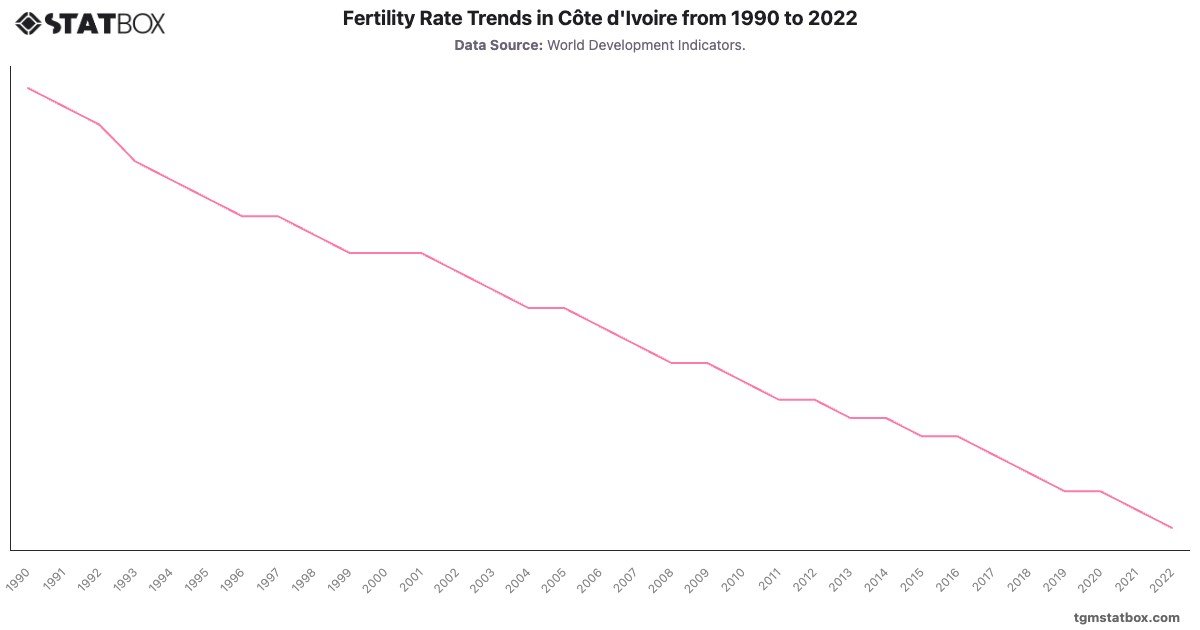
Côte d'Ivoire experienced a steady decline in fertility rates from 6.7 in 1990 to 4.3 in 2022. The reduction reflects improvements in education access, particularly for women, and increased availability of family planning resources. The 1990s saw a marked decline to 5.8 by 2000, driven by urbanization and health campaigns.
The trend continued in the 21st century, supported by international development programs focusing on reproductive health. By 2022, the rate fell to 4.3, signaling a demographic transition characterized by reduced fertility and a shift toward modern family dynamics, although rural-urban disparities persist.
The trend continued in the 21st century, supported by international development programs focusing on reproductive health. By 2022, the rate fell to 4.3, signaling a demographic transition characterized by reduced fertility and a shift toward modern family dynamics, although rural-urban disparities persist.
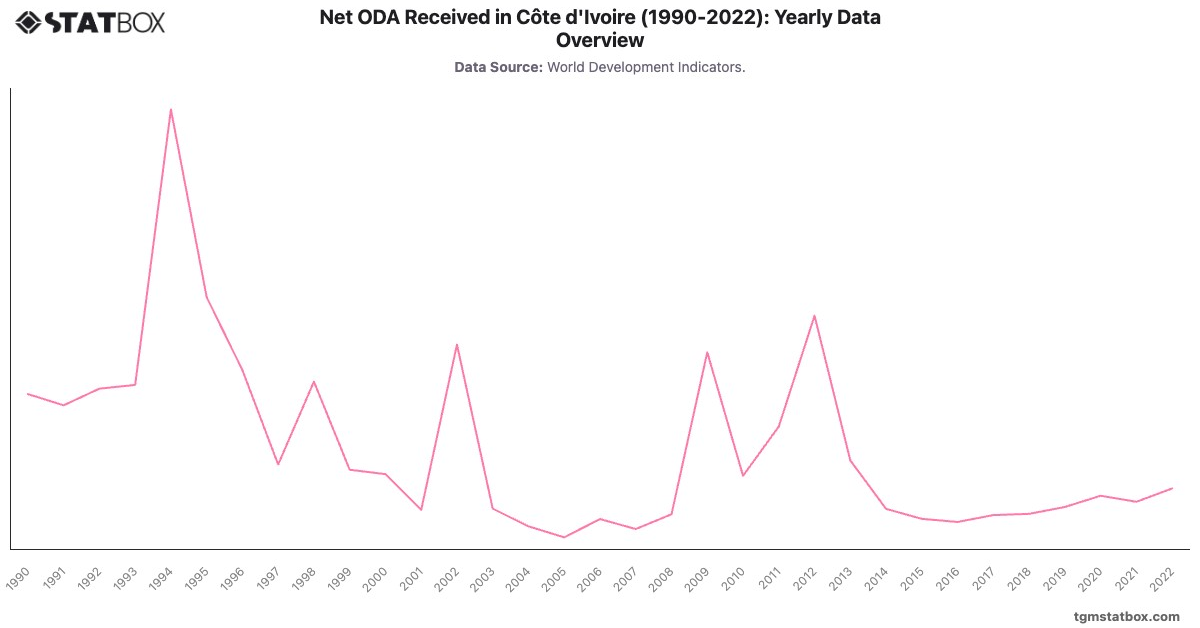
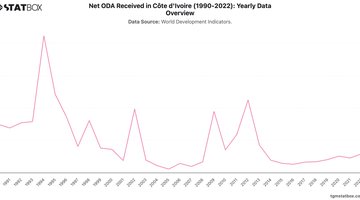
Gain a broader perspective by reviewing Côte d’Ivoire’s yearly net ODA, Côte d'Ivoire’s goods import value, urbanization rate in Côte d’Ivoire.