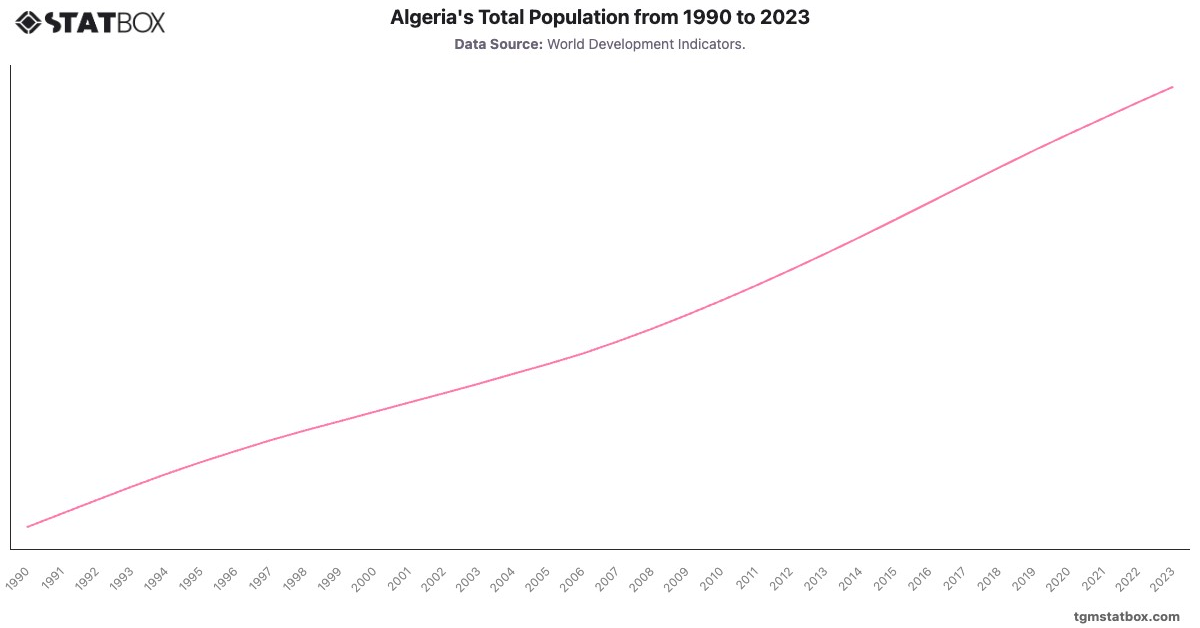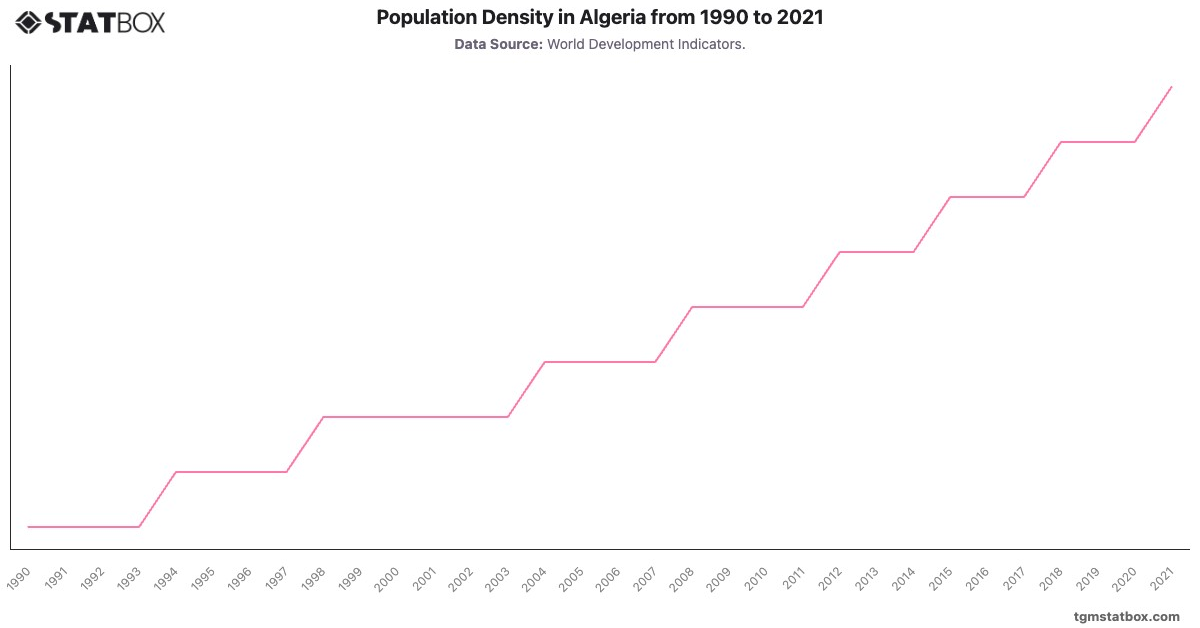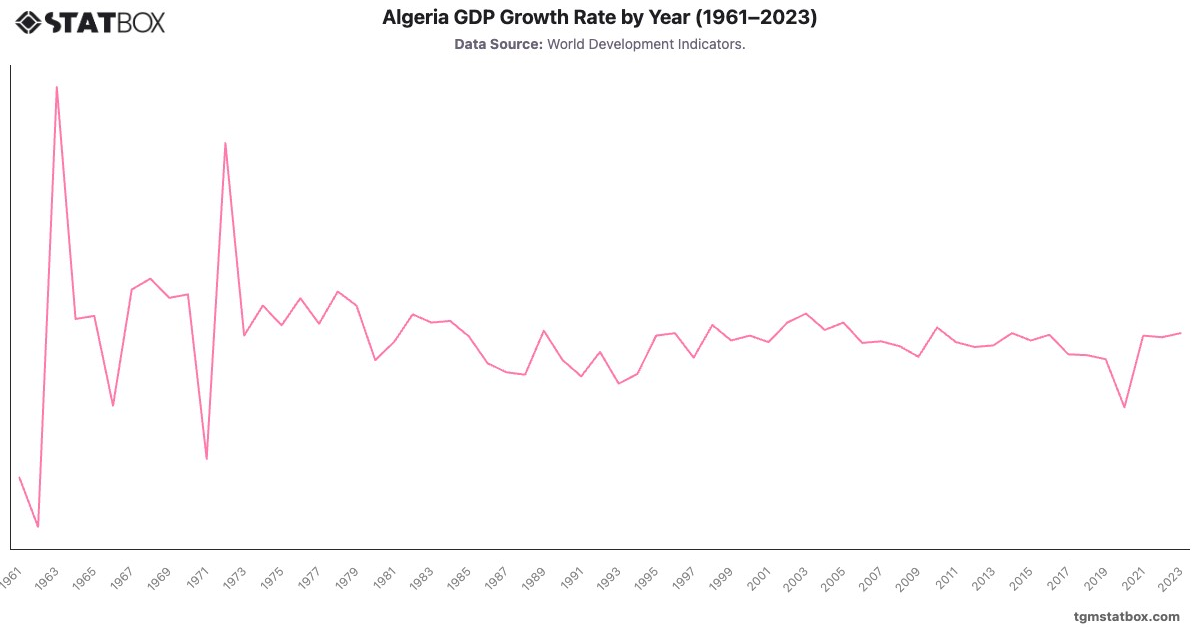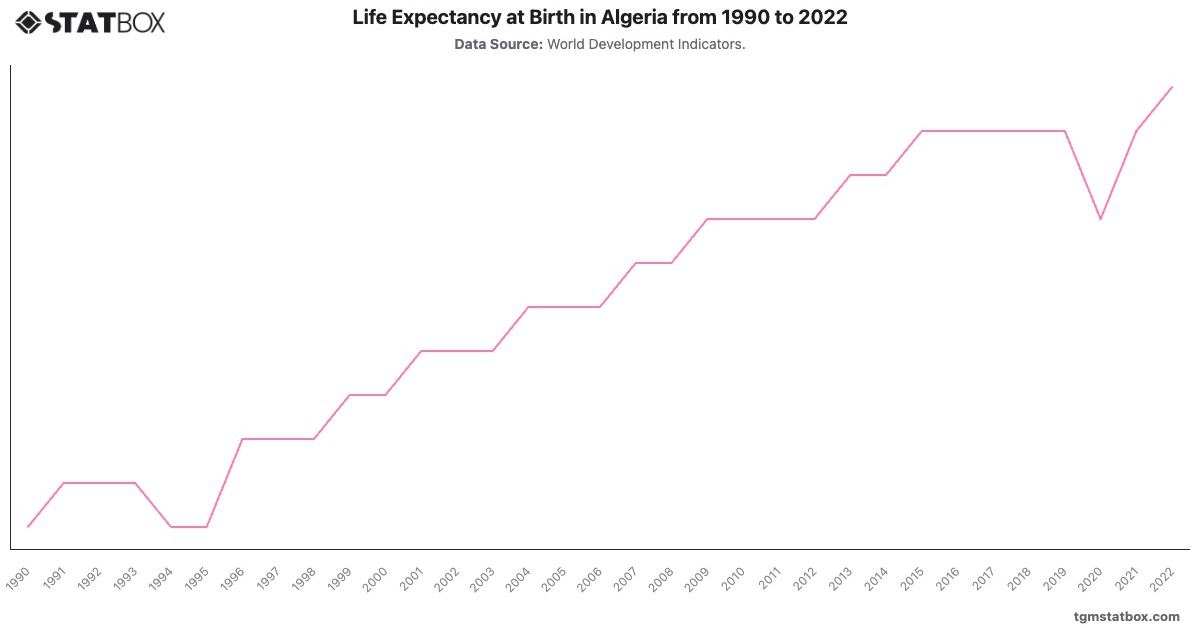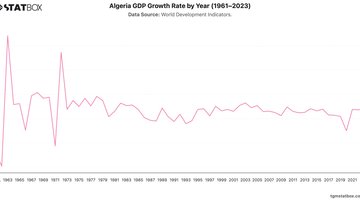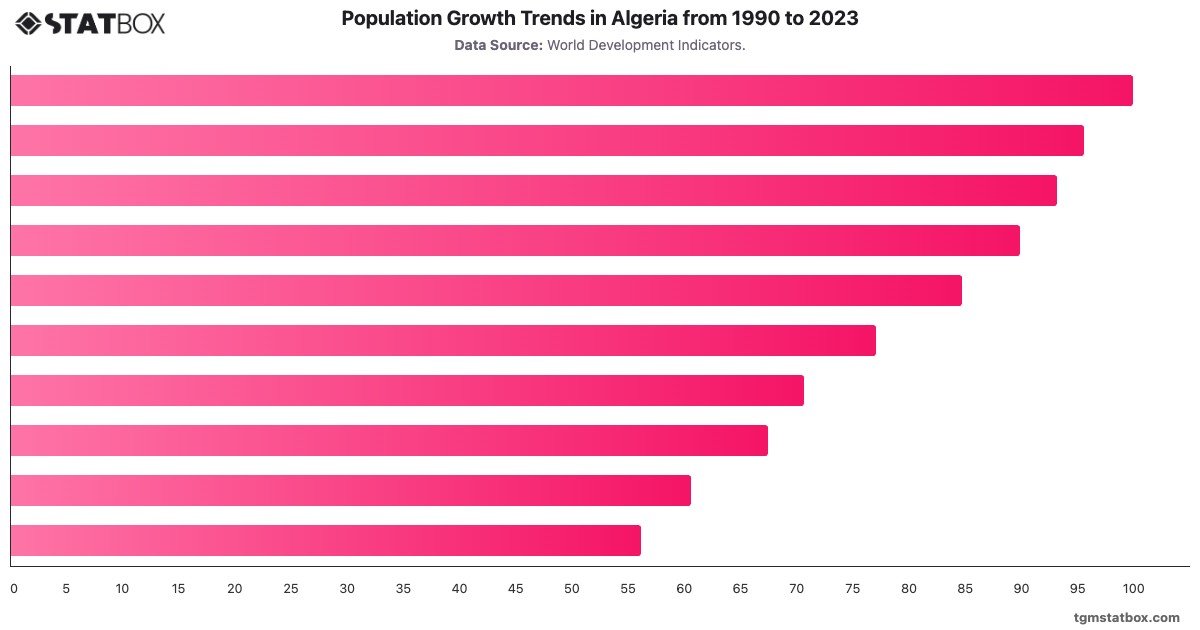
The chart highlights Algeria's gradual shift from high to moderate growth rates. In the early 1990s, growth rates remained robust, starting at in 1990, slightly tapering each year through the decade as Algeria faced economic and political challenges, including a civil conflict that influenced migration and birth rates. By 1999, the growth rate decreased to , reflecting lower fertility rates and a slowing natural increase.
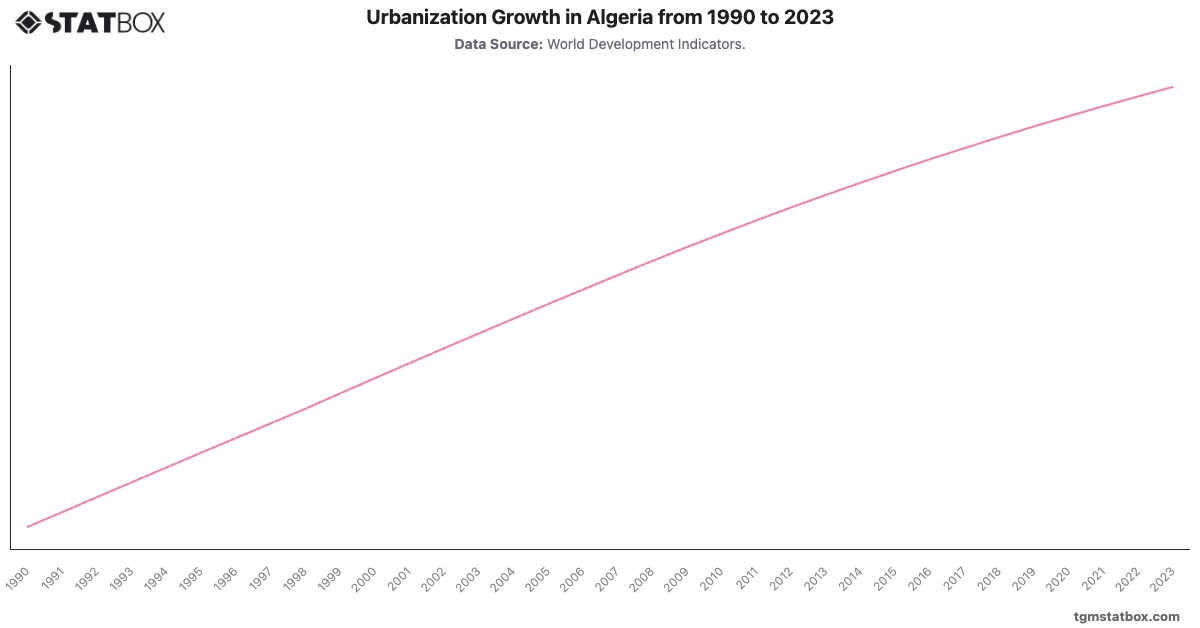
A period of stability marked the early 2000s, with growth hovering around to , signaling gradual recovery alongside improved healthcare and living standards. Between 2013 and 2016, Algeria saw growth sustain at around , partly due to a youthful population and enhanced public health initiatives. However, since 2018, the rate declined steadily, reaching in 2023, influenced by slowing birth rates, evolving family structures, and an increasingly urban population.
A period of stability marked the early 2000s, with growth hovering around to , signaling gradual recovery alongside improved healthcare and living standards. Between 2013 and 2016, Algeria saw growth sustain at around , partly due to a youthful population and enhanced public health initiatives. However, since 2018, the rate declined steadily, reaching in 2023, influenced by slowing birth rates, evolving family structures, and an increasingly urban population.
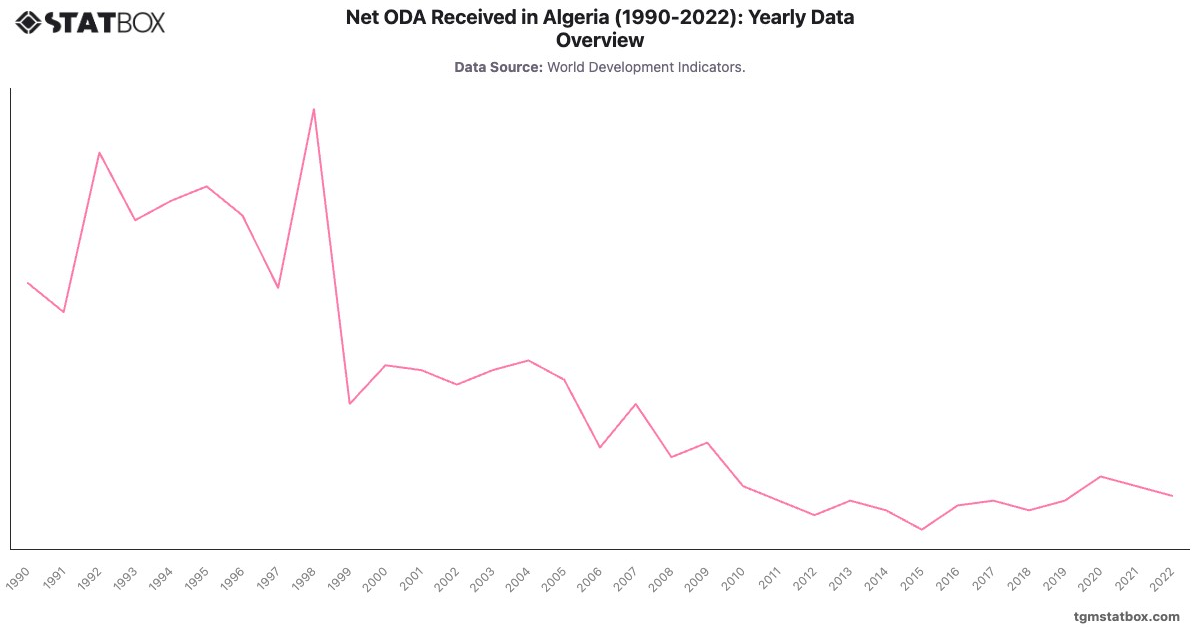
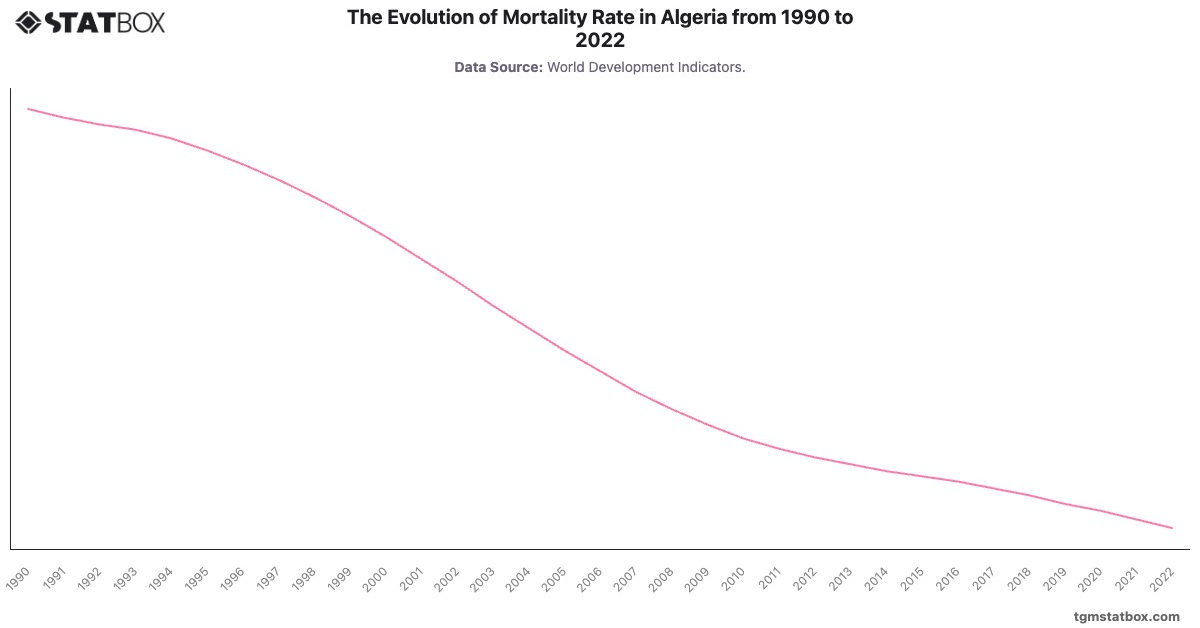
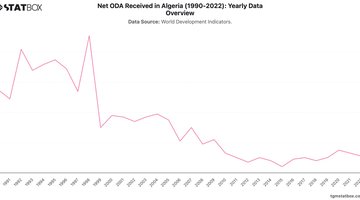
For a broader context, visit other statistics on Algeria’s net ODA data, Algeria’s manufacturing sector share in GDP, Algeria’s mortality rate trends.