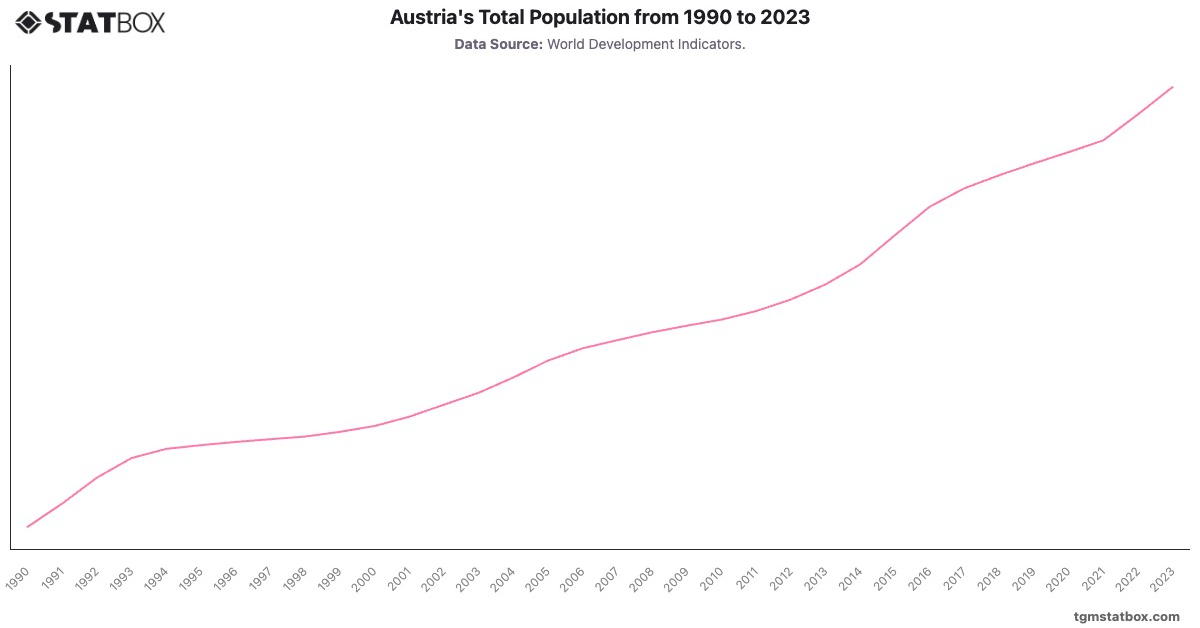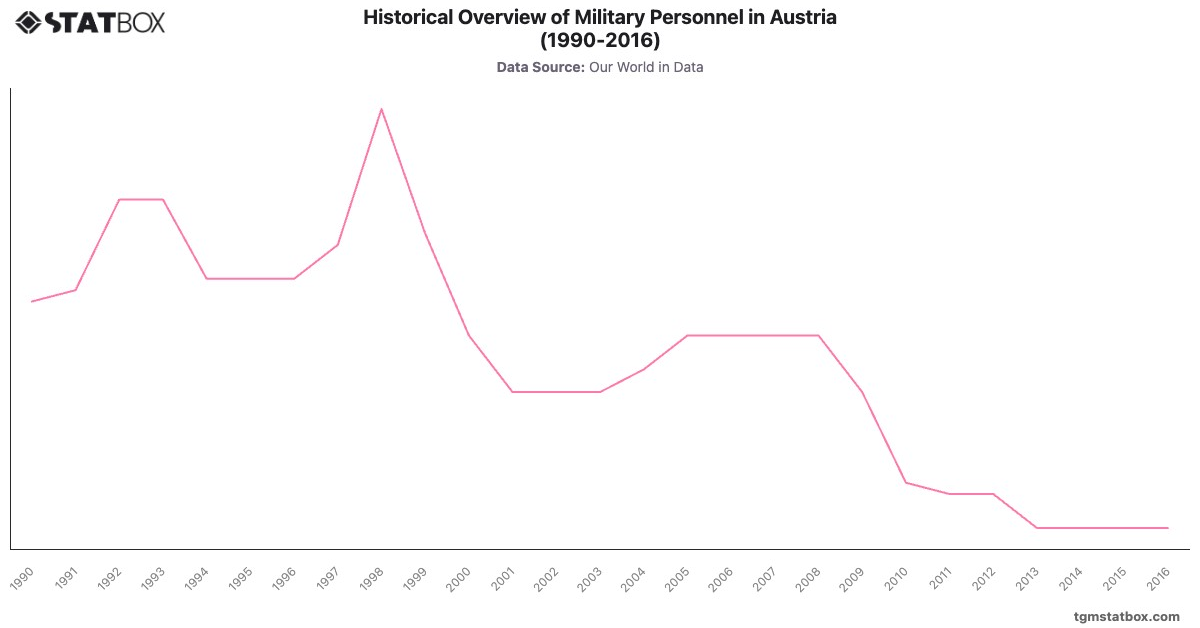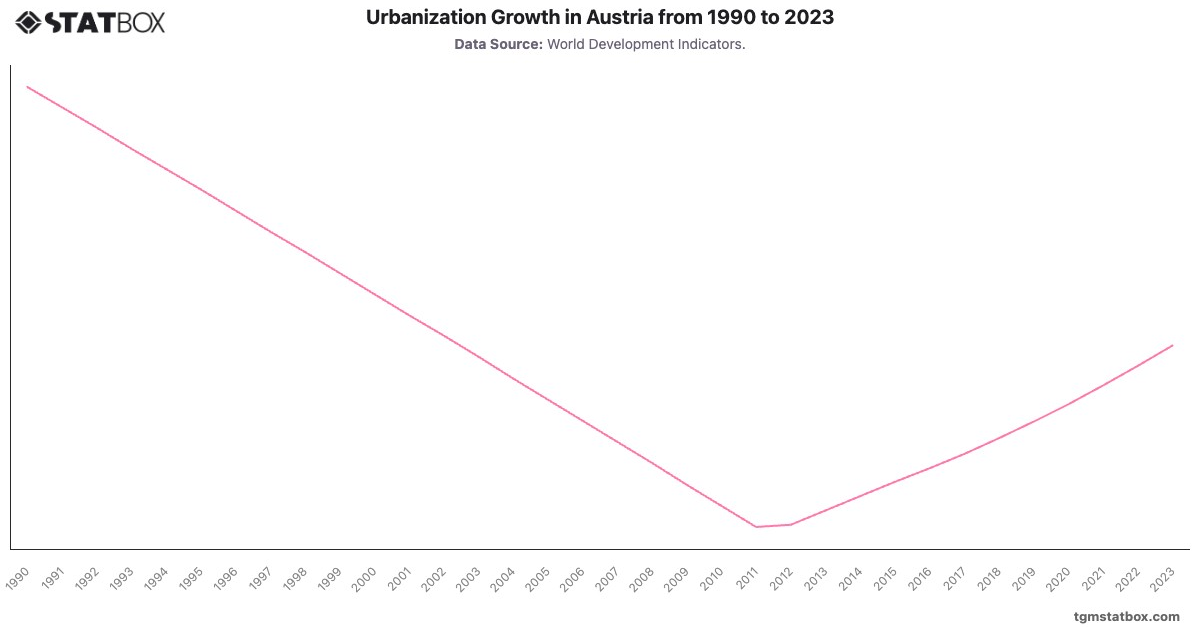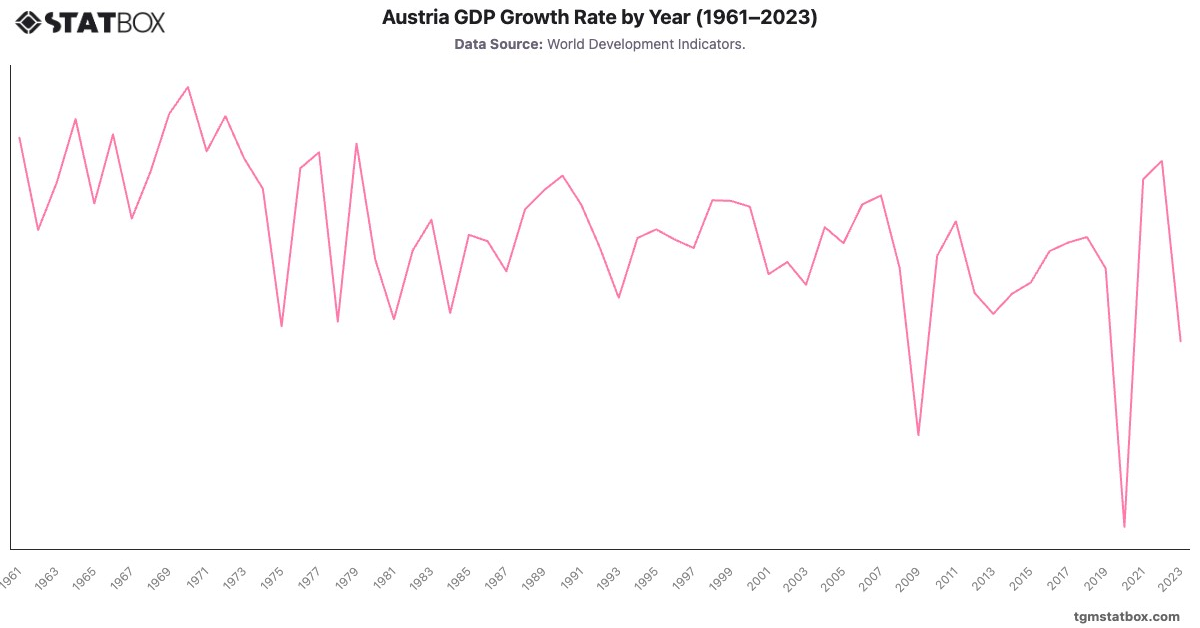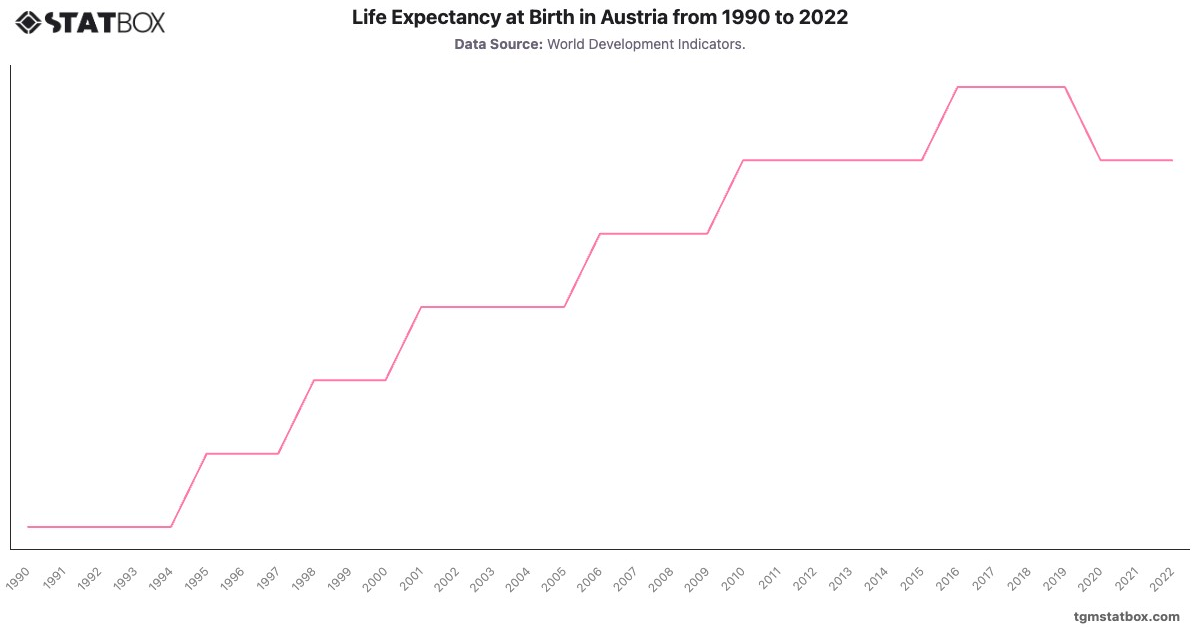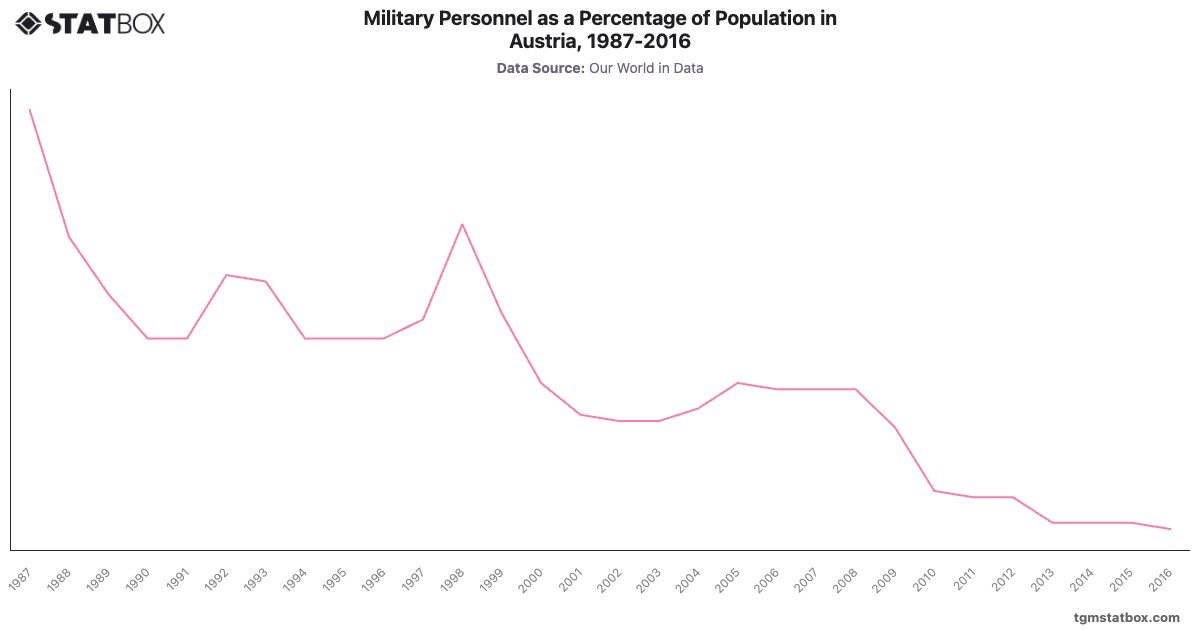
Austria’s military personnel as a percentage of population dropped from in 1987 to by 2016, mirroring broader European trends toward reduced military spending post-Cold War. The end of the Cold War in 1991 significantly impacted Austria’s military strategy, reducing the perceived need for a large defense force. Austria’s neutrality stance and integration into the European Union further encouraged a pivot toward economic and social investments as urban areas expanded.
As Austria's population urbanized, the government prioritized social infrastructure and domestic welfare over military expenditure, evidenced by the consistent reduction in personnel percentages. The final stabilization at reflects Austria’s strategic decision to maintain a lean military force, largely oriented toward peacekeeping and supporting EU security mandates rather than sustaining a high percentage of active personnel.
As Austria's population urbanized, the government prioritized social infrastructure and domestic welfare over military expenditure, evidenced by the consistent reduction in personnel percentages. The final stabilization at reflects Austria’s strategic decision to maintain a lean military force, largely oriented toward peacekeeping and supporting EU security mandates rather than sustaining a high percentage of active personnel.
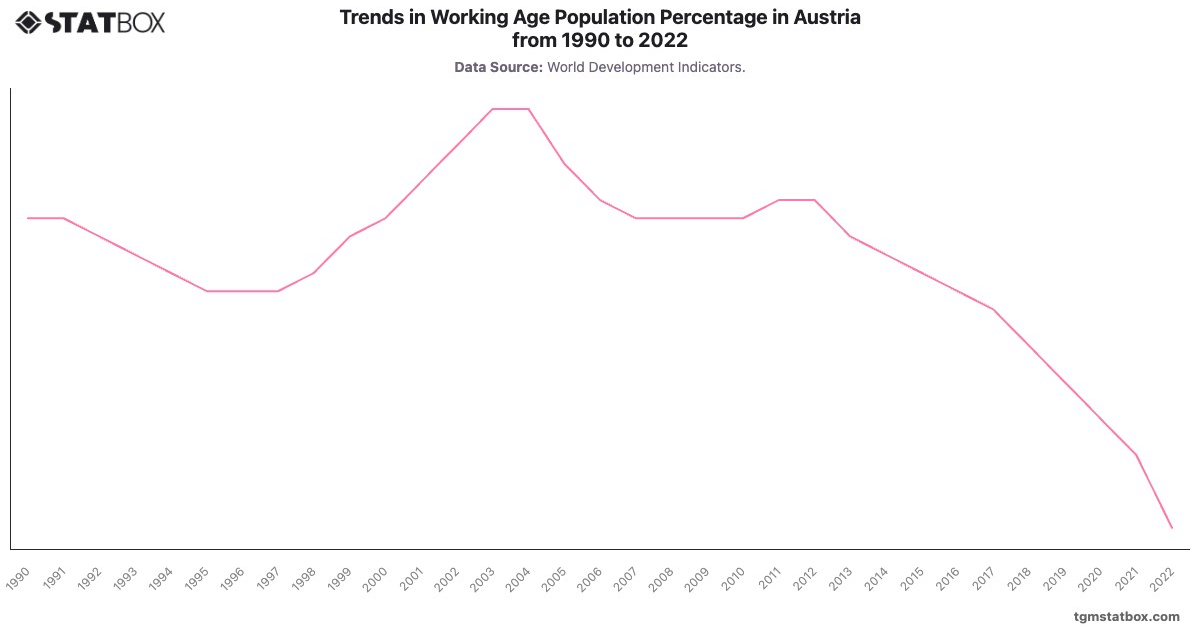
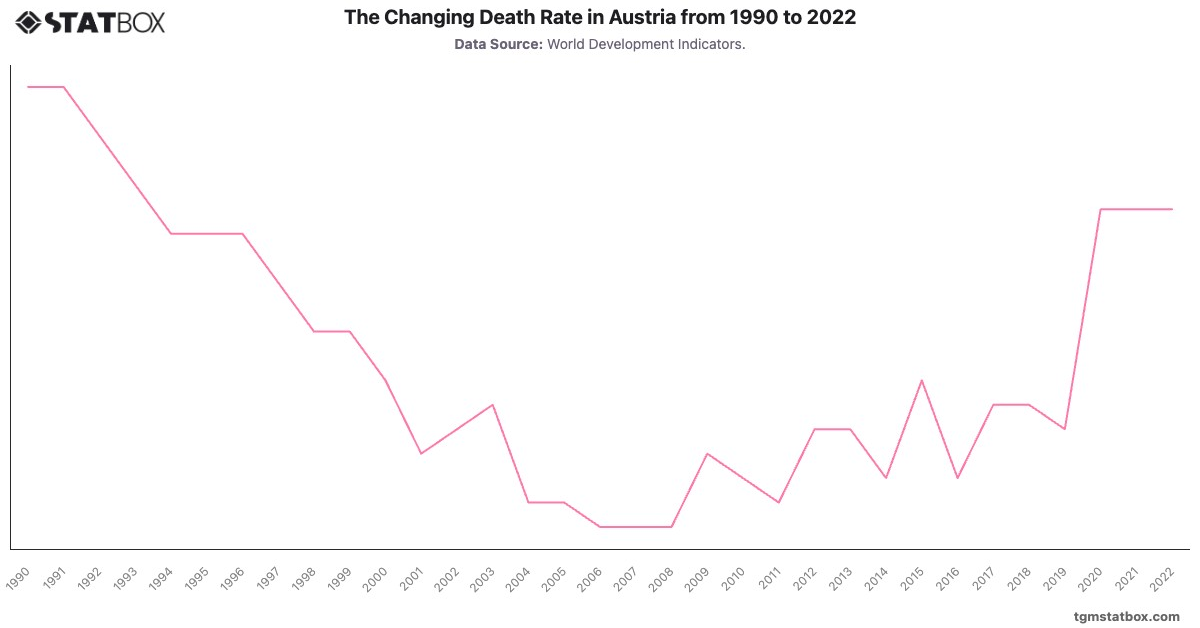
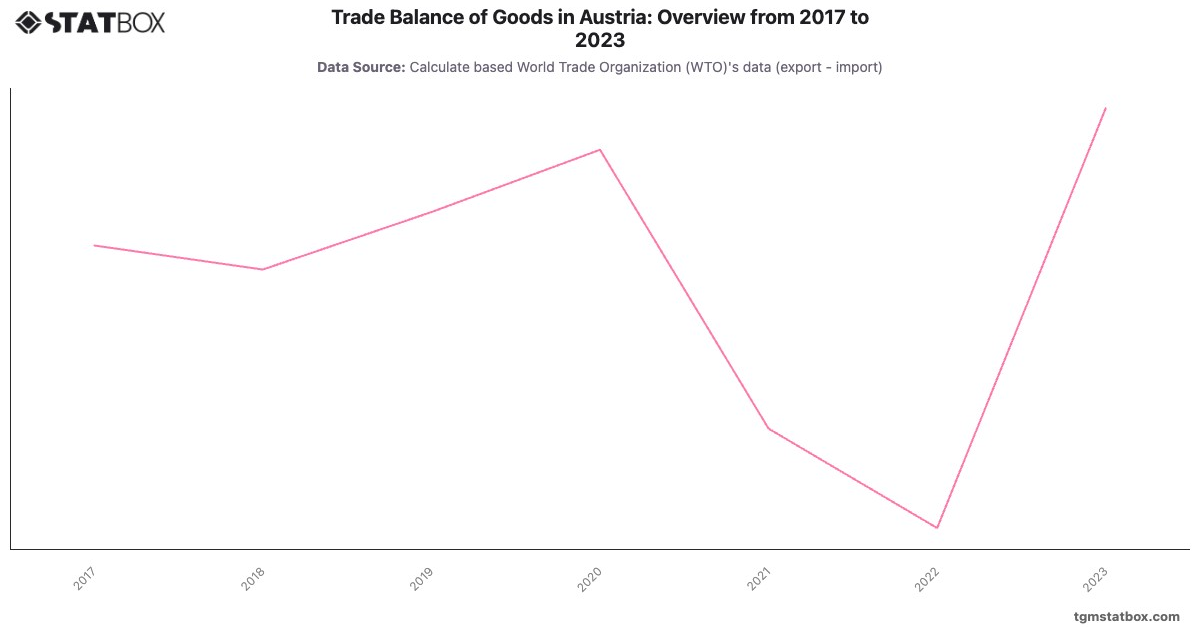
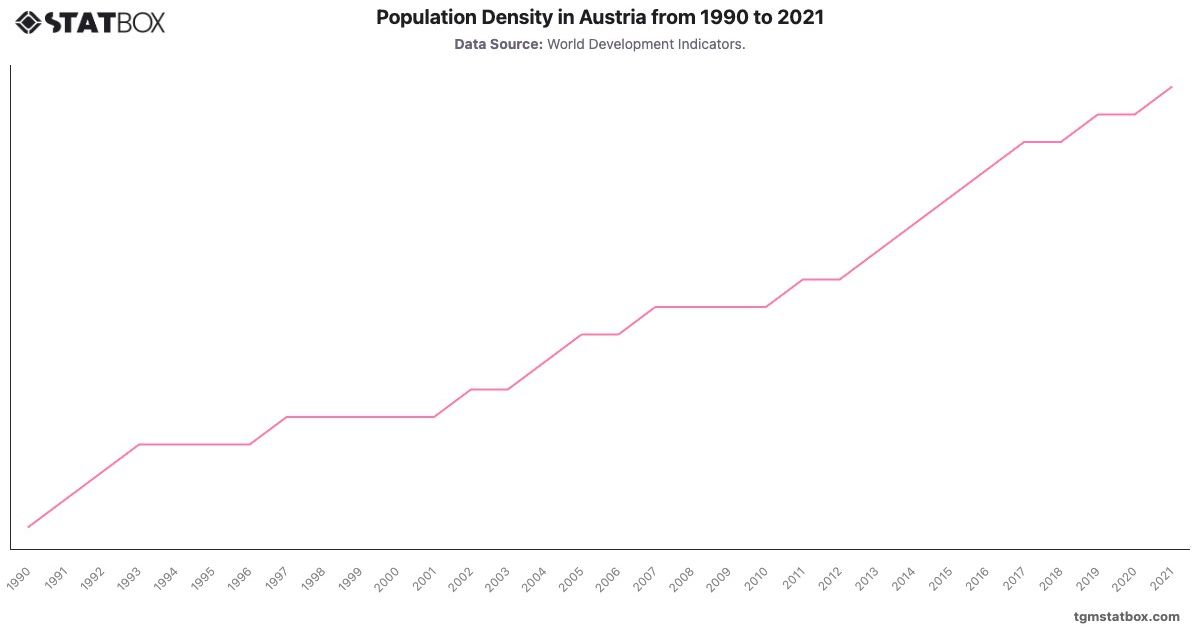
Explore related charts to gain a better understanding of Austria’s population density, Overview of Austria’s military personnel data, Austria’s population figures.