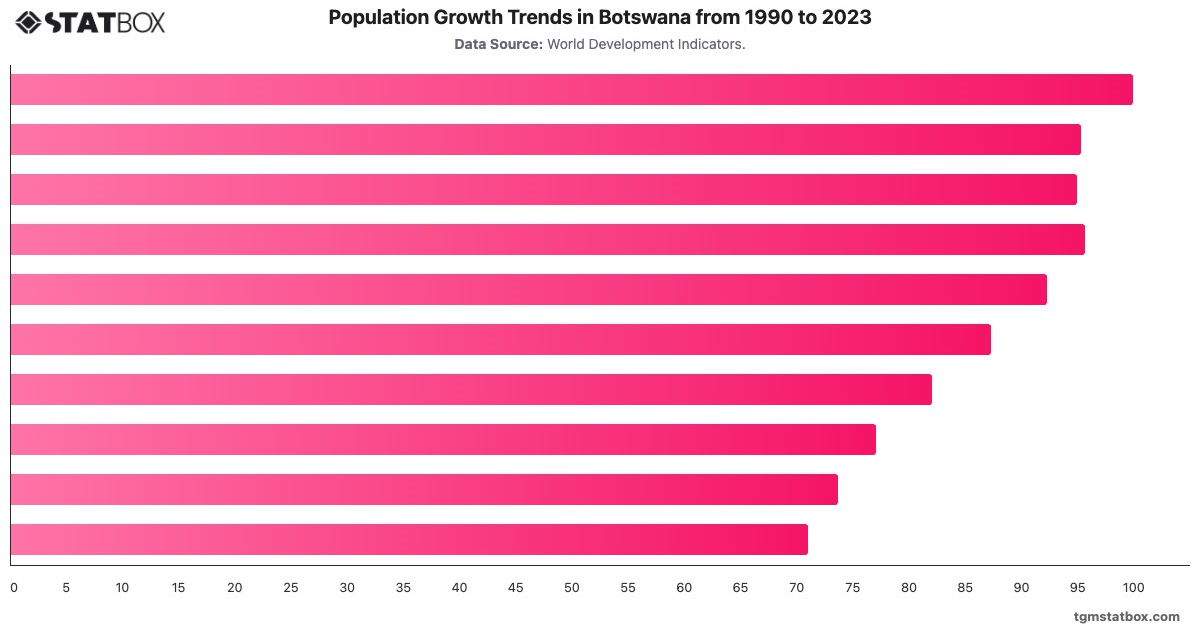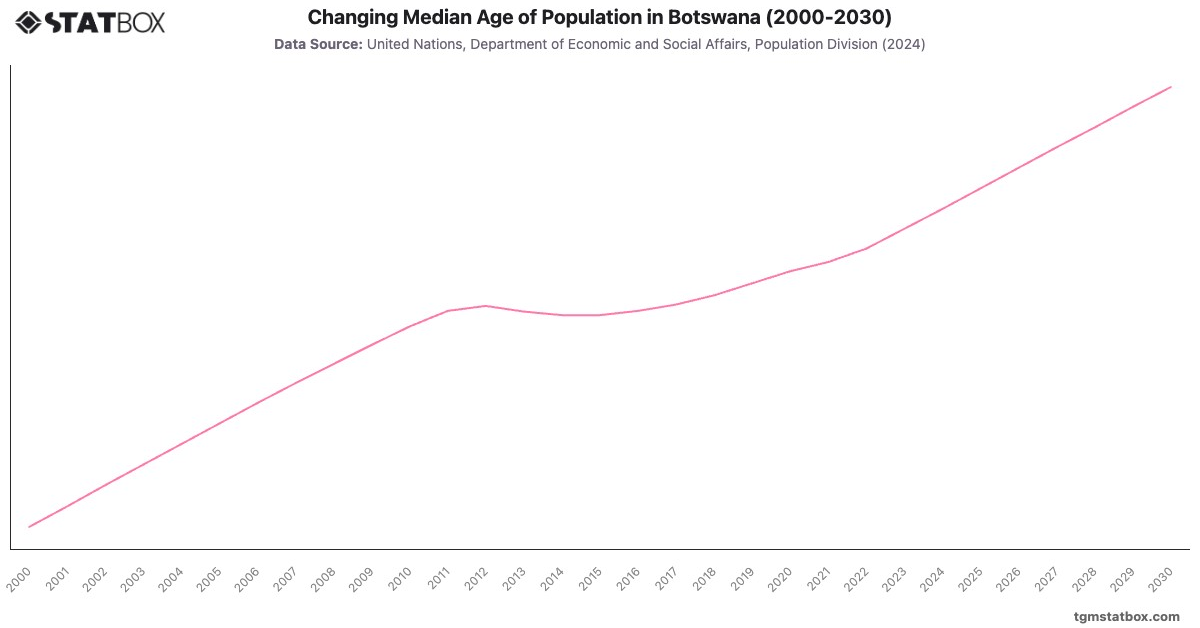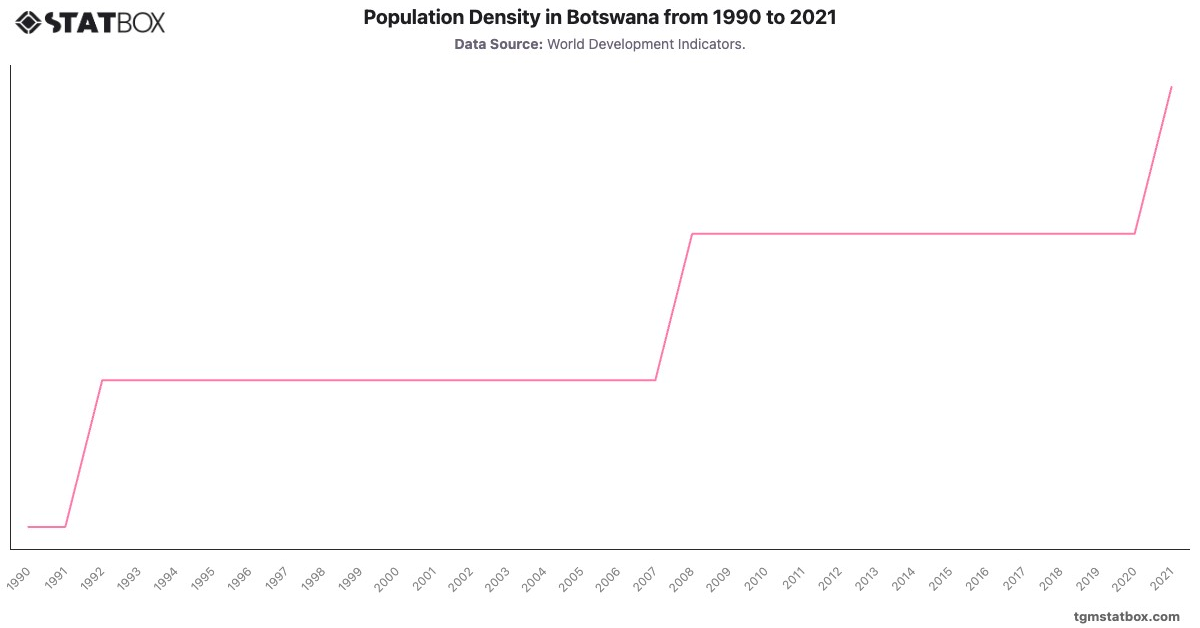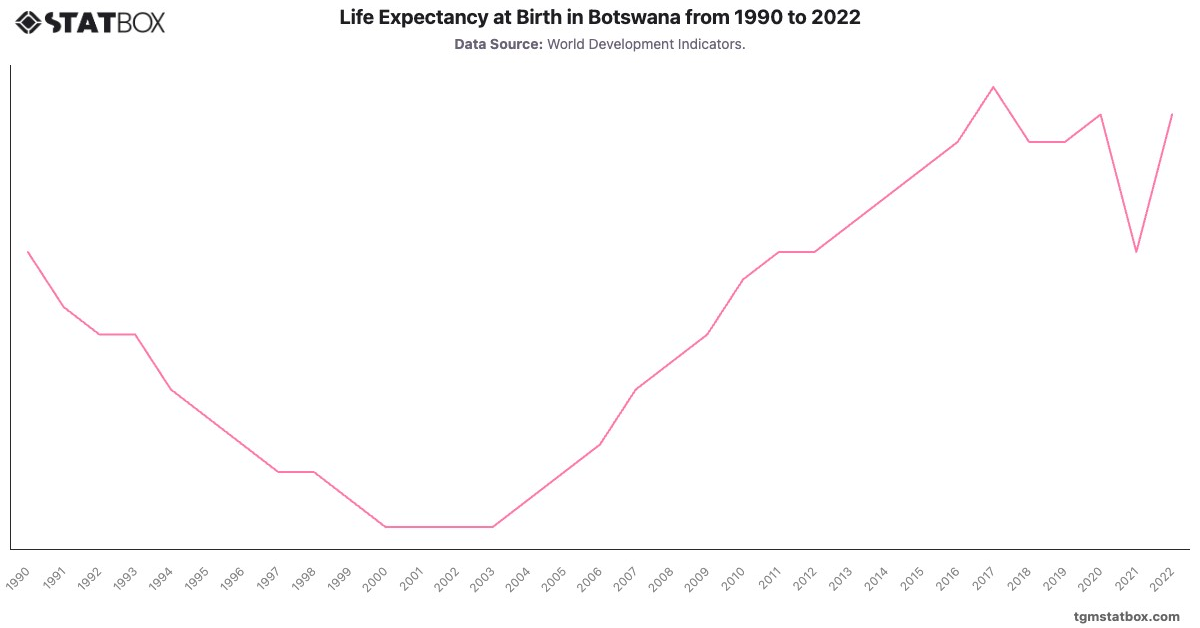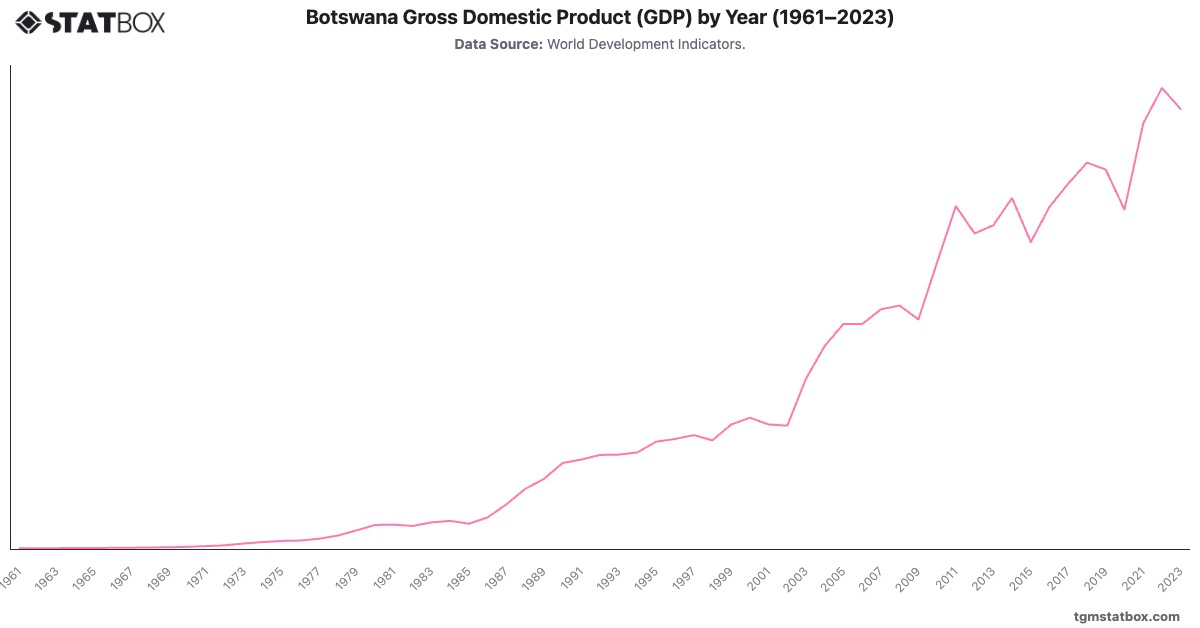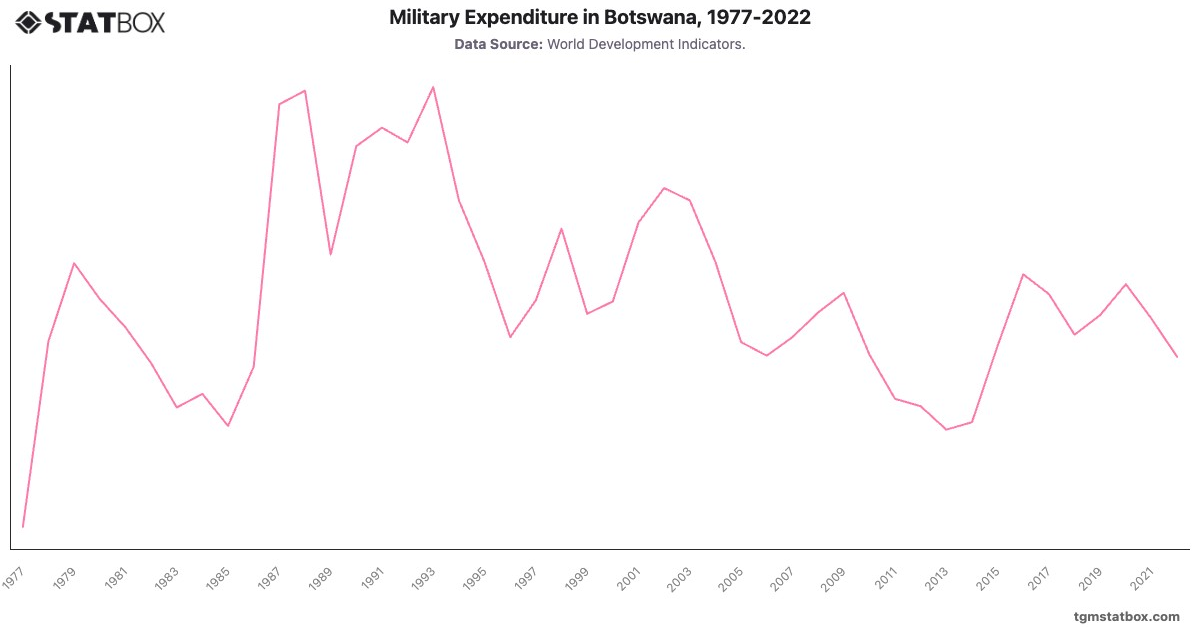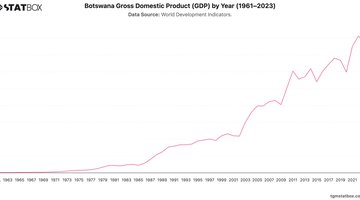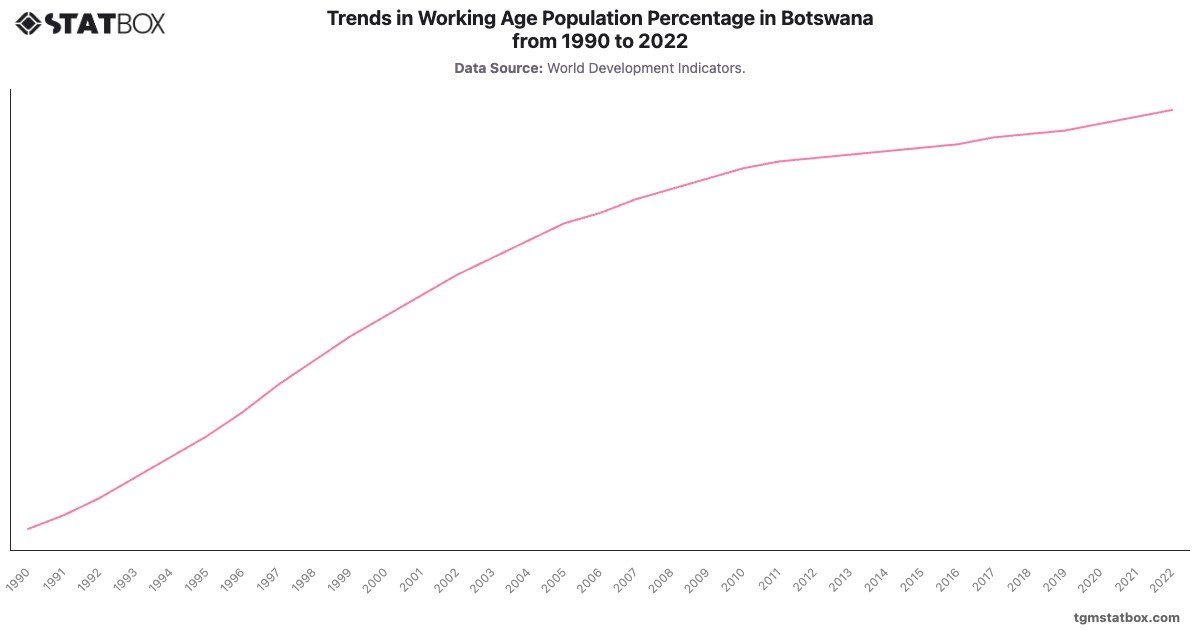
The chart illustrates the trends in Botswana's working-age population (individuals aged 15 to 64) from 1990 to 2022. In 1990, the working-age population accounted for of the total population, and this proportion steadily increased over the years, reaching by 2022.
This continuous growth in the working-age demographic can be attributed to improvements in healthcare, education, and declining birth rates, allowing Botswana to capitalize on a larger labor force. The gradual increase over three decades reflects the country's demographic shift toward a more productive age group. This trend suggests a potential demographic dividend, where a larger working-age population can contribute positively to economic growth.
This continuous growth in the working-age demographic can be attributed to improvements in healthcare, education, and declining birth rates, allowing Botswana to capitalize on a larger labor force. The gradual increase over three decades reflects the country's demographic shift toward a more productive age group. This trend suggests a potential demographic dividend, where a larger working-age population can contribute positively to economic growth.
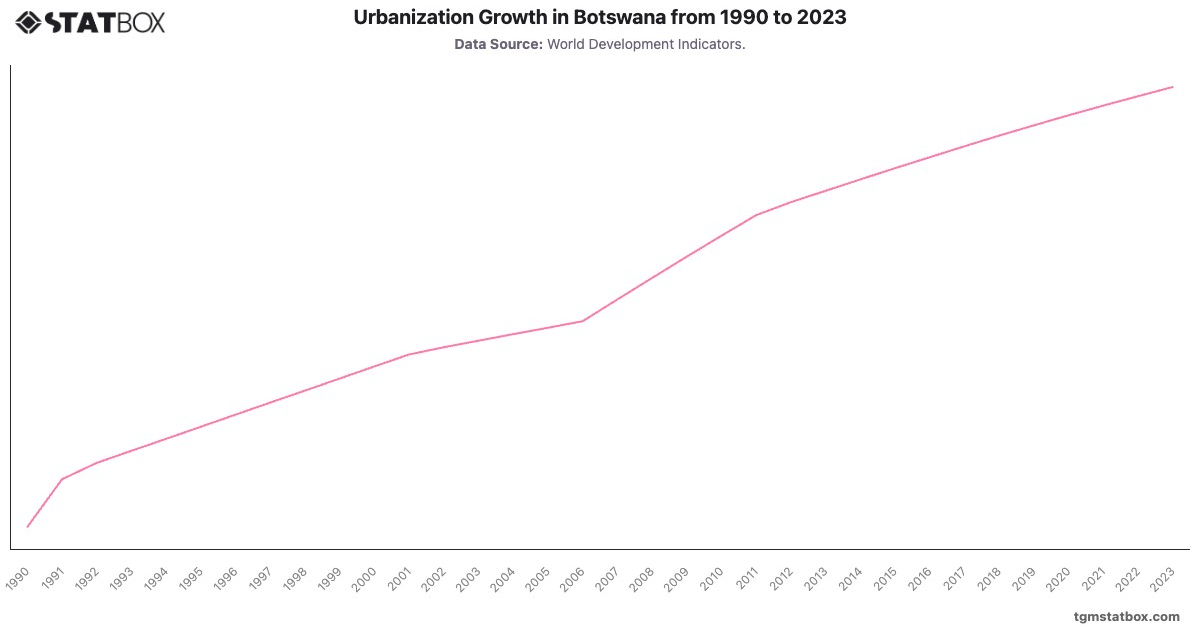
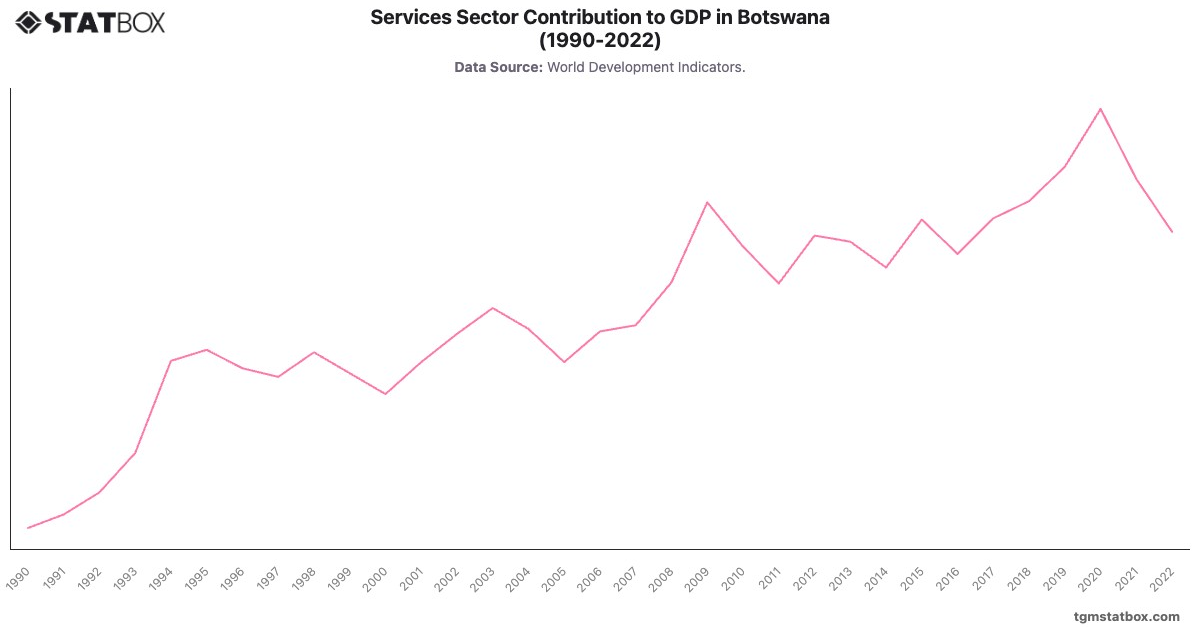
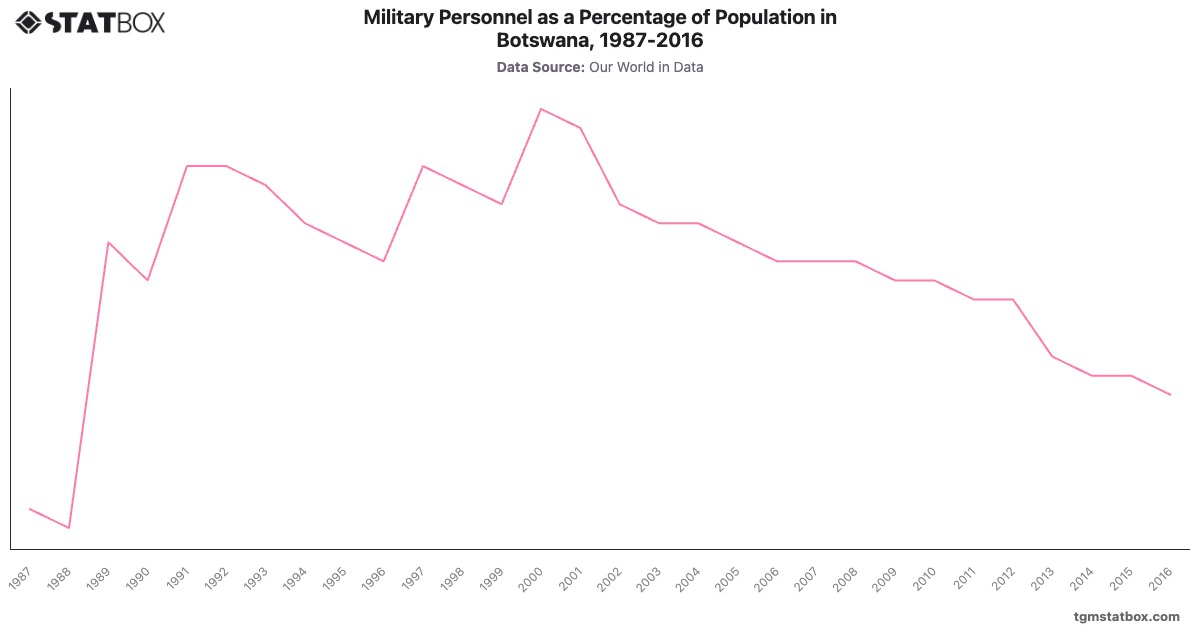
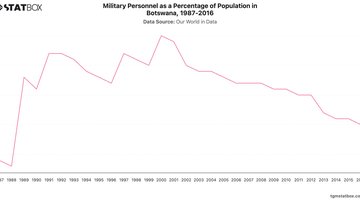
Discover additional trends and data on military personnel-to-population ratio in Botswana, Botswana’s urbanization rate, Botswana’s services sector share in GDP.