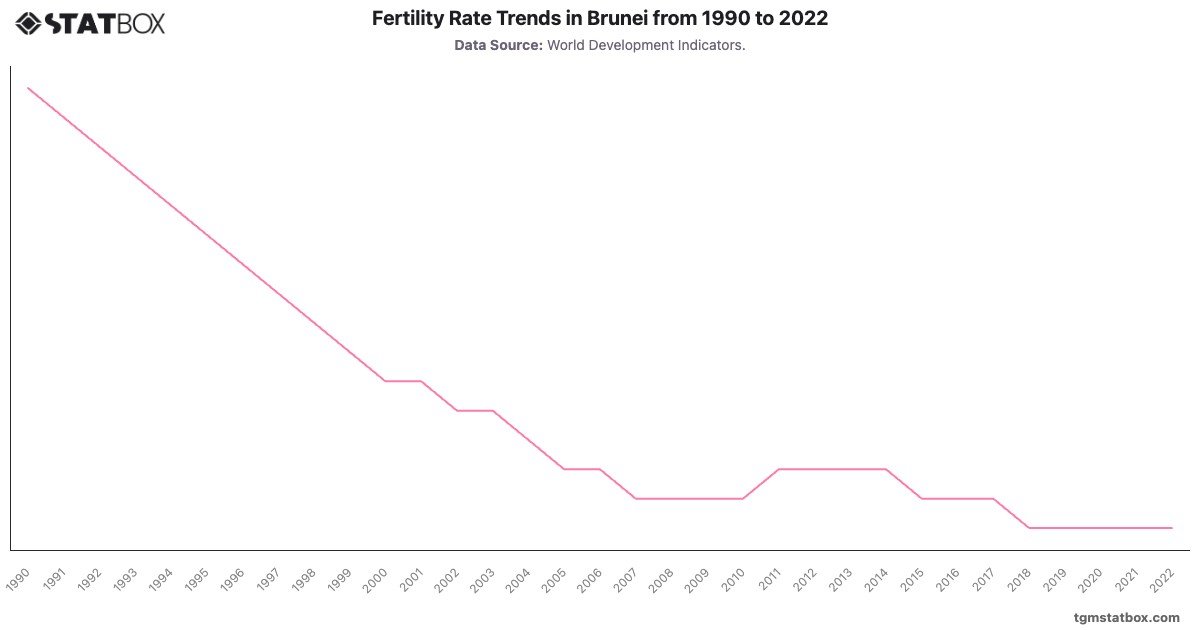
Brunei’s fertility rate declined steadily from 3.3 in 1990 to 1.8 in 2022, reflecting its transition to a low-fertility regime. The sharpest drops occurred during the 1990s, driven by increased female education and improved healthcare access. Stabilization around 1.9 during the 2000s signals the effectiveness of ongoing family planning measures.
The persistent decline is attributed to shifts in lifestyle preferences, delayed marriages, and economic factors affecting family size. While Brunei maintains a relatively young population, the continued decrease in fertility highlights challenges related to aging and the need for policies encouraging family growth.
The persistent decline is attributed to shifts in lifestyle preferences, delayed marriages, and economic factors affecting family size. While Brunei maintains a relatively young population, the continued decrease in fertility highlights challenges related to aging and the need for policies encouraging family growth.
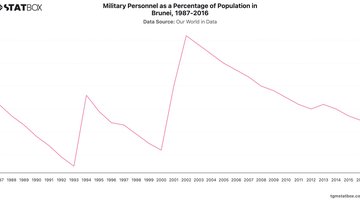
For a deeper dive into the topic, explore Brunei’s urbanization rate, Brunei’s military personnel ratio, Brunei’s unemployment trend.