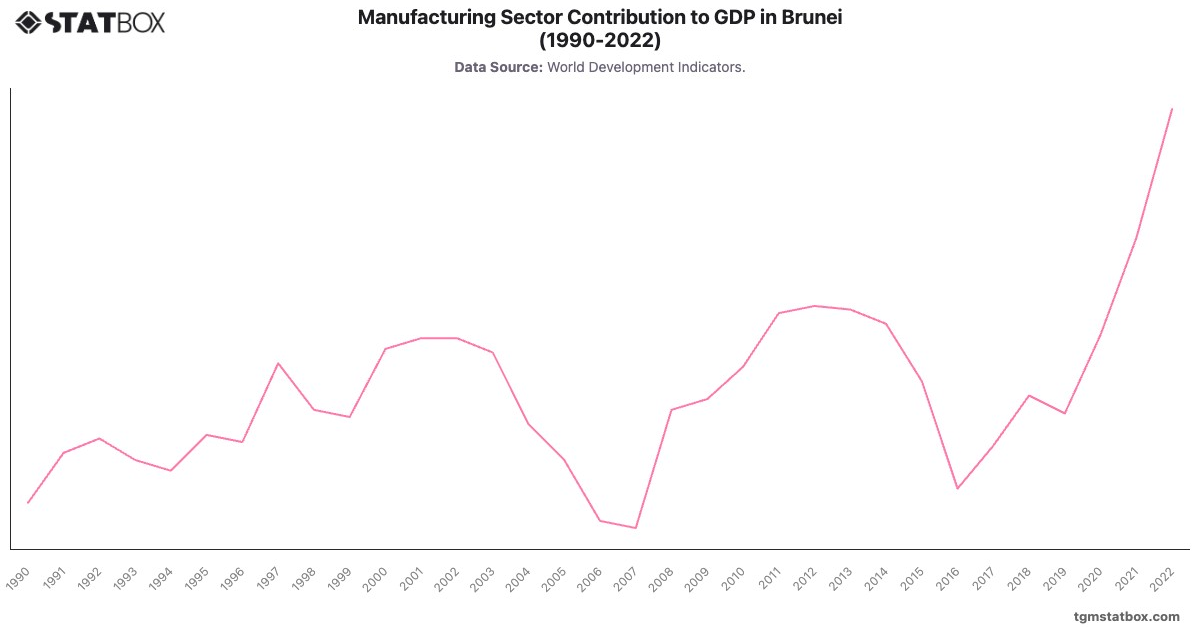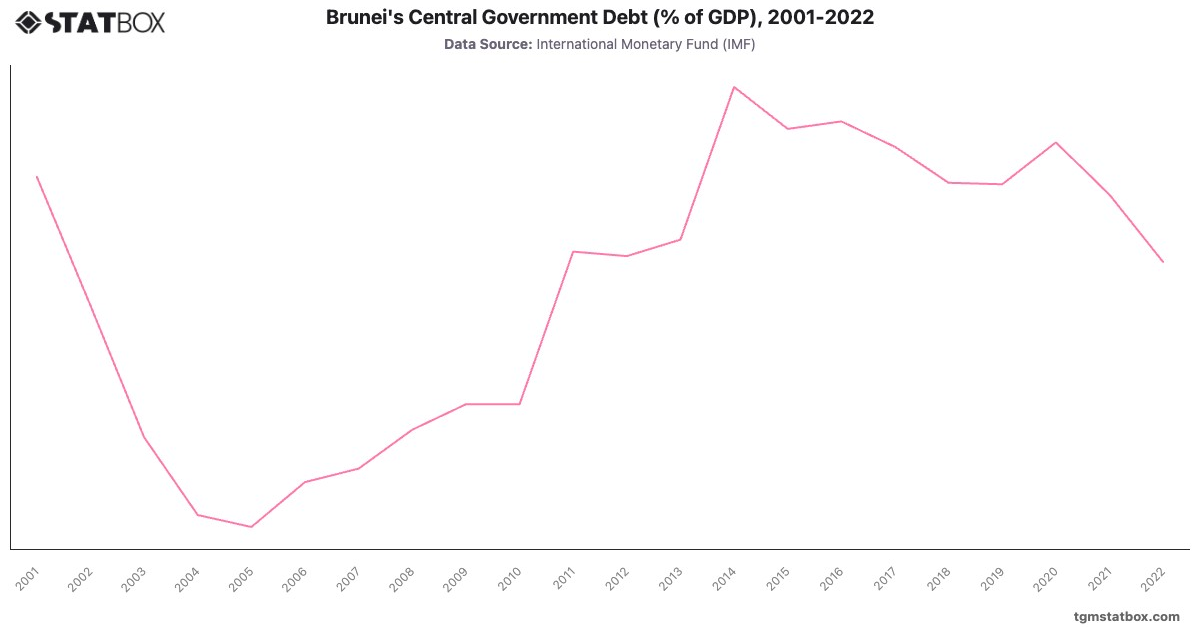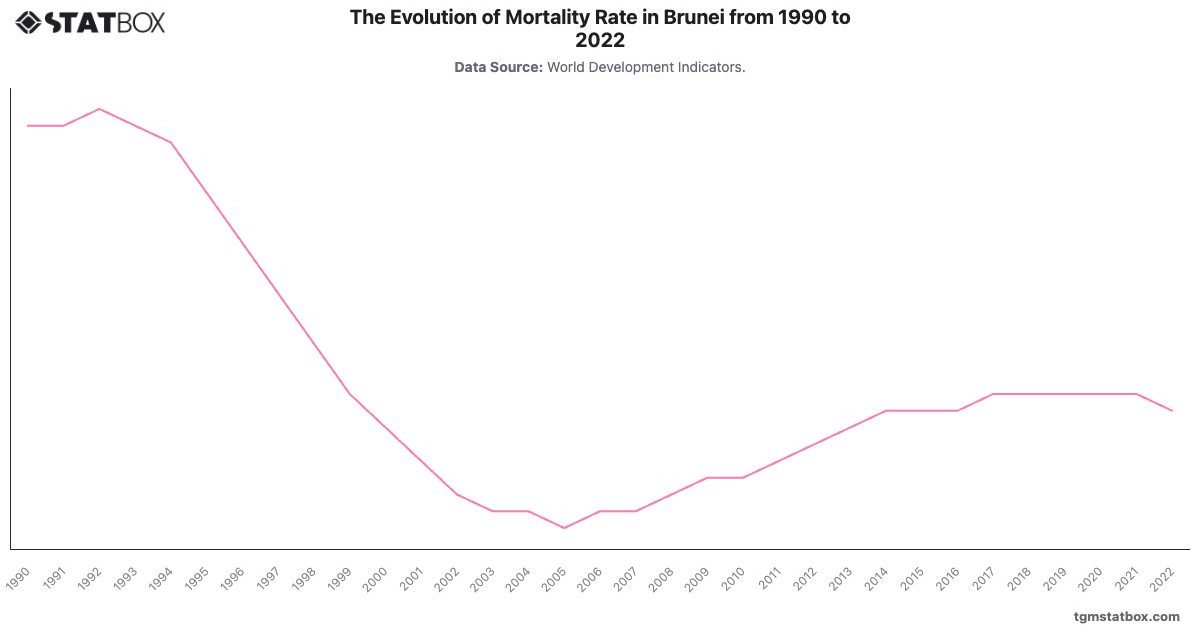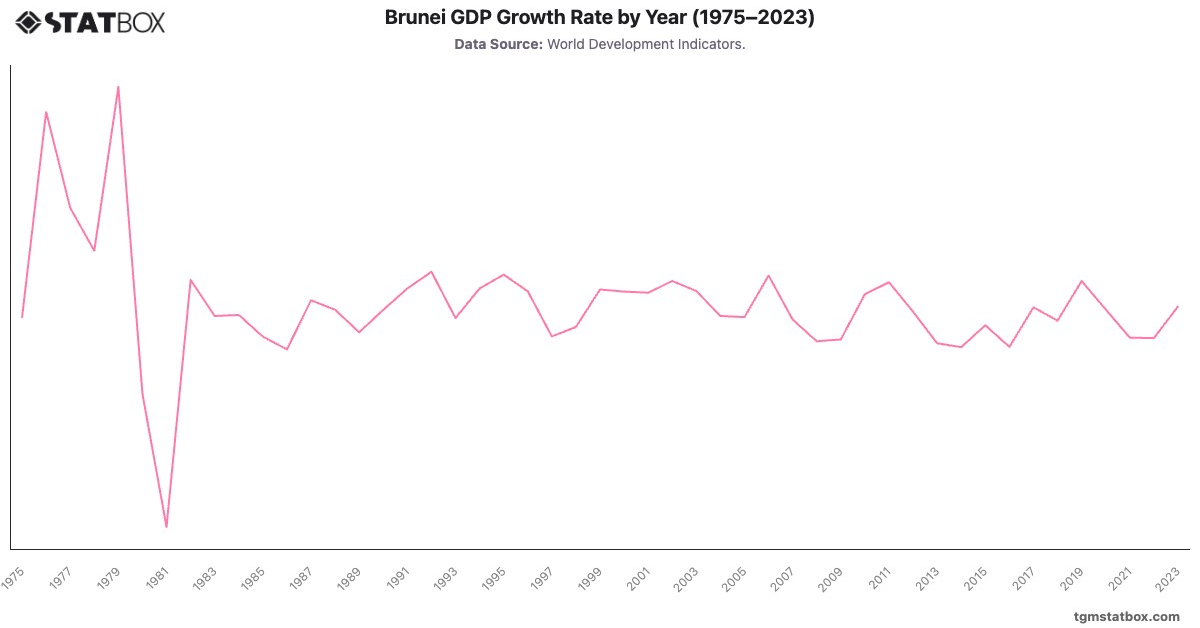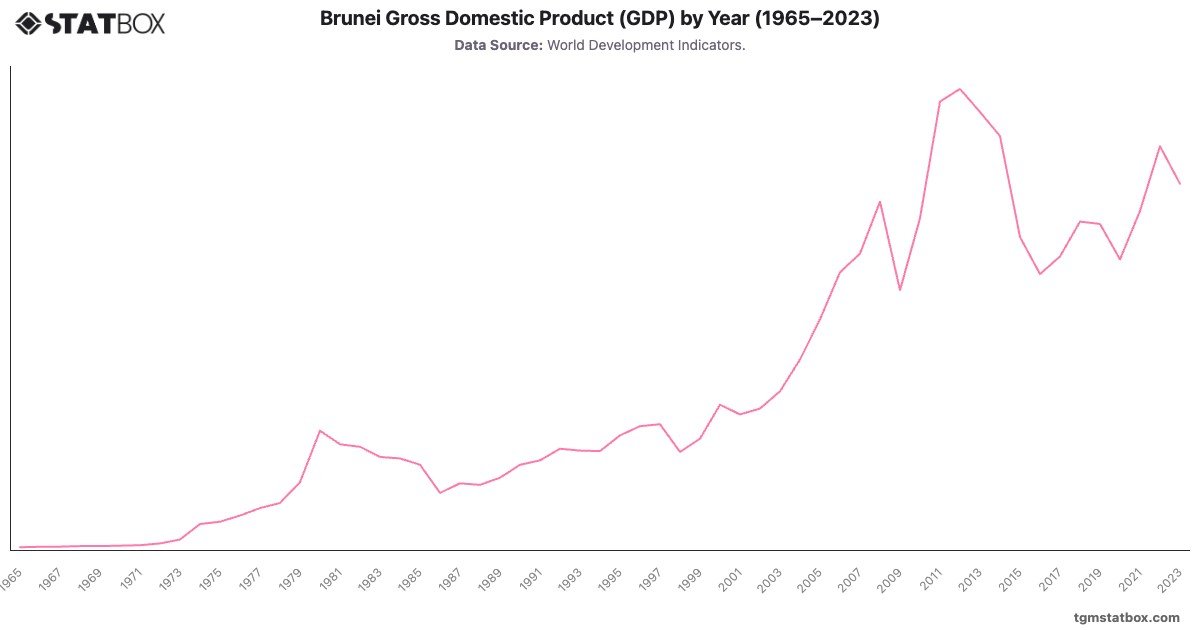
Brunei’s Gross Domestic Product (GDP) has experienced significant fluctuations from 1965 to 2023, influenced heavily by the oil and gas sector, which constitutes the backbone of the country's economy. During the early years, Brunei’s GDP was relatively modest, with the economy starting to gain momentum in the 1970s, following the discovery and exploitation of its vast hydrocarbon resources. By the late 1970s and 1980s, Brunei saw considerable economic growth, reaching its first significant GDP peak at 1 billion USD.
The oil price boom of the 2000s further boosted GDP, driving it to new heights in 2008 and 2011. However, Brunei’s GDP faced downturns when global oil prices fell, particularly in 2014 and during the COVID-19 pandemic in 2020. Despite these challenges, recent years have shown recovery, bolstered by global oil demand and economic diversification efforts.
The oil price boom of the 2000s further boosted GDP, driving it to new heights in 2008 and 2011. However, Brunei’s GDP faced downturns when global oil prices fell, particularly in 2014 and during the COVID-19 pandemic in 2020. Despite these challenges, recent years have shown recovery, bolstered by global oil demand and economic diversification efforts.
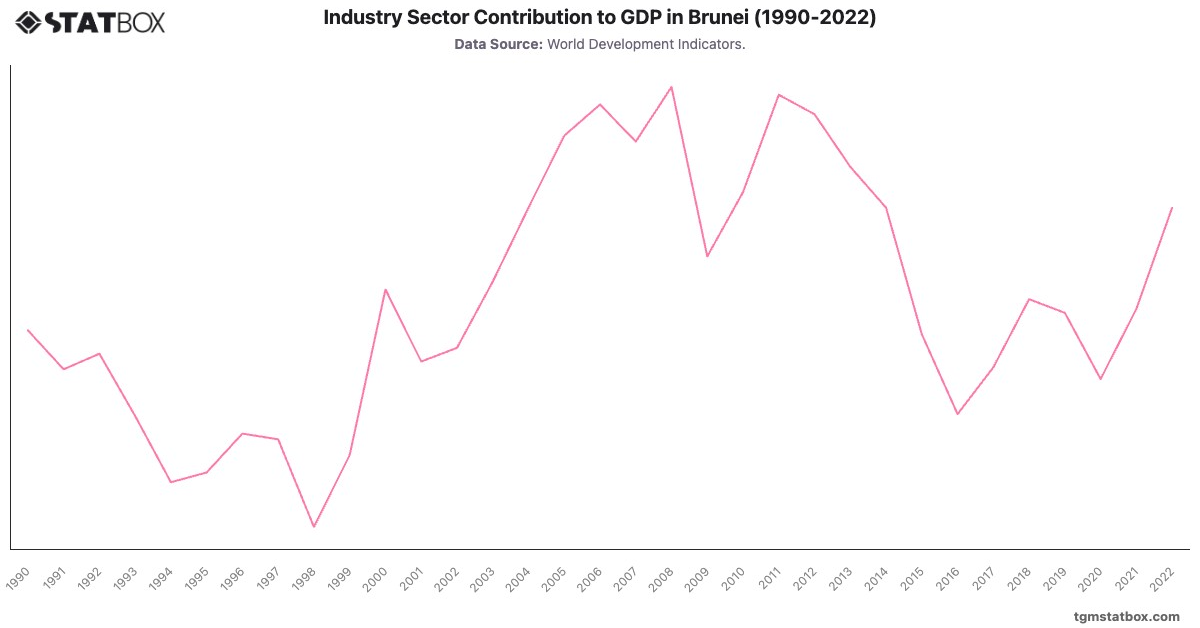
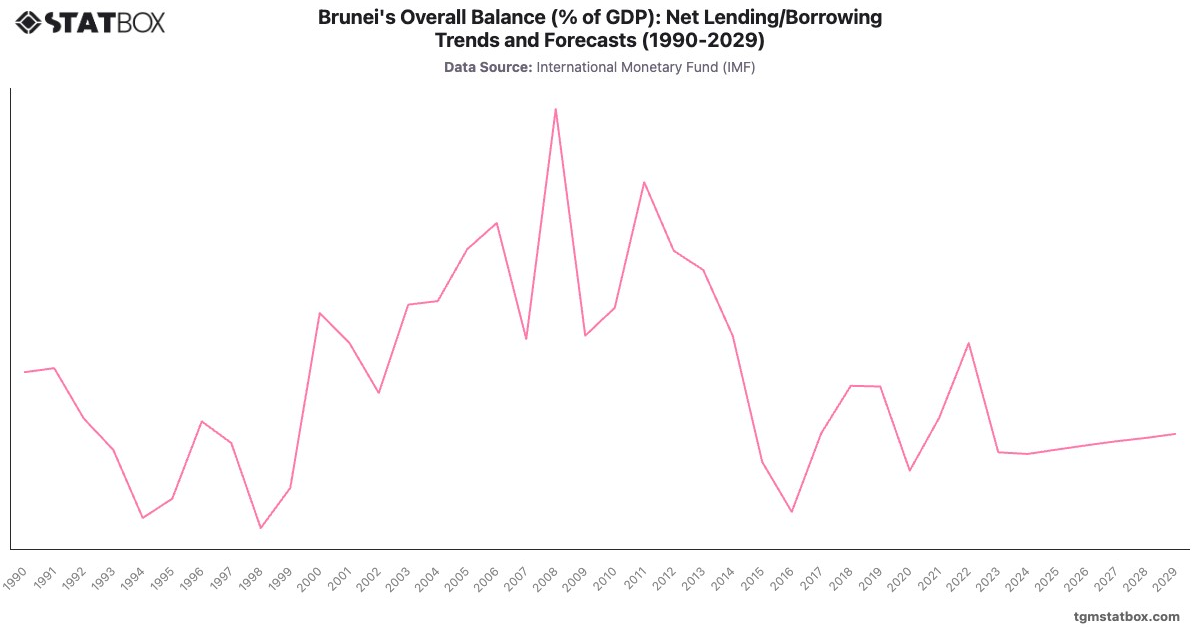
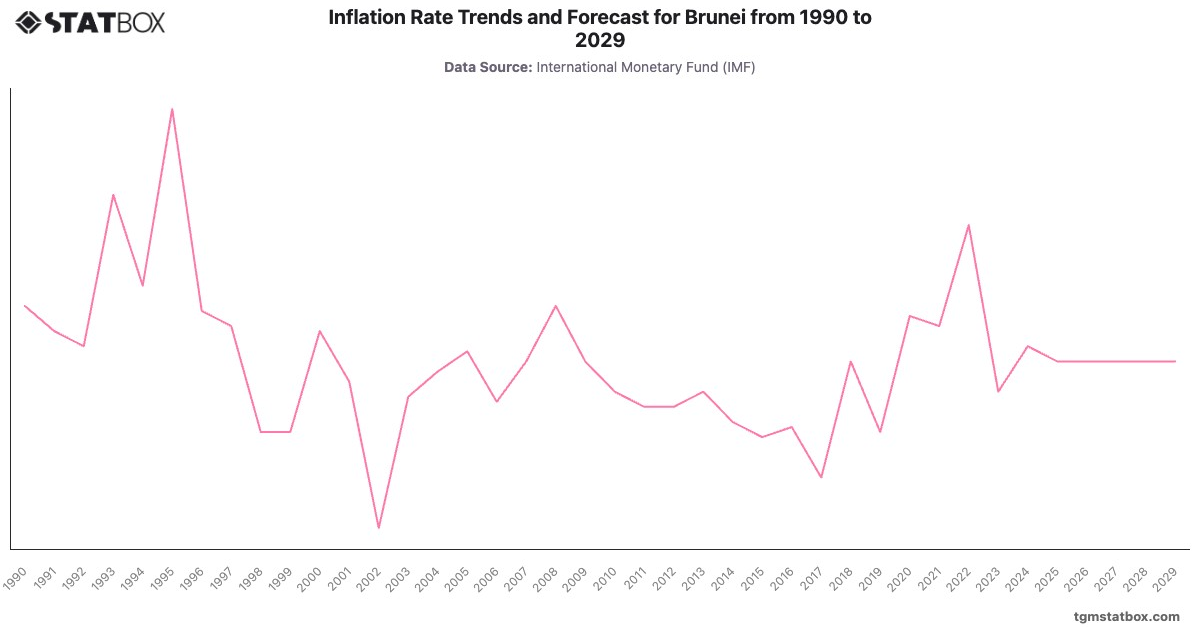
Discover additional trends and data on Brunei’s net lending/borrowing rate as a percentage of GDP, Brunei’s inflation rate forecast, Brunei’s industry sector share in GDP.