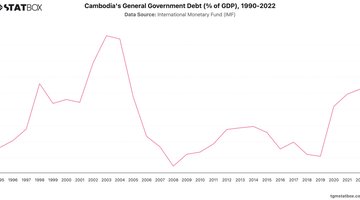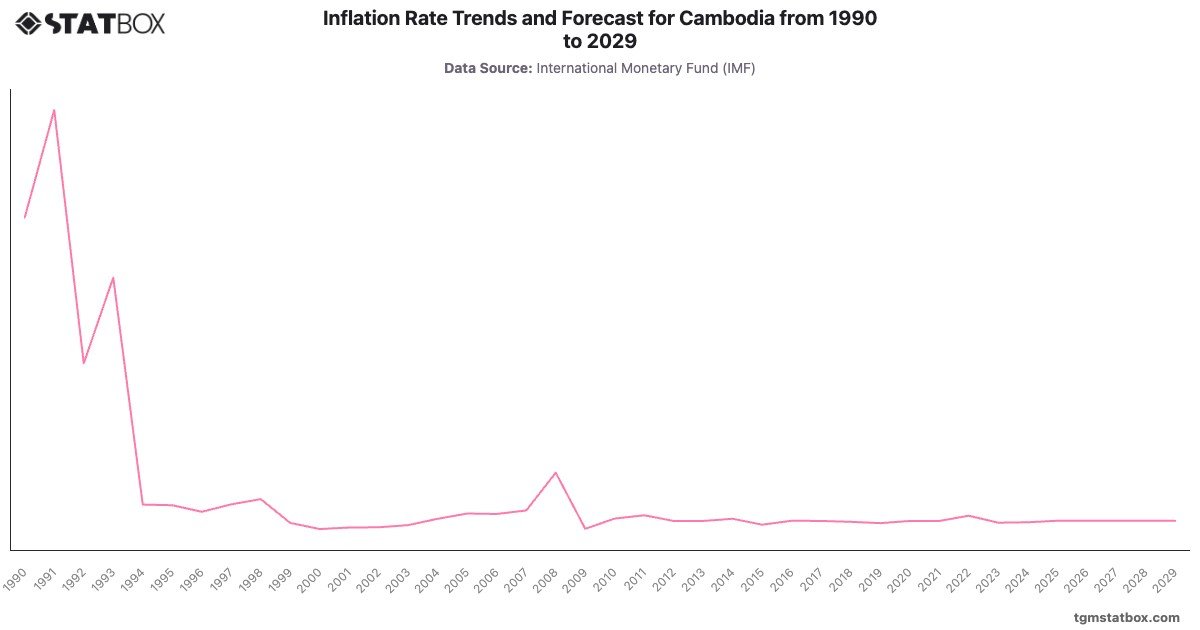
Cambodia experienced extreme inflation in the early 1990s, peaking at in 1991 due to post-conflict economic instability and currency devaluation. By 1994, inflation had dropped sharply to , aided by international aid and economic reforms. A second peak in 2008 saw inflation rise to , driven by global food and energy price shocks, before falling into negative territory in 2009 as the global financial crisis reduced demand.
Since 2010, inflation rates have remained relatively stable, fluctuating around 2-, reflecting a period of macroeconomic stability. Projections suggest inflation will stabilize at from 2026 onwards, supported by steady economic growth and prudent fiscal policies.
Since 2010, inflation rates have remained relatively stable, fluctuating around 2-, reflecting a period of macroeconomic stability. Projections suggest inflation will stabilize at from 2026 onwards, supported by steady economic growth and prudent fiscal policies.
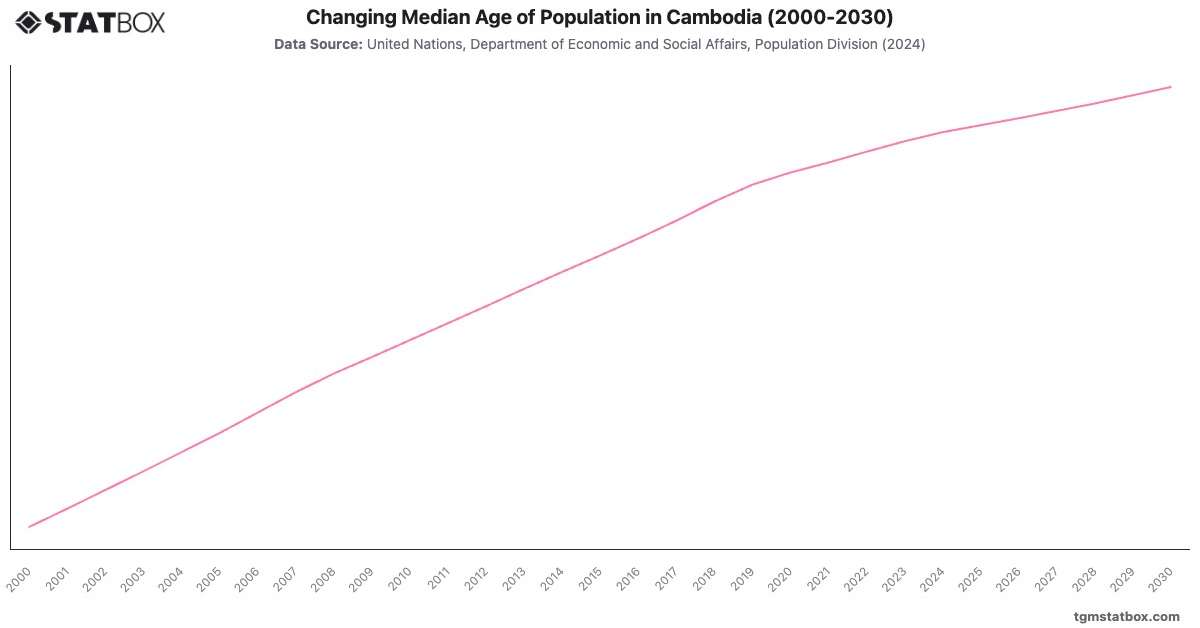
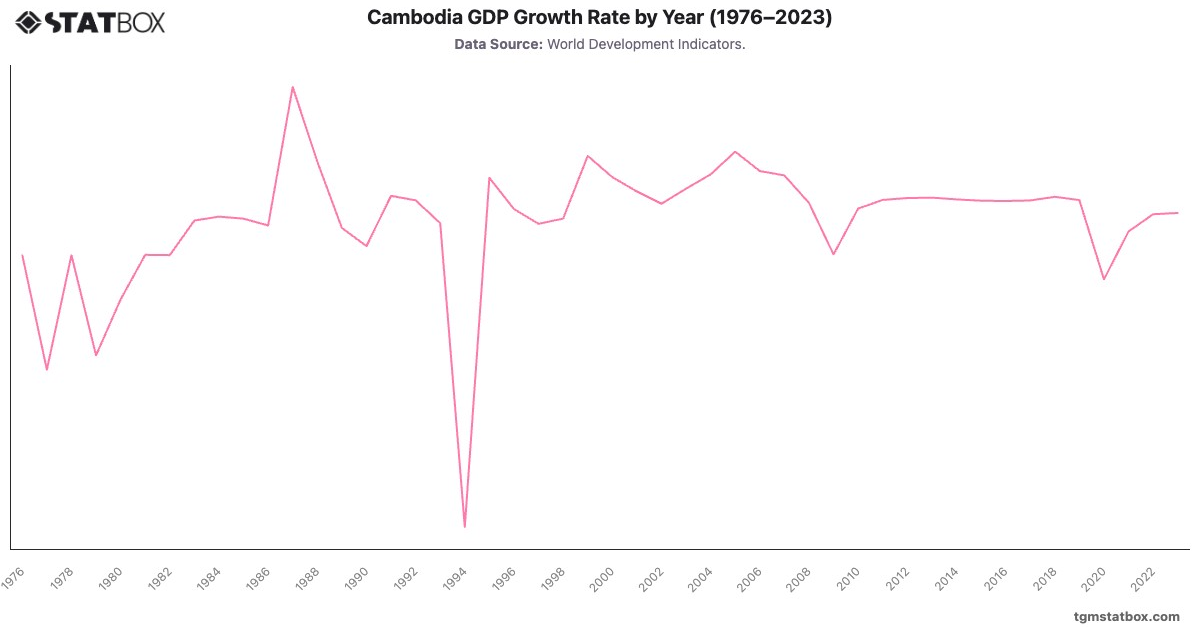
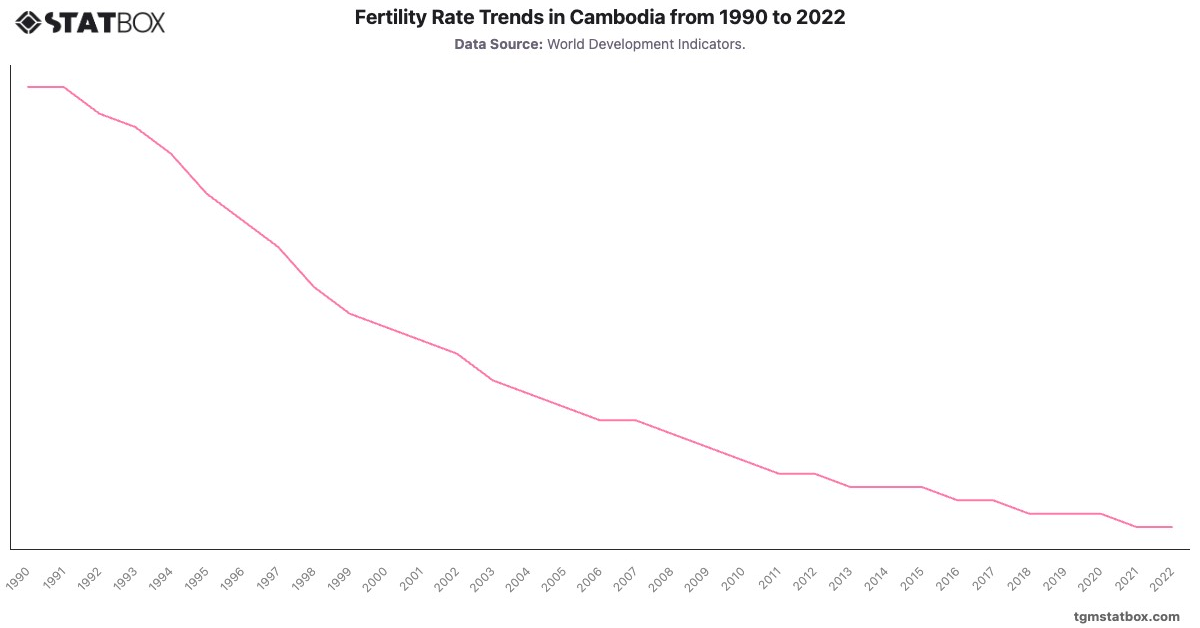
For additional information, visit statistics on Cambodia’s fertility rate trends, Cambodia’s annual GDP growth rate, Cambodia’s median age.