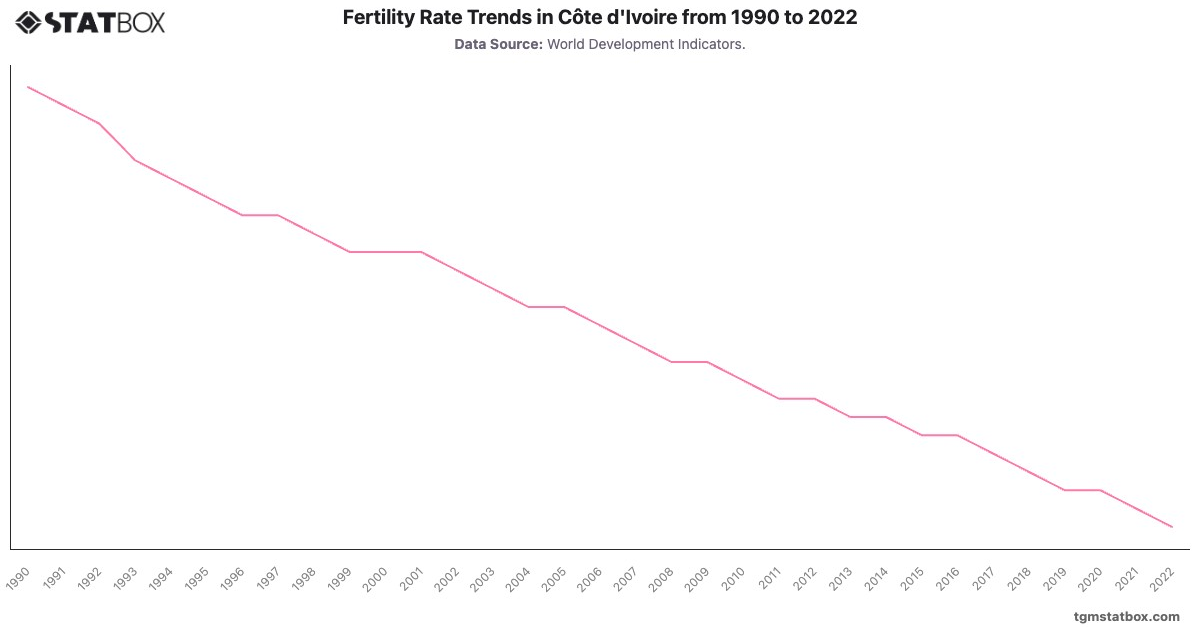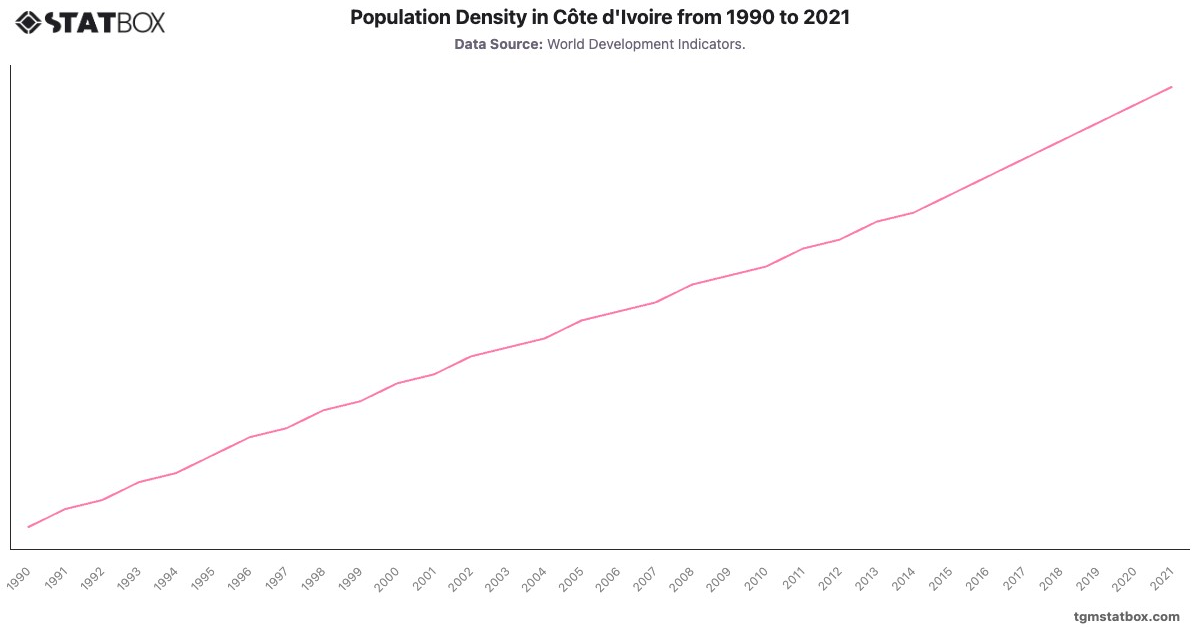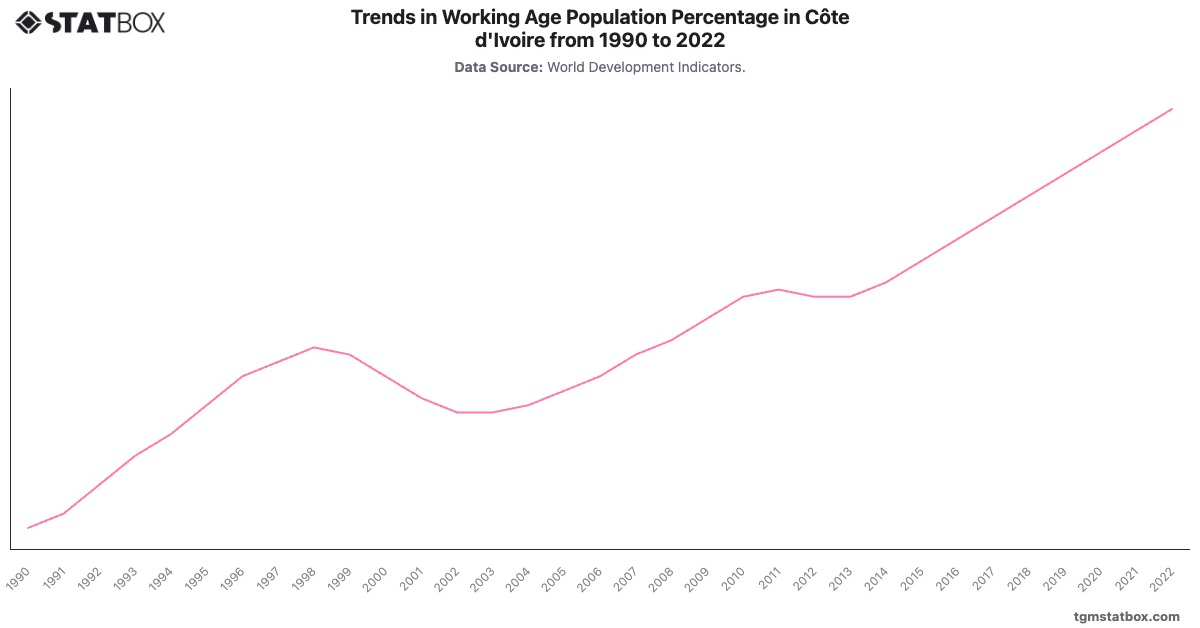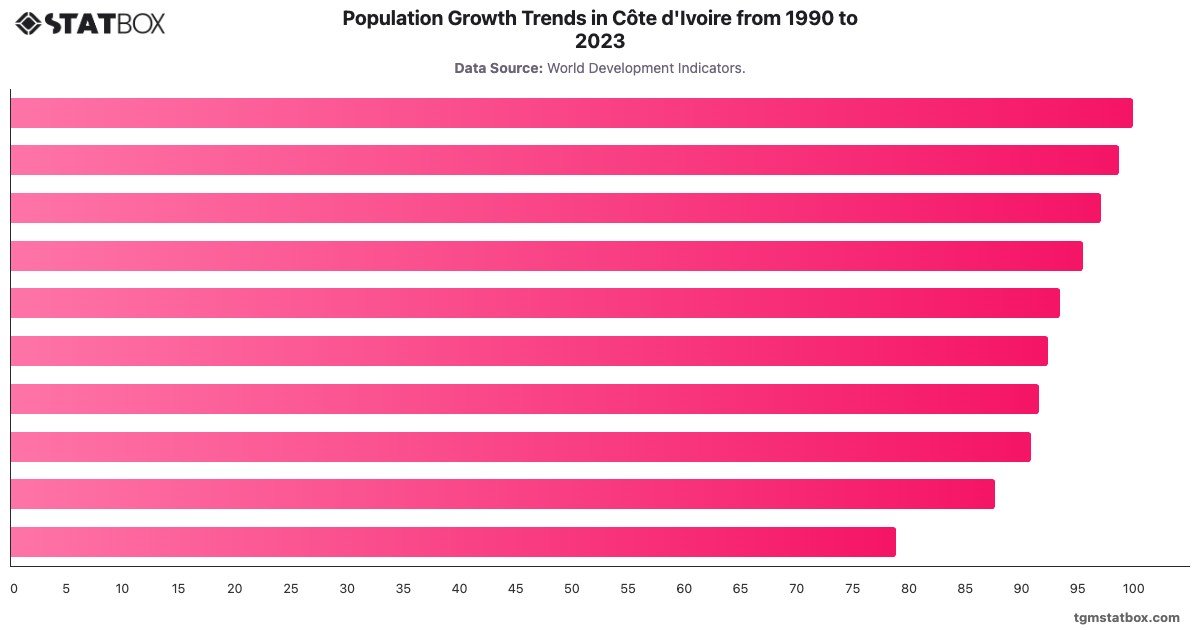
In 1990, Côte d'Ivoire experienced a high growth rate of , which began to gradually decline in the early 1990s, reaching by 1999 as political instability and economic pressures contributed to migration and changes in fertility rates. This downward trend continued into the 2000s, with growth rates dropping to by 2010.
A slight recovery in growth was observed in the mid-2010s, stabilizing around as the country began to experience economic improvements and a return to relative political stability, which encouraged population retention and development. Since then, growth has remained steady at from 2020 to 2023, signaling a maturing demographic with sustained yet moderated growth. These trends suggest future focus areas in resource management, education, and employment as Côte d'Ivoire transitions toward a more balanced population structure.
A slight recovery in growth was observed in the mid-2010s, stabilizing around as the country began to experience economic improvements and a return to relative political stability, which encouraged population retention and development. Since then, growth has remained steady at from 2020 to 2023, signaling a maturing demographic with sustained yet moderated growth. These trends suggest future focus areas in resource management, education, and employment as Côte d'Ivoire transitions toward a more balanced population structure.
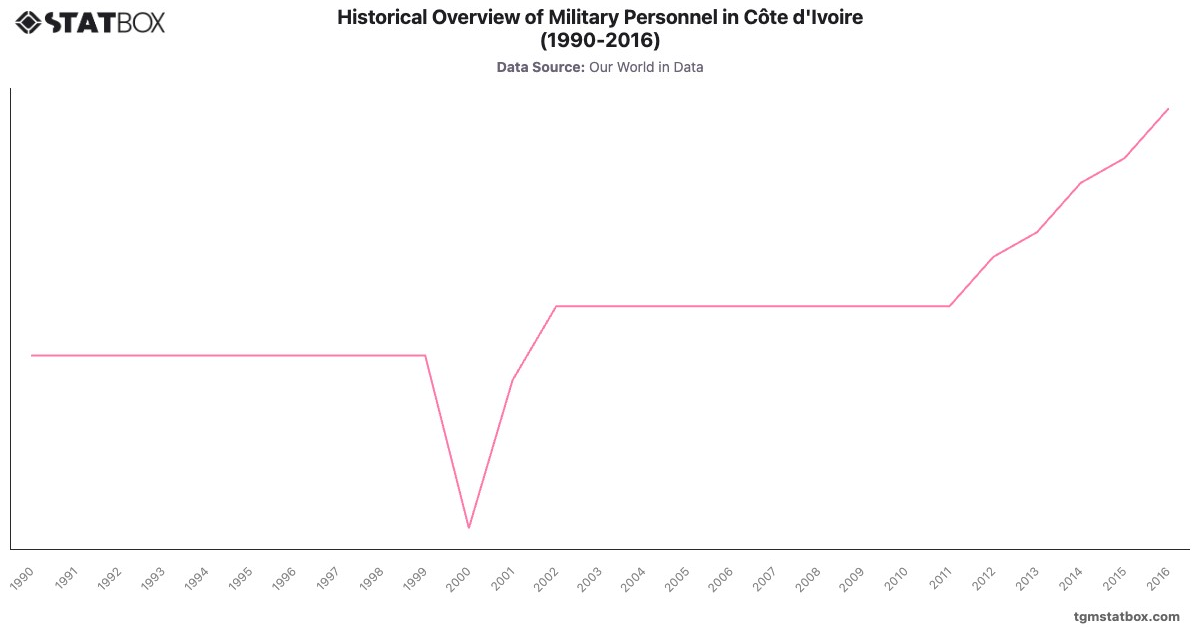
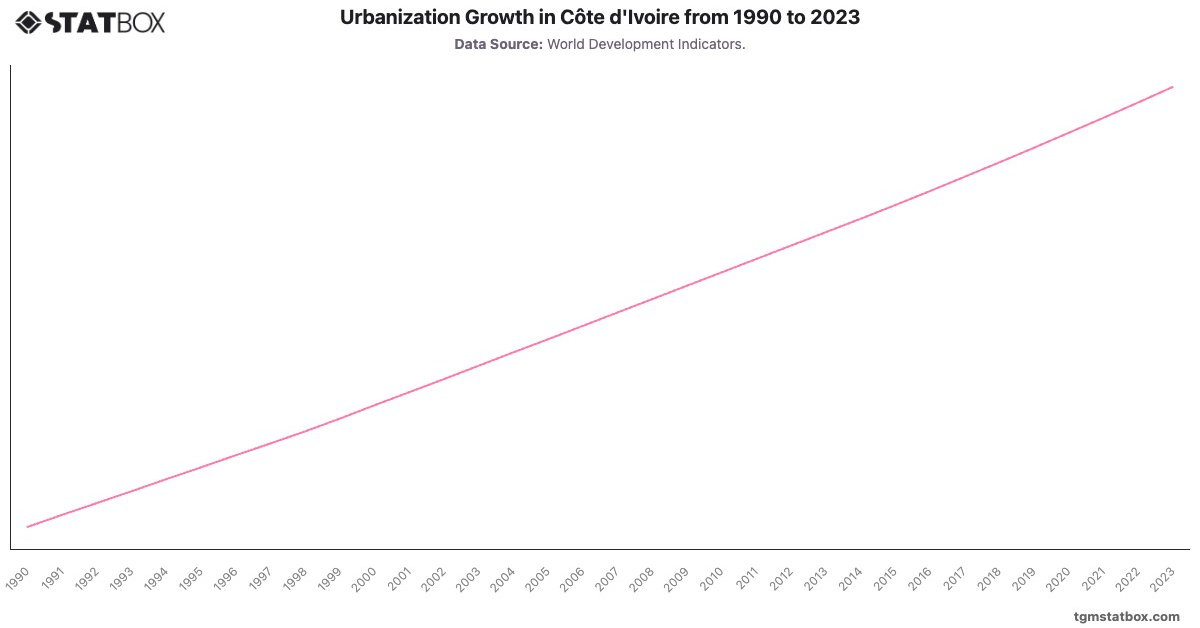
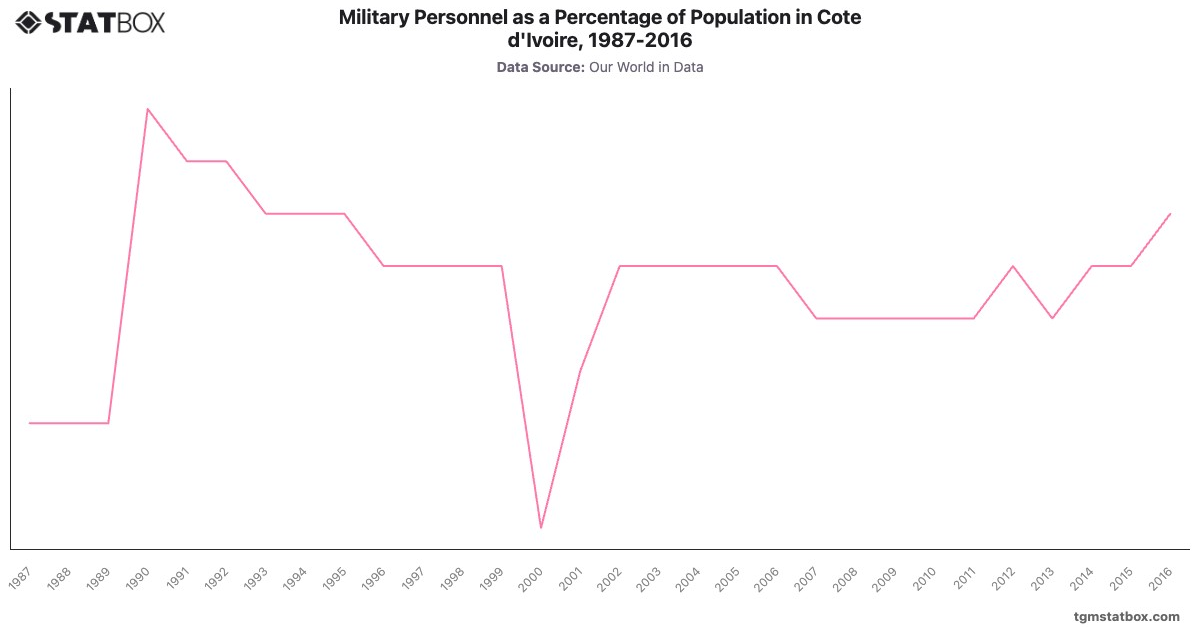
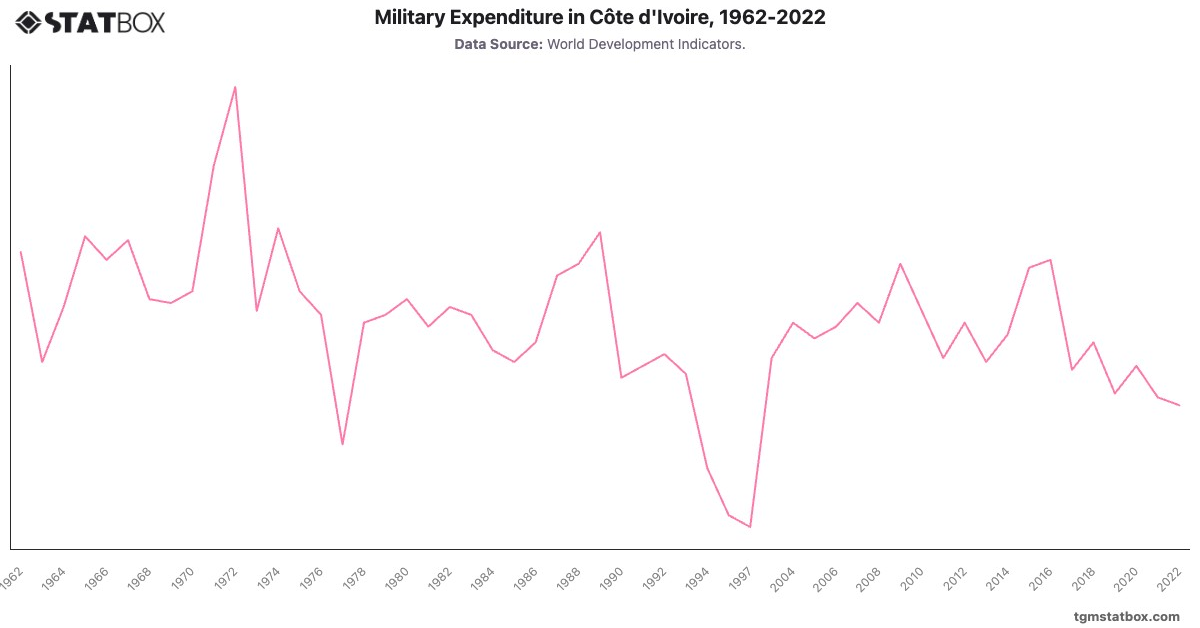
Gain a broader perspective by reviewing share of agriculture in Côte d'Ivoire’s GDP, urbanization rate in Côte d’Ivoire, Cote d’Ivoire’s military share of population.