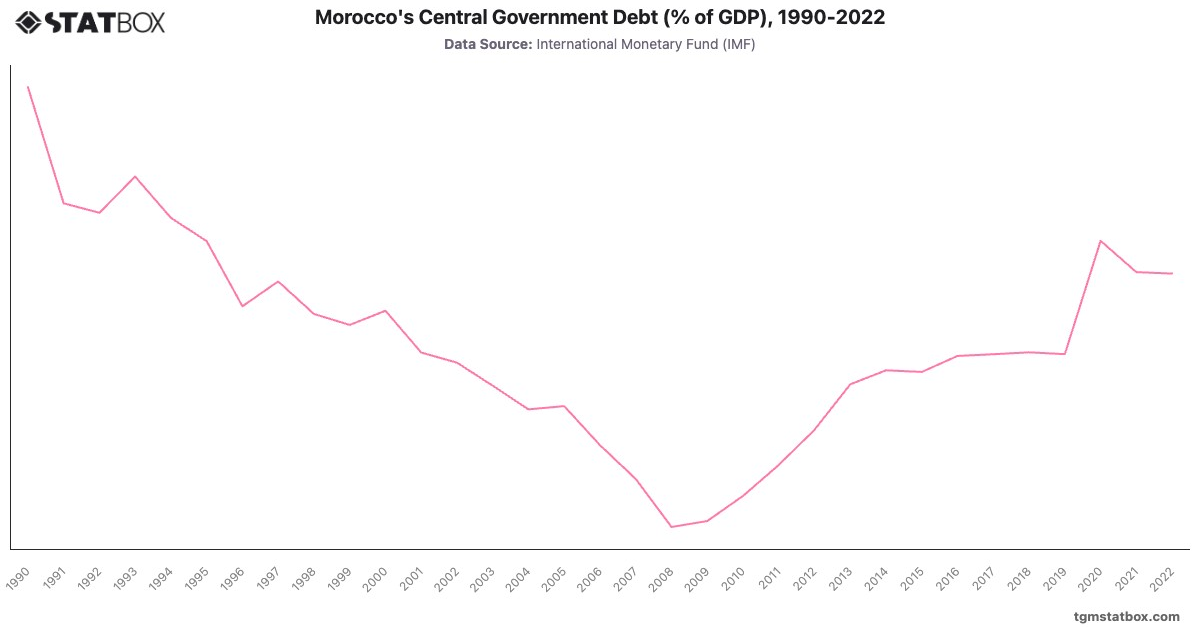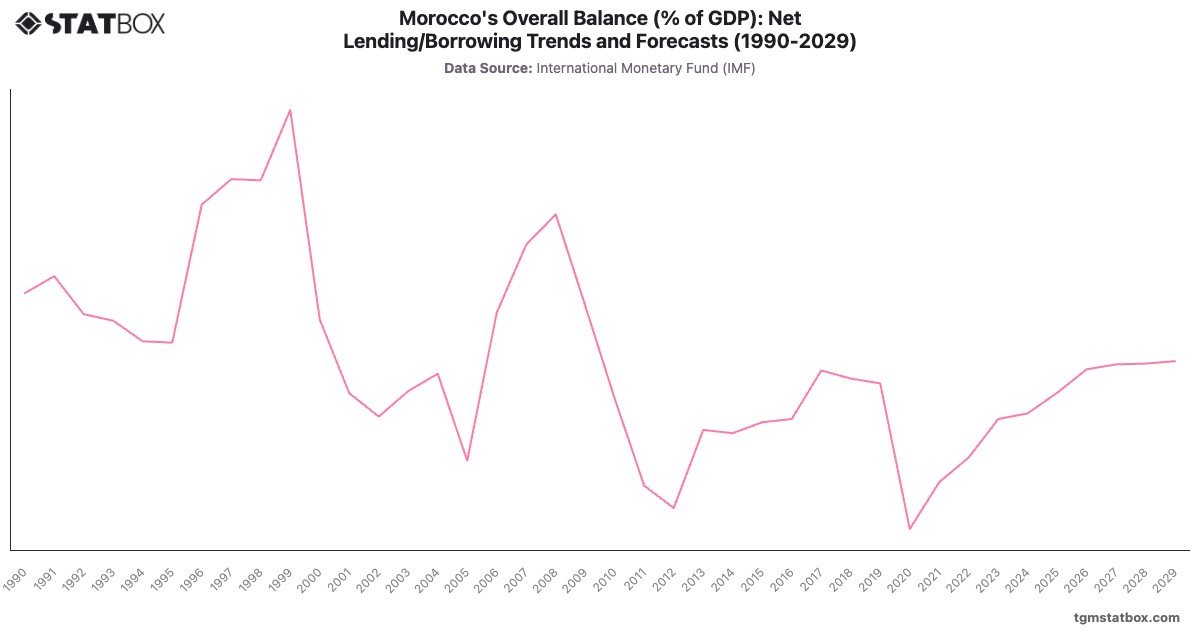
Morocco's fiscal performance has fluctuated over the decades, reflecting shifts in public spending and economic conditions. The 1990s saw manageable deficits, averaging around -, with occasional surpluses in the late 1990s, such as in 1999, attributed to improved fiscal policies. However, the early 2000s brought larger deficits, peaking at - in 2005, due to increased public expenditure.
The 2011 Arab Spring and global economic pressures widened deficits to - in 2012. Fiscal reforms and reduced subsidies brought gradual improvements, but the pandemic in 2020 pushed the deficit to -. Projections for 2029 indicate a steady narrowing to -, supported by ongoing fiscal consolidation and economic recovery efforts.
The 2011 Arab Spring and global economic pressures widened deficits to - in 2012. Fiscal reforms and reduced subsidies brought gradual improvements, but the pandemic in 2020 pushed the deficit to -. Projections for 2029 indicate a steady narrowing to -, supported by ongoing fiscal consolidation and economic recovery efforts.
For additional information, visit statistics on Morocco’s fertility rate trends, Morocco’s government debt as a percentage of GDP, Morocco’s population dynamics.