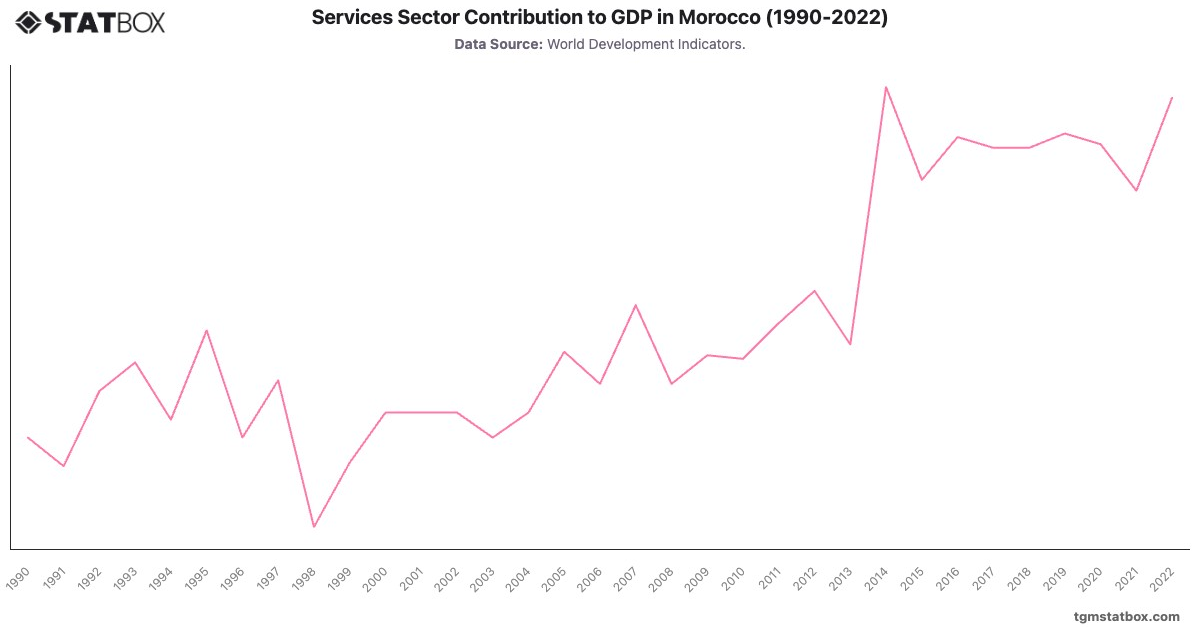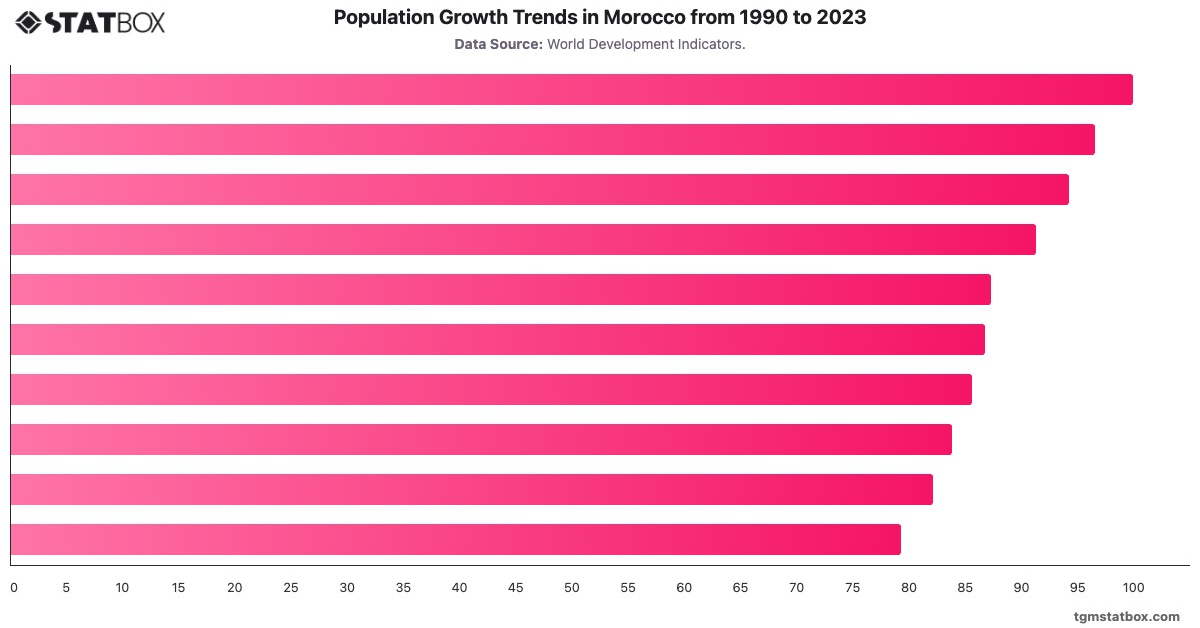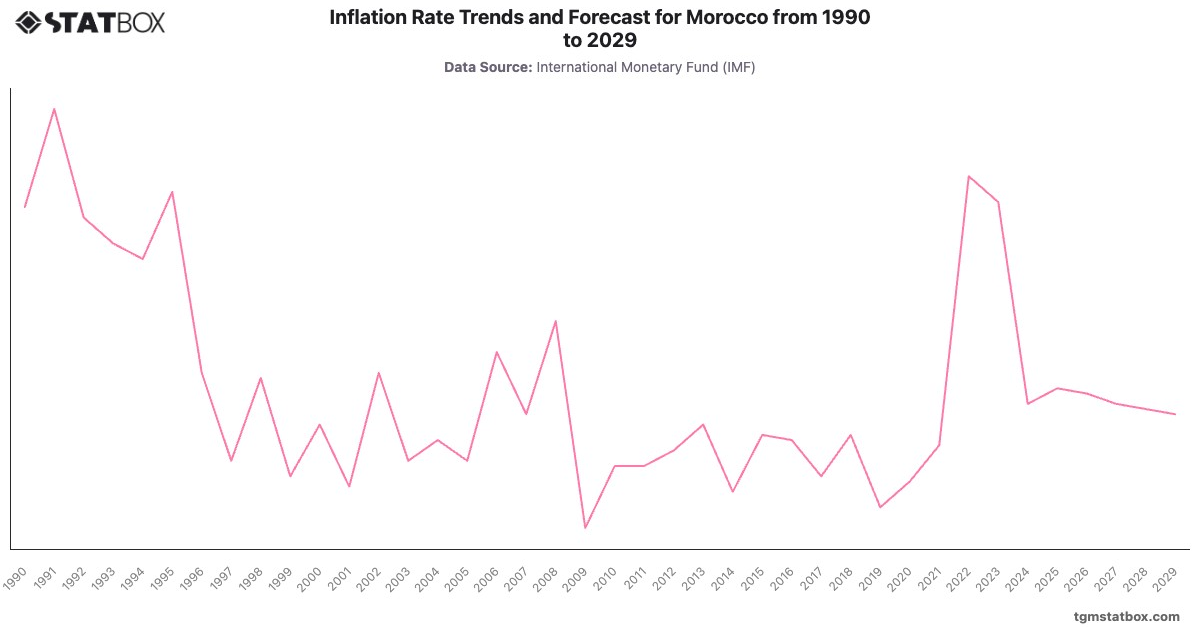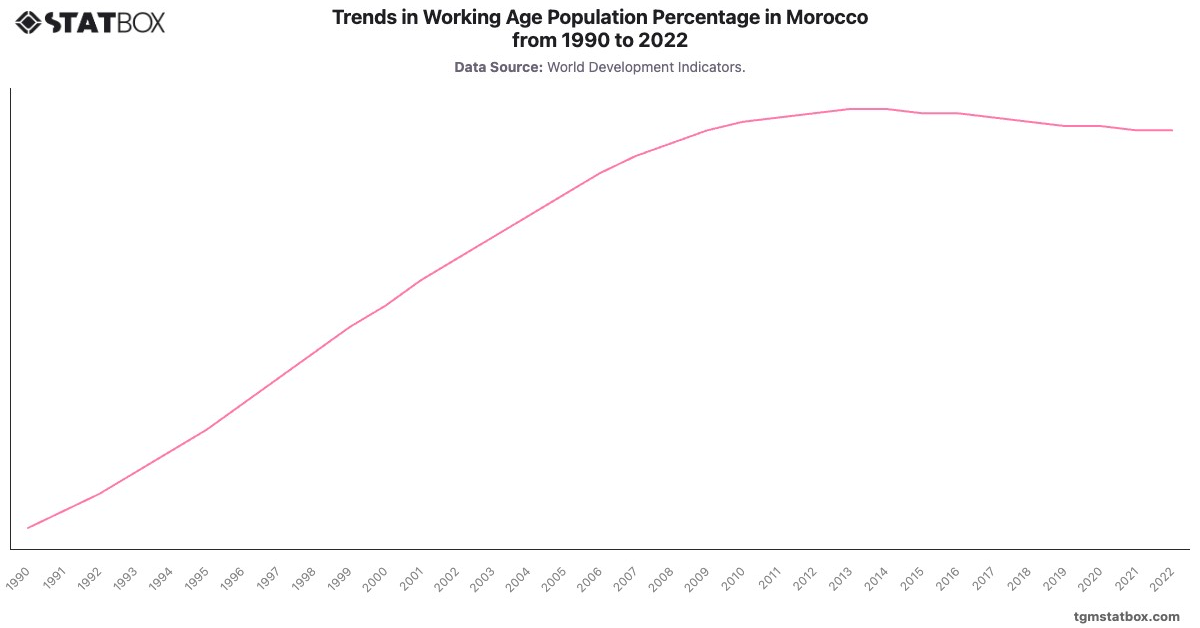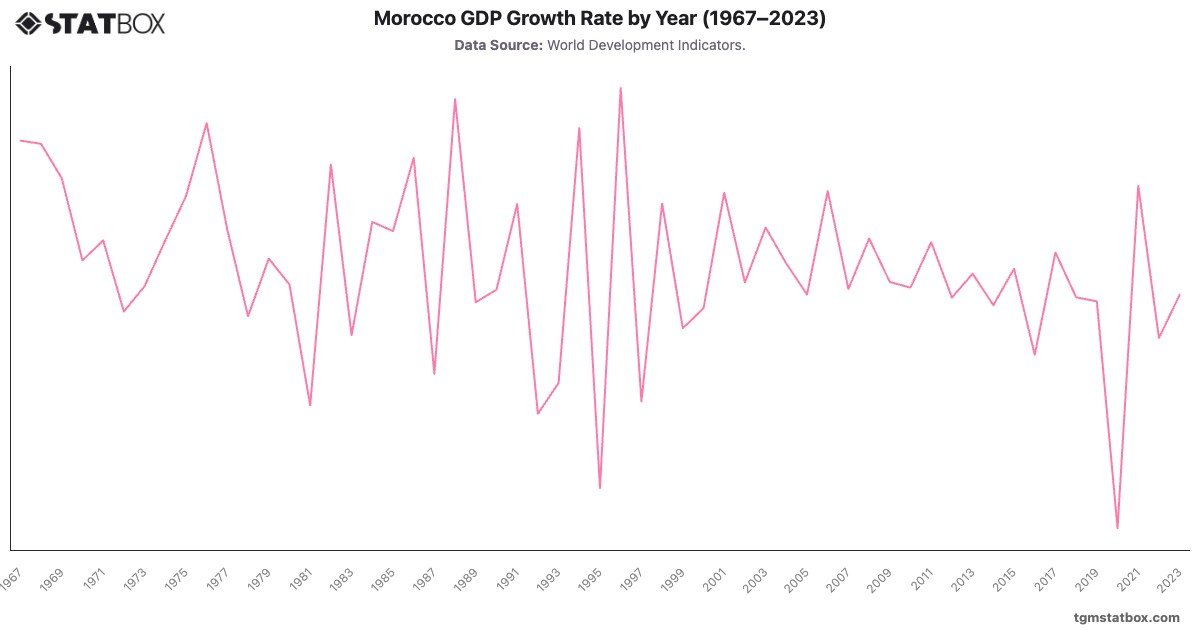
Morocco's GDP growth rate has varied significantly from 1961 to 2023, reflecting the country's economic developments and challenges. The late 1960s and early 1970s were marked by robust growth, with rates peaking at in 1976, driven by agricultural output and industrial development. However, the country also experienced downturns, such as a - contraction in 1981, influenced by global economic fluctuations.
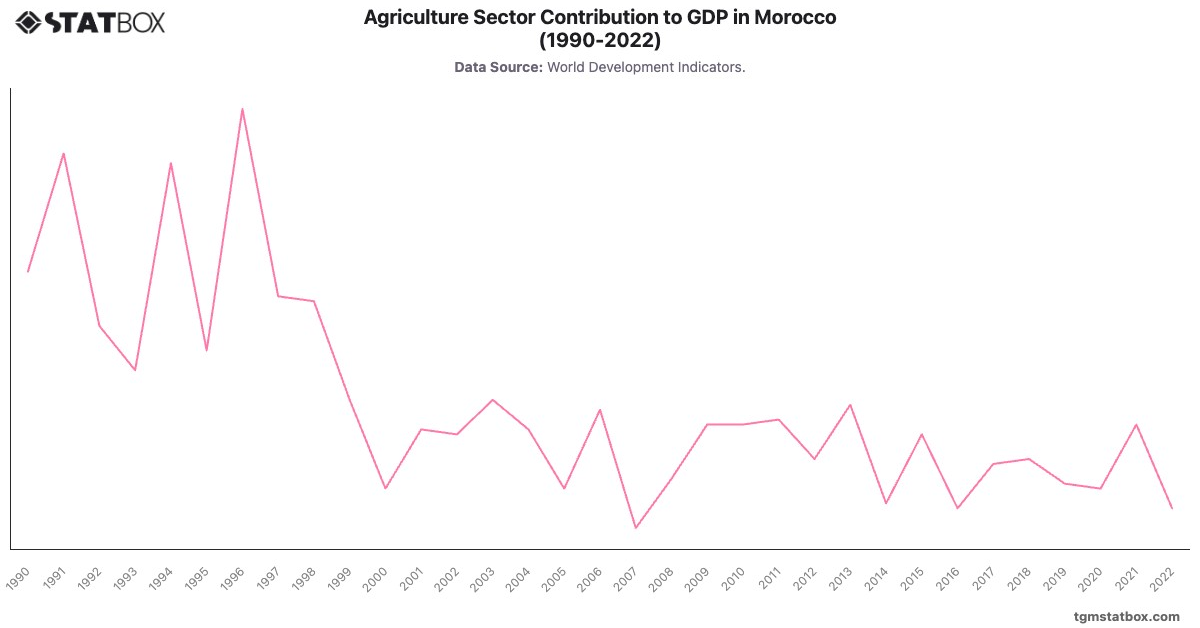
In the 1990s, Morocco experienced mixed growth, with fluctuations between positive and negative rates, peaking at in 1996. The 2000s, marked by significant investments in infrastructure and tourism, brought more stable growth to the country. In the 2010s, Morocco's economy stabilized, achieving growth rates between and . The country’s diversification efforts, particularly in renewable energy and manufacturing, contributed positively. However, the COVID-19 pandemic caused a significant contraction of - in 2020, prompting the need for recovery strategies.
As of 2021, the economy rebounded with an growth rate, followed by more modest growth of in 2022. In 2023, projections suggest further growth at , indicating a cautious but steady recovery trajectory for Morocco.
For a deeper dive into the topic, explore Morocco’s urbanization rate, Morocco’s yearly GDP, industry sector’s GDP share.