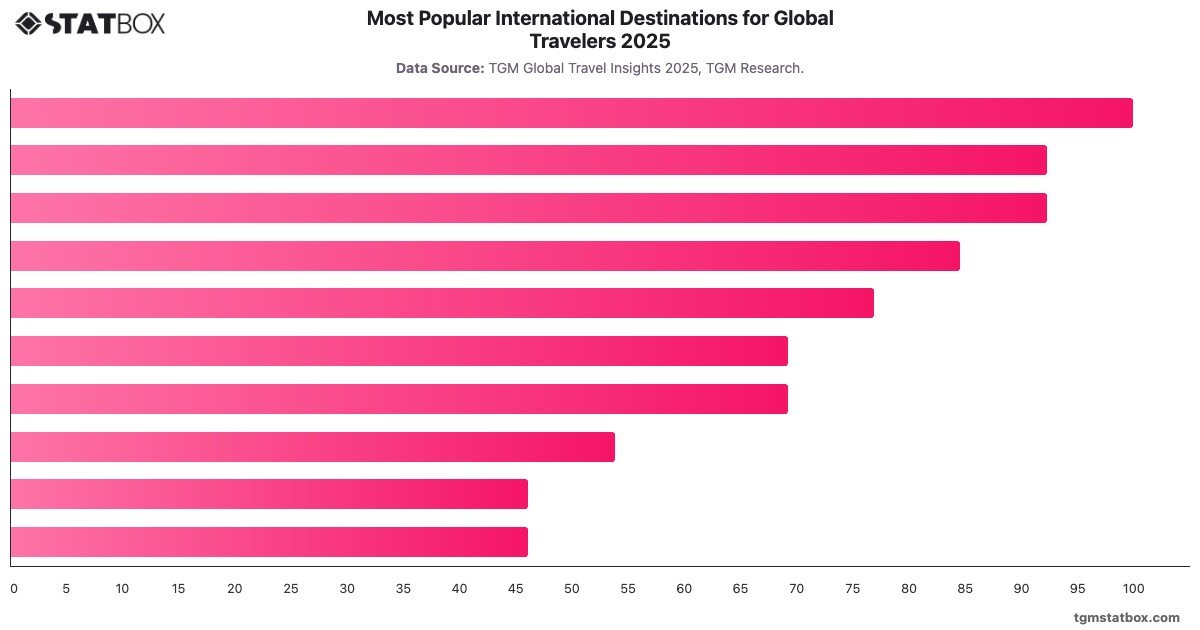
Western Europe’s fall from in 2023 to just in 2025 is loud. It doesn’t whisper change, it screams saturation. What was once the easy answer to post-COVID wanderlust may now be suffering from over-tourism fatigue, rising costs, or simply being checked “done”. Meanwhile, the Middle East and Southeast Asia quietly climb to second place, each pulling . Regional stability, luxury-meets-authenticity appeal, and cultural draw (think Saudi’s giga-projects or Thailand’s digital nomad visa) have repositioned them from niche to mainstream.North America dips from to , possibly reflecting the U.S. dollar’s strength and visa frictions. Unlike 2023’s front-loaded trends, travel interest has fragmented. No single region crosses even in 2025. This isn’t just about where people fly, it’s about a global appetite for variety, driven by shifting economies, new tourism investments, and a traveler who now demands fresh stories, not just familiar sights.
For more insights, discover related statistics on global travel information sources, popular travel styles, preferred travel booking methods.