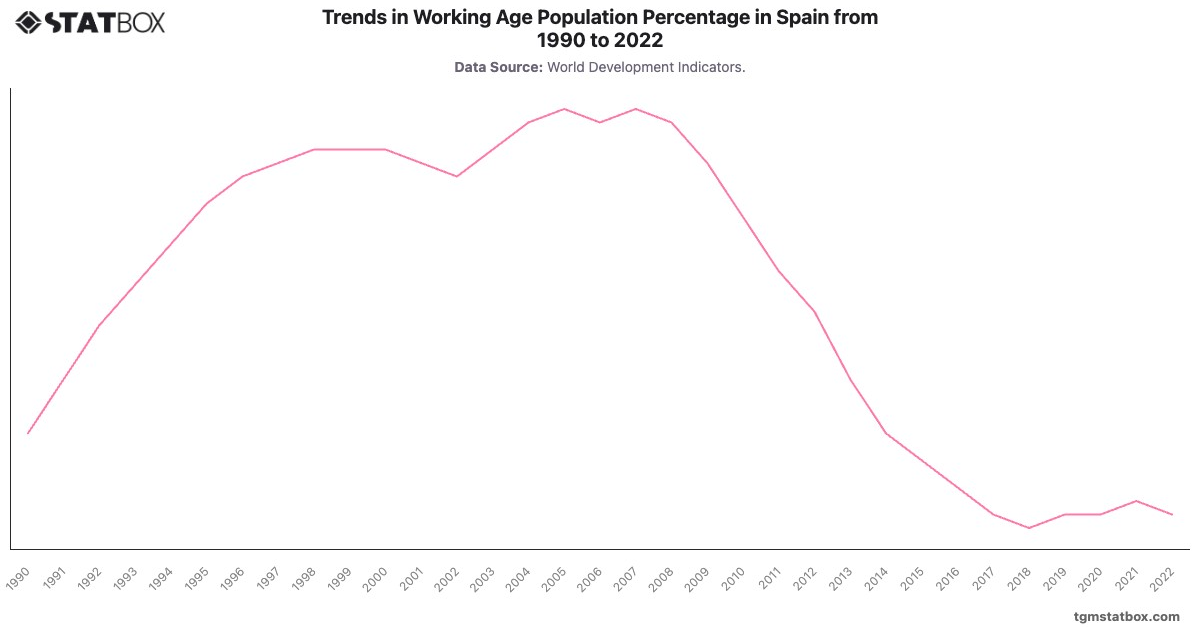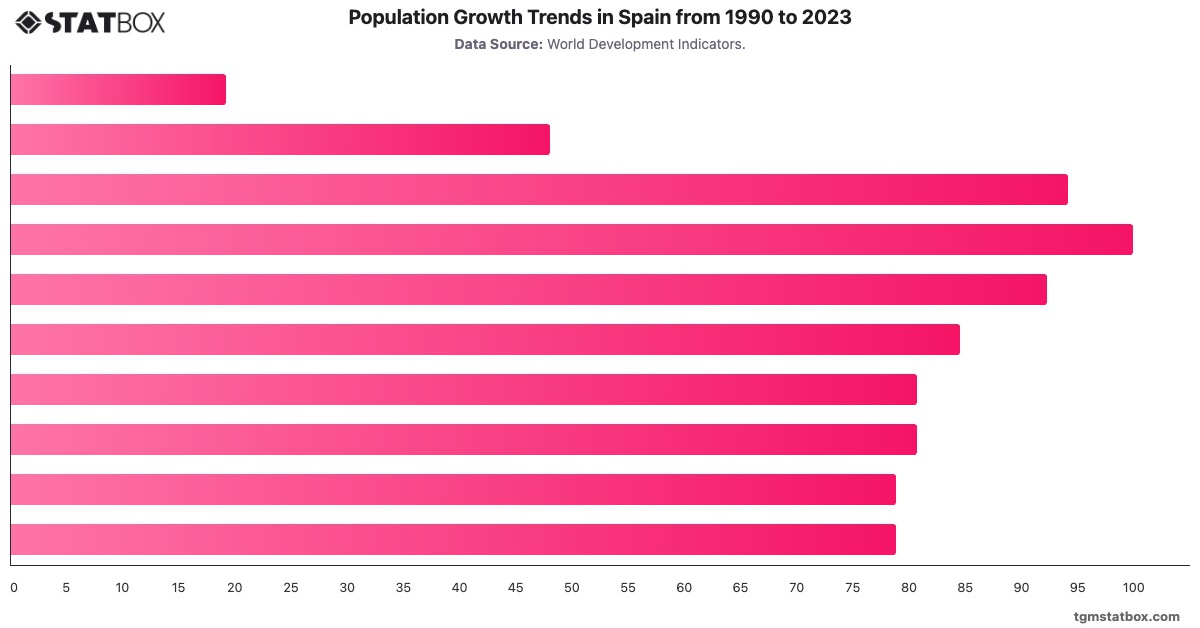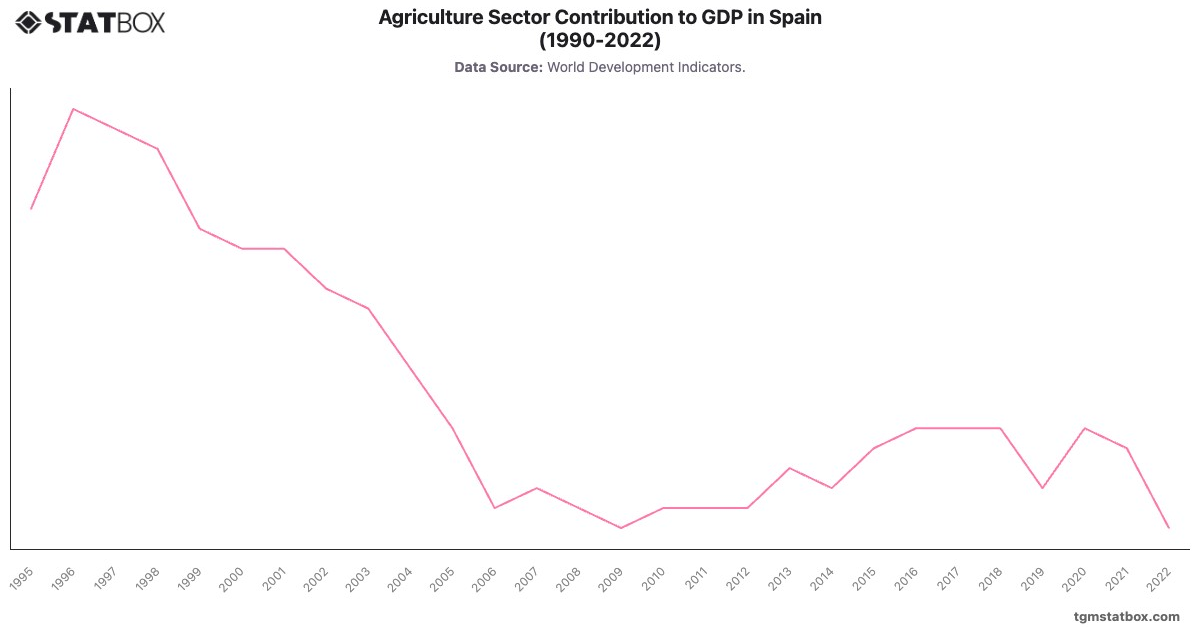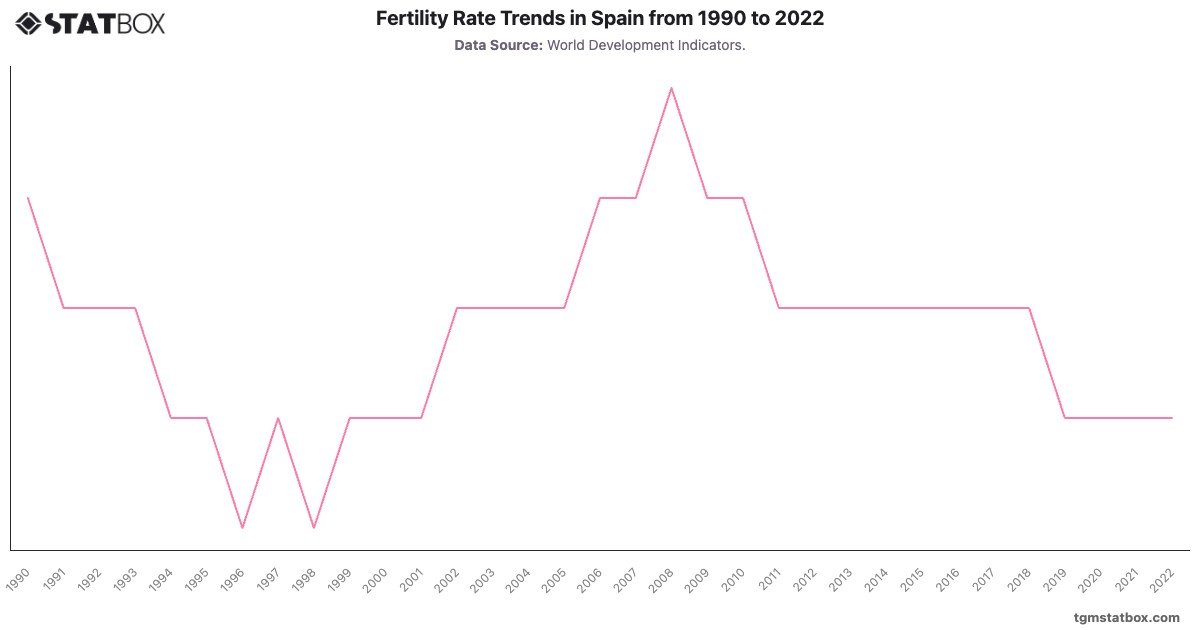
Spain's fertility rate exhibited steady fluctuations between 1990 and 2022, with a gradual decline in the early years, stabilizing afterward. In 1990, the fertility rate was 1.4 children per woman, dipping slightly to 1.1 in 1996 and 1998. This period of decline correlates with social and economic shifts, including higher education levels and labor market changes impacting family planning choices.
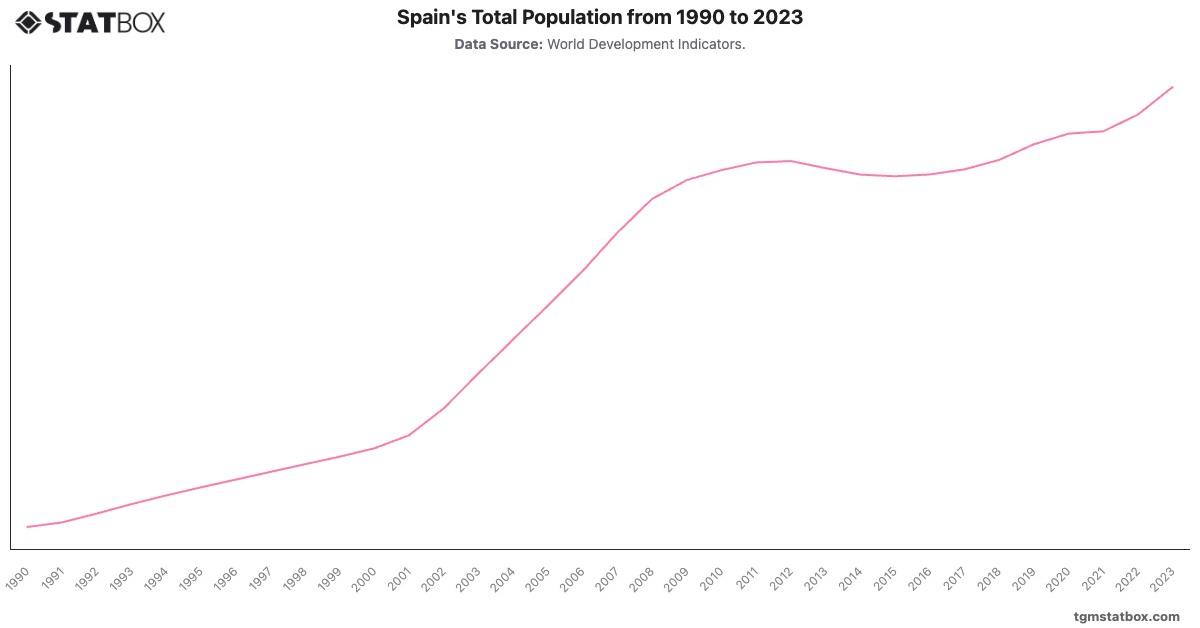
From 2000 onward, the rate stabilized at around 1.2–1.4. Notably, the slight uptick in 2006–2008, reaching 1.5 in 2008, aligns with increased immigration and a broader population base contributing to higher birth rates. However, post-2010, the rate plateaued at 1.2, reflecting Spain's aging population and continued economic challenges influencing family size decisions.
From 2000 onward, the rate stabilized at around 1.2–1.4. Notably, the slight uptick in 2006–2008, reaching 1.5 in 2008, aligns with increased immigration and a broader population base contributing to higher birth rates. However, post-2010, the rate plateaued at 1.2, reflecting Spain's aging population and continued economic challenges influencing family size decisions.
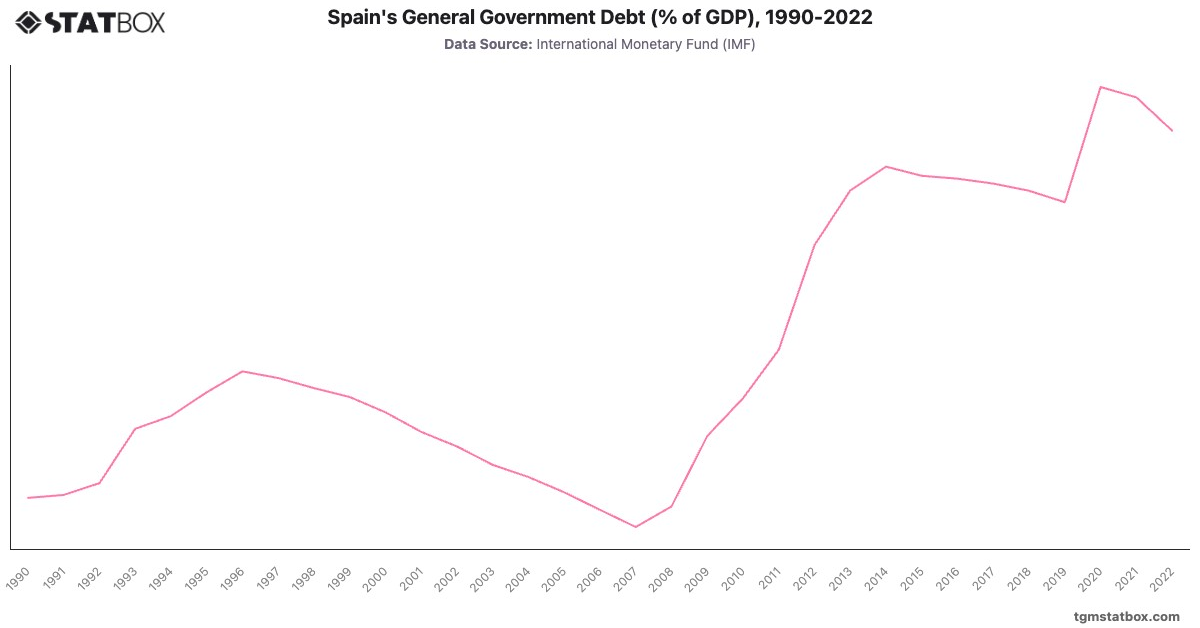
Gain a broader perspective by reviewing Spain’s population count, Spain’s government debt to GDP ratio, Spain’s median age trend.