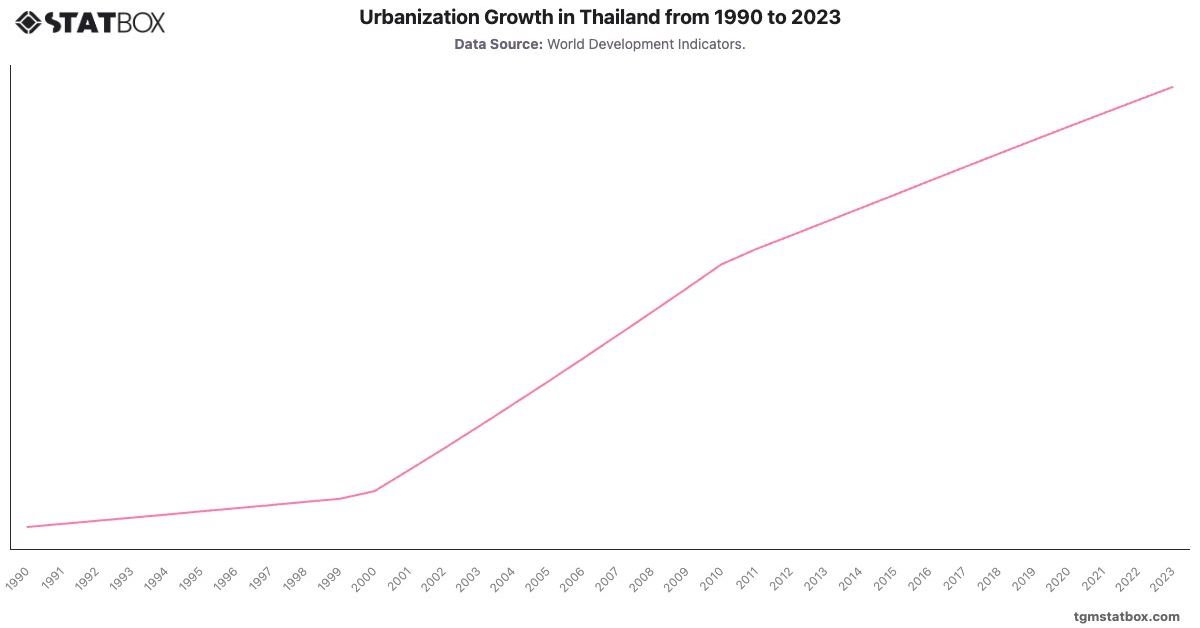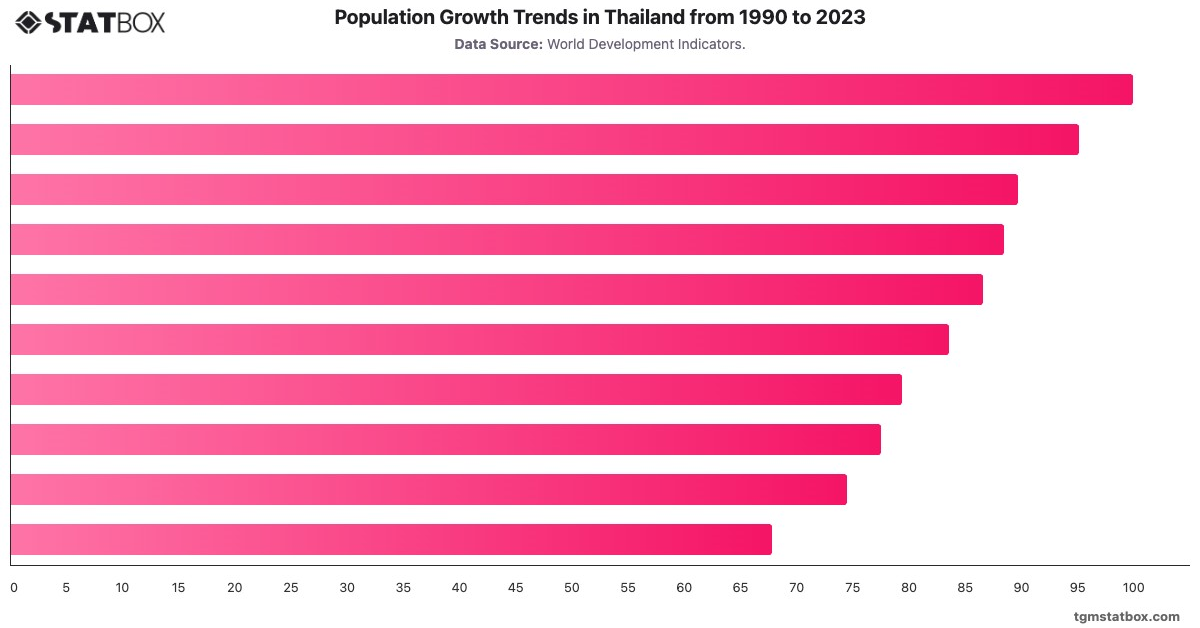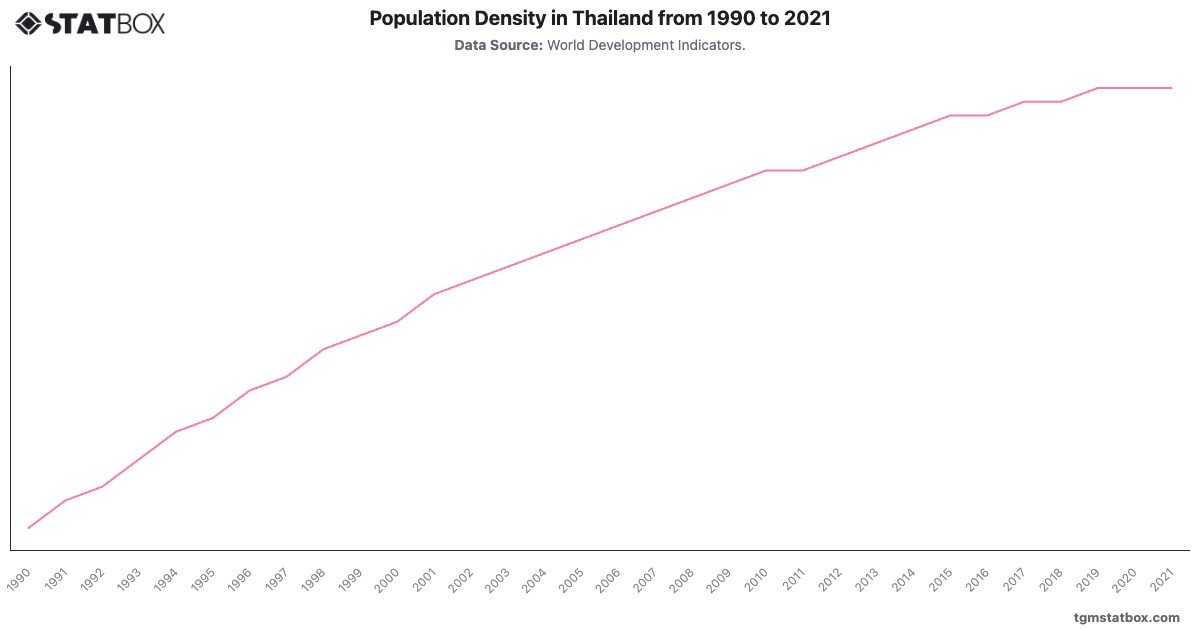
Thailand’s population density rose from 108 people per square kilometer in 1990 to 140 by 2021, reflecting steady urbanization. Major cities like Bangkok, Chiang Mai, and Pattaya saw notable population growth as people migrated from rural areas to cities seeking better job opportunities. Thailand's growing tourism industry also contributed to this trend, particularly in cities that became economic hubs due to visitor influx.
While urban areas show higher density, rural regions have kept the national average relatively moderate. As Thailand continues to urbanize, population density is likely to rise in its metropolitan areas, reflecting economic development and migration patterns within the country.
While urban areas show higher density, rural regions have kept the national average relatively moderate. As Thailand continues to urbanize, population density is likely to rise in its metropolitan areas, reflecting economic development and migration patterns within the country.
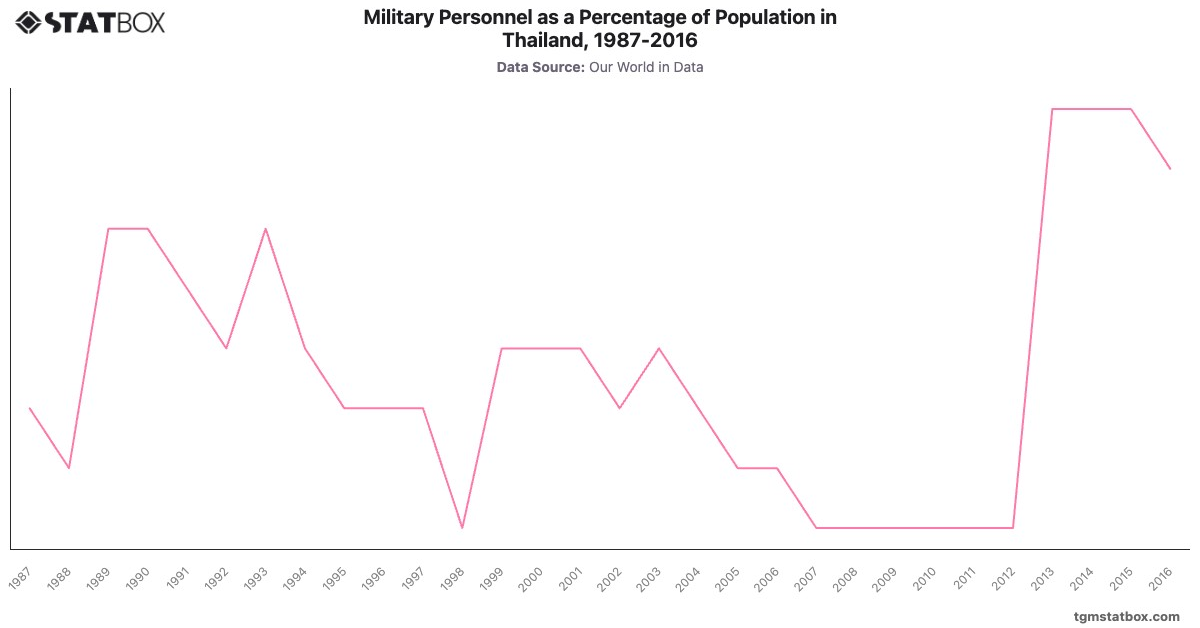
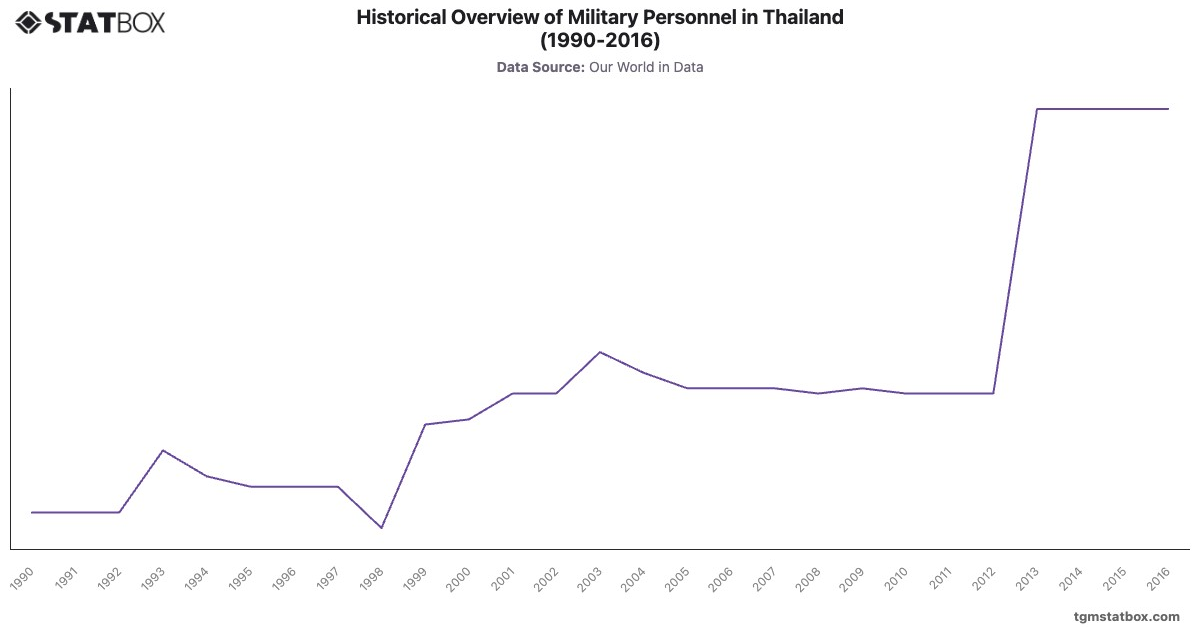
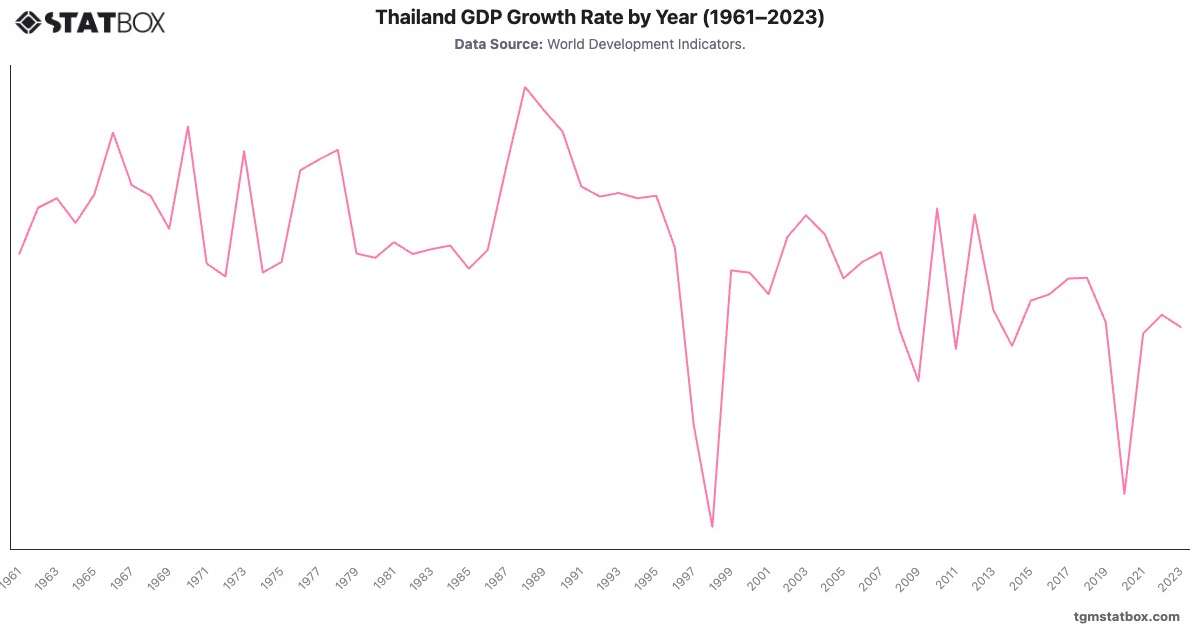
For a deeper dive into the topic, explore Thailand’s military population ratio, Thailand’s annual GDP growth rate, Thailand’s population growth overview.