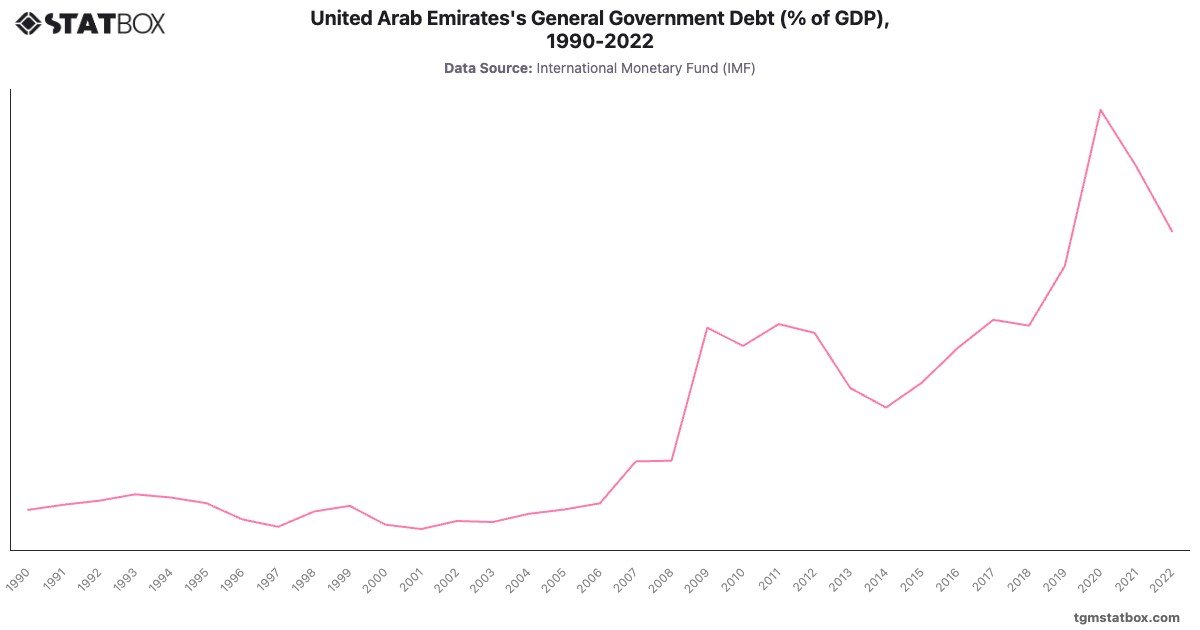
The UAE maintained relatively low levels of government debt from 1990 through the early 2000s, with debt-to-GDP ratios consistently under . During this period, strong oil revenues allowed the UAE to fund government initiatives without substantial borrowing. Debt began to rise modestly in 2007, reaching , due to increased infrastructure investment to support economic diversification and tourism ahead of the 2008 financial crisis.
The debt ratio peaked at in 2011 following the global economic downturn and a period of slowed growth. Subsequently, debt levels remained manageable, hovering around 15- until 2019, when oil price volatility prompted further increases. The impact of COVID-19 caused a sharp spike to in 2020 as the UAE responded with economic support measures. By 2022, debt decreased to as oil prices recovered and economic activities resumed.
The debt ratio peaked at in 2011 following the global economic downturn and a period of slowed growth. Subsequently, debt levels remained manageable, hovering around 15- until 2019, when oil price volatility prompted further increases. The impact of COVID-19 caused a sharp spike to in 2020 as the UAE responded with economic support measures. By 2022, debt decreased to as oil prices recovered and economic activities resumed.
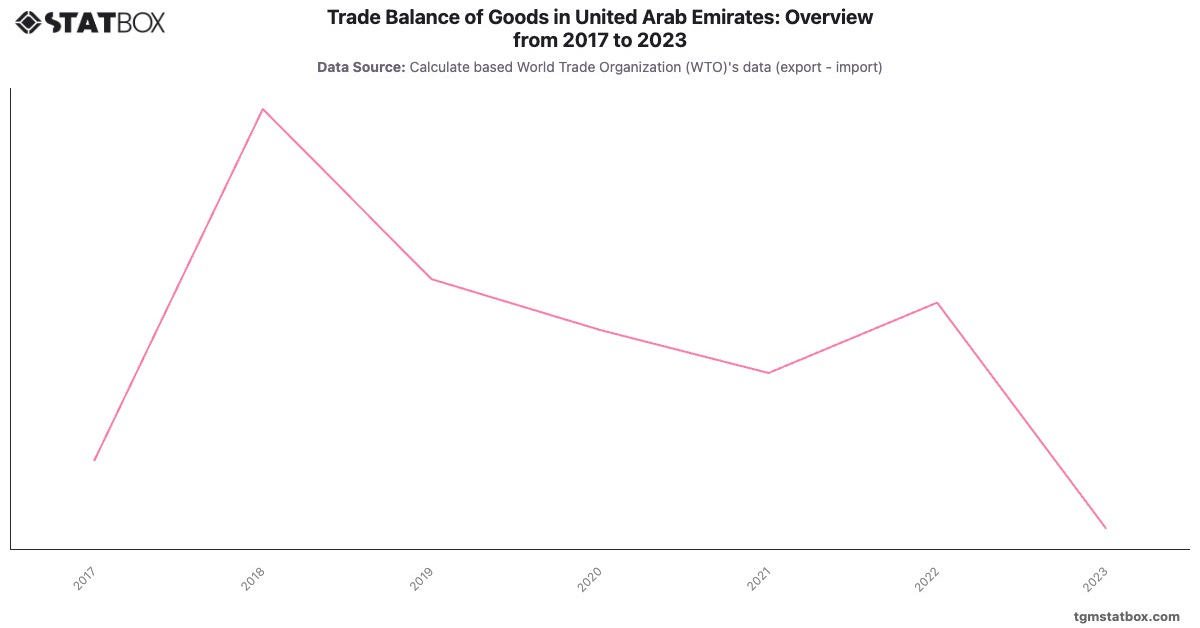
Discover additional trends and data on UAE’s industry sector share in GDP, UAE trade goods balance, United Arab Emirates export value.