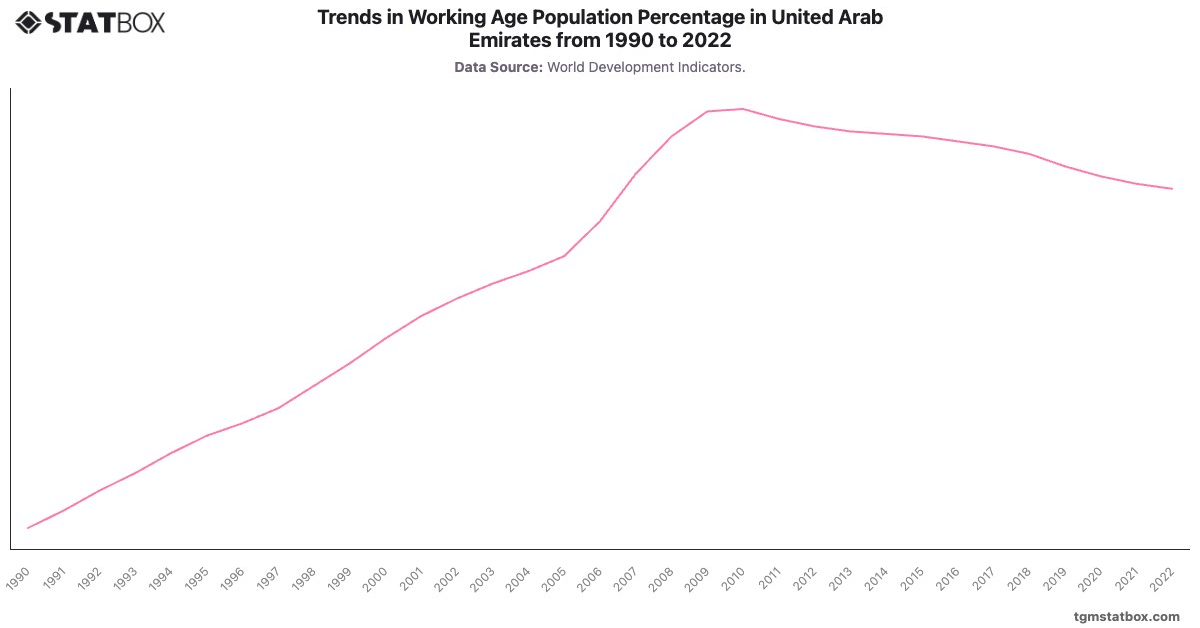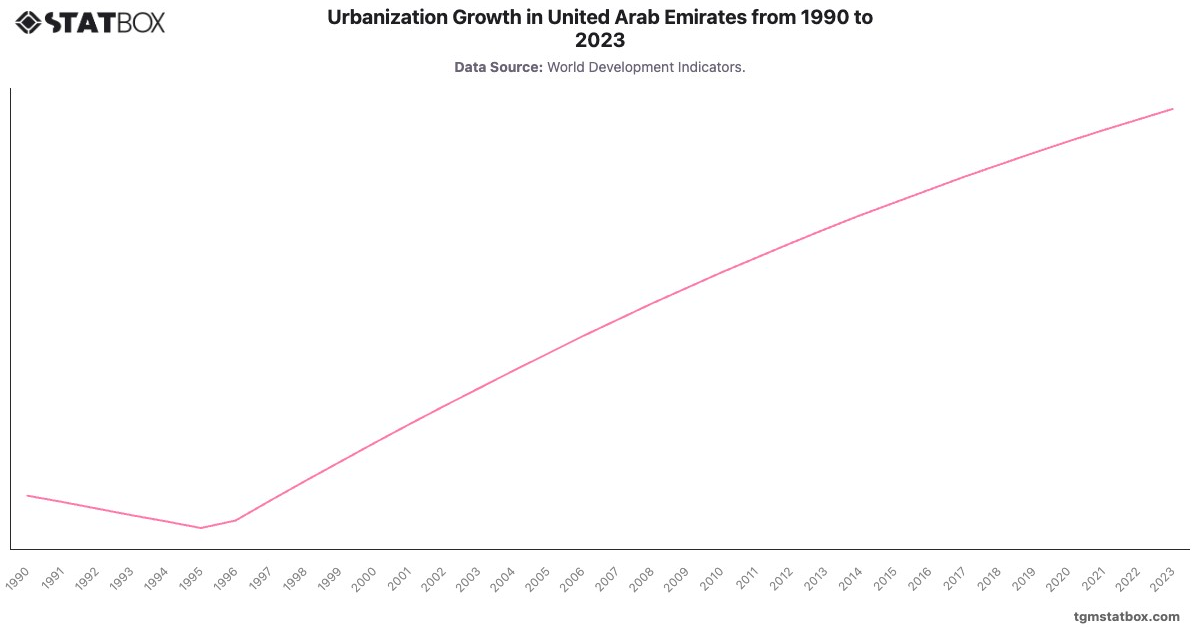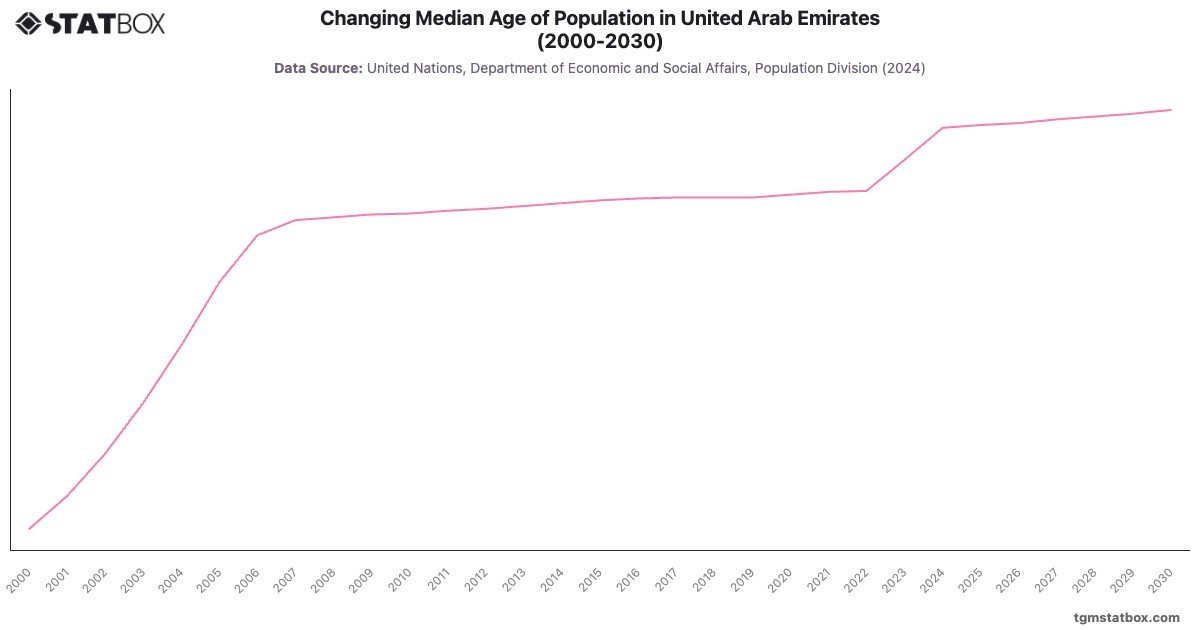
The United Arab Emirates (UAE) saw its median age rise moderately from 27.3 years in 2000 to an estimated 31.8 years by 2030. The relatively younger median age, compared to global trends, is partly due to a significant influx of younger expatriate workers drawn to the country’s urban centers. Urbanization has transformed the UAE’s population structure, with over of residents living in urban areas, where economic opportunities attract a younger, working-age demographic.
From 2008 onward, the median age stabilized around 30.8 years, due to immigration policies and labor market demands. This stability reflects the UAE’s unique demographic, driven by economic migration patterns that offset natural aging trends. The expected gradual increase to 31.8 years by 2030 signals the UAE's continued reliance on a younger workforce, particularly in urban areas that require a dynamic labor force to support its growth.
From 2008 onward, the median age stabilized around 30.8 years, due to immigration policies and labor market demands. This stability reflects the UAE’s unique demographic, driven by economic migration patterns that offset natural aging trends. The expected gradual increase to 31.8 years by 2030 signals the UAE's continued reliance on a younger workforce, particularly in urban areas that require a dynamic labor force to support its growth.
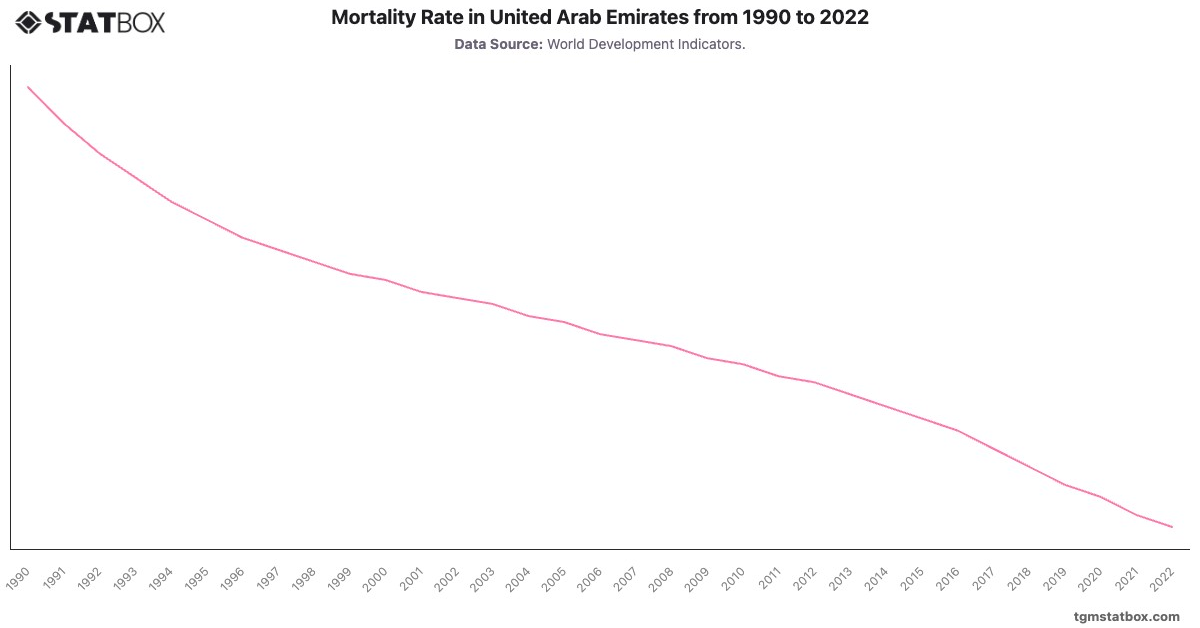
For a broader context, visit other statistics on UAE military spending, UAE’s mortality rate trend, UAE’s urbanization rate.