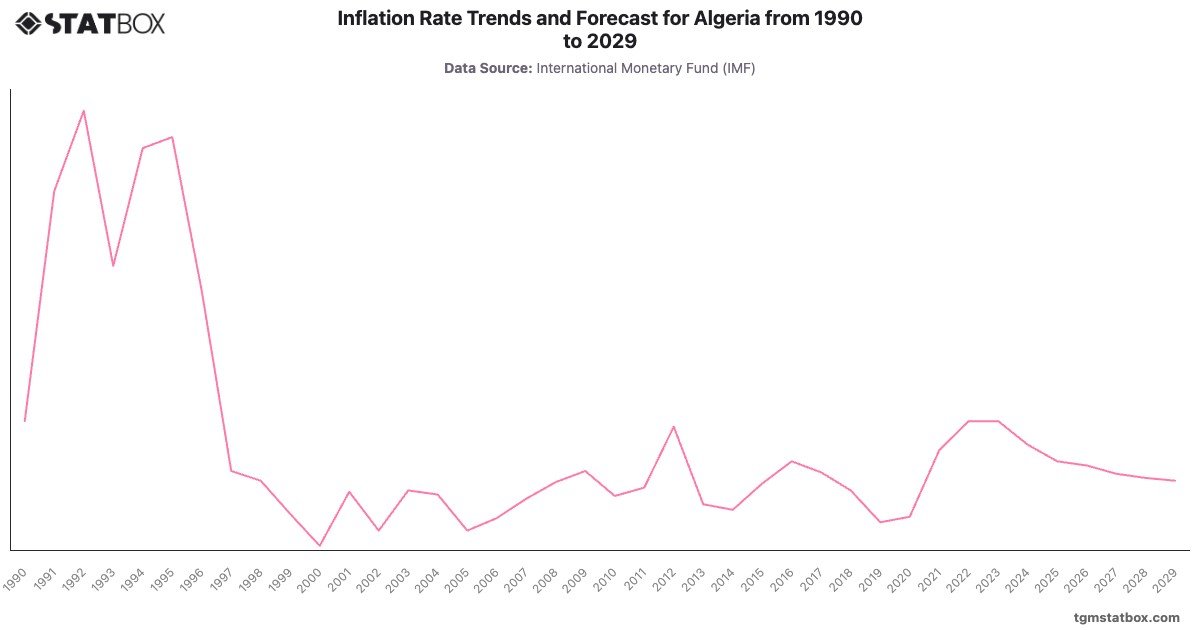
Algeria's inflation rate surged to in 1992 amid political instability and economic restructuring. High rates persisted into the mid-1990s, peaking at in 1995, as the country struggled with civil conflict and fiscal deficits. By 1999, reforms and improved governance brought inflation down to , maintaining a manageable level until 2012 when rates spiked to due to rising food and energy prices.
Inflation saw another uptick in 2022-2023, reaching , driven by global commodity price shocks and supply chain disruptions. The forecast predicts a gradual decline to by 2029 as government policies stabilize the economy and external pressures ease. This trend underscores Algeria's susceptibility to global markets and domestic fiscal dynamics.
Inflation saw another uptick in 2022-2023, reaching , driven by global commodity price shocks and supply chain disruptions. The forecast predicts a gradual decline to by 2029 as government policies stabilize the economy and external pressures ease. This trend underscores Algeria's susceptibility to global markets and domestic fiscal dynamics.
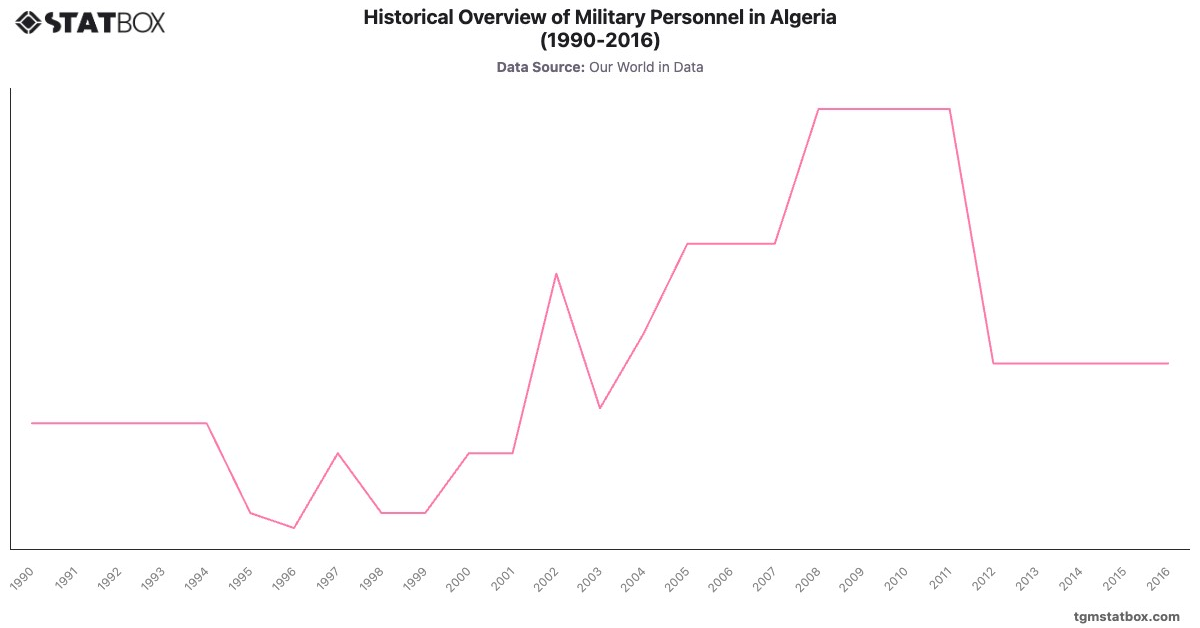
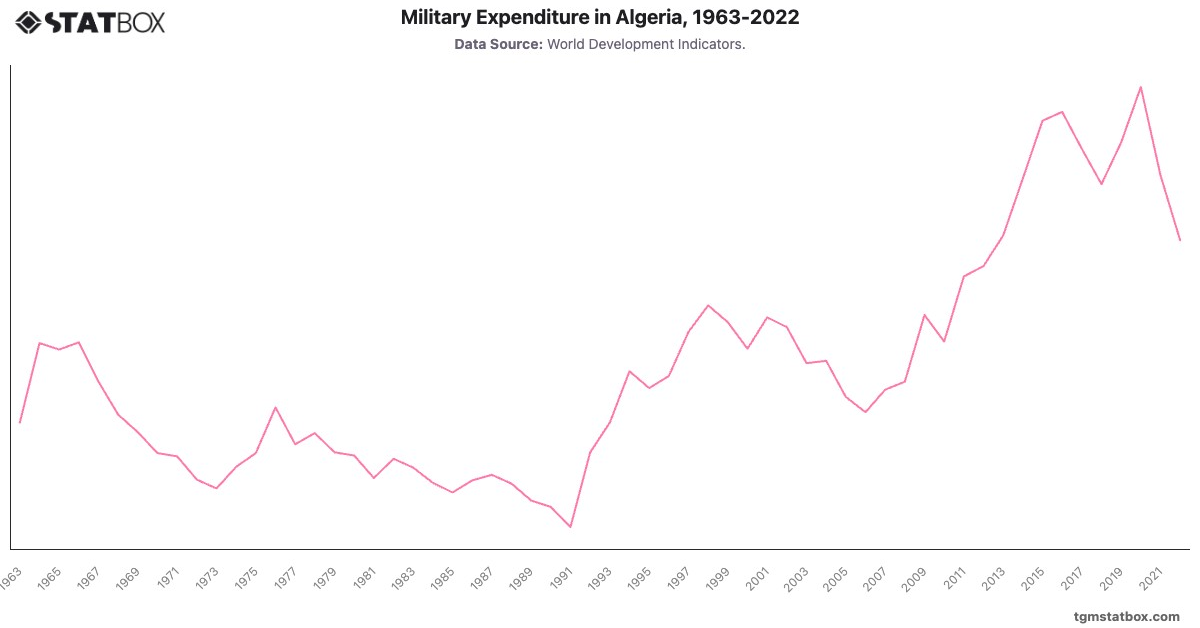
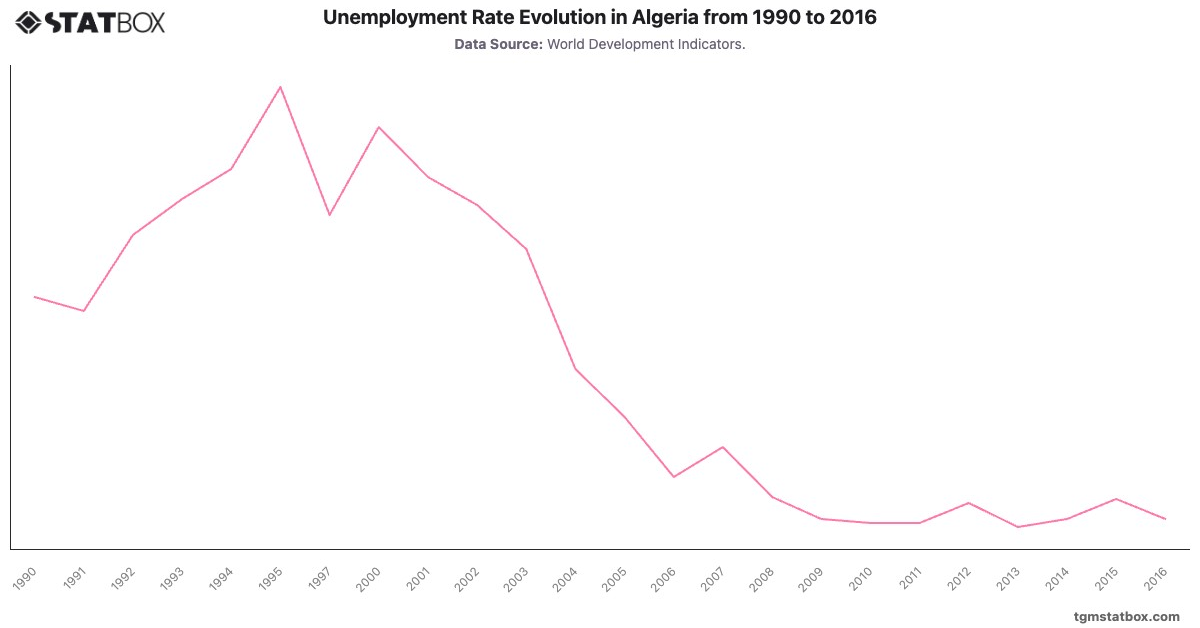
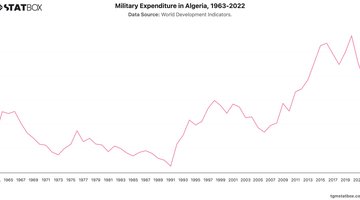
Gain a broader perspective by reviewing Algeria’s unemployment rate fluctuations, Algeria’s population growth rate, Algeria’s military spending.