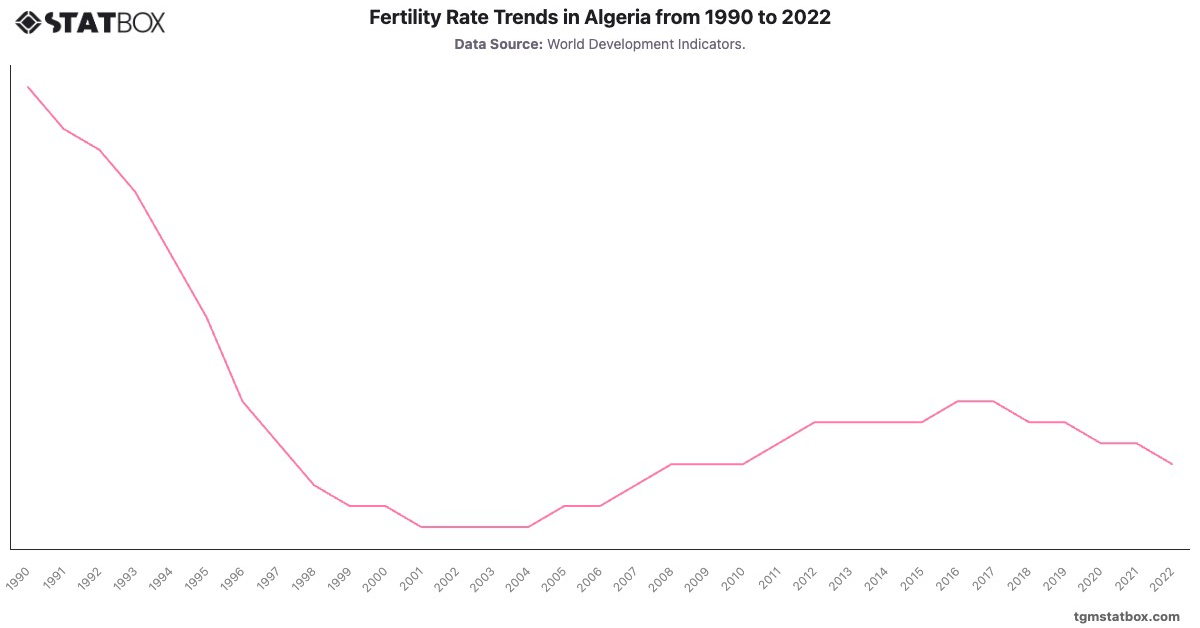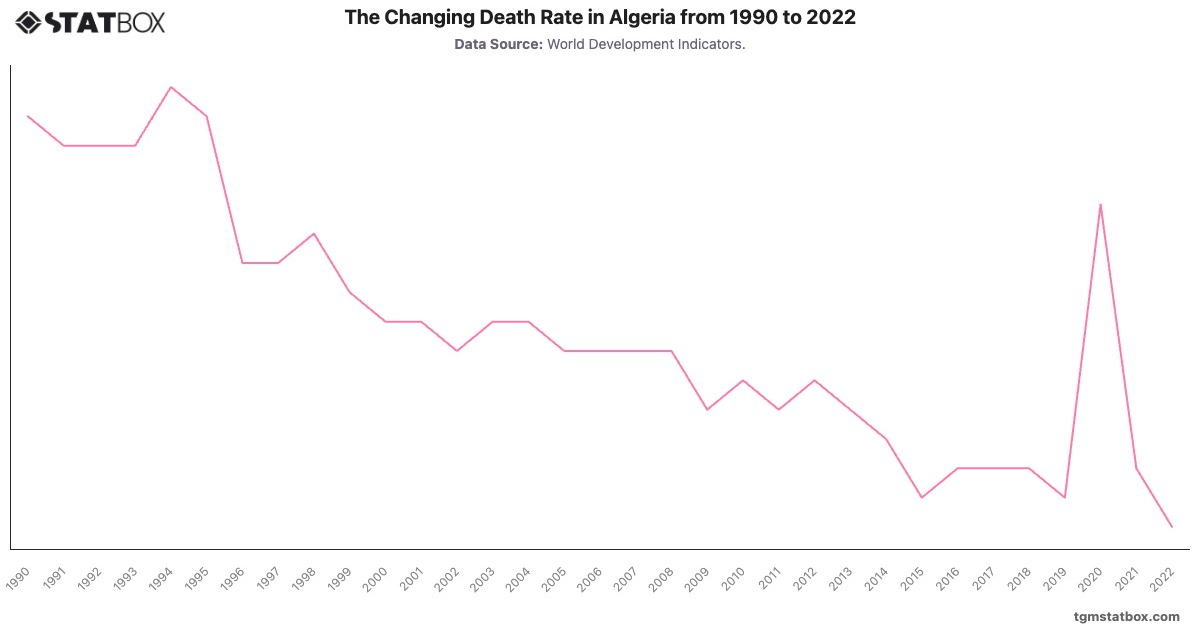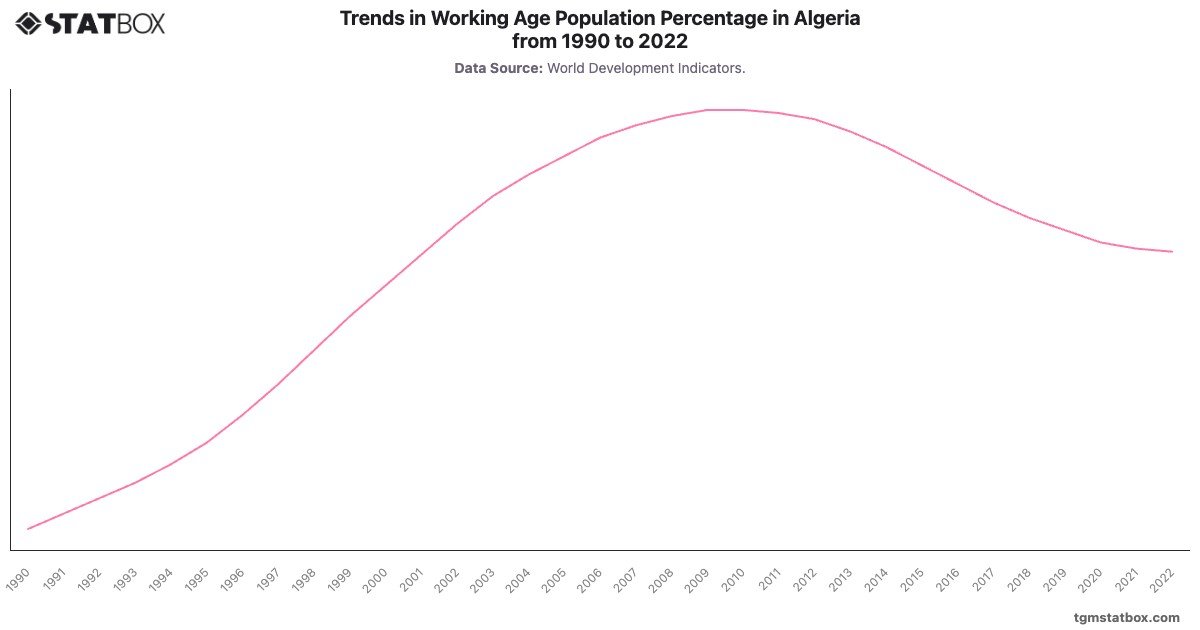
The chart shows the trends in Algeria's working-age population percentage from 1990 to 2022. In 1990, the working-age population (defined as individuals between 15 and 64 years old) accounted for of the total population, gradually increasing to a peak of in 2009. After this peak, the percentage began to decline steadily, reaching in 2022.
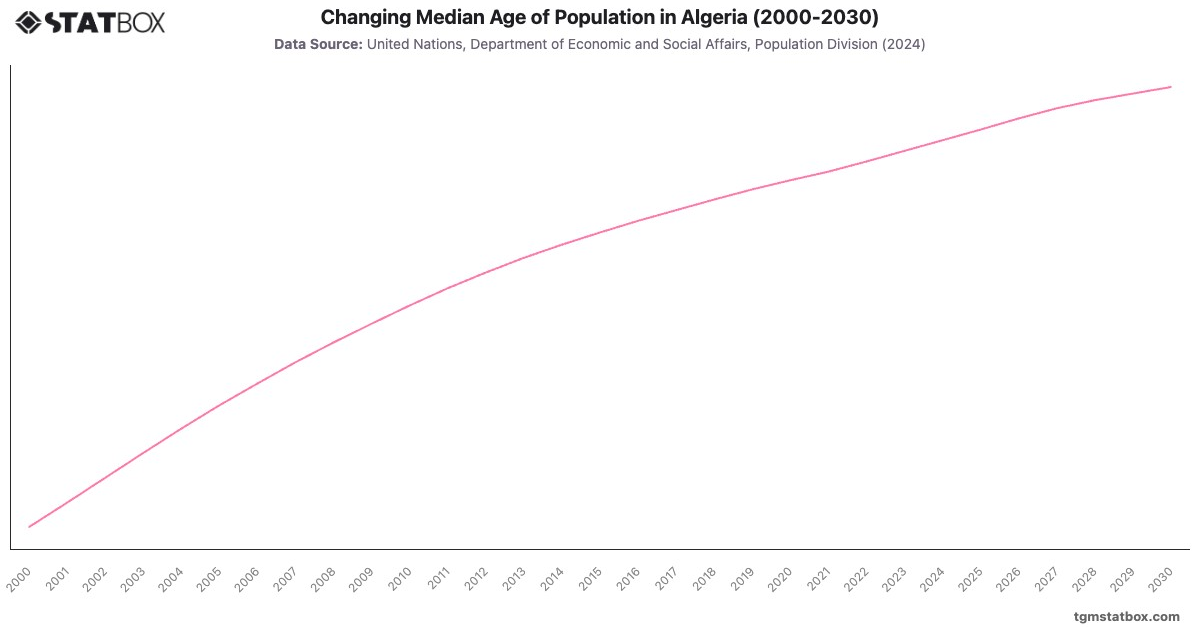
This shift reflects significant demographic changes in Algeria. The initial rise in the working-age population was driven by reduced birth rates and improved healthcare, resulting in a larger labor force. However, since 2010, the gradual decline signals a transition toward an aging population, with fewer young individuals entering the workforce. This demographic evolution could present economic challenges, as a shrinking labor force may strain social services and reduce overall productivity.
This shift reflects significant demographic changes in Algeria. The initial rise in the working-age population was driven by reduced birth rates and improved healthcare, resulting in a larger labor force. However, since 2010, the gradual decline signals a transition toward an aging population, with fewer young individuals entering the workforce. This demographic evolution could present economic challenges, as a shrinking labor force may strain social services and reduce overall productivity.
For additional information, visit statistics on Algeria’s population growth rate, Algeria’s population numbers, Algeria’s median age demographic shift.