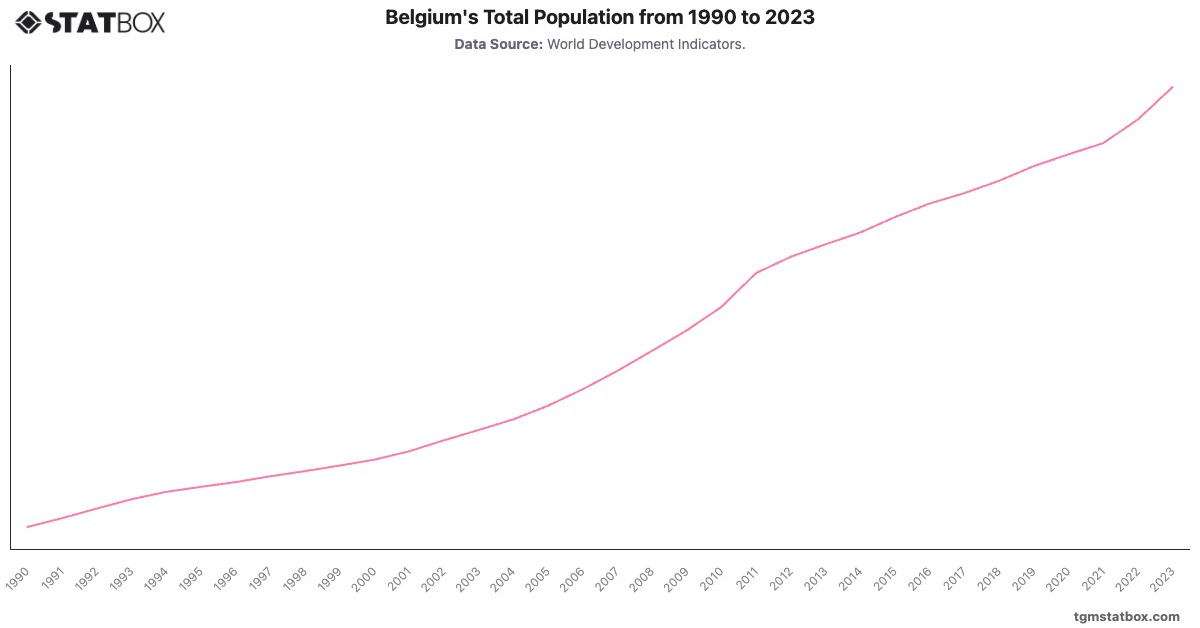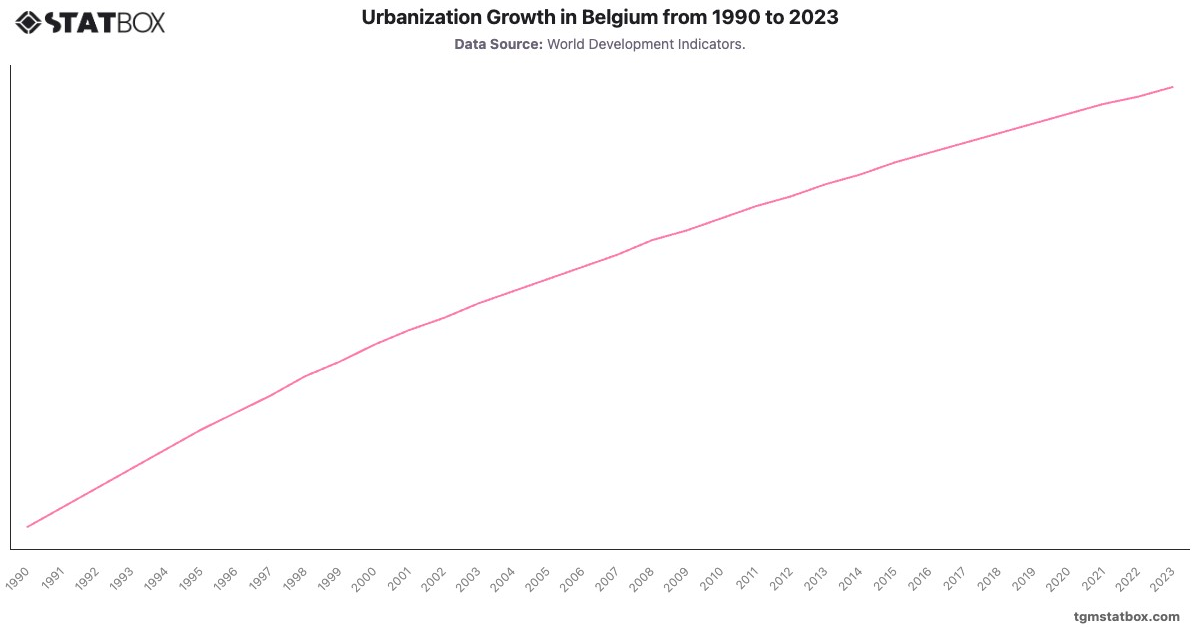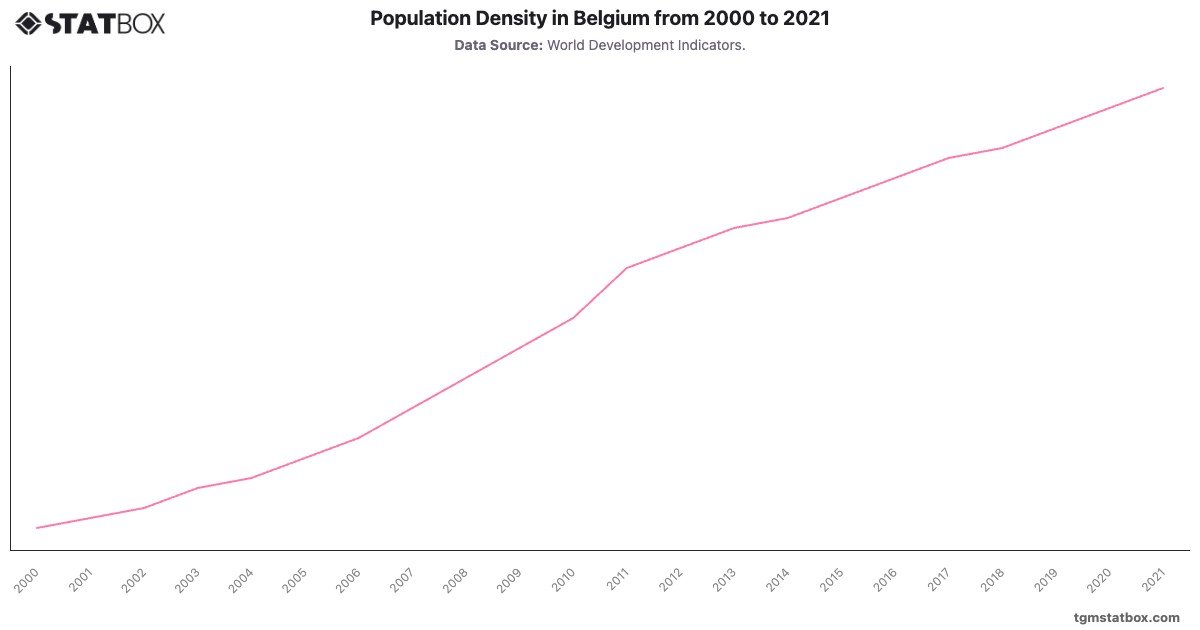
Belgium, with one of the highest population densities in Europe, saw its density increase from 339 people per square kilometer in 2000 to 383 in 2021. This increase is a result of urbanization and immigration, especially in and around Brussels, the capital, which attracts a significant international population due to its role in European governance. By 2010, the density had risen to 360, indicative of Belgium’s economic appeal and growing urban population.
From 2010 onward, density continued to rise, reaching 383 by 2021, reflecting a sustained urban expansion and infrastructure growth. Belgium’s high density, coupled with limited land area, underscores challenges in urban planning and resource management, particularly in maintaining livable urban environments.
From 2010 onward, density continued to rise, reaching 383 by 2021, reflecting a sustained urban expansion and infrastructure growth. Belgium’s high density, coupled with limited land area, underscores challenges in urban planning and resource management, particularly in maintaining livable urban environments.
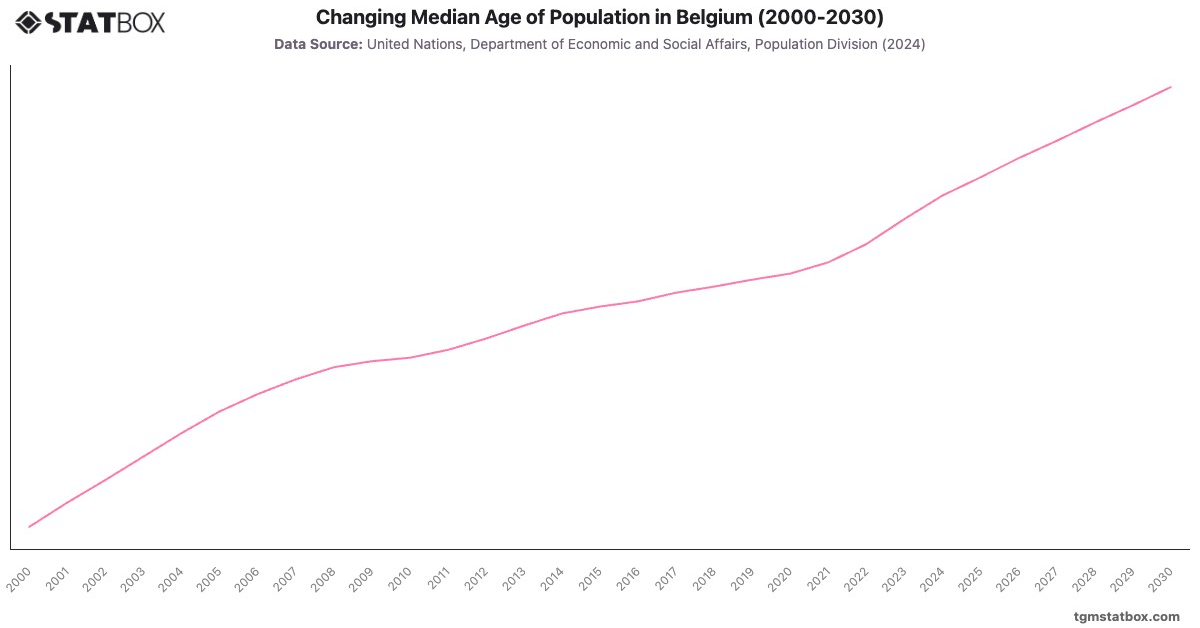
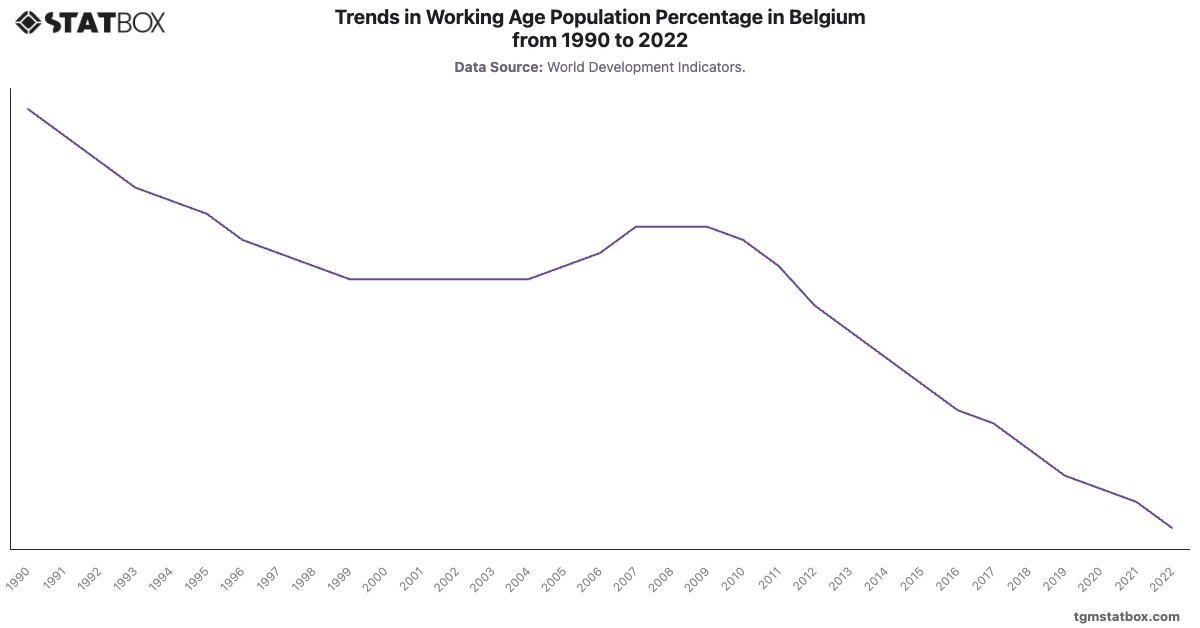
For additional information, visit statistics on Belgium’s median age shift, Belgium’s population count, Belgium’s working-age population share.