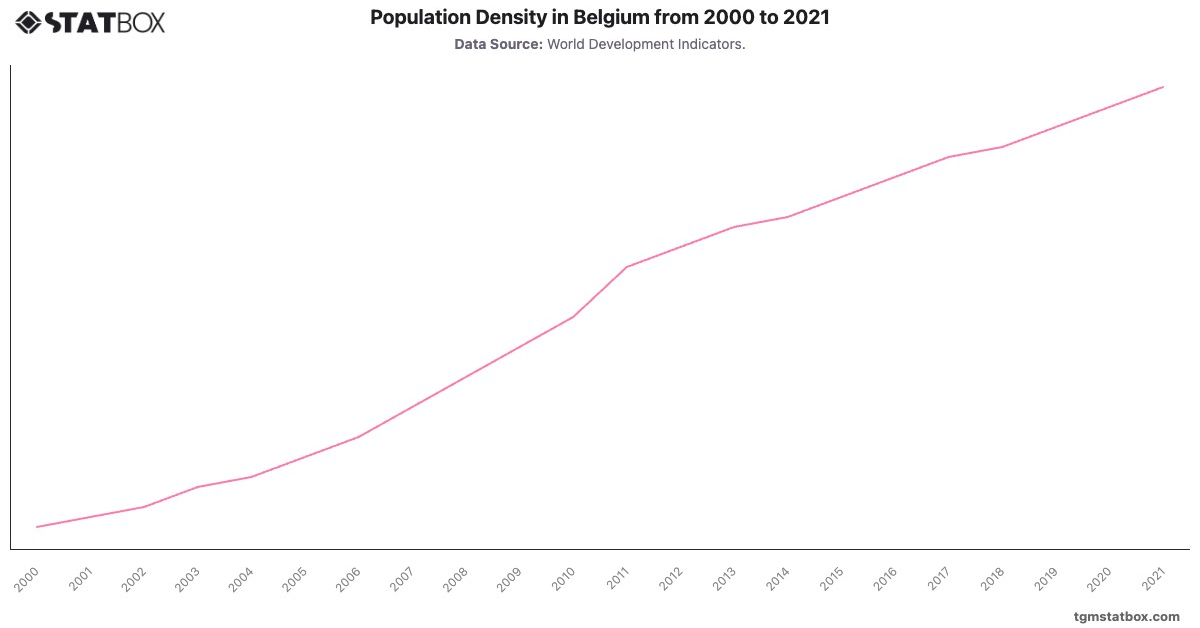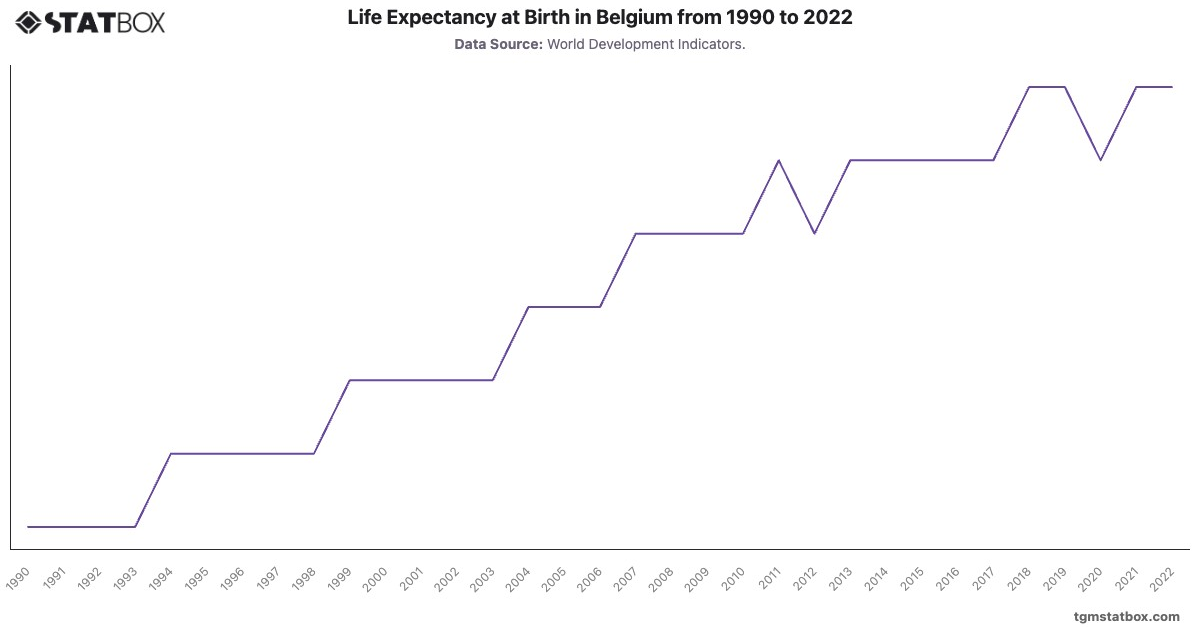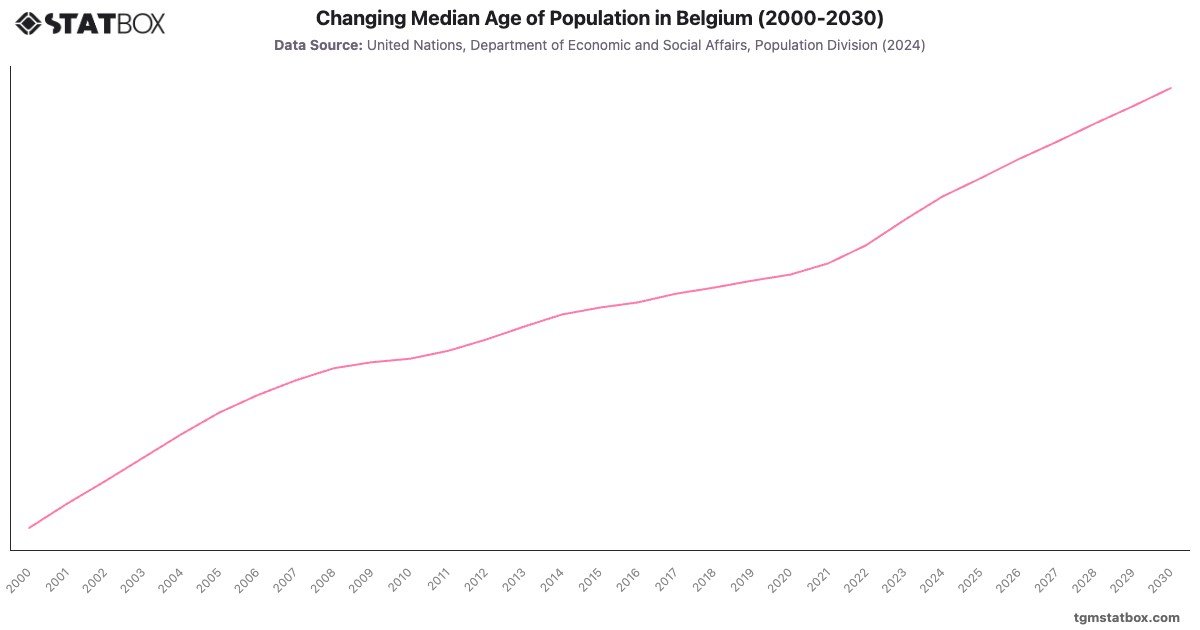
In Belgium, the median age rose from 37.9 in 2000 to 40.8 by 2020, reflecting an aging population shaped by increased longevity and stable but low birth rates. The country’s progressive healthcare advancements and social systems have contributed to a gradual increase in life expectancy. Between 2015 and 2020, median age growth stabilized slightly, suggesting a potential plateau in the immediate effects of demographic aging.
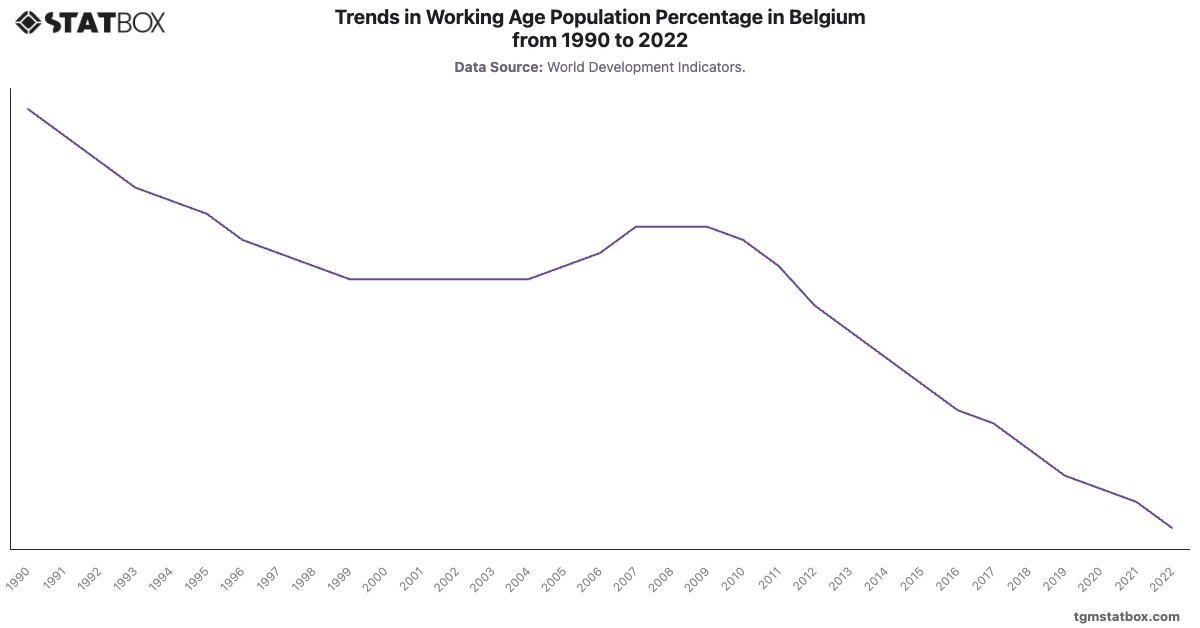
By 2030, Belgium’s median age is expected to reach 43.0, underscoring a slow but continuous upward trend. As the working-age population declines, Belgium will likely focus on social policies aimed at supporting an older demographic. The aging trend poses strategic implications for workforce planning, healthcare resource allocation, and economic sustainability as the population ages further.
By 2030, Belgium’s median age is expected to reach 43.0, underscoring a slow but continuous upward trend. As the working-age population declines, Belgium will likely focus on social policies aimed at supporting an older demographic. The aging trend poses strategic implications for workforce planning, healthcare resource allocation, and economic sustainability as the population ages further.
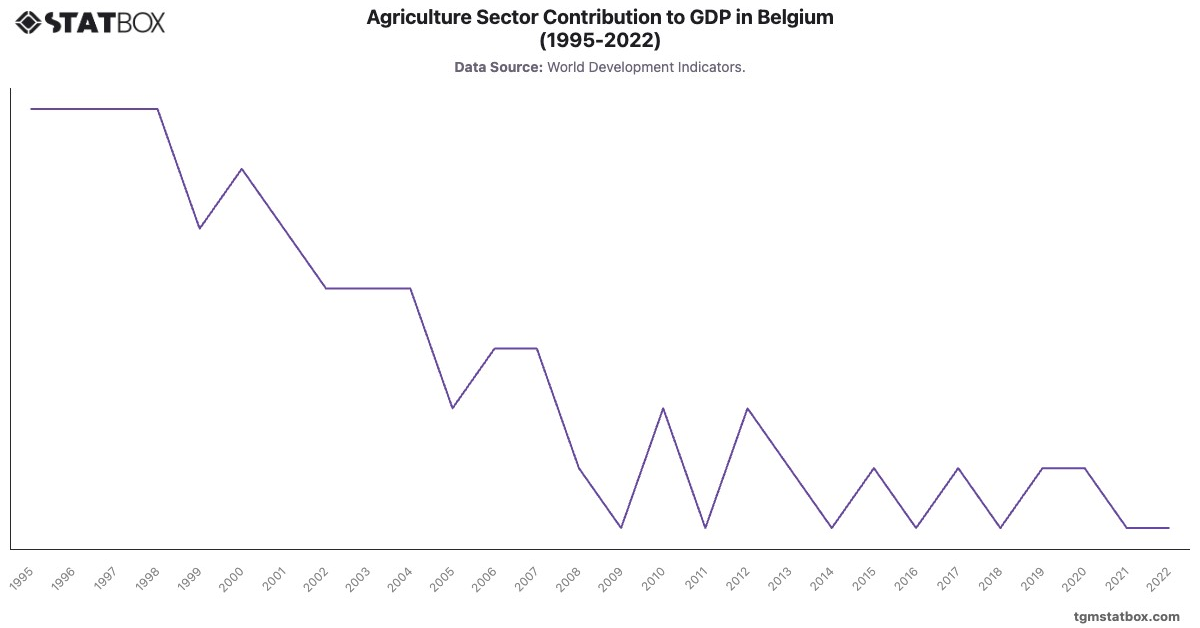
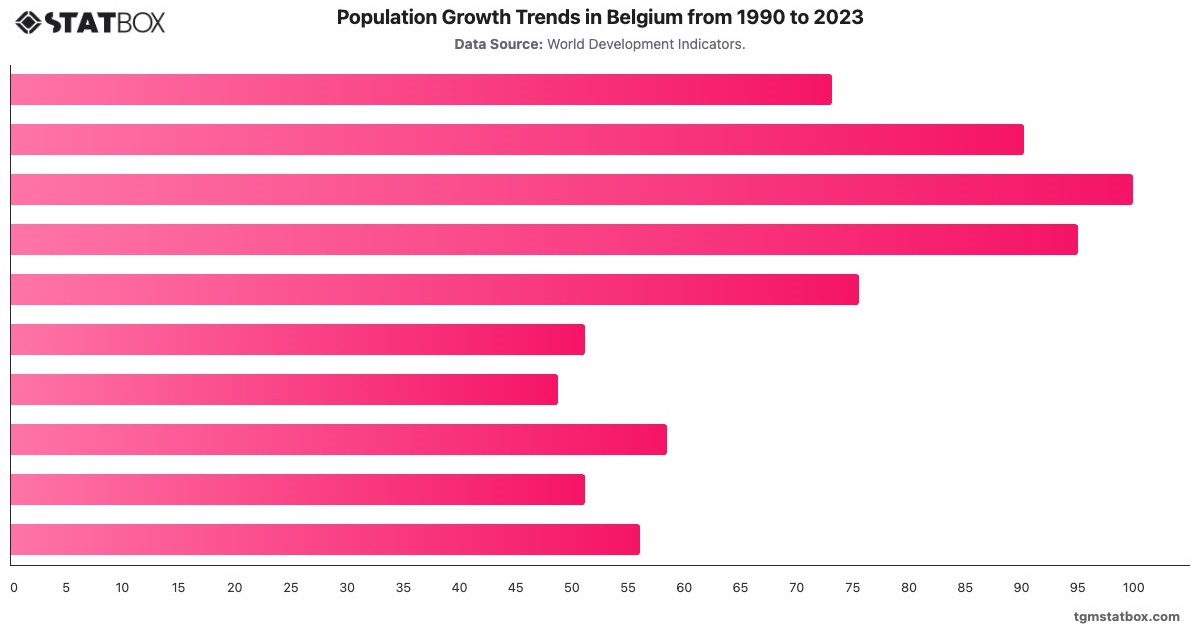
Explore related charts to gain a better understanding of Belgium’s population count, Belgium’s agricultural GDP share, Belgium’s population growth.