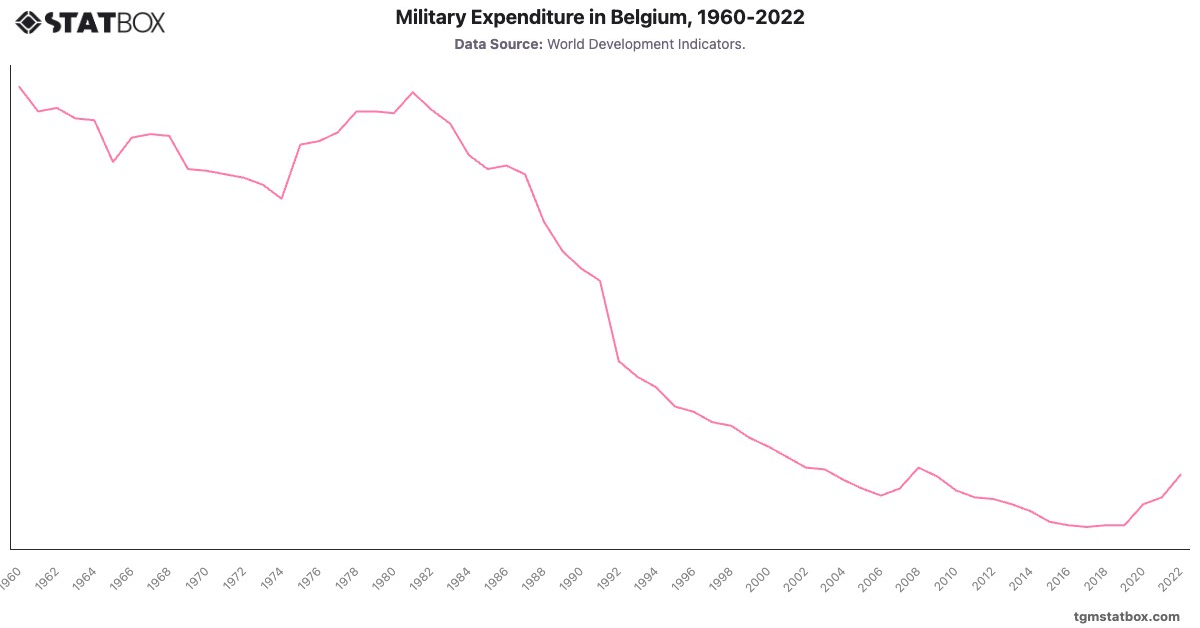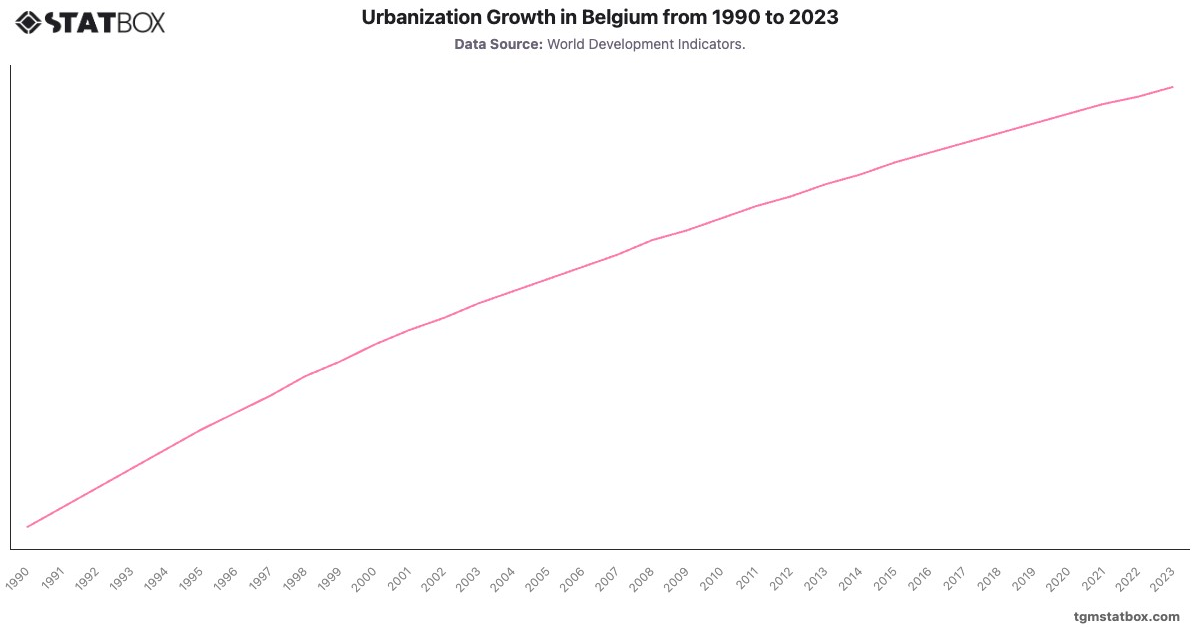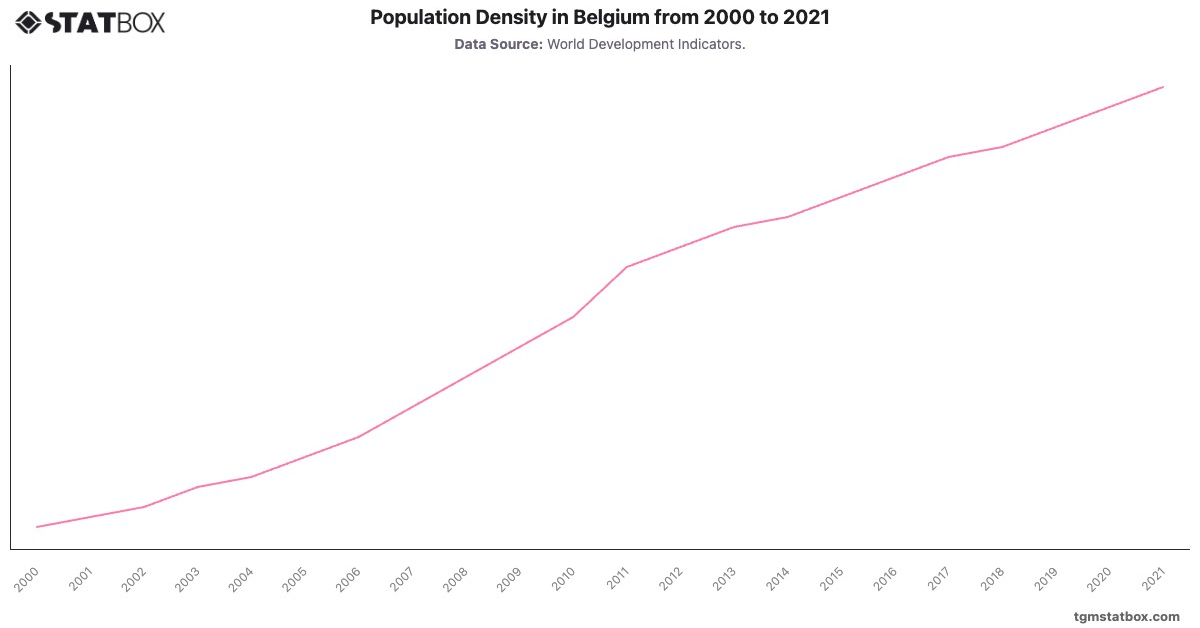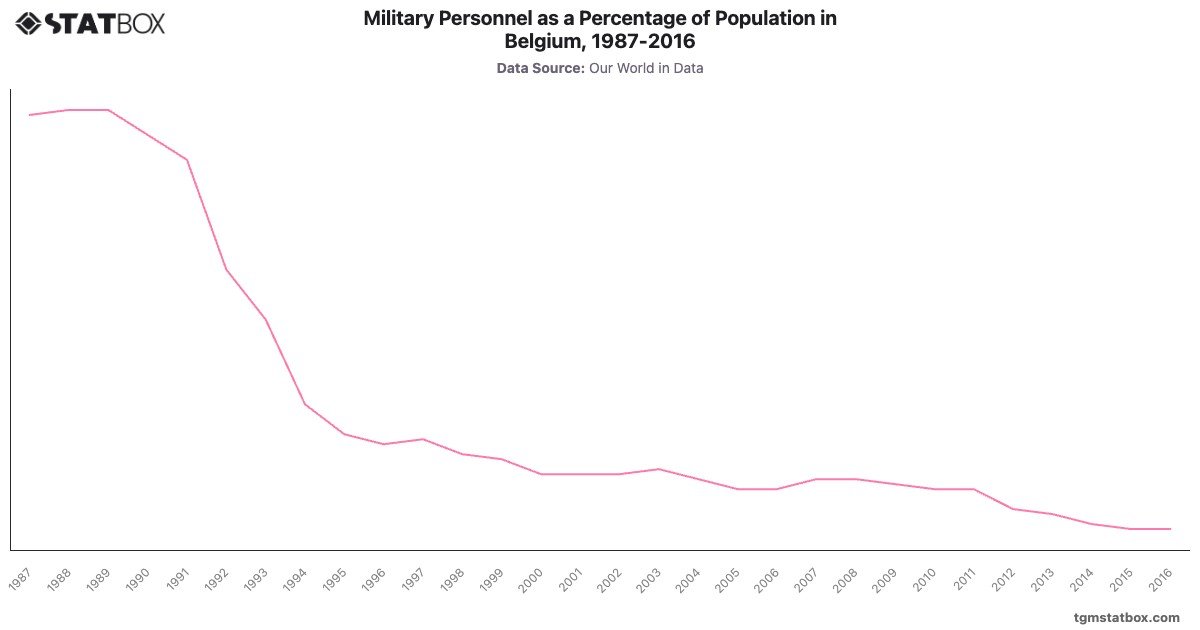
Belgium’s military personnel percentage declined sharply from in 1987 to in 2016. This decrease aligns with Belgium’s shift toward a more professional, smaller military force in the early 1990s, following broader European defense reforms. Post-Cold War, Belgium embraced a stronger NATO presence, enabling it to scale back its own military numbers while leveraging collective security arrangements. This downsizing coincided with increased urbanization, leading the government to prioritize urban infrastructure over defense spending.
As Belgian cities grew and urban issues gained prominence, funding for social programs took precedence, reducing military personnel relative to the population. The stable in the 2000s indicates a commitment to a minimal but modernized military force, aligned with Belgium's active role in international peacekeeping and alliance-based defense strategies.
As Belgian cities grew and urban issues gained prominence, funding for social programs took precedence, reducing military personnel relative to the population. The stable in the 2000s indicates a commitment to a minimal but modernized military force, aligned with Belgium's active role in international peacekeeping and alliance-based defense strategies.
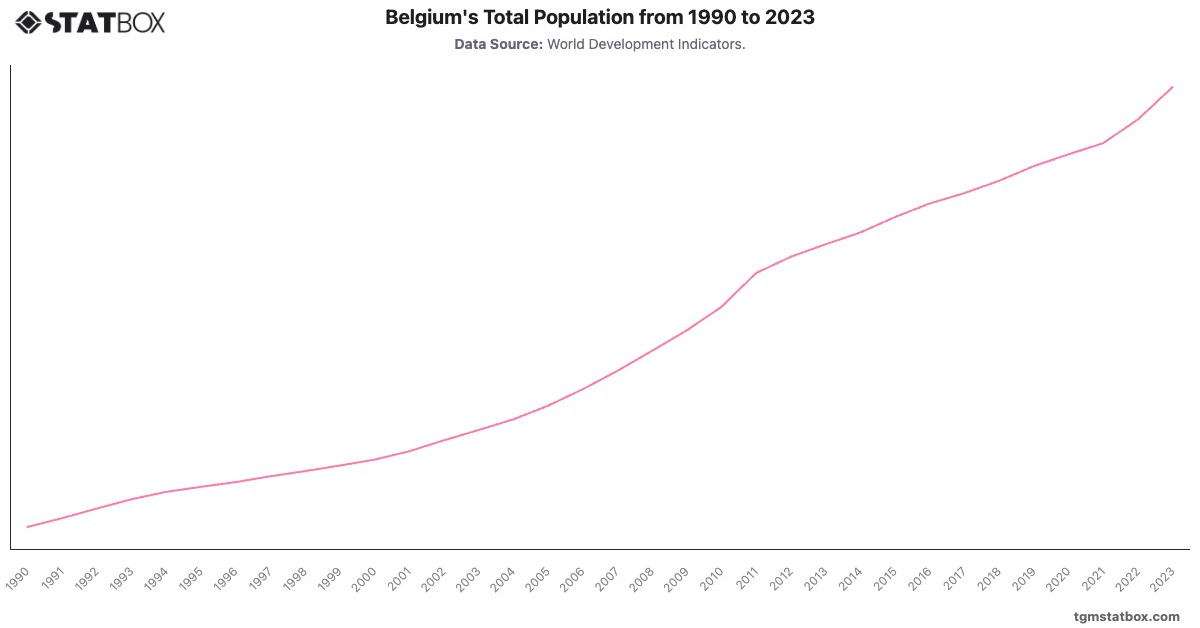
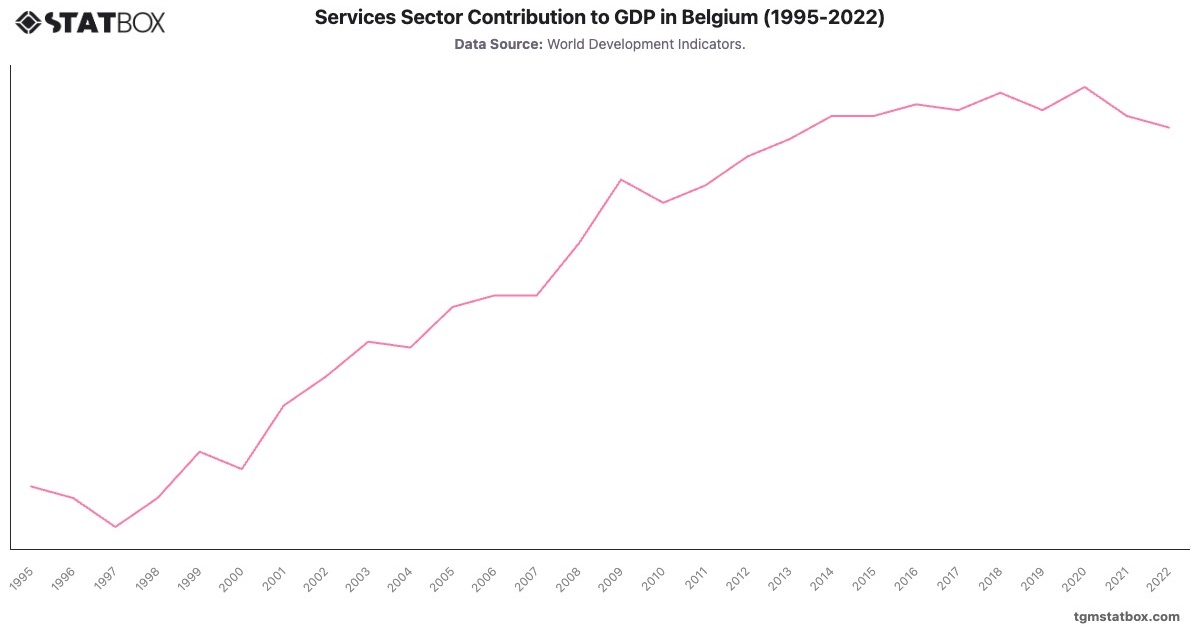
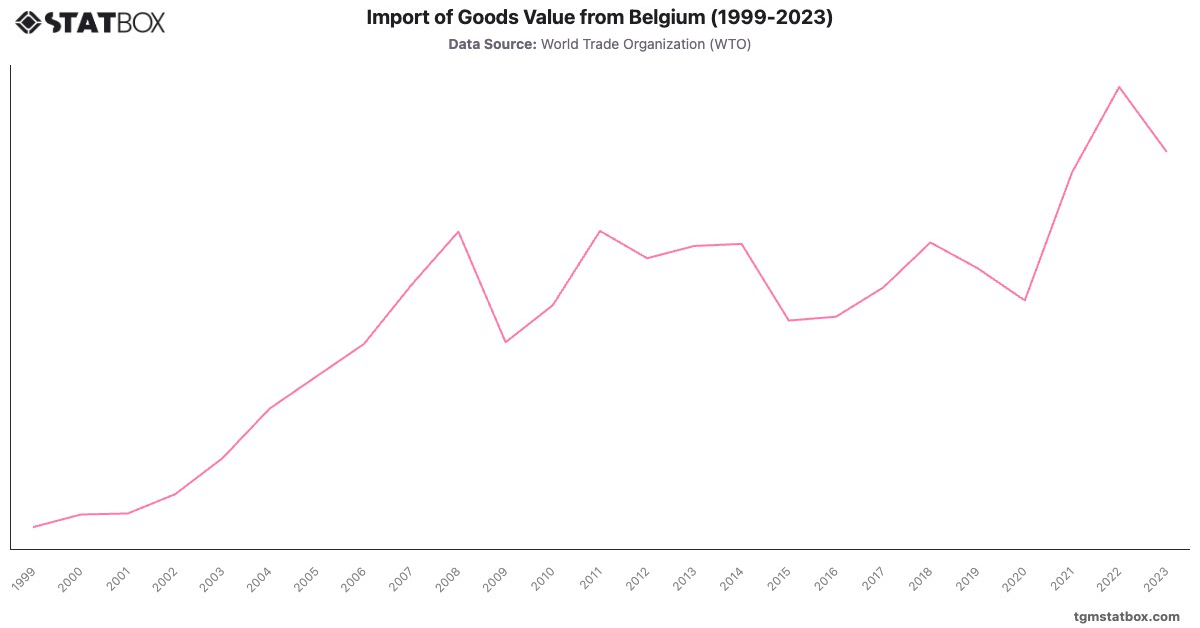
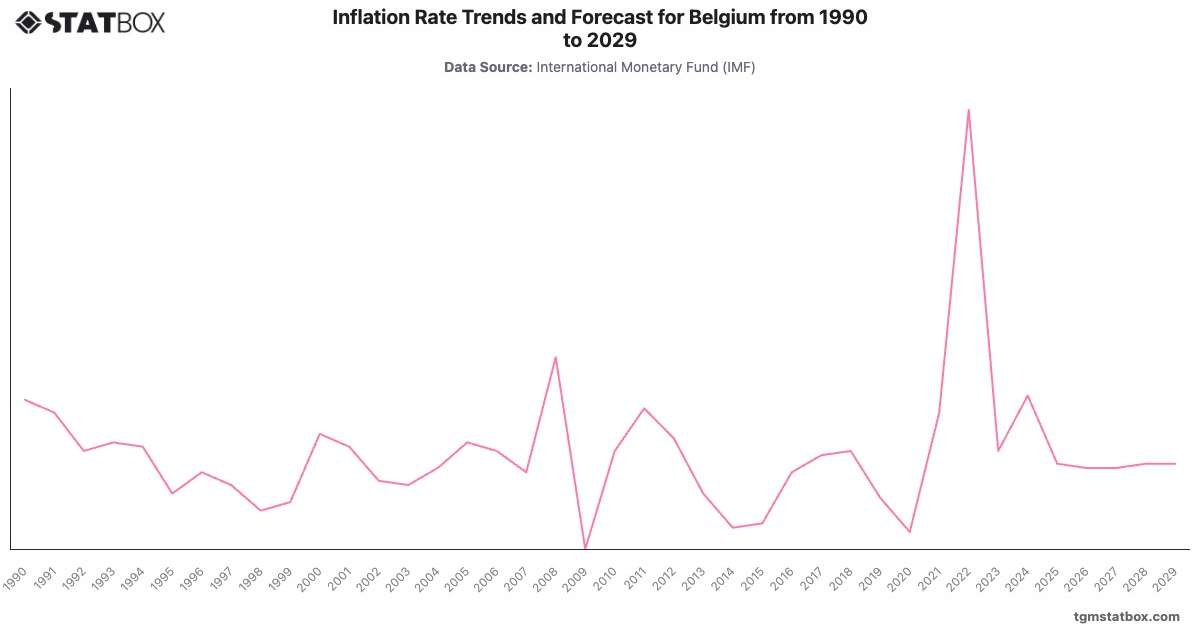
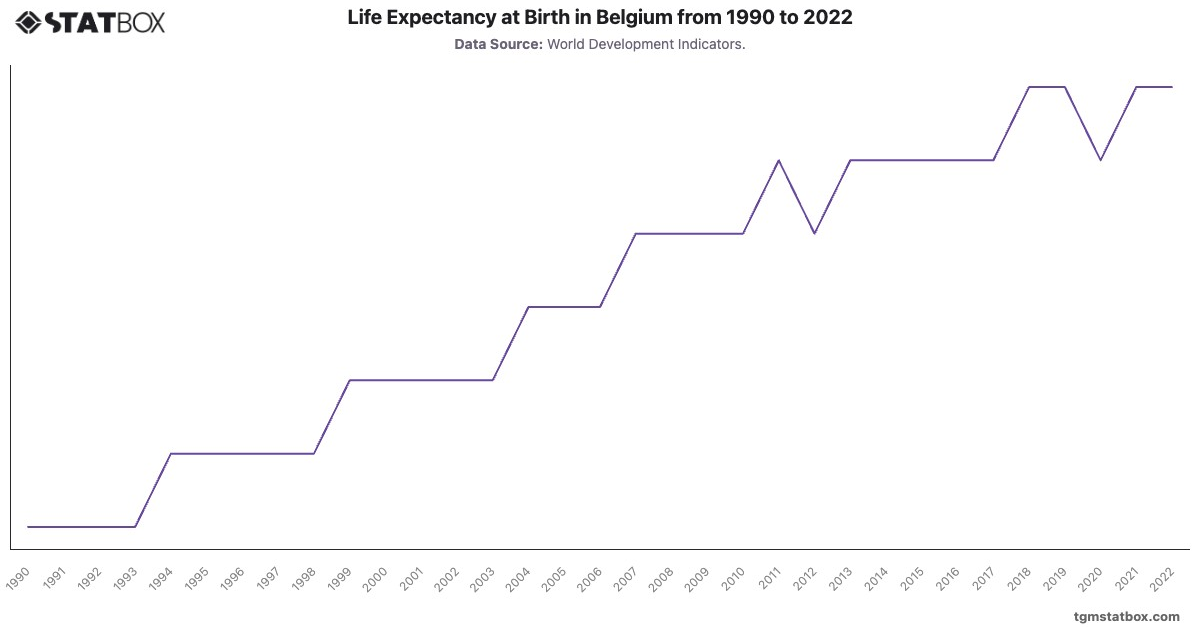
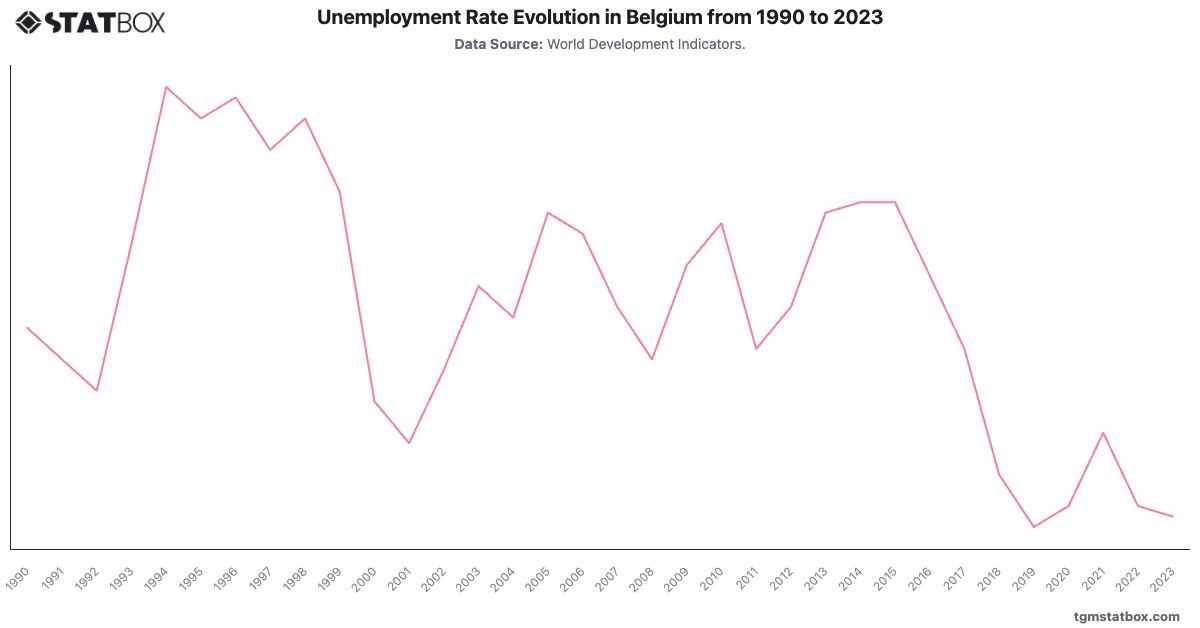
Gain a broader perspective by reviewing Belgium’s unemployment rate trend, Belgium’s services sector share in GDP, Belgium’s population growth.