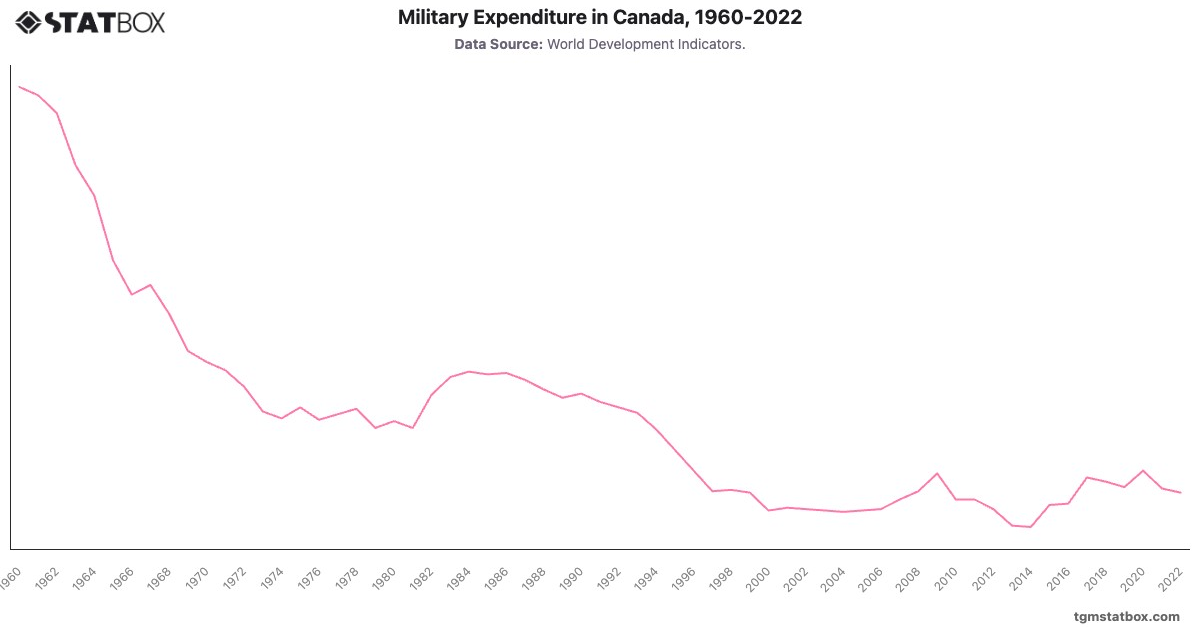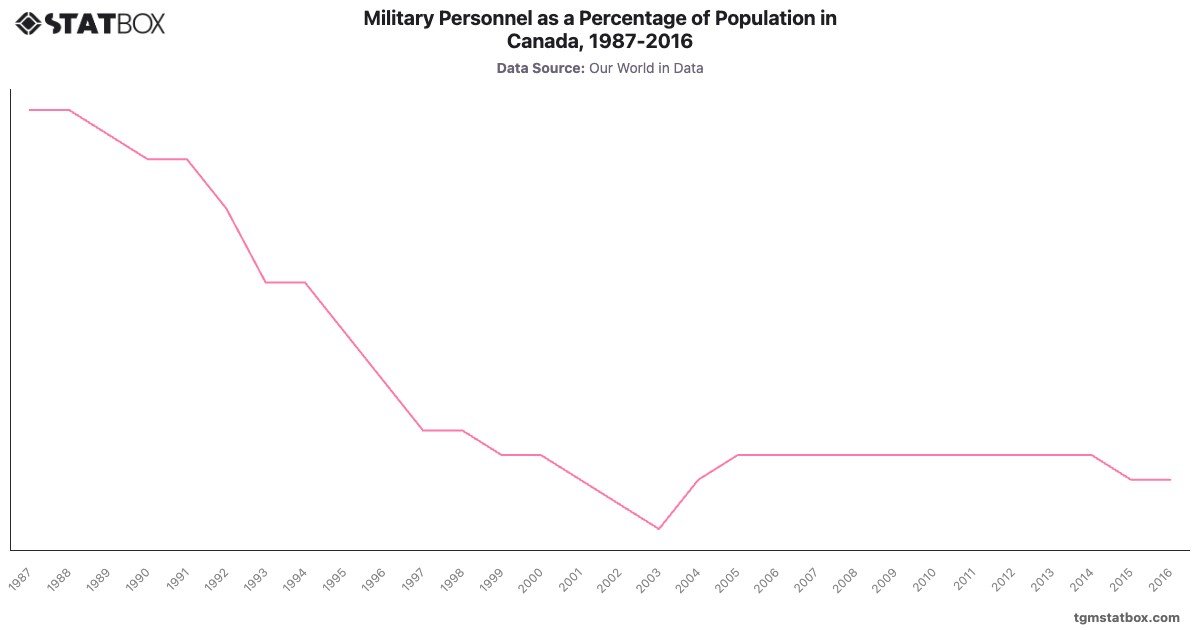
Canada’s military personnel percentage remained steady at from 1987 through 1994 before stabilizing at from 1995 onwards. The gradual reduction reflects Canada’s focus on peacekeeping and diplomacy, rather than maintaining a large active military force. Following the Cold War, Canada shifted defense policies to prioritize technological advancement over personnel expansion, aligning with NATO’s evolving strategic objectives.
The urbanization of Canada’s population further influenced budget allocations toward healthcare, education, and infrastructure. By maintaining a stable , Canada underscored its commitment to a professional, specialized military force, tailored to international peacekeeping missions and supporting broader NATO goals without a significant increase in active personnel.
The urbanization of Canada’s population further influenced budget allocations toward healthcare, education, and infrastructure. By maintaining a stable , Canada underscored its commitment to a professional, specialized military force, tailored to international peacekeeping missions and supporting broader NATO goals without a significant increase in active personnel.
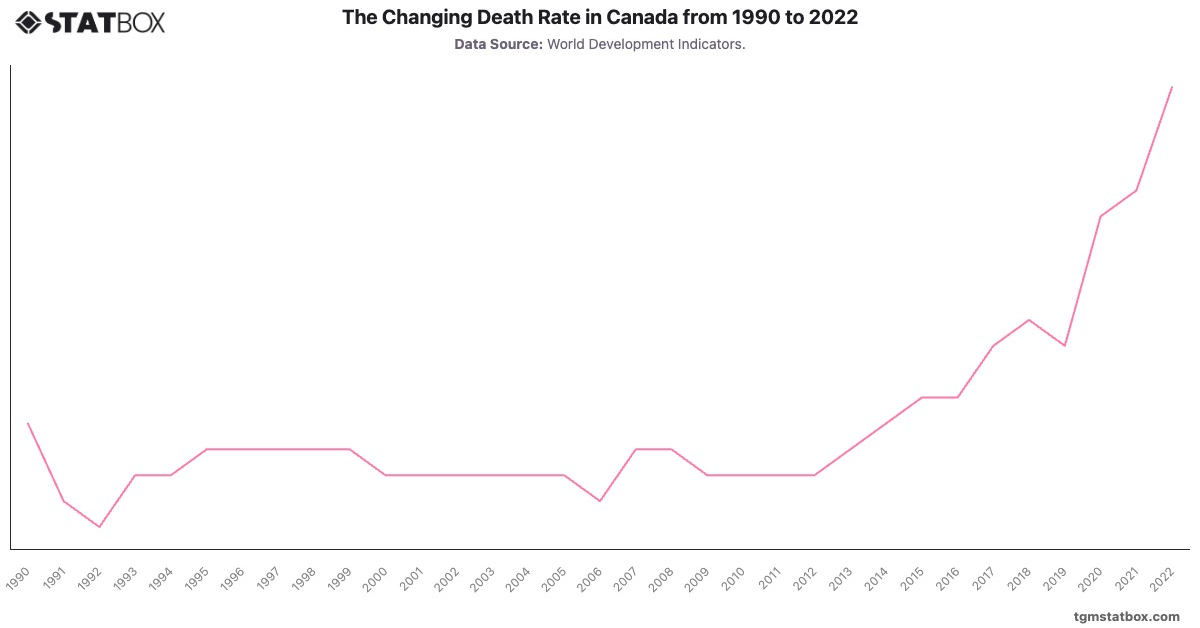
Find out more through related statistics on Canada’s death rate trend, Canada’s urbanization rate, Canada’s military spending.