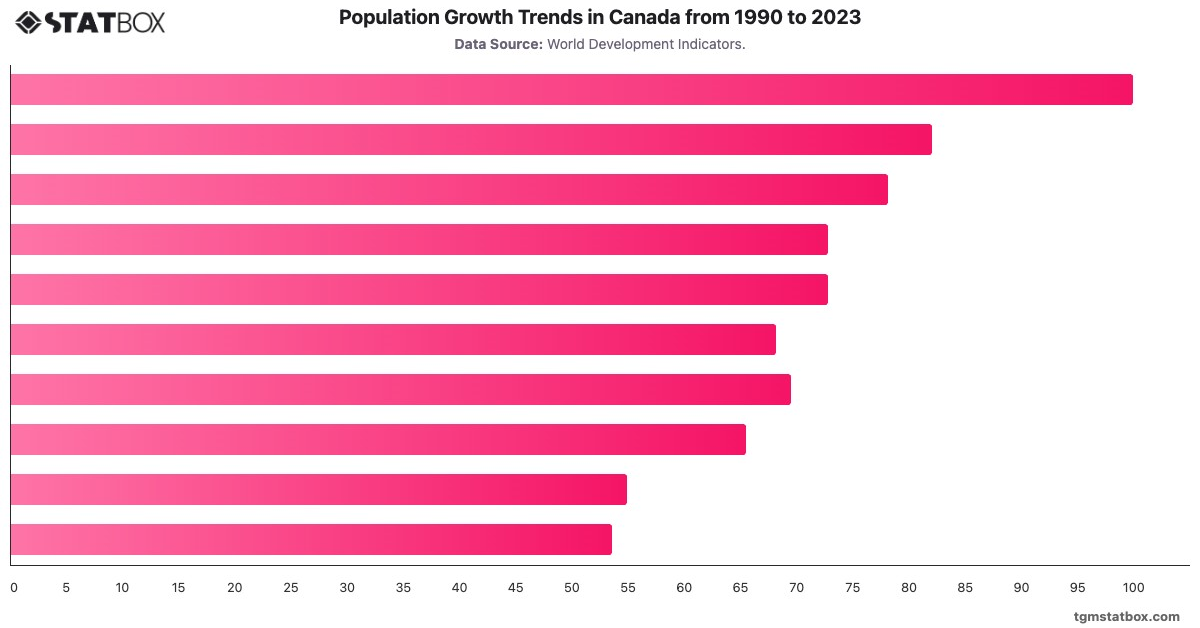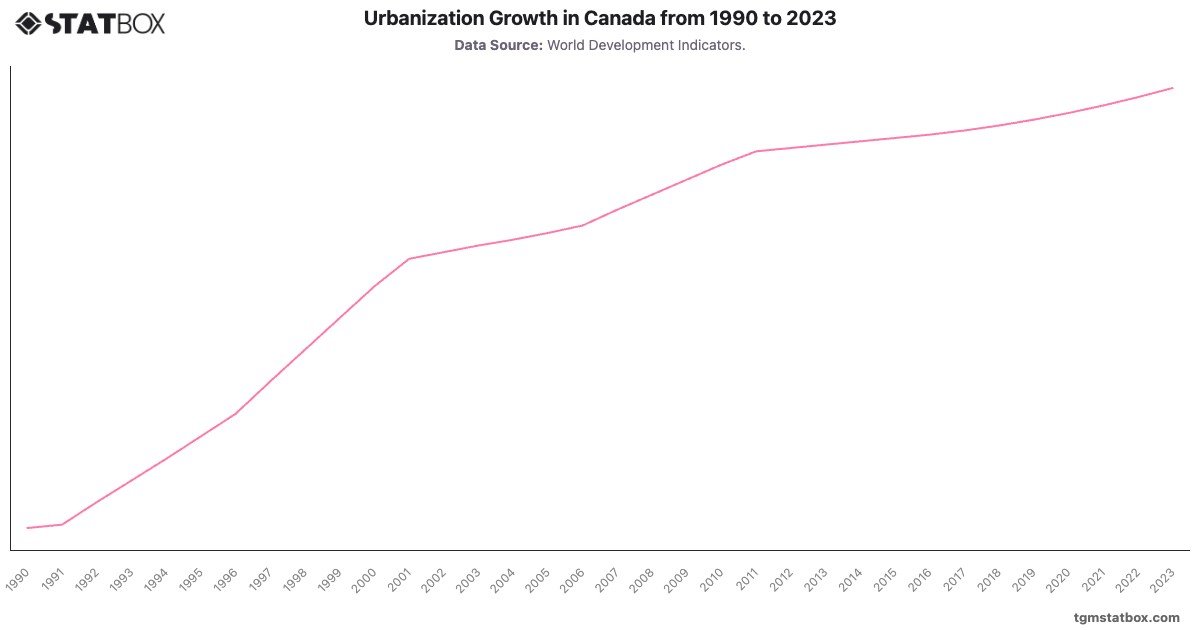
Canada saw steady urban growth from 1990 to 2023, reflecting both economic expansion and shifting population trends. Starting at in 1990, the urbanization rate gradually rose, crossing the mark by 2003. This increase paralleled significant economic development, particularly in the service sector, and an ongoing trend of migration to urban centers, including Toronto, Vancouver, and Montreal. By 2020, Canada reached an urbanization level of , influenced by continued immigration and metropolitan job opportunities. The trend continued upward, reaching in 2023, driven by infrastructure development and a stable urban economy.
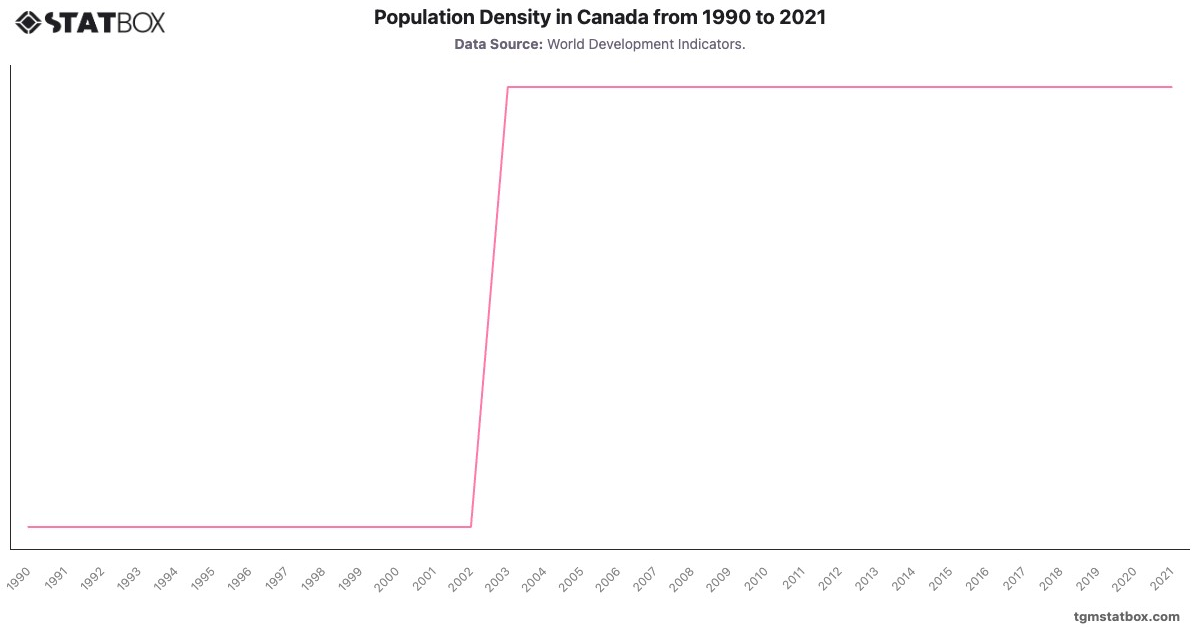
Find out more through related statistics on Canada’s working-age population share, Canada’s population density, Canada’s population count.