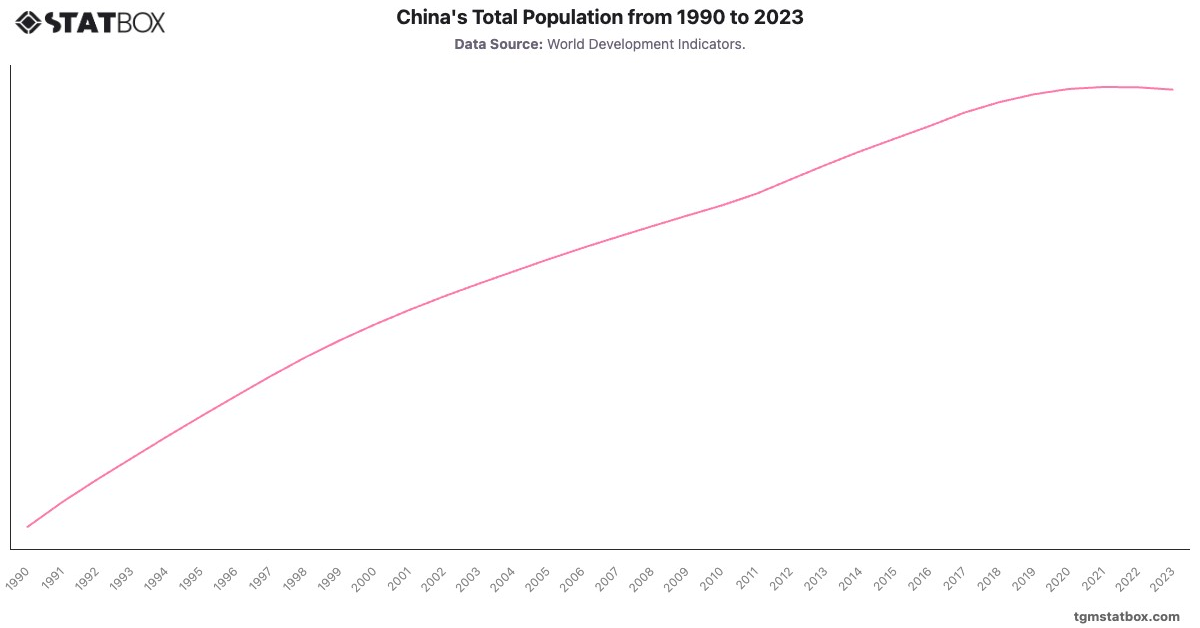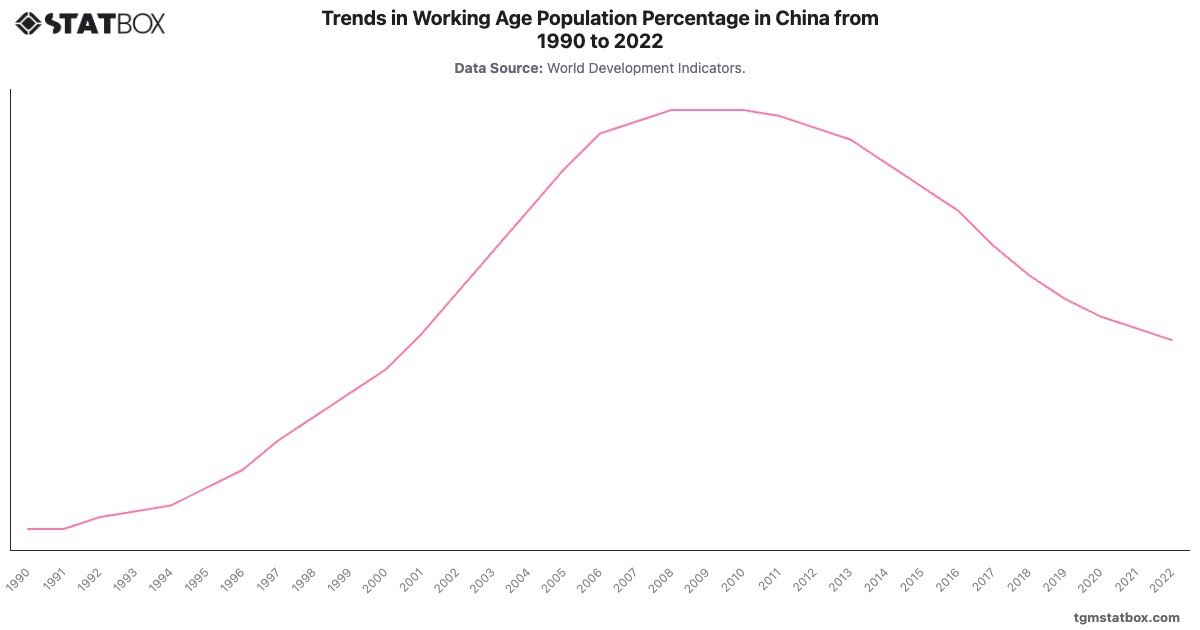
China's working-age population percentage has undergone significant changes from 1990 to 2022. Beginning at in 1990, the percentage steadily increased, reaching a peak of in 2010. This growth was driven by robust economic expansion, urbanization, and a large influx of individuals into the labor force, facilitated by government policies supporting industrialization and education.
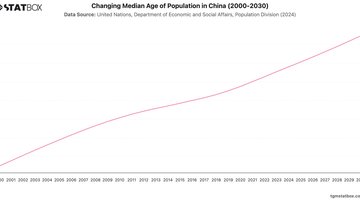
However, from 2011 onward, the working-age population percentage began to decline, falling to by 2022. This trend reflects the aging population and the long-term impacts of the one-child policy, which has contributed to a shrinking labor force. The decrease also highlights the challenges China faces in maintaining economic growth amid demographic shifts, including rising dependency ratios and potential labor shortages.
However, from 2011 onward, the working-age population percentage began to decline, falling to by 2022. This trend reflects the aging population and the long-term impacts of the one-child policy, which has contributed to a shrinking labor force. The decrease also highlights the challenges China faces in maintaining economic growth amid demographic shifts, including rising dependency ratios and potential labor shortages.
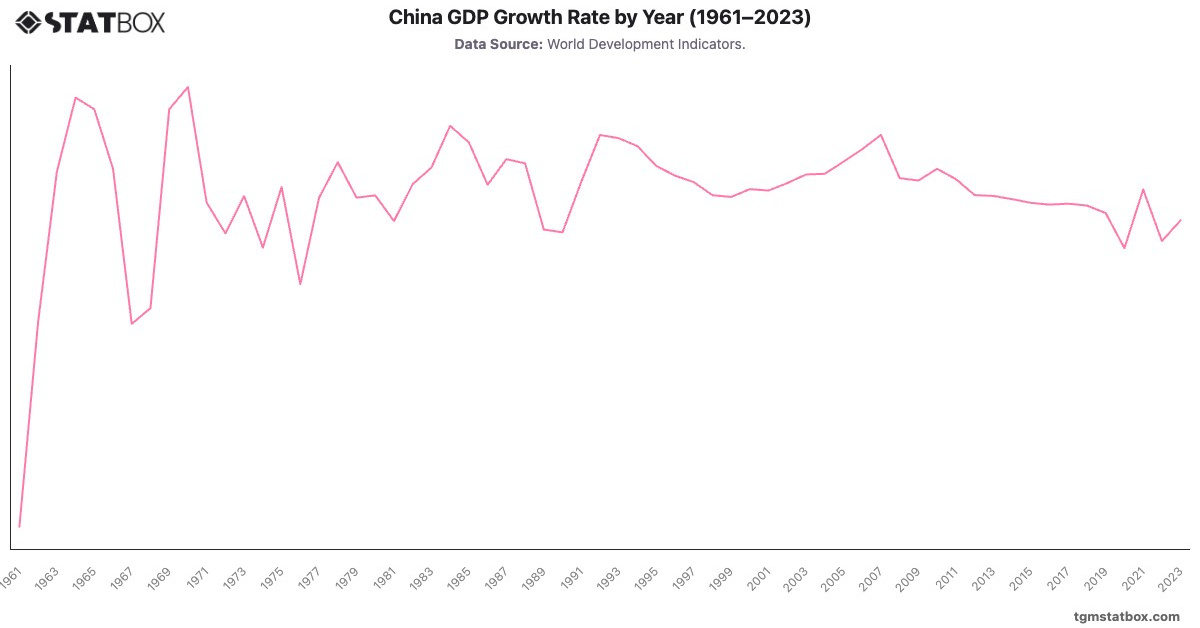
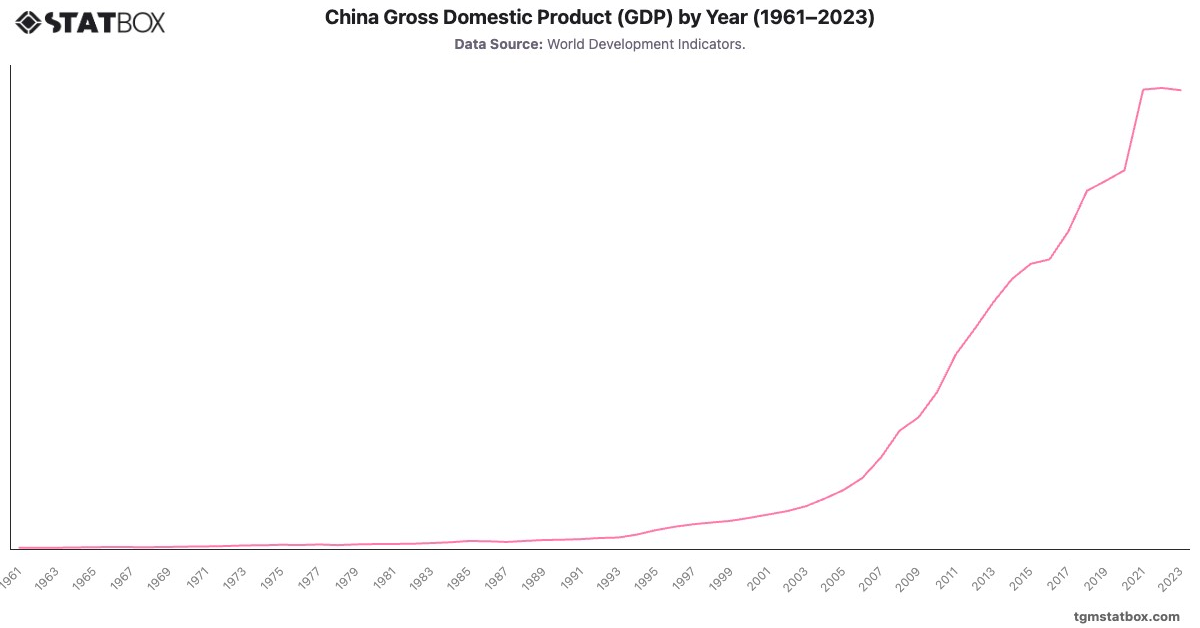
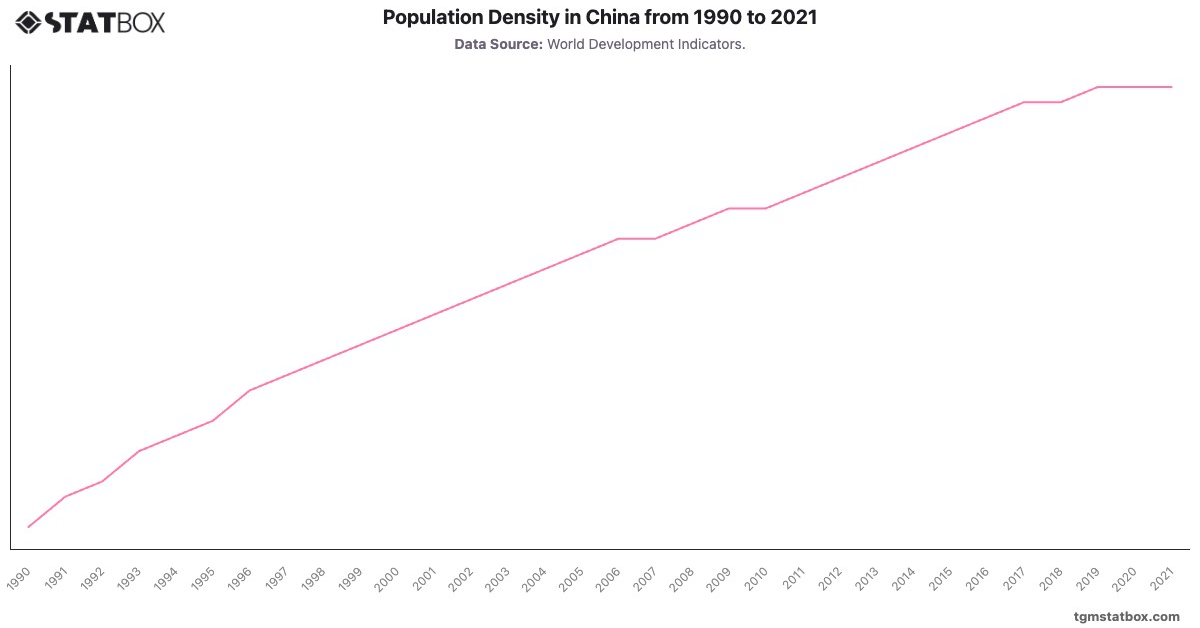
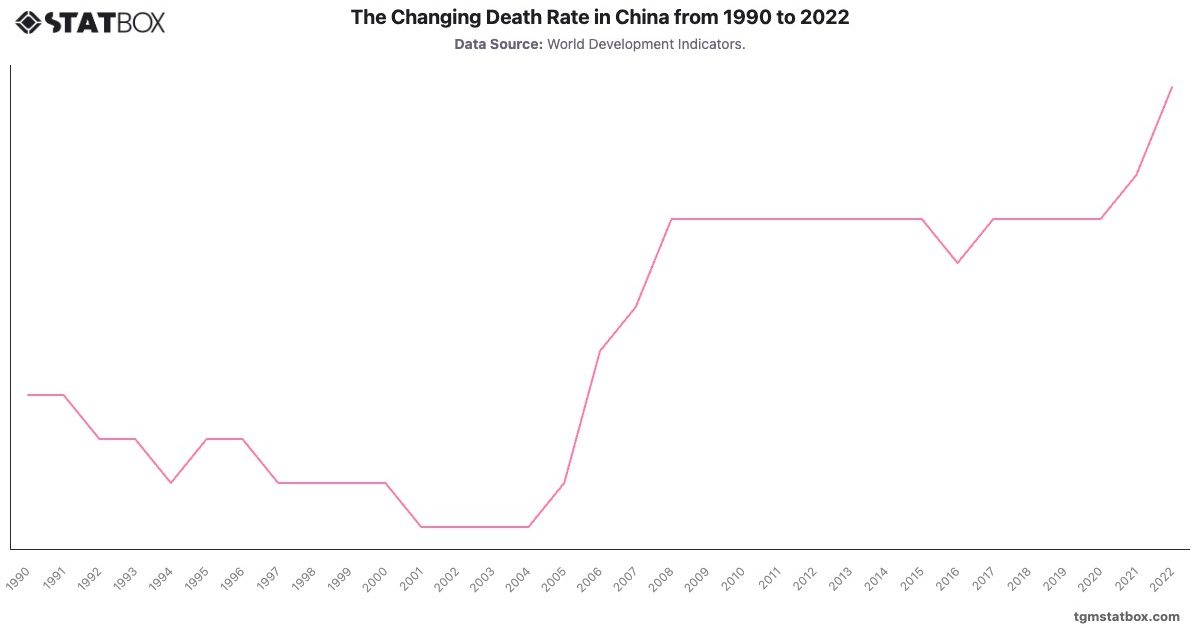
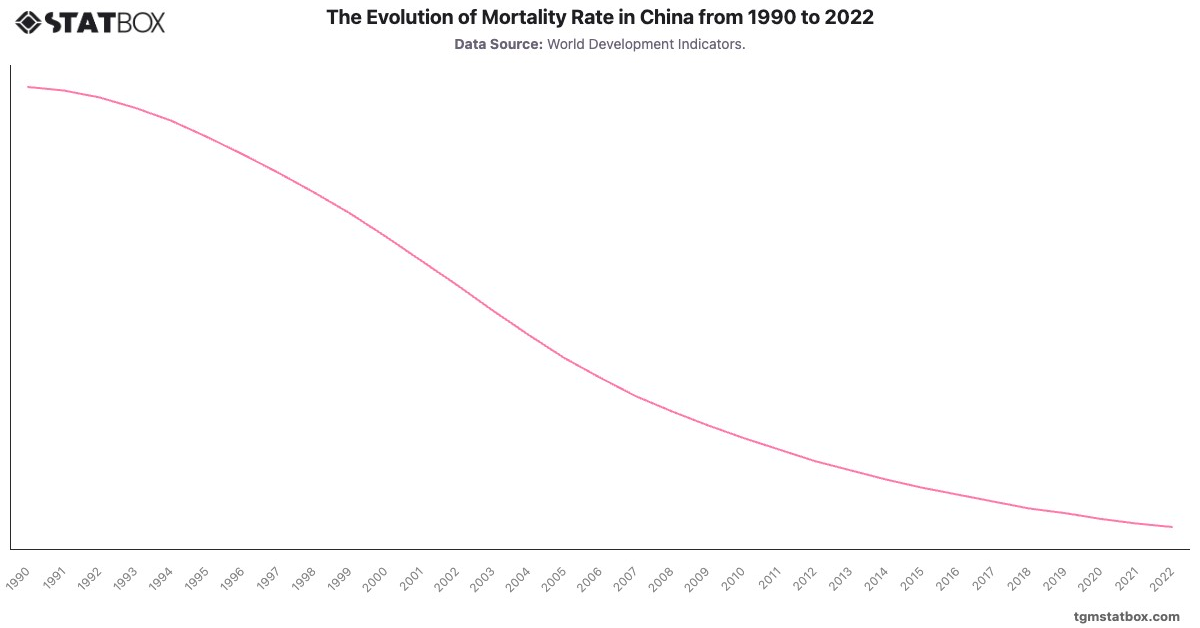
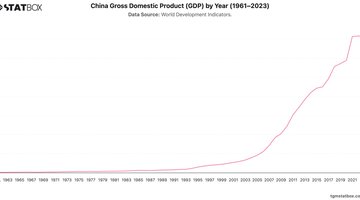
Gain a broader perspective by reviewing China’s annual GDP figures, China’s death rate changes, China’s population density.