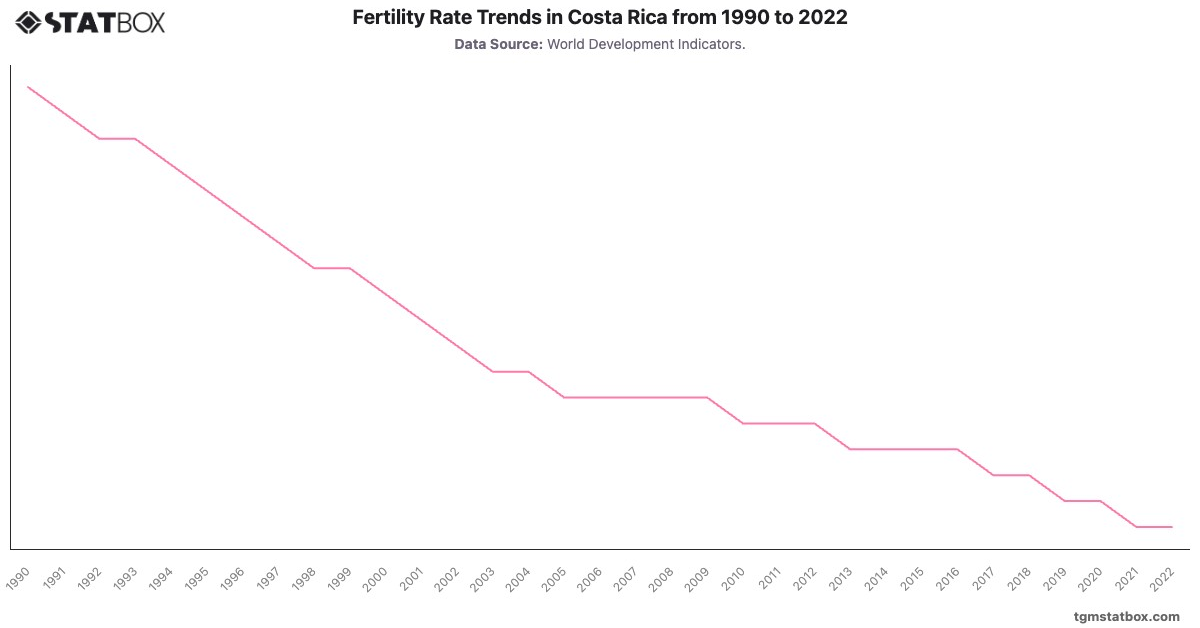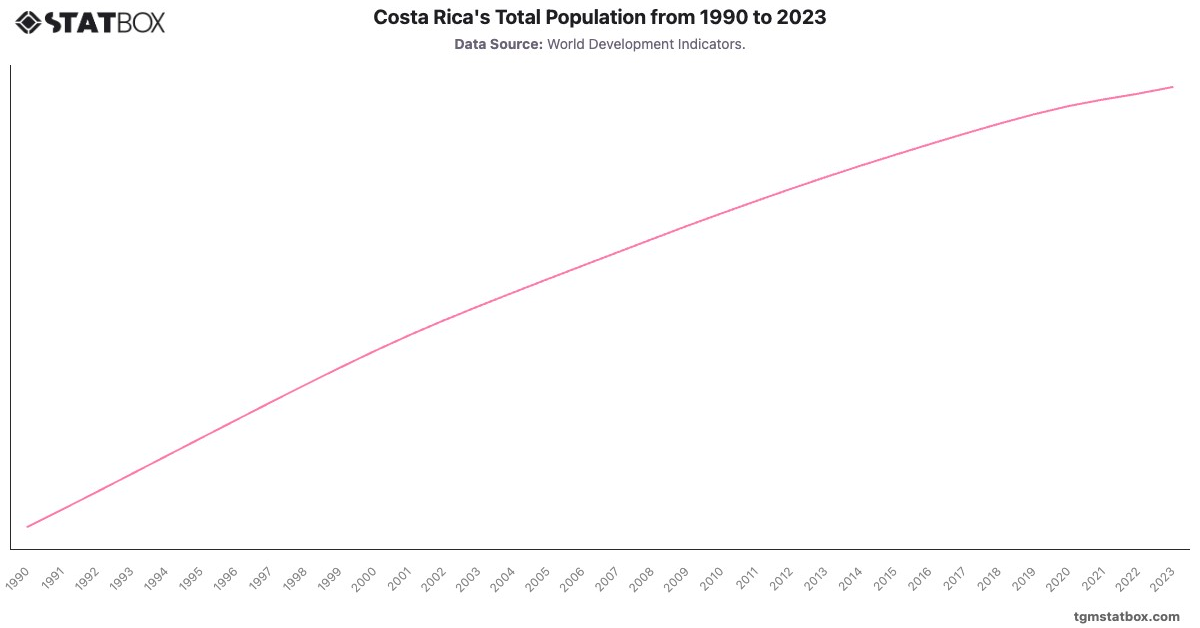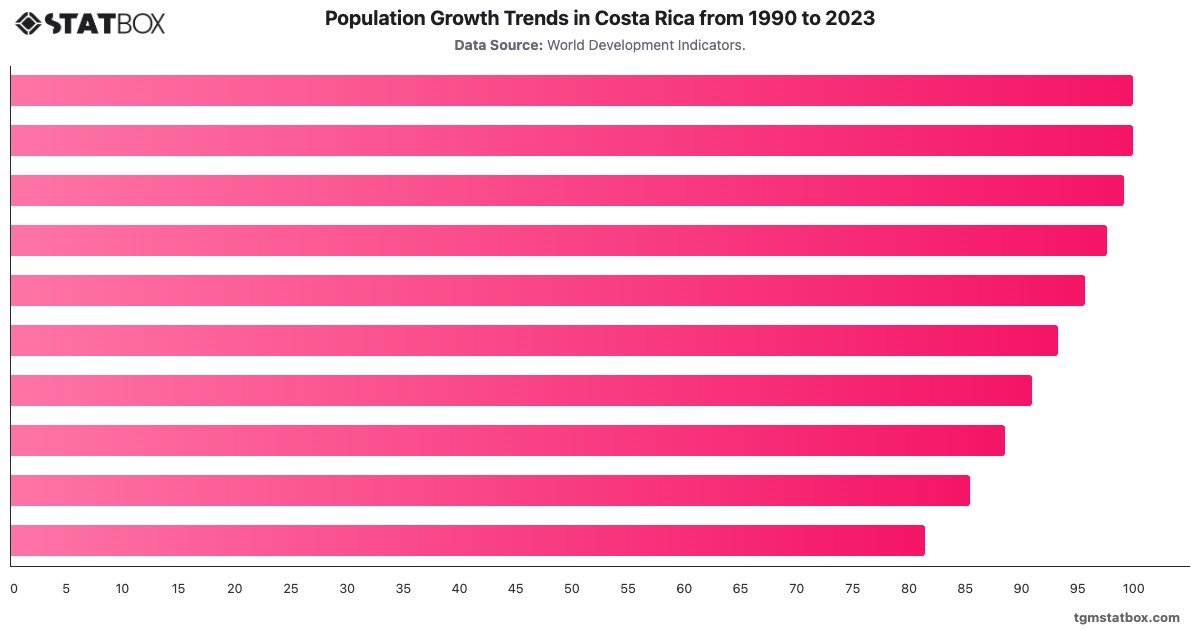
Costa Rica's population growth rate was high in the 1990s, consistently around , reflecting strong fertility rates and a relatively young population. However, the rate began to decline steadily after 1995, dropping to by 2007. This decline aligns with the nation’s advancements in healthcare, education, and family planning initiatives, which contributed to reduced birth rates.
The decline continued into the 2010s, with growth rates falling to by 2020. The trend reflects Costa Rica’s demographic transition, with a mature economy and aging population contributing to slower growth. By 2023, the rate stabilized at , indicative of the country's shift toward demographic patterns common in developed nations.
The decline continued into the 2010s, with growth rates falling to by 2020. The trend reflects Costa Rica’s demographic transition, with a mature economy and aging population contributing to slower growth. By 2023, the rate stabilized at , indicative of the country's shift toward demographic patterns common in developed nations.
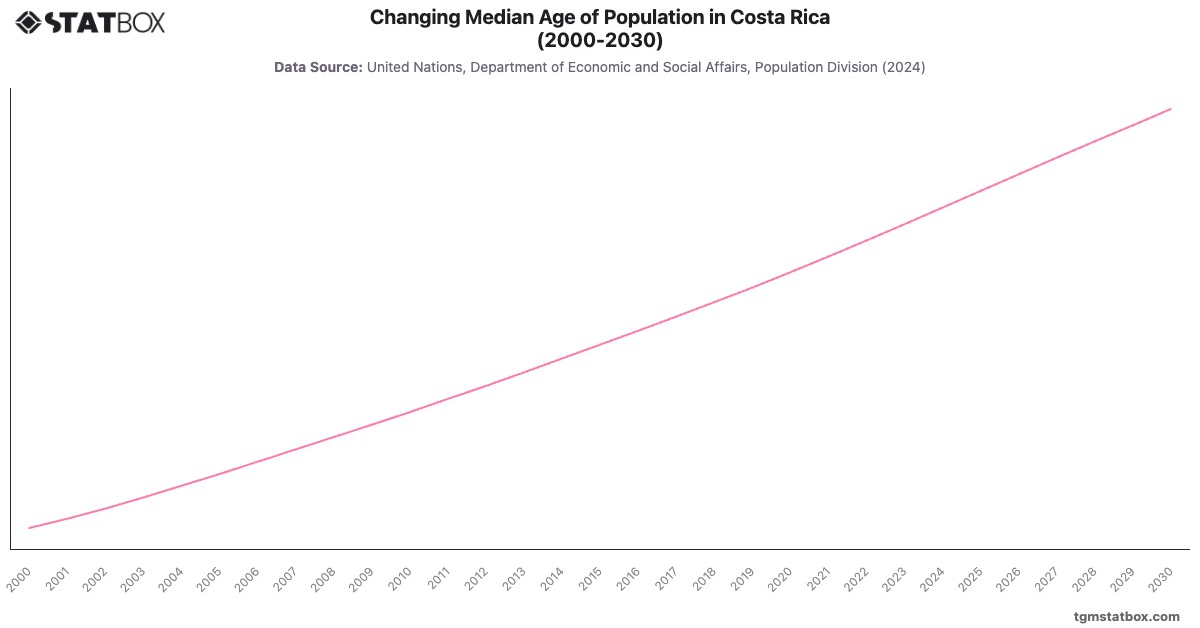
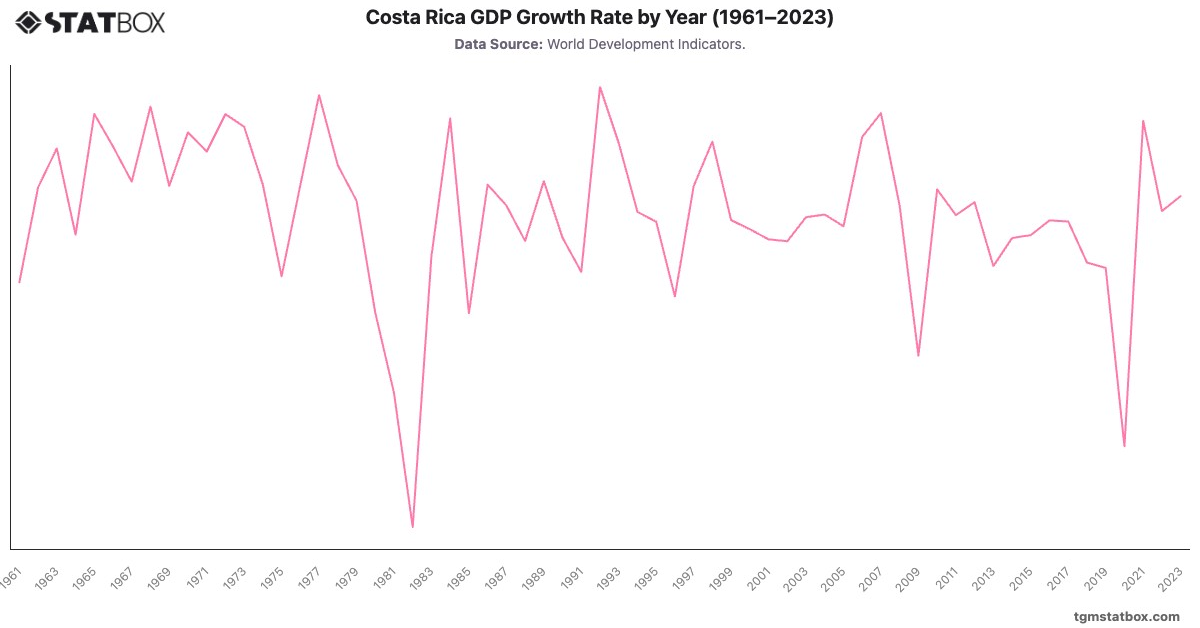
Gain a broader perspective by reviewing Costa Rica’s median age shift, Costa Rica’s annual GDP growth rate, Costa Rica’s industrial sector GDP share.