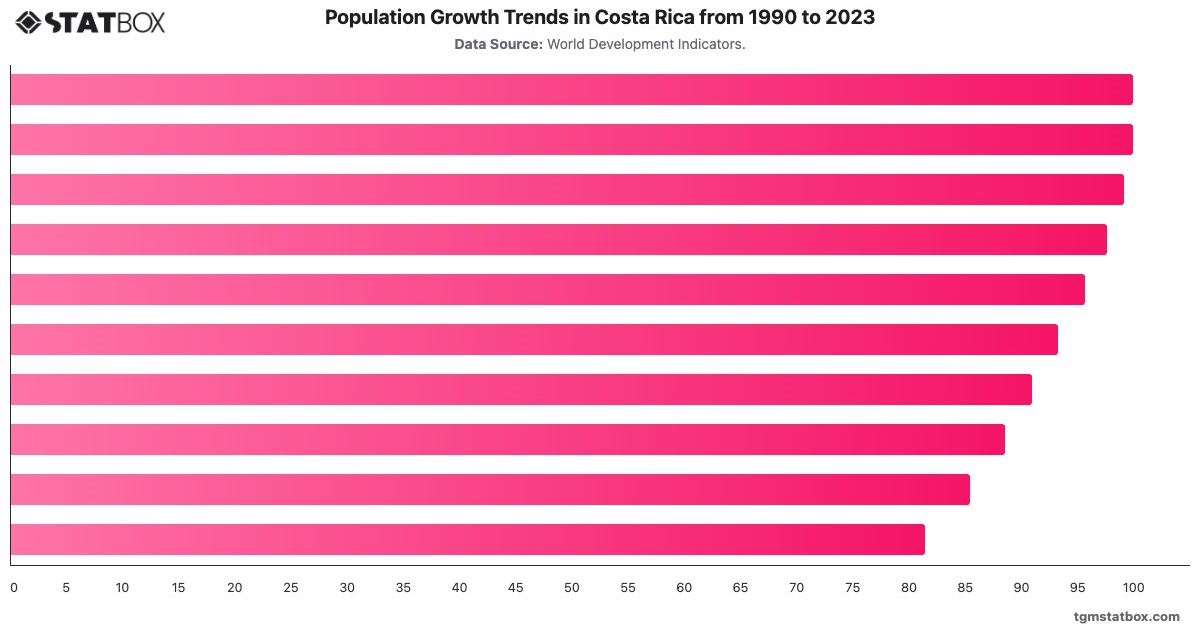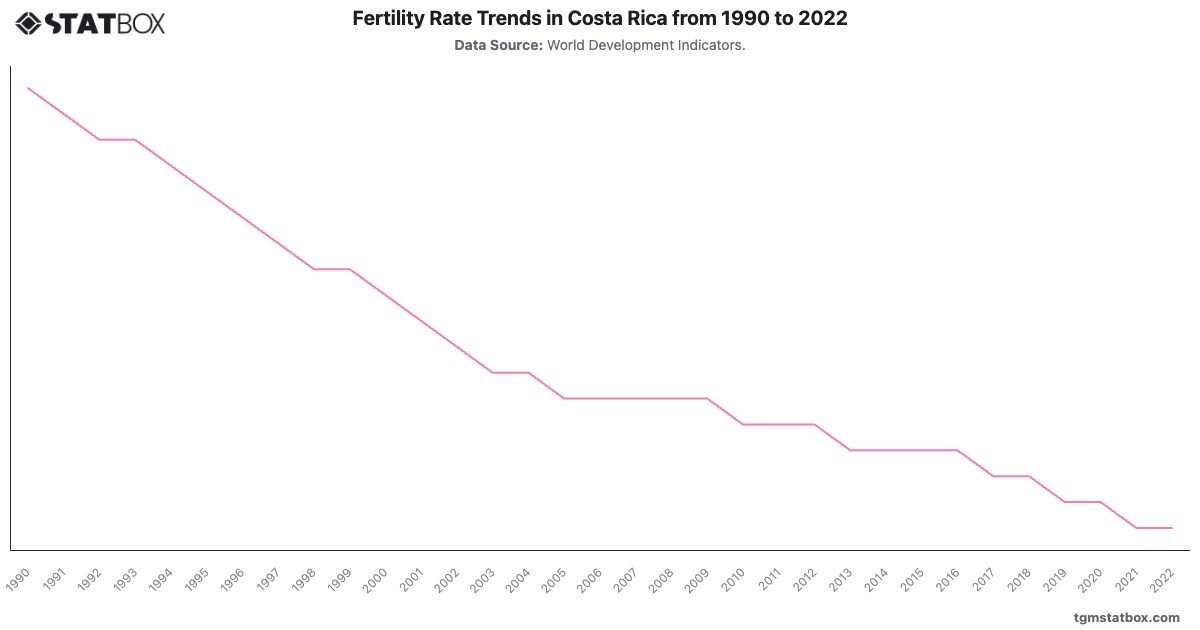
Costa Rica's fertility rate fell steadily from 3.2 in 1990 to 1.5 in 2022, demonstrating the impact of socioeconomic shifts and successful public health policies. During the 1990s, the fertility rate declined by approximately 0.1 per year, driven by widespread family planning initiatives and educational campaigns promoting reproductive health. Rural areas experienced slower declines compared to urban centers, where economic factors and lifestyle changes encouraged smaller families.
From 2000 onward, the rate of decline slowed, reflecting Costa Rica's transition to a low-fertility society. By the 2010s, the fertility rate hovered around 1.8, then decreased further to 1.5 by 2022. Factors such as women's increased workforce participation and evolving social norms contributed to this trend, underscoring Costa Rica's alignment with regional demographic shifts in Latin America.
From 2000 onward, the rate of decline slowed, reflecting Costa Rica's transition to a low-fertility society. By the 2010s, the fertility rate hovered around 1.8, then decreased further to 1.5 by 2022. Factors such as women's increased workforce participation and evolving social norms contributed to this trend, underscoring Costa Rica's alignment with regional demographic shifts in Latin America.
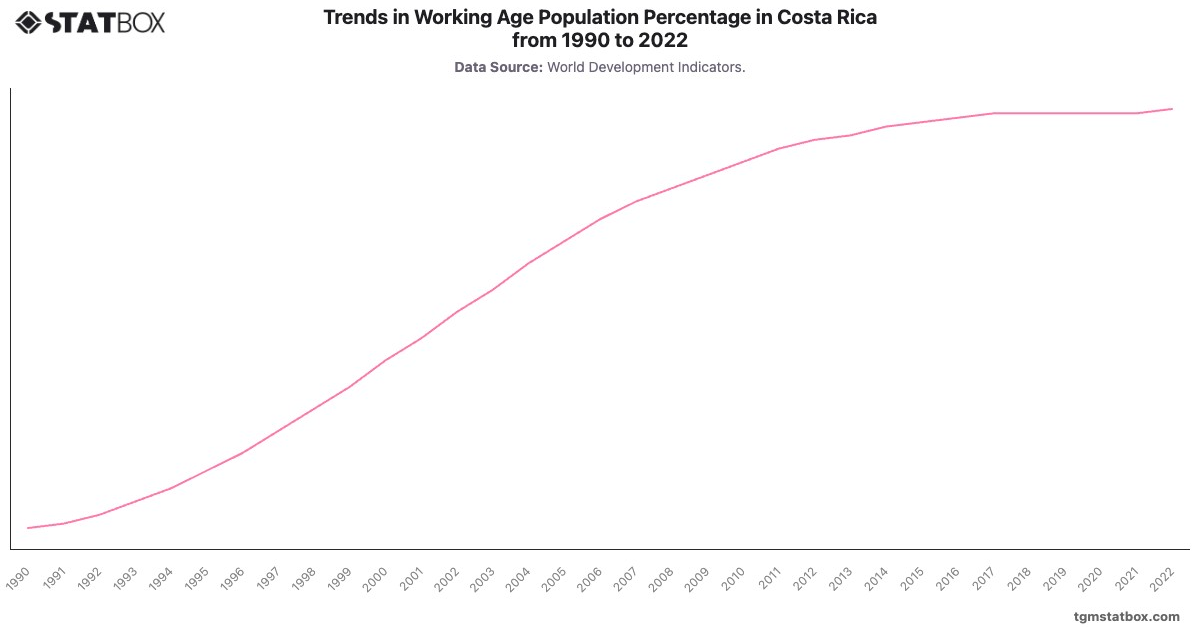
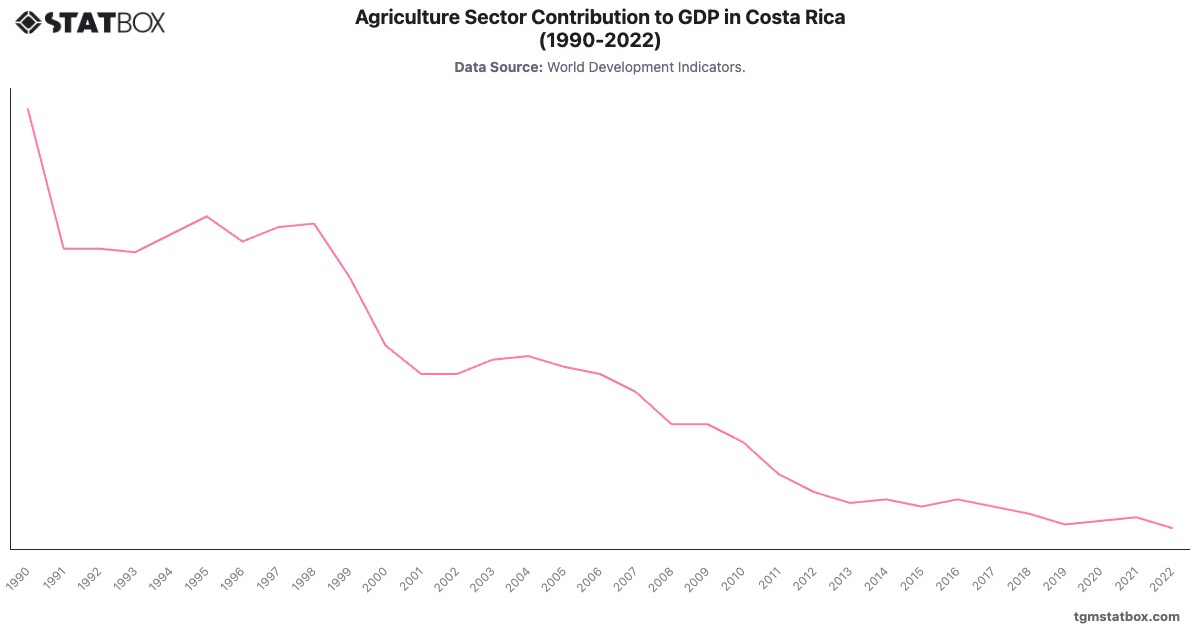
Find out more through related statistics on Costa Rica’s agricultural sector share in GDP, Costa Rica’s working-age population share, Costa Rica’s birth life expectancy.