Trends in Working Age Population Percentage in Costa Rica from 1990 to 2022
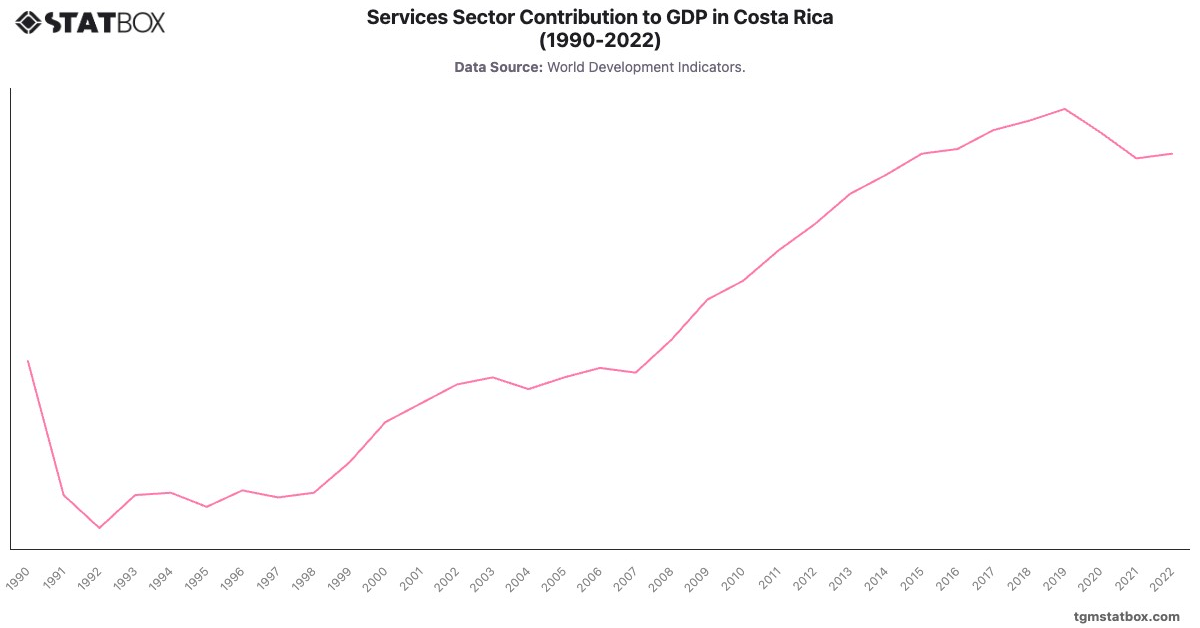
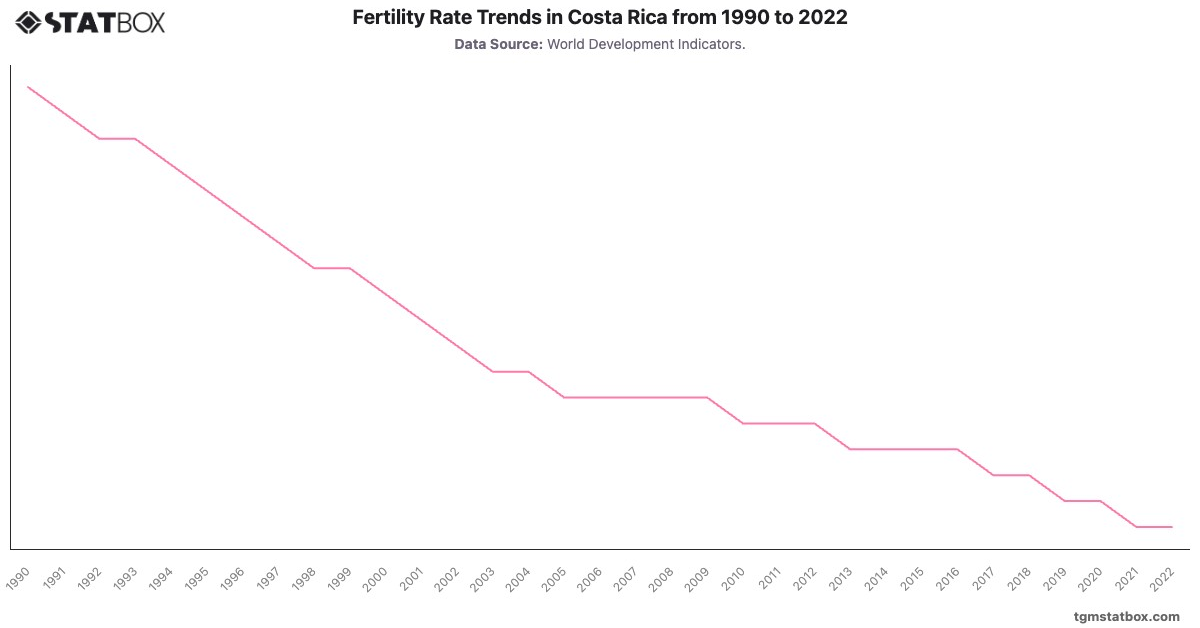
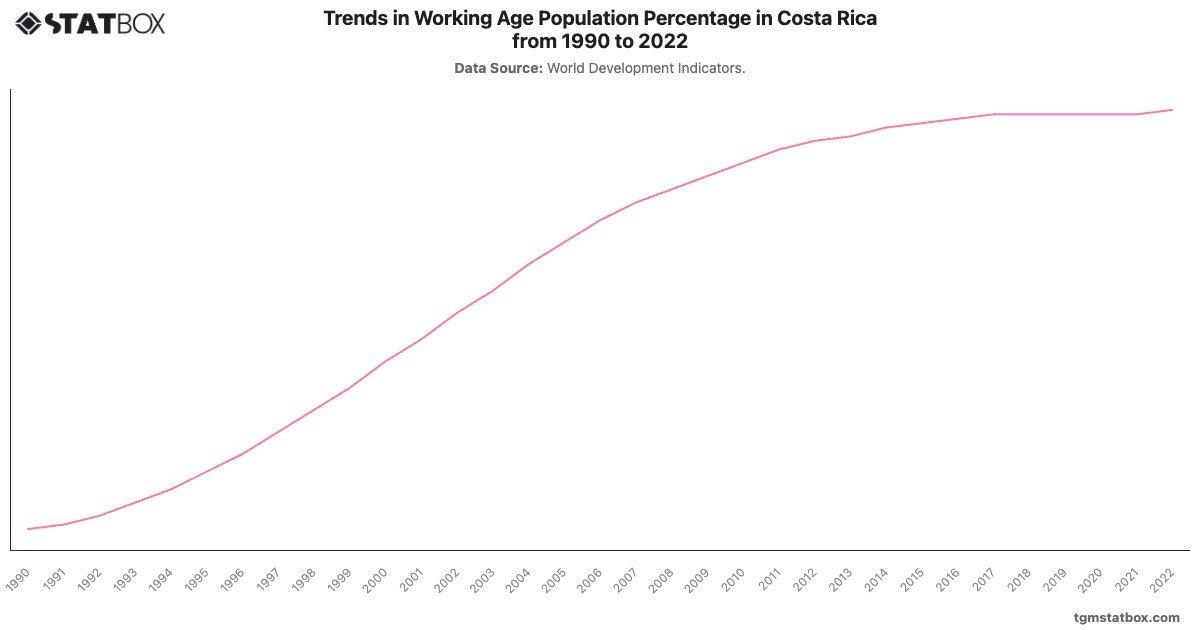
Costa Rica's working-age population steadily increased from in 1990 to in 2022, reflecting gradual demographic changes and socioeconomic development. The most significant growth occurred between the late 1990s and early 2000s, aligning with higher educational attainment and the expansion of the service and tech industries. The percentage remained relatively stable in recent years, hovering just above from 2014 to 2020. Costa Rica's focus on healthcare and education has played a crucial role in supporting this increase, though the steady rate towards 2022 could reflect an aging population.
Costa Rica's working-age population steadily increased from in 1990 to in 2022, reflecting gradual demographic changes and socioeconomic development. The most significant growth occurred between the late 1990s and early 2000s, aligning with higher educational attainment and the expansion of the service and tech industries. The percentage remained relatively stable in recent years, hovering just above from 2014 to 2020. Costa Rica's focus on healthcare and education has played a crucial role in supporting this increase, though the steady rate towards 2022 could reflect an aging population.
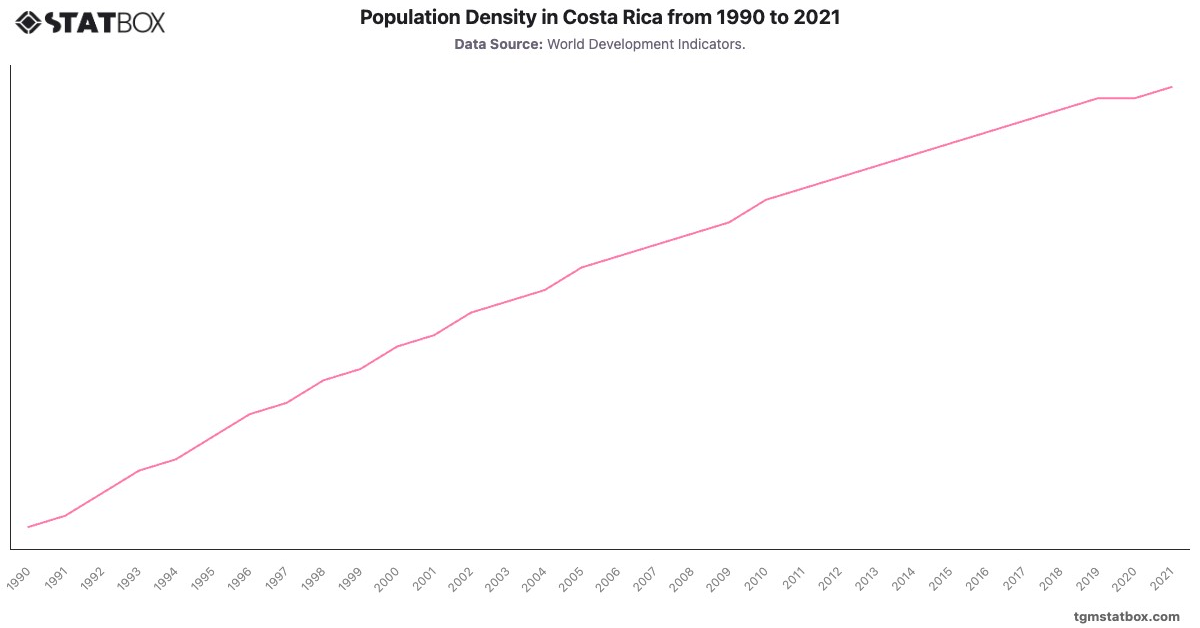
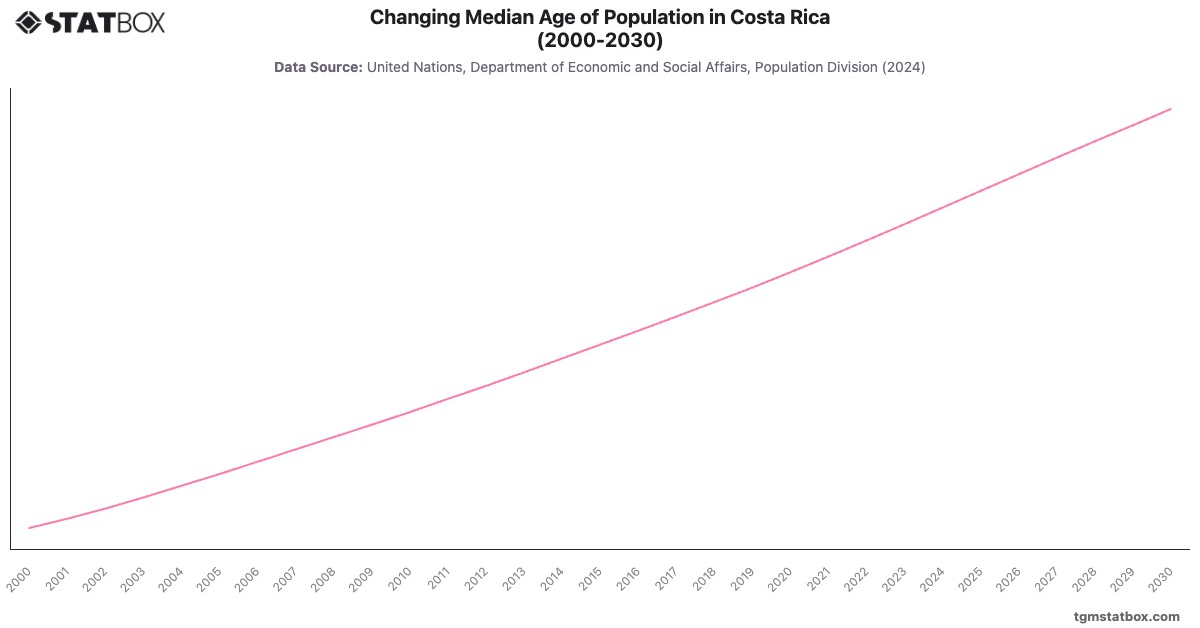
Find out more through related statistics on Costa Rica’s median age shift, Costa Rica’s industrial sector GDP share, Costa Rica’s population density.