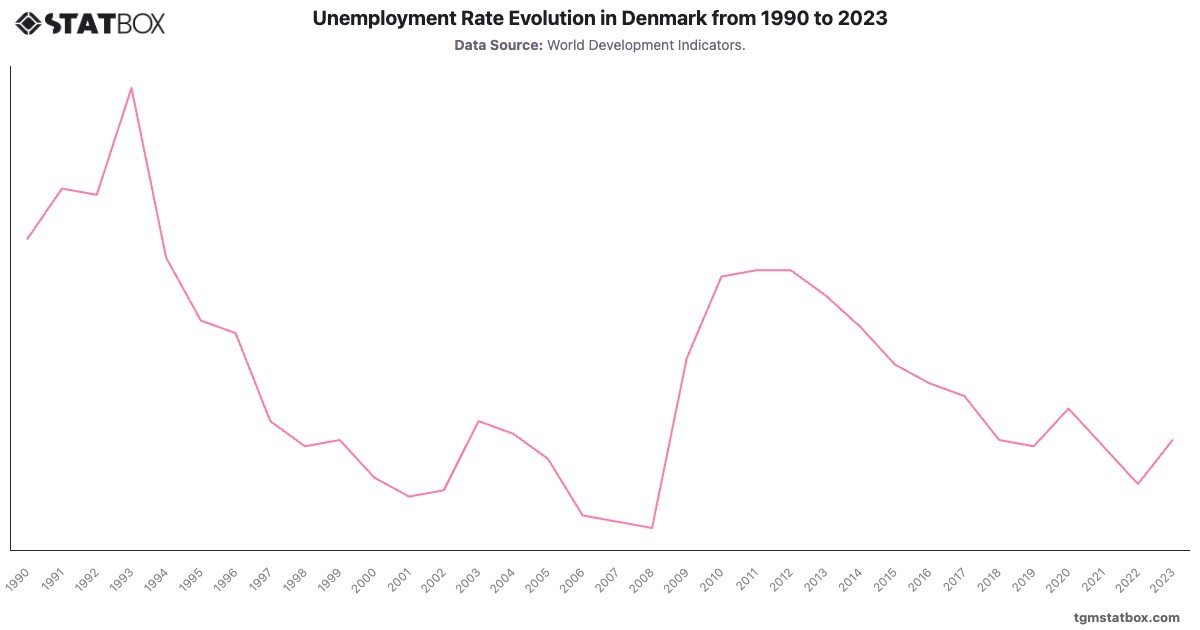
Denmark’s unemployment rate from 1990 to 2021 illustrates the stability of a well-regulated, resilient economy. In the early 1990s, Denmark saw a high unemployment rate, peaking at in 1993 due to a domestic recession. Following this, Denmark implemented labor market reforms, resulting in a steady decrease to a low of by 2008, coinciding with a period of robust economic growth.
The global financial crisis in 2008 drove the unemployment rate up to by 2011. However, Denmark's "flexicurity" model allowed for a relatively swift recovery, with unemployment returning to around by the end of the decade. The COVID-19 pandemic caused a temporary increase to in 2020, but by 2021, the rate had stabilized back to pre-pandemic levels, underscoring Denmark's strong labor market framework.
The global financial crisis in 2008 drove the unemployment rate up to by 2011. However, Denmark's "flexicurity" model allowed for a relatively swift recovery, with unemployment returning to around by the end of the decade. The COVID-19 pandemic caused a temporary increase to in 2020, but by 2021, the rate had stabilized back to pre-pandemic levels, underscoring Denmark's strong labor market framework.
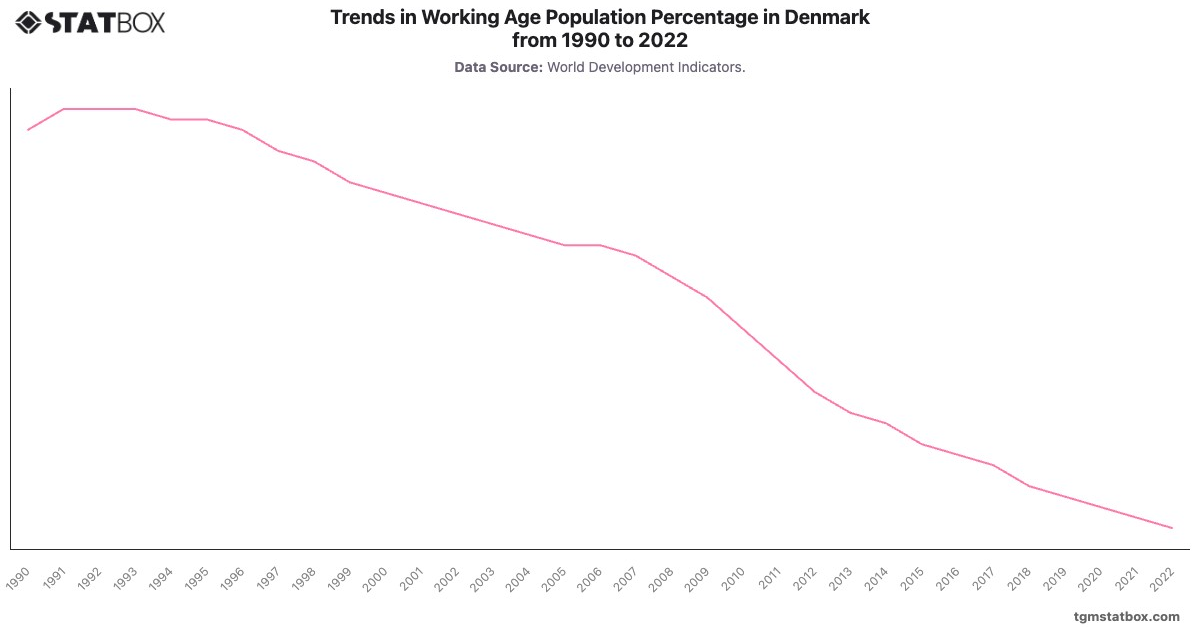
For additional information, visit statistics on Denmark’s working-age population share, Denmark’s mortality rate trend, Denmark’s population growth trend.