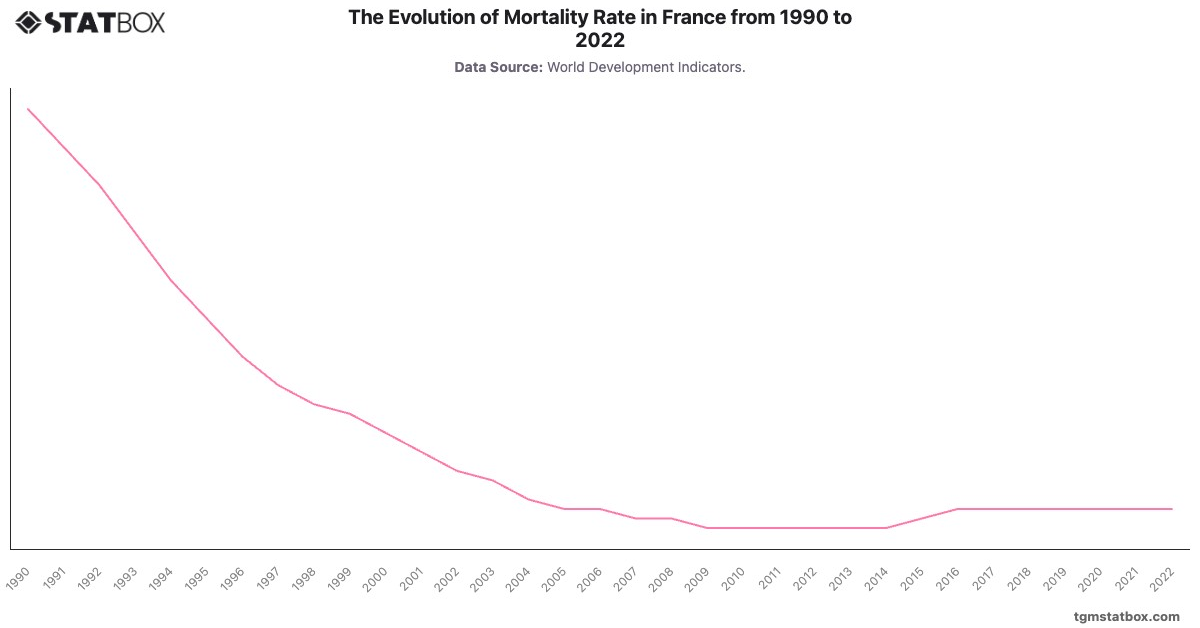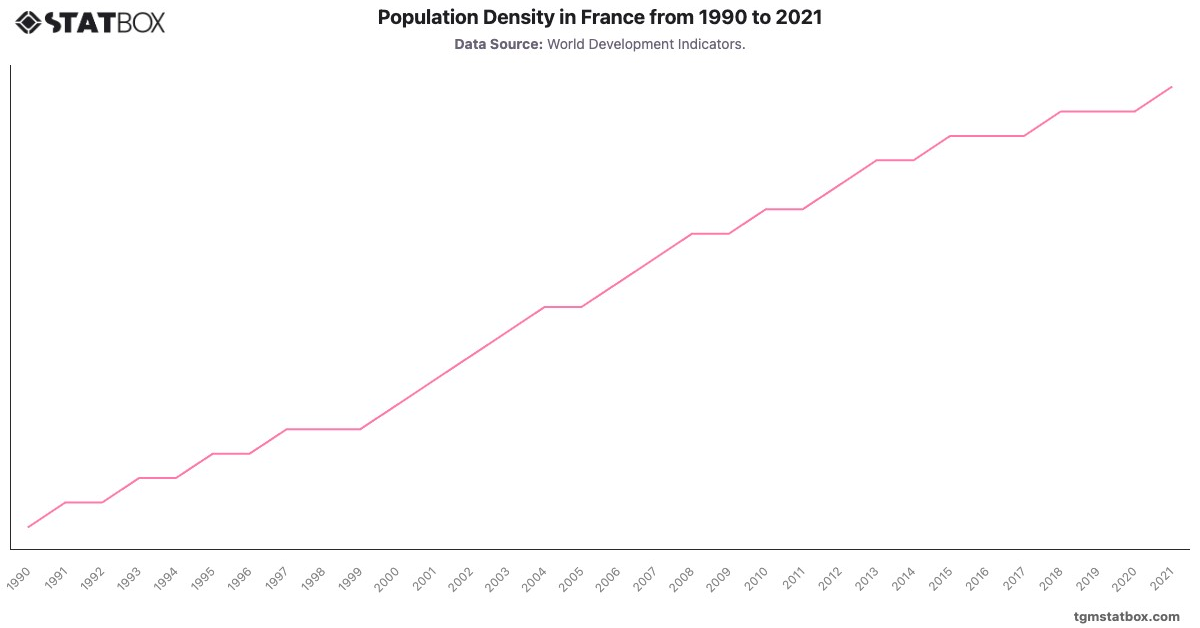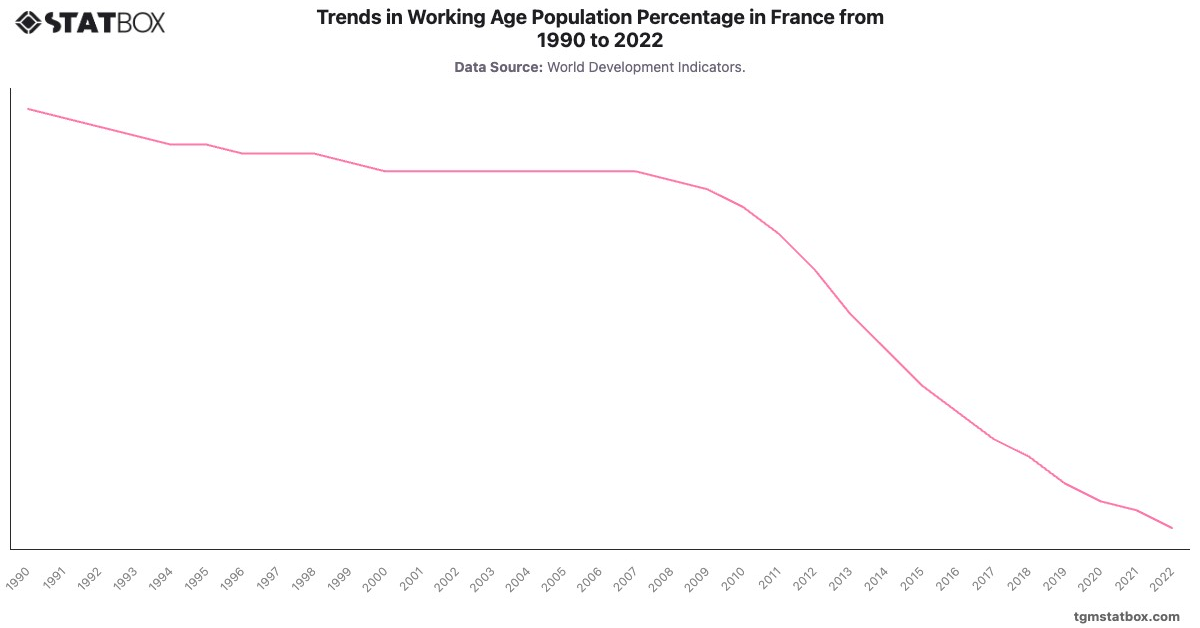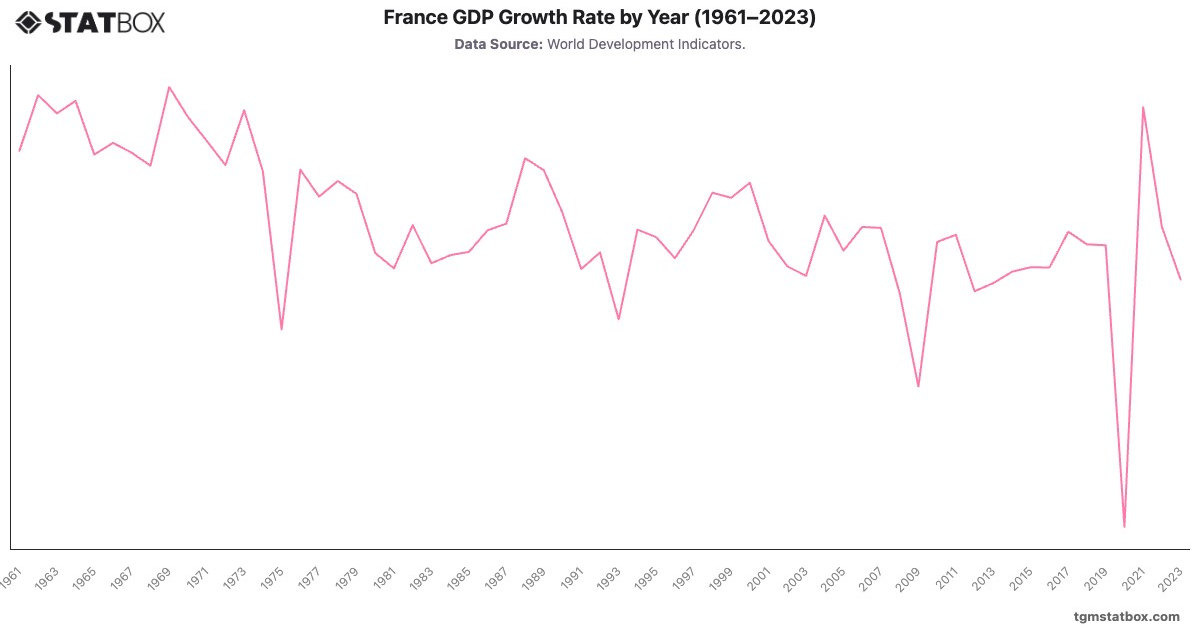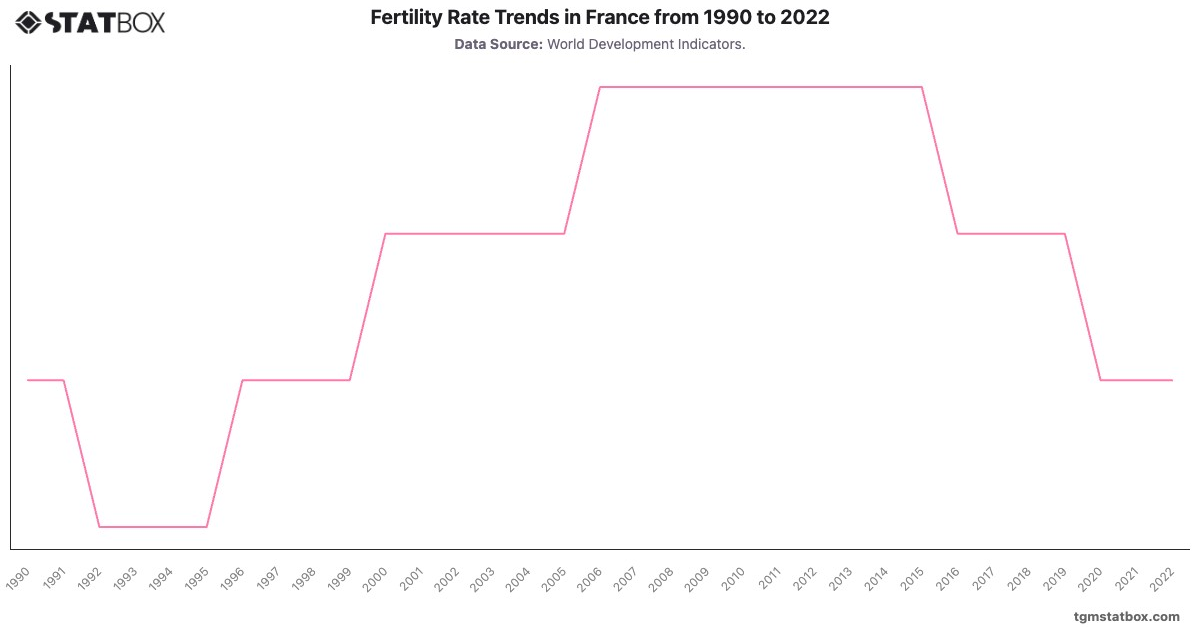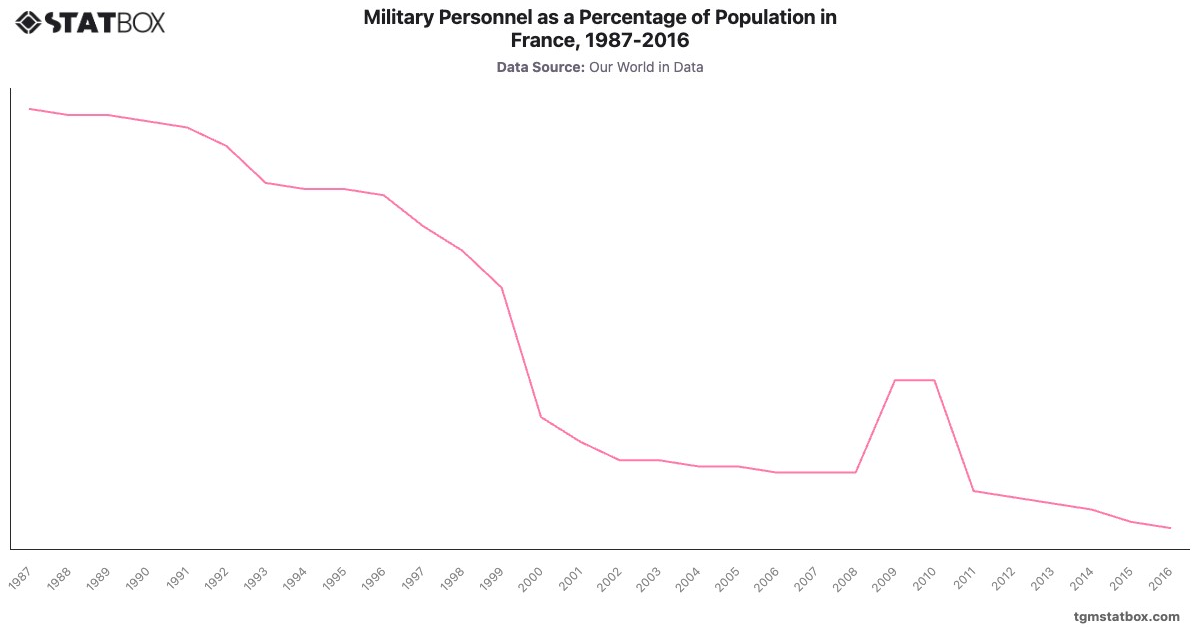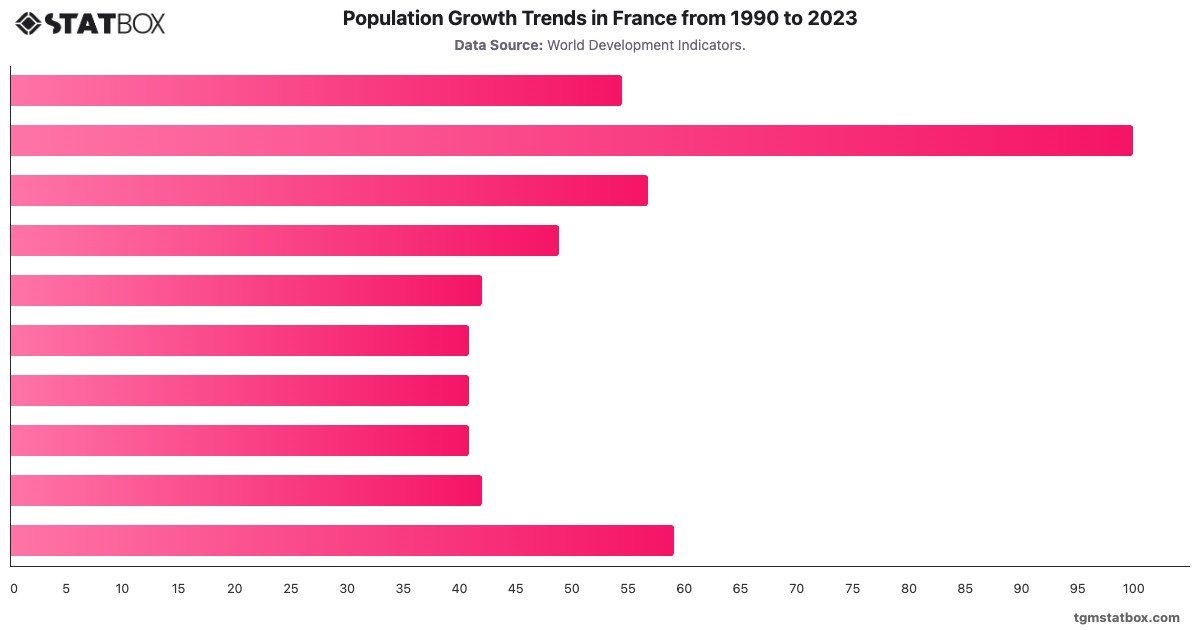
France experienced steady population growth between 1990 and the early 2000s, with rates averaging to . The sharpest increase occurred in 1991, reaching , which can be attributed to economic stability and a slight baby boom following the 1980s economic recovery. From 1993 onwards, growth stabilized at around -, supported by relatively high birth rates and immigration policies facilitating the inflow of foreign workers and refugees.
After 2010, the growth rate gradually declined, stabilizing at from 2016 onwards. This decline reflects demographic aging and lower birth rates, consistent with broader trends in Western Europe. Despite these challenges, France maintained moderate population growth, aided by its relatively high fertility rate compared to neighboring countries and sustained immigration levels.
After 2010, the growth rate gradually declined, stabilizing at from 2016 onwards. This decline reflects demographic aging and lower birth rates, consistent with broader trends in Western Europe. Despite these challenges, France maintained moderate population growth, aided by its relatively high fertility rate compared to neighboring countries and sustained immigration levels.
For a deeper dive into the topic, explore percentage of France’s working-age population, France’s population figures, France’s fertility rate trends.