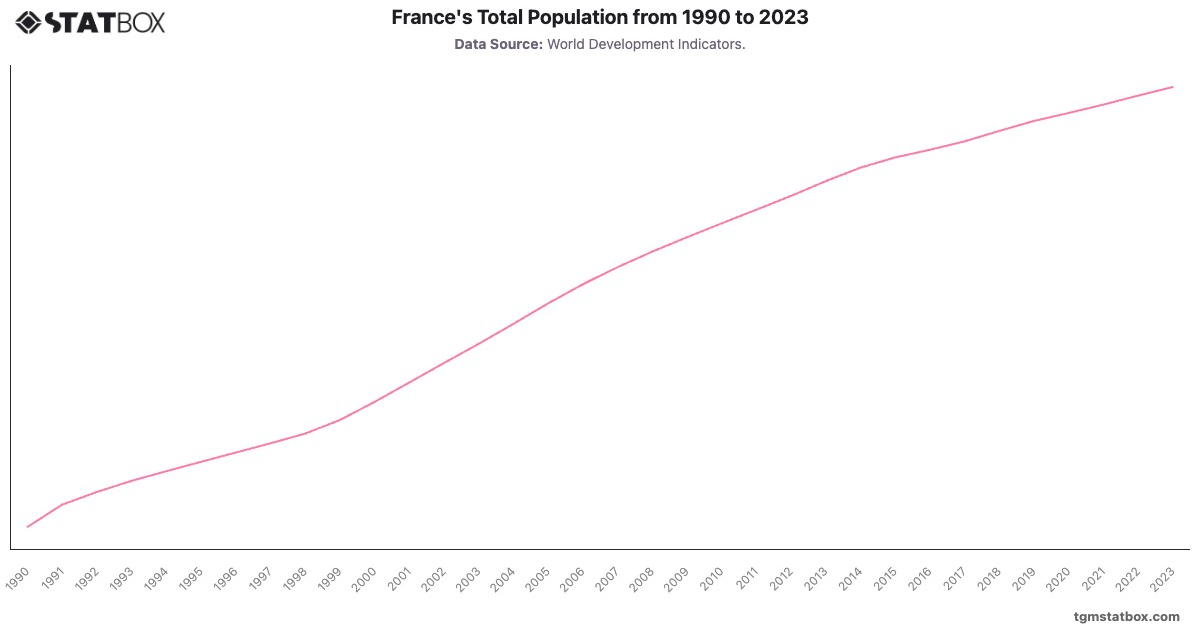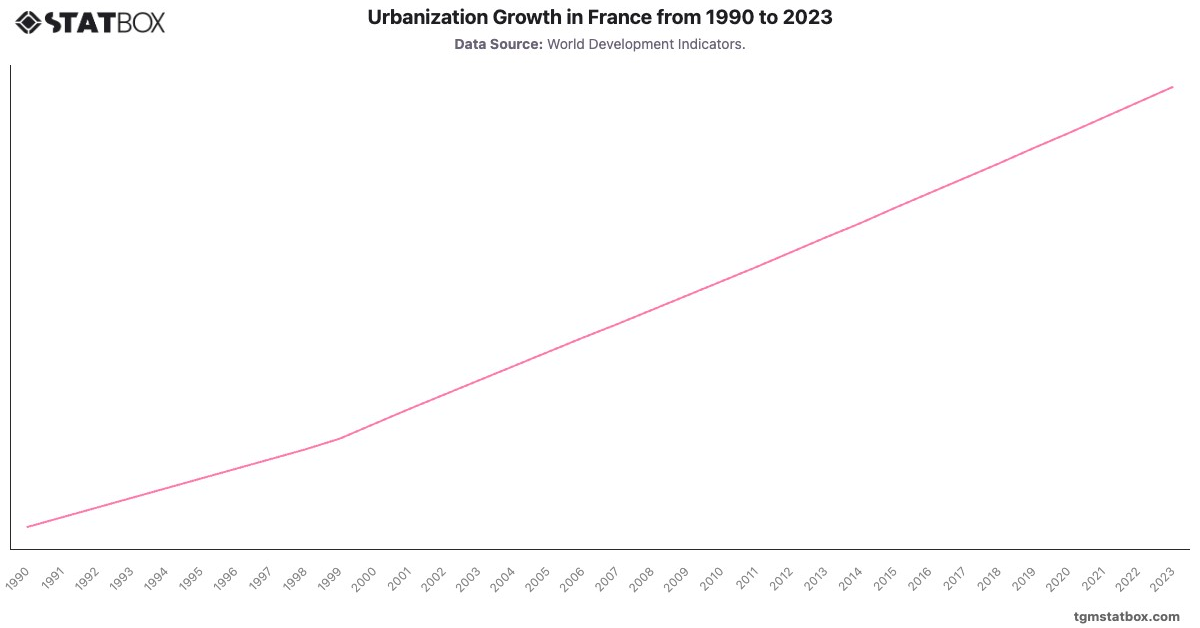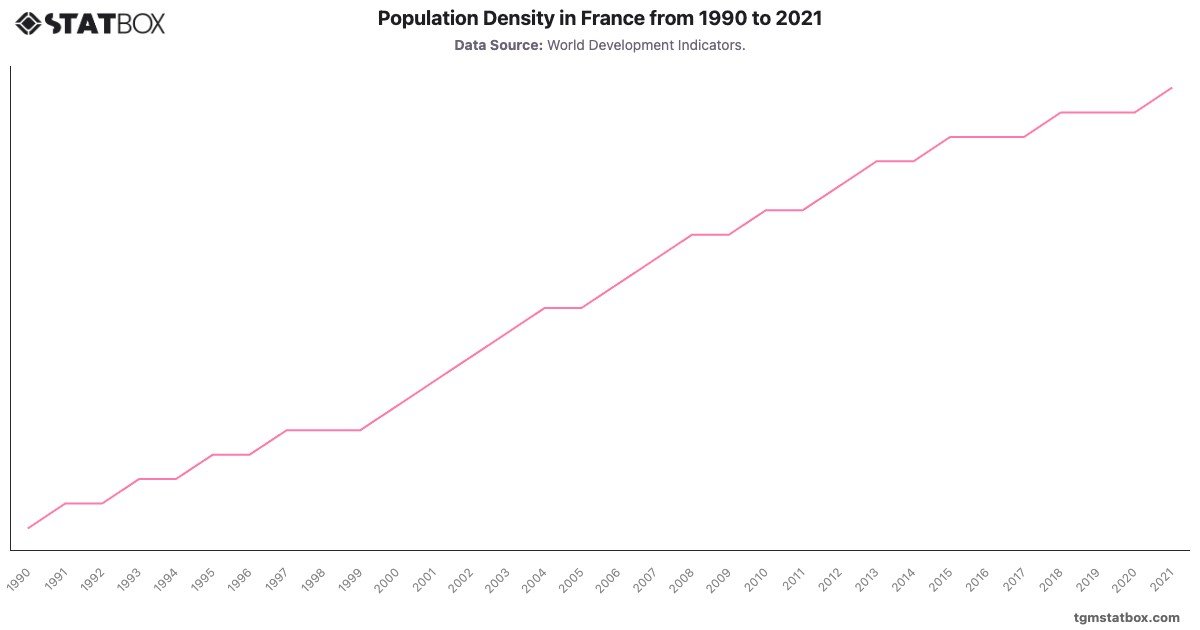
Between 1990 and 2021, France’s population density saw a consistent upward trend, increasing from 106 people per square kilometer in 1990 to 124 in 2021. This gradual rise reflects France's steady urbanization and population growth, particularly around major metropolitan areas like Paris, Lyon, and Marseille. Urban migration and economic development contributed significantly to this trend as people moved toward cities in pursuit of job opportunities and better infrastructure. The late 1990s and early 2000s marked a noticeable acceleration, with urban expansion responding to population demands.
The early 2000s onward shows continued but modest growth, in line with France's overall slower population growth relative to other European nations. As urban centers became more populated, infrastructure developments supported higher density without drastic increases. The stable rise in density through 2021 highlights a balance between urban development and spatial planning, ensuring sustainability and manageable density levels across the country.
The early 2000s onward shows continued but modest growth, in line with France's overall slower population growth relative to other European nations. As urban centers became more populated, infrastructure developments supported higher density without drastic increases. The stable rise in density through 2021 highlights a balance between urban development and spatial planning, ensuring sustainability and manageable density levels across the country.
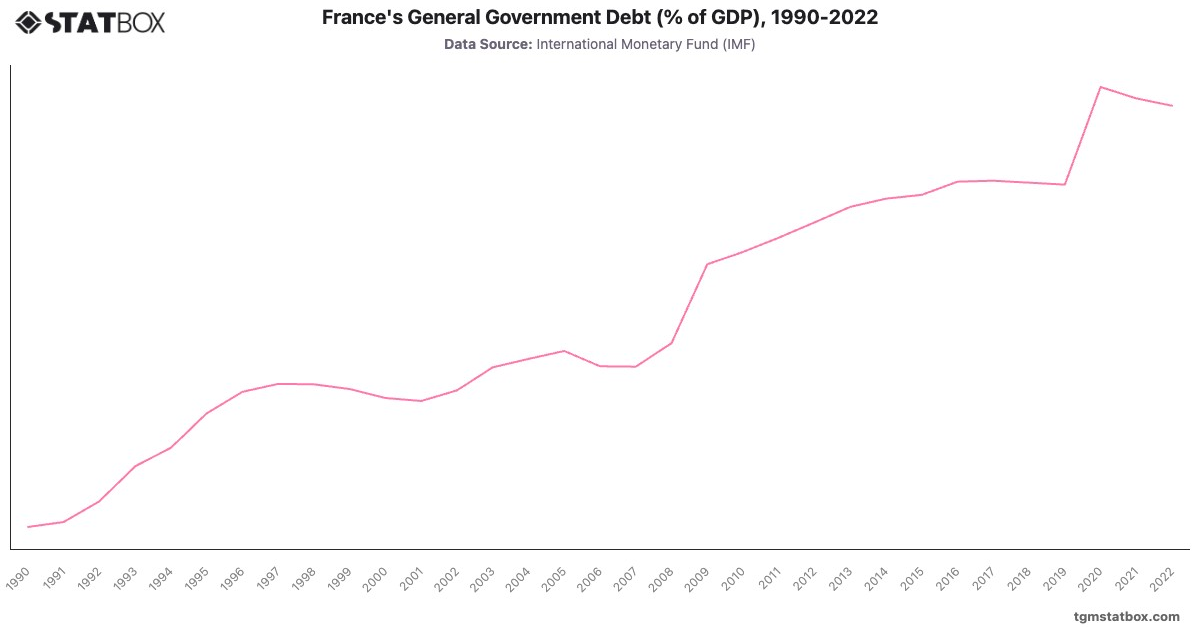
For a broader context, visit other statistics on France’s government debt-to-GDP ratio, France’s population figures, France’s agriculture share in GDP.