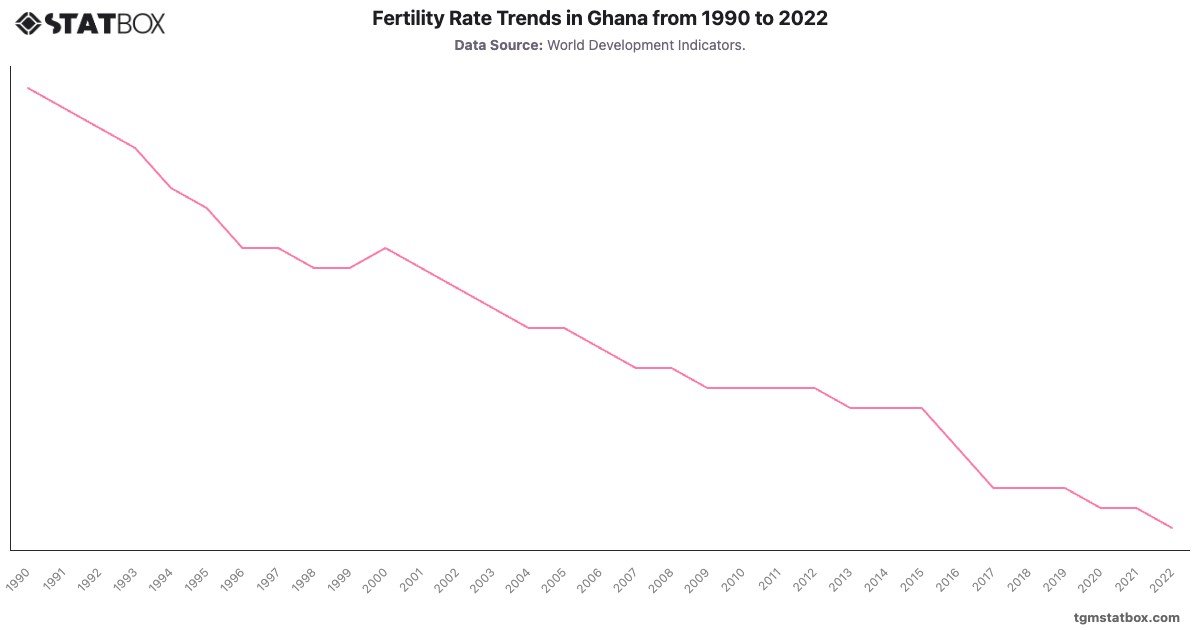
Ghana's fertility rate experienced a steady decline, falling from 5.7 in 1990 to 3.5 in 2022. The sharpest decreases occurred between 1994 and 2010, driven by improved education, healthcare access, and urbanization, which reduced family size preferences.
From 2016 onward, the fertility rate decreased more slowly, stabilizing around 3.6 in 2020 before reaching 3.5 in 2022. Despite this progress, cultural norms and rural populations continue to influence fertility trends, maintaining levels higher than the global average.
From 2016 onward, the fertility rate decreased more slowly, stabilizing around 3.6 in 2020 before reaching 3.5 in 2022. Despite this progress, cultural norms and rural populations continue to influence fertility trends, maintaining levels higher than the global average.
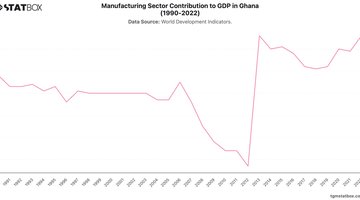
For additional information, visit statistics on Ghana’s manufacturing sector share in GDP, Ghana’s inflation trends, Ghana’s unemployment rate trend.