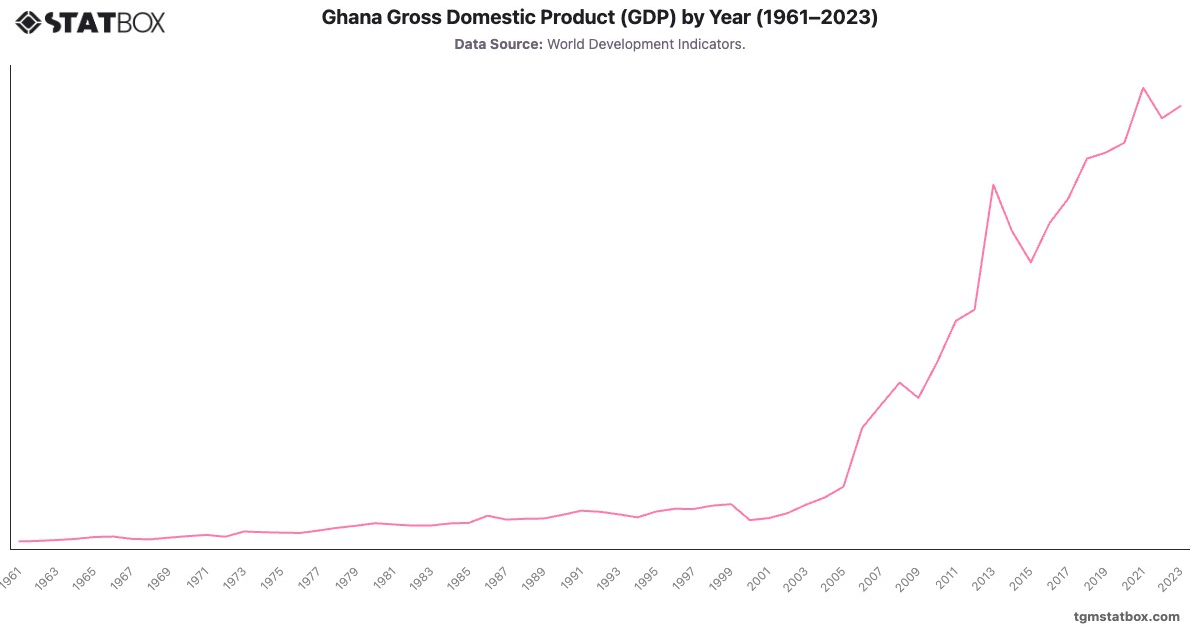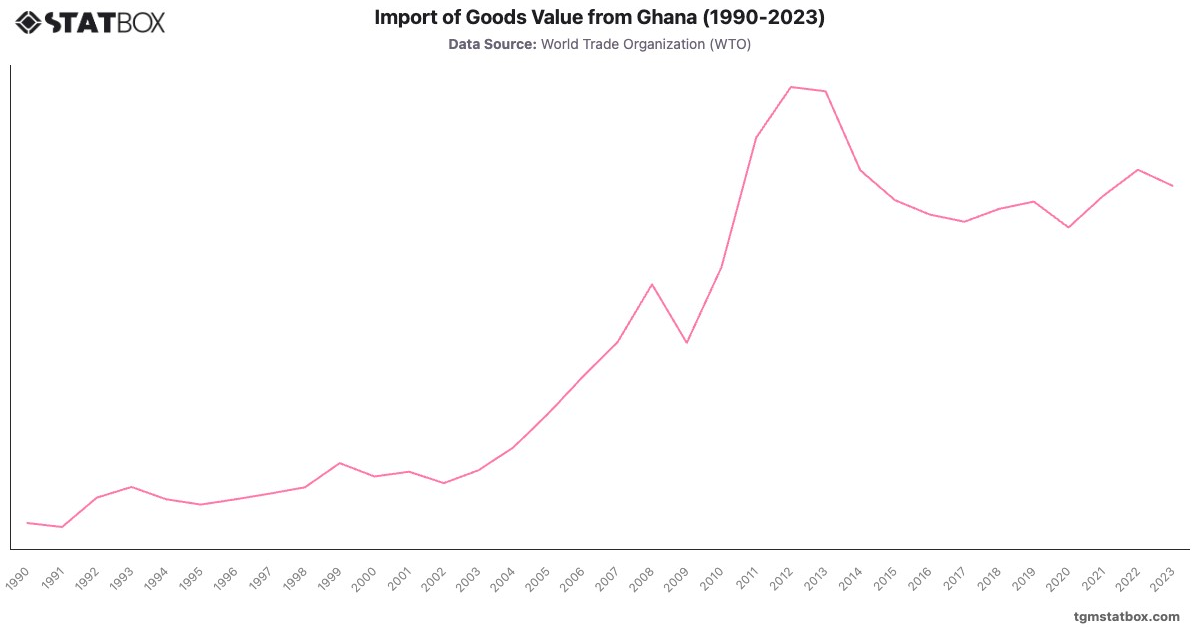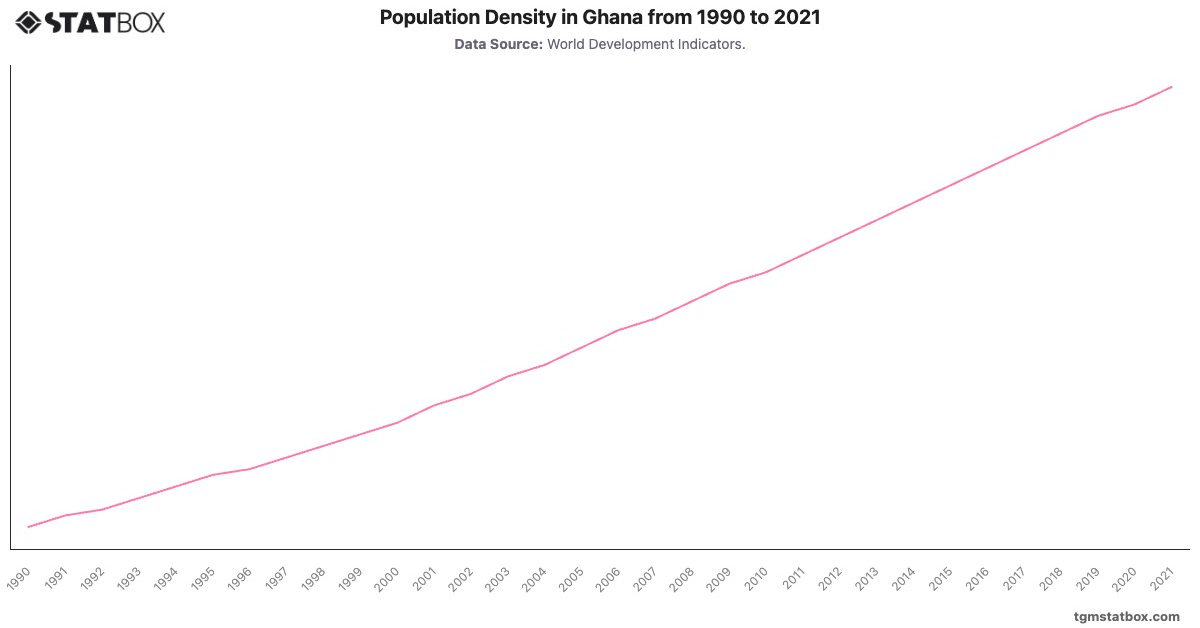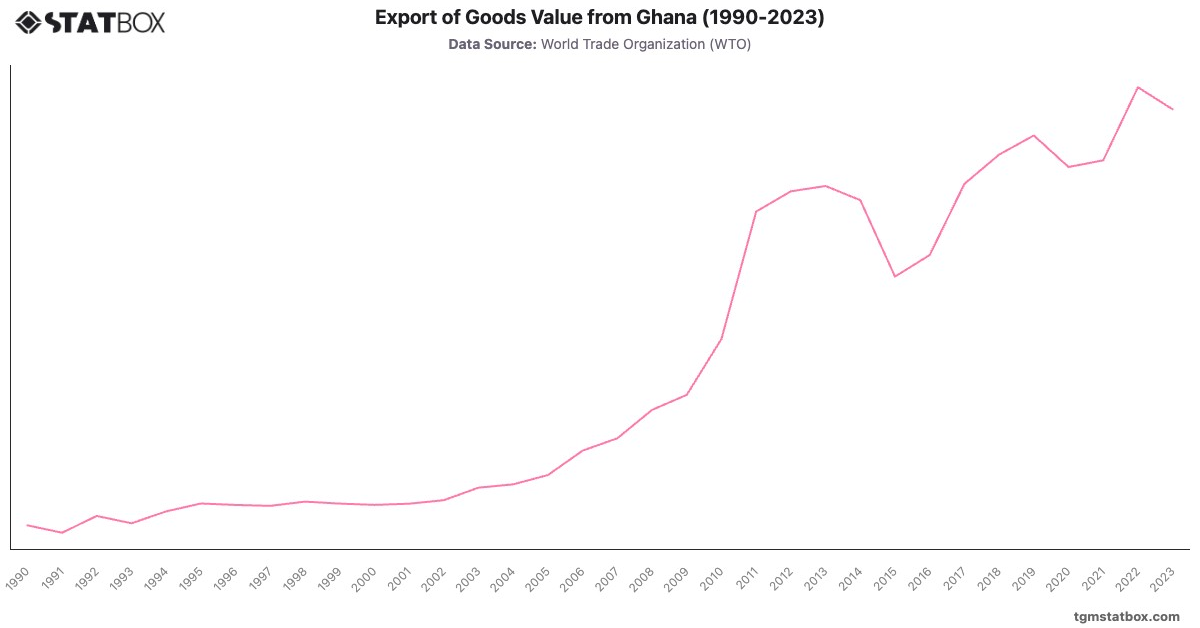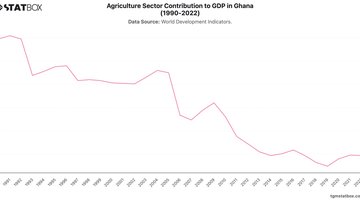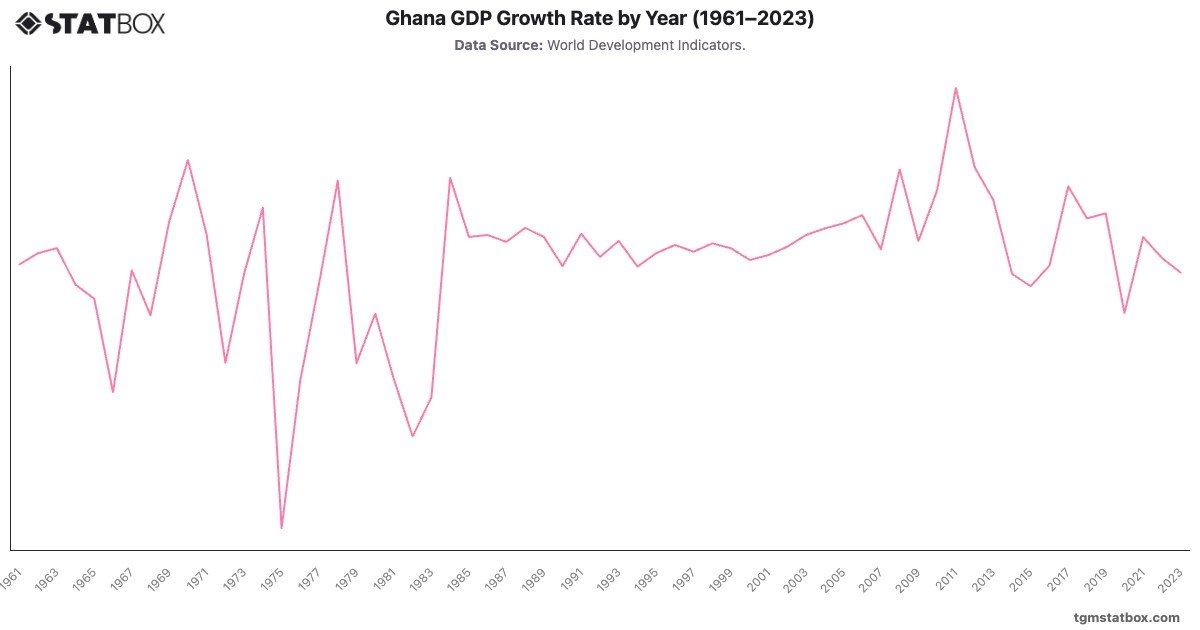
In the early years, Ghana's economy experienced instability, with a marked decline in 1966 (-) following the military coup that ousted President Kwame Nkrumah. The political transition disrupted economic activity, leading to negative growth. The 1970s and early 1980s further witnessed economic struggles, with another notable low point in 1982 (-), as the country grappled with military coups, poor economic management, and global market challenges.
A period of recovery and growth began in the late 1980s, but the most substantial economic boost came after the discovery of oil in 2007. This discovery marked the beginning of a new growth era, with the GDP growth rate peaking at in 2011. The oil sector, alongside infrastructure investment, drove rapid economic expansion during this period.
However, Ghana’s economy faced challenges in the 2010s, with fluctuating growth rates. The global COVID-19 pandemic caused a significant economic slowdown in 2020, reducing the GDP growth rate to just .
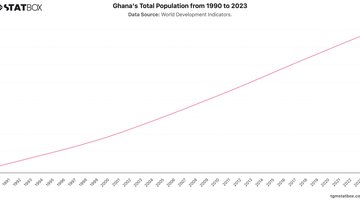
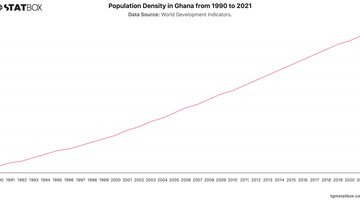
Discover additional trends and data on Ghana’s unemployment rate trend, Ghana’s population numbers, Ghana’s annual GDP figures.