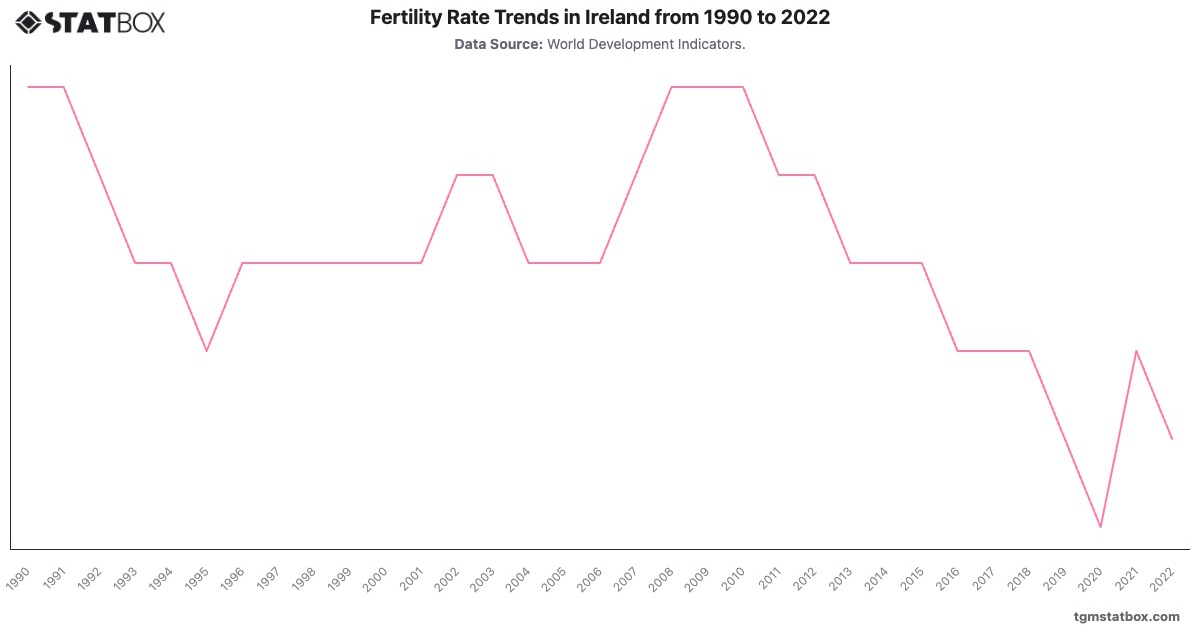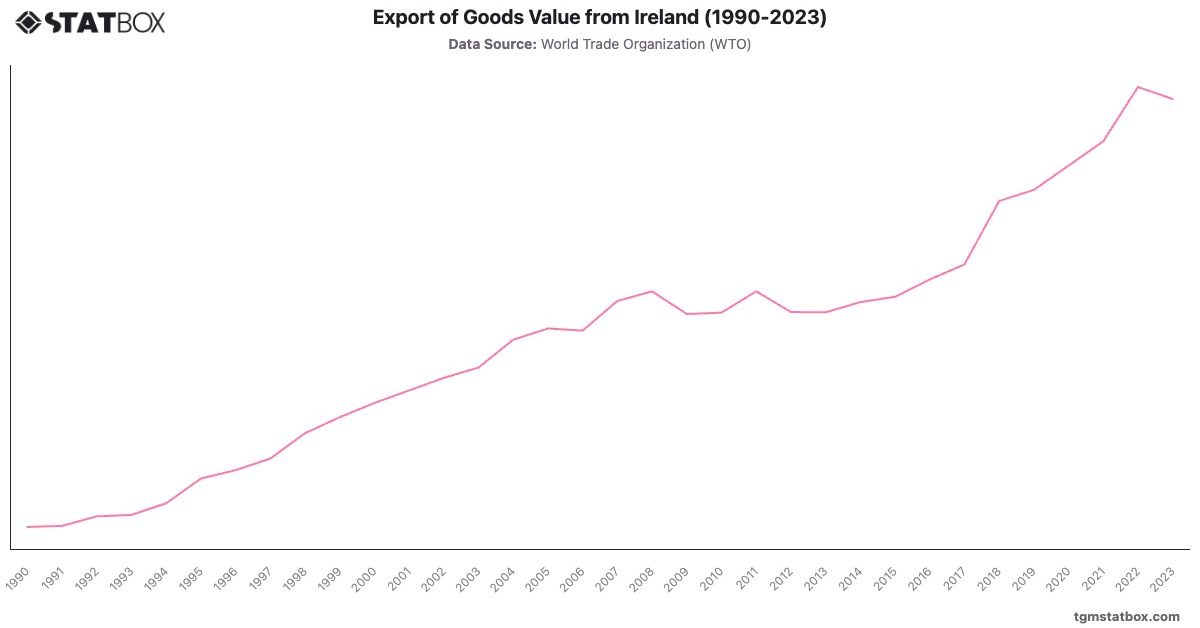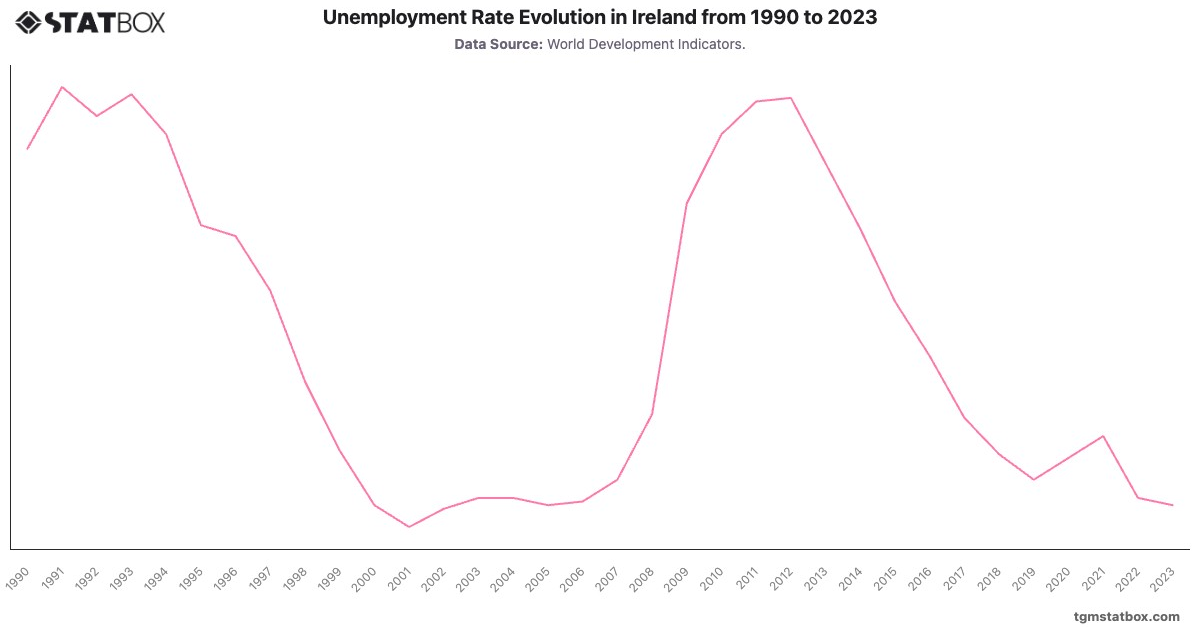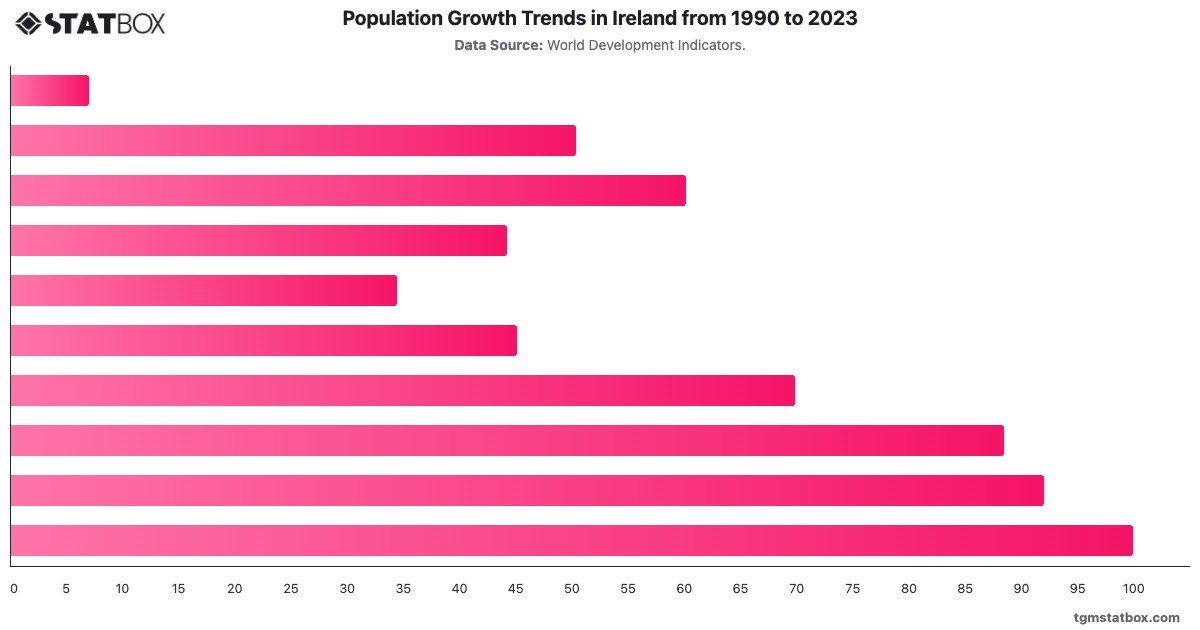
Ireland's population growth exhibited notable fluctuations over the past three decades, marked by periods of rapid expansion and stabilization. Growth was minimal in 1990 at , but significant acceleration began in the mid-1990s, coinciding with Ireland's economic transformation during the Celtic Tiger years. By 2000, growth had reached , and the peak growth of in 2007 reflected high immigration rates driven by robust economic opportunities.
The global financial crisis in 2008 caused a sharp deceleration, with growth dropping to by 2009. Recovery in subsequent years was steady, supported by improving economic conditions and government incentives to attract skilled immigrants. By 2022, growth surged to , partially attributed to post-pandemic recovery and an increase in net migration. The growth in 2023, the highest since the mid-2000s, indicates Ireland’s sustained attractiveness as a destination for migration amid a strong economic performance.
The global financial crisis in 2008 caused a sharp deceleration, with growth dropping to by 2009. Recovery in subsequent years was steady, supported by improving economic conditions and government incentives to attract skilled immigrants. By 2022, growth surged to , partially attributed to post-pandemic recovery and an increase in net migration. The growth in 2023, the highest since the mid-2000s, indicates Ireland’s sustained attractiveness as a destination for migration amid a strong economic performance.
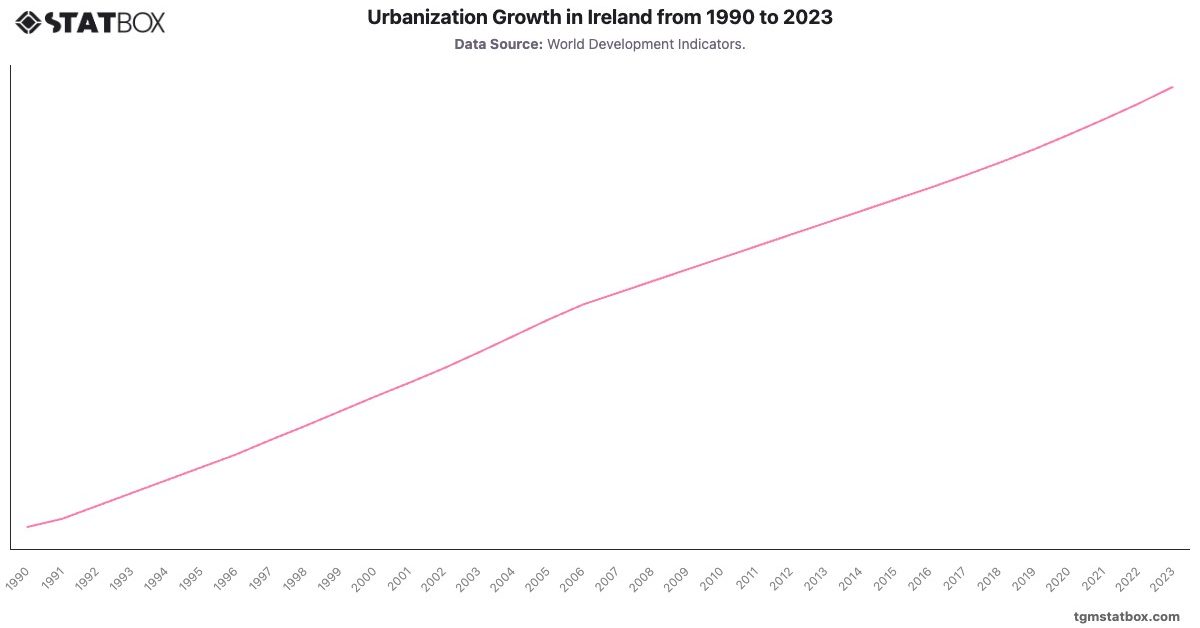
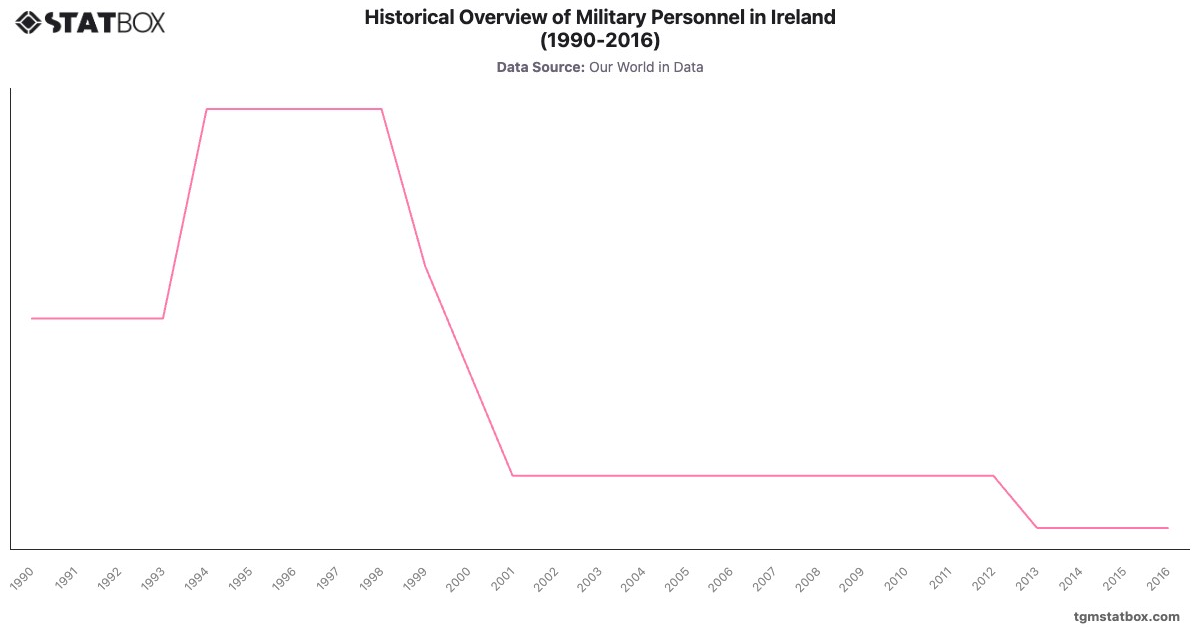
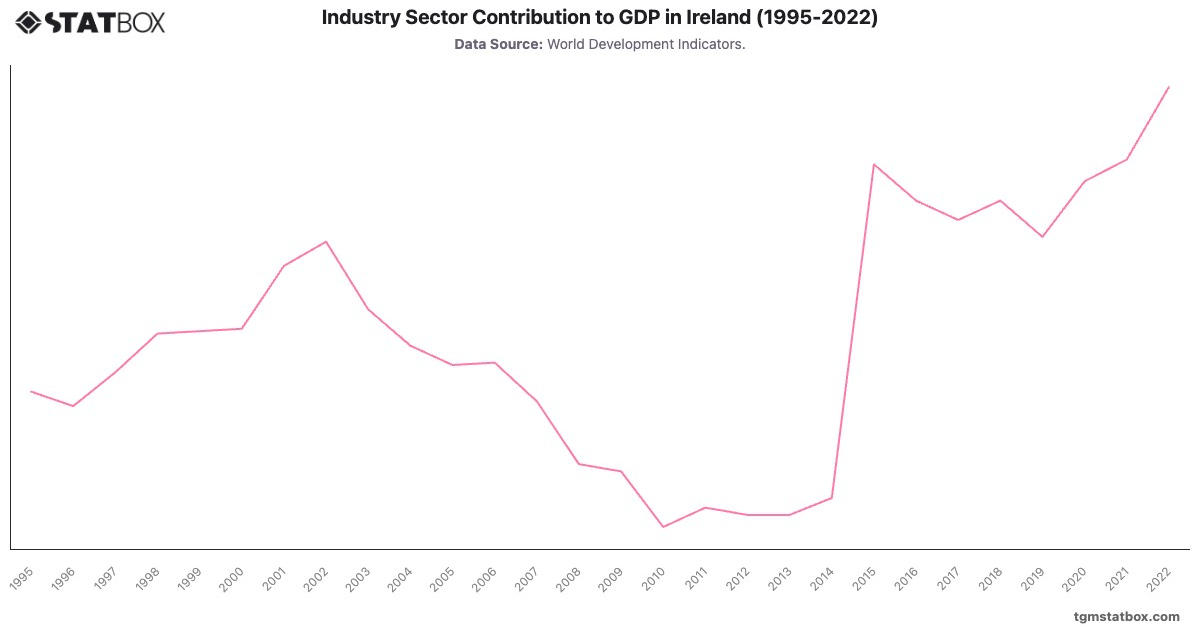
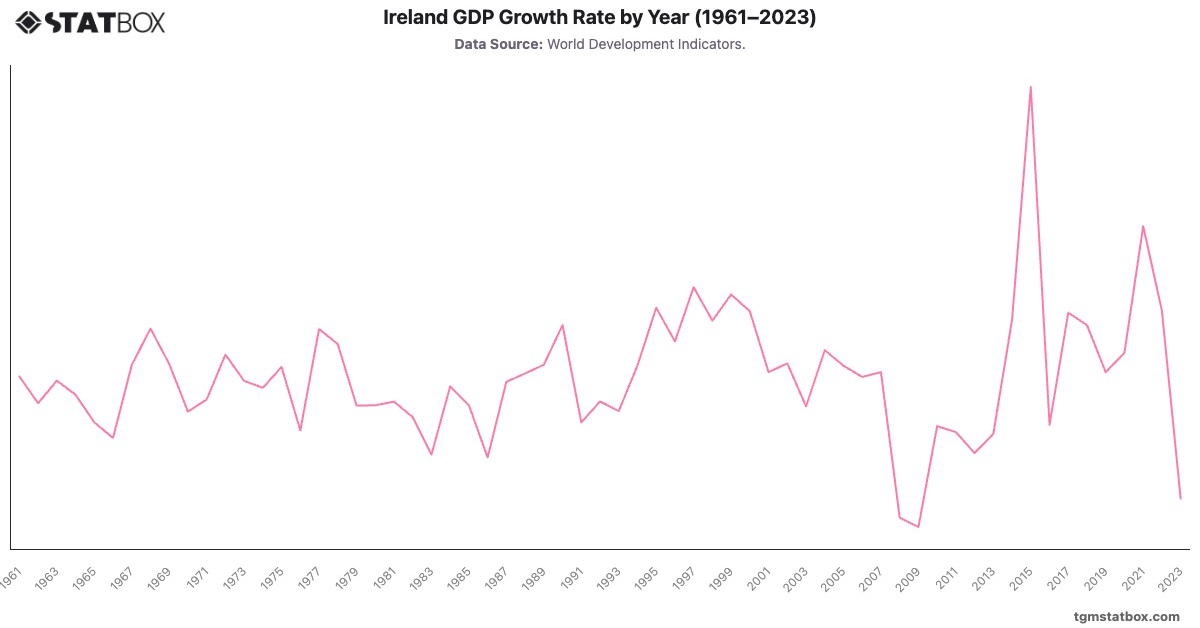
Explore related charts to gain a better understanding of urbanization rise in Ireland, Ireland’s annual GDP data, Ireland’s share of military personnel.