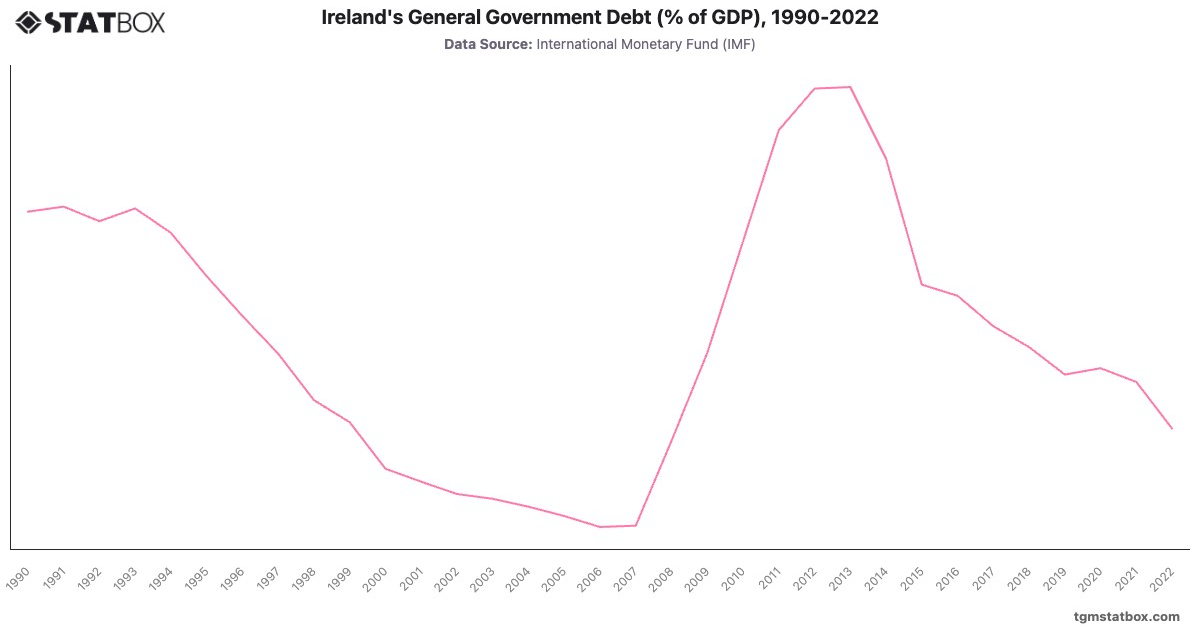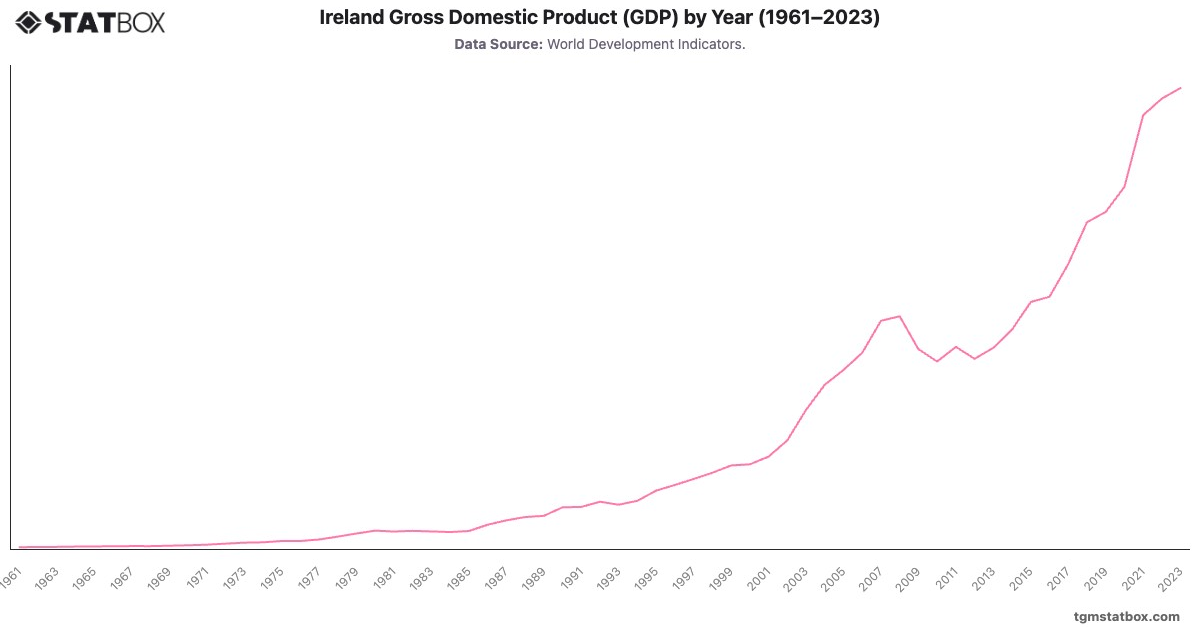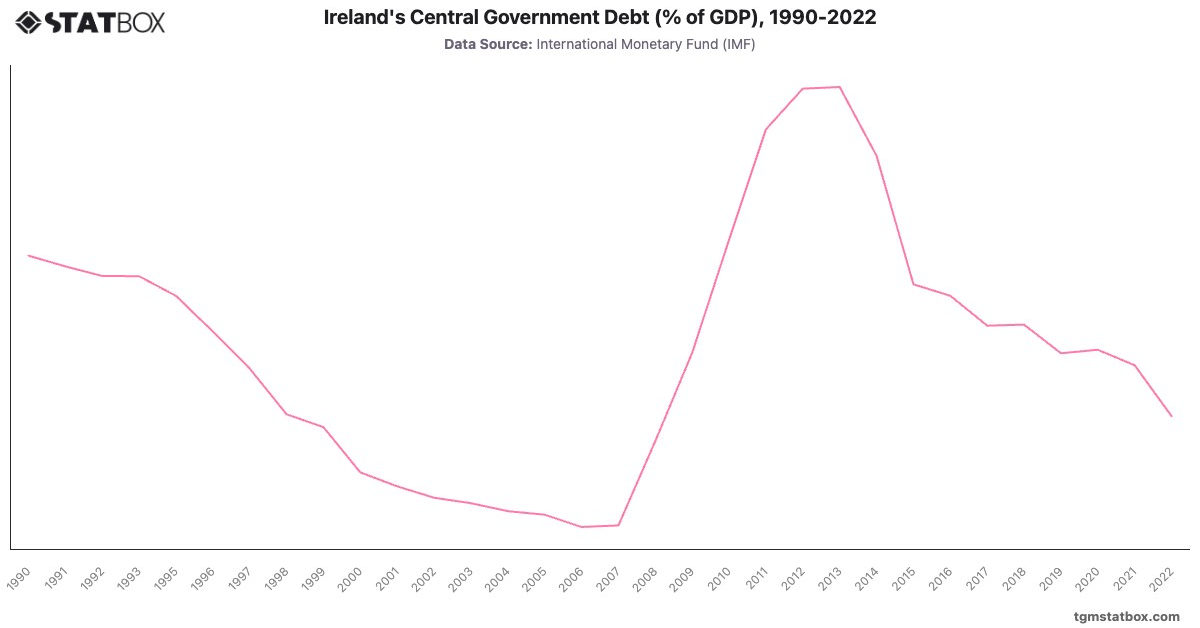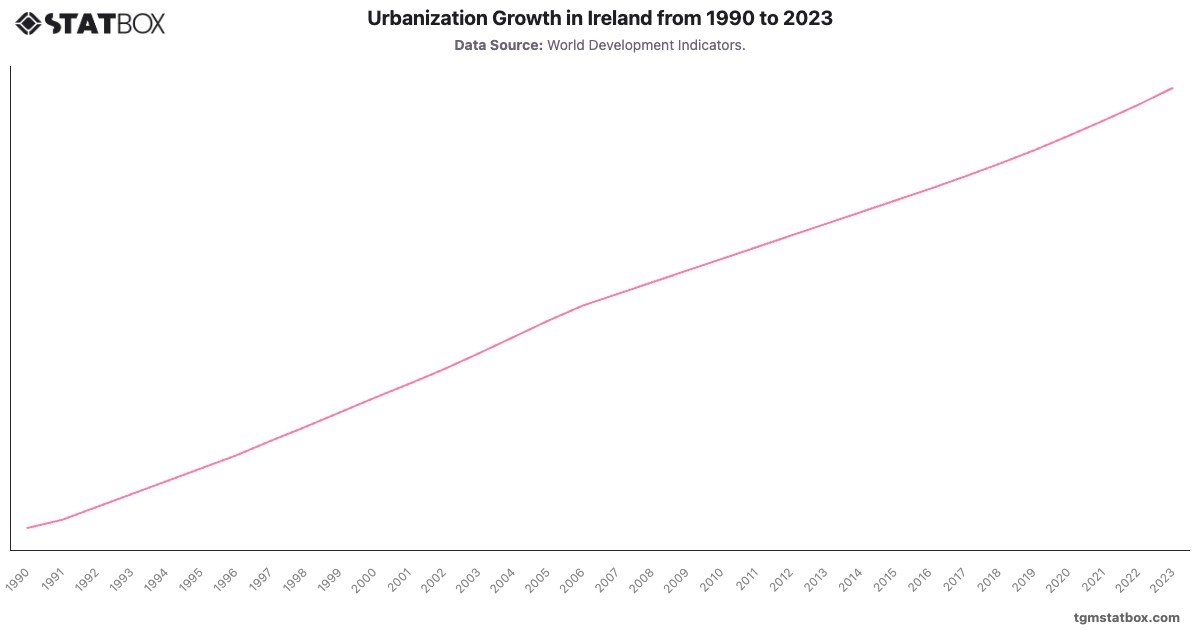
Ireland's urbanization growth from 1990 to 2023 reflects its transition into a modern, service-based economy. In 1990, urbanization was at , with gradual increases as economic policies attracted foreign investment and accelerated urban growth. By the mid-2000s, urbanization reached , supported by a booming economy and housing developments. Even the economic downturn in 2008 did not significantly impact urbanization, with levels continuing to rise, reaching by 2010. The trend continued into the 2010s as urban employment opportunities expanded and Ireland’s cities attracted a skilled workforce. By 2020, urbanization had reached , and by 2023, it stood at , indicating sustained growth. This rise in urbanization is closely linked to economic reforms, investment in technology sectors, and urban infrastructure improvements, positioning Ireland as a dynamic urbanized economy in Europe.
For a deeper dive into the topic, explore Ireland’s government debt-to-GDP ratio, Ireland’s share of military personnel, Ireland’s manufacturing sector share of GDP.