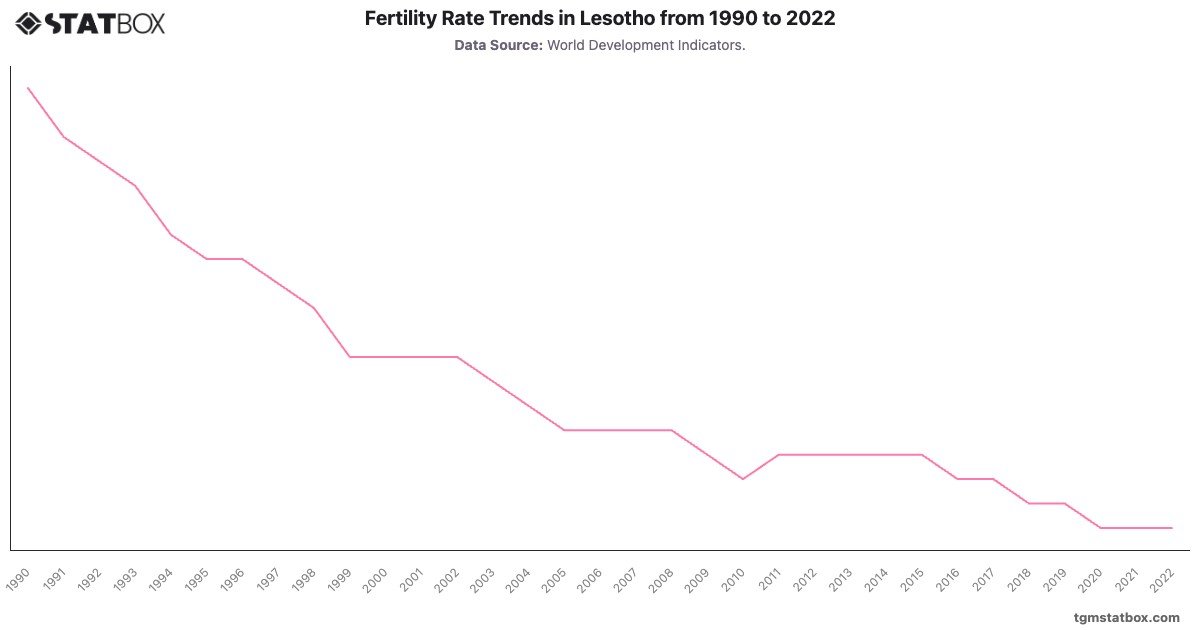
Lesotho's fertility rate declined moderately from 4.8 in 1990 to 3.0 in 2022, reflecting gradual socioeconomic developments and public health improvements. In the 1990s, the decrease was steady, with the rate dropping to 3.7 by 1999. This period saw increased access to reproductive healthcare and education, which played a critical role in influencing family size decisions.
Post-2000, the fertility rate plateaued around 3.4 for several years, reflecting challenges in sustaining the earlier pace of decline. Contributing factors include persistent socioeconomic disparities and the impact of the HIV/AIDS epidemic, which shaped demographic dynamics. By 2022, the rate stabilized at 3.0, aligning with global trends in lower fertility across developing nations.
Post-2000, the fertility rate plateaued around 3.4 for several years, reflecting challenges in sustaining the earlier pace of decline. Contributing factors include persistent socioeconomic disparities and the impact of the HIV/AIDS epidemic, which shaped demographic dynamics. By 2022, the rate stabilized at 3.0, aligning with global trends in lower fertility across developing nations.
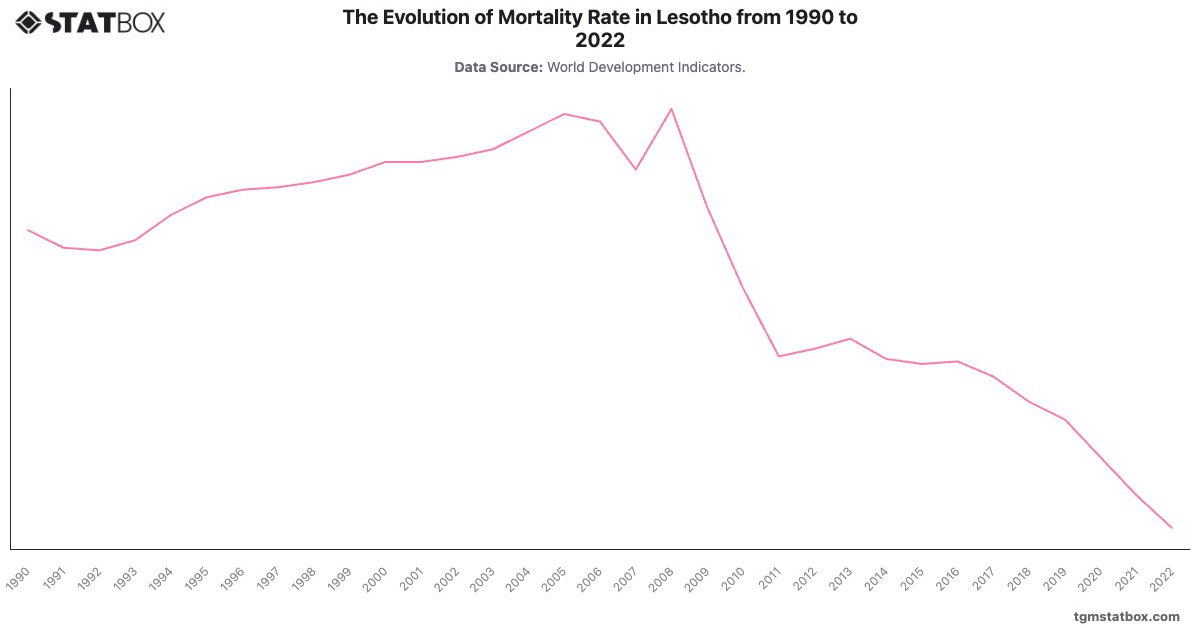
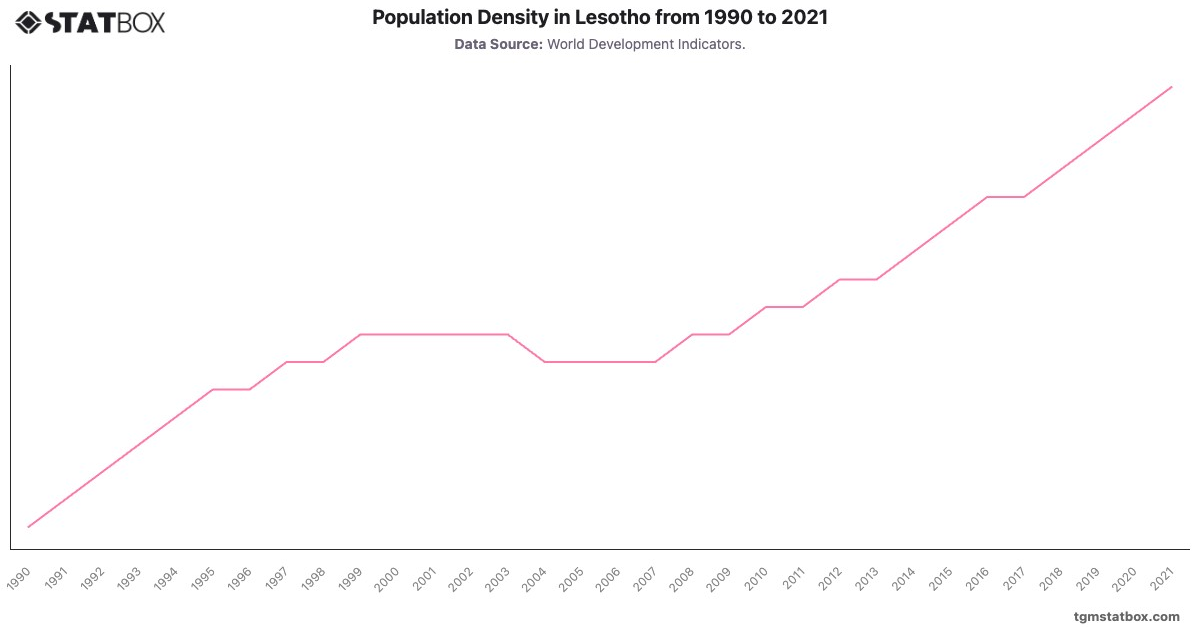
For additional information, visit statistics on Lesotho’s net ODA figures, Lesotho’s mortality rate trend, Lesotho’s population growth.