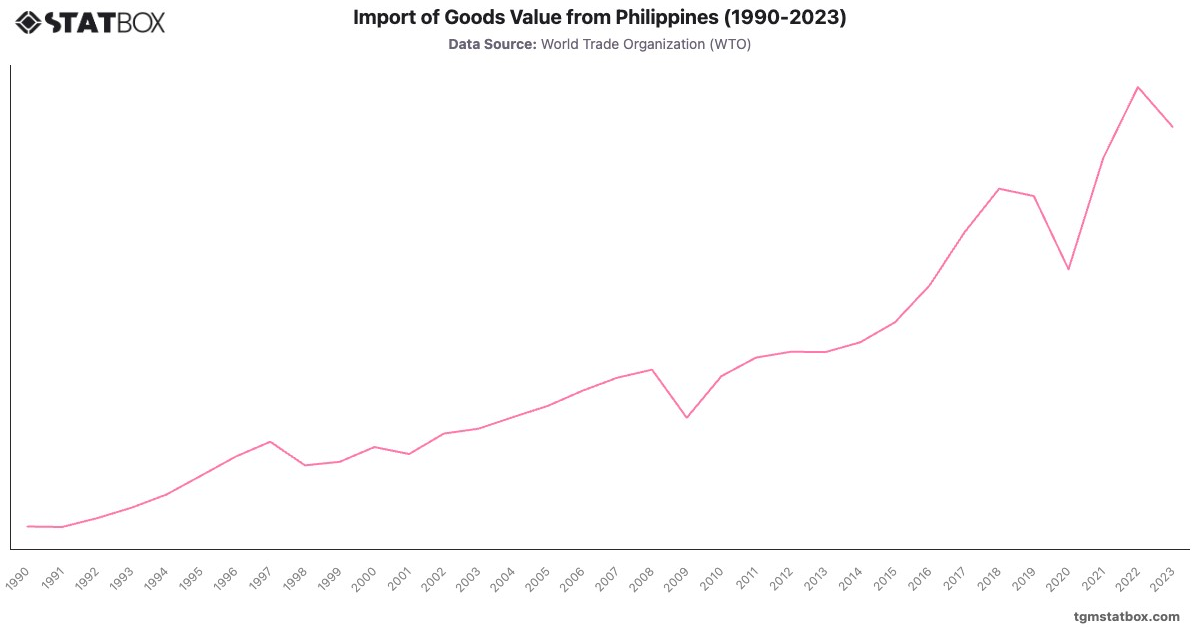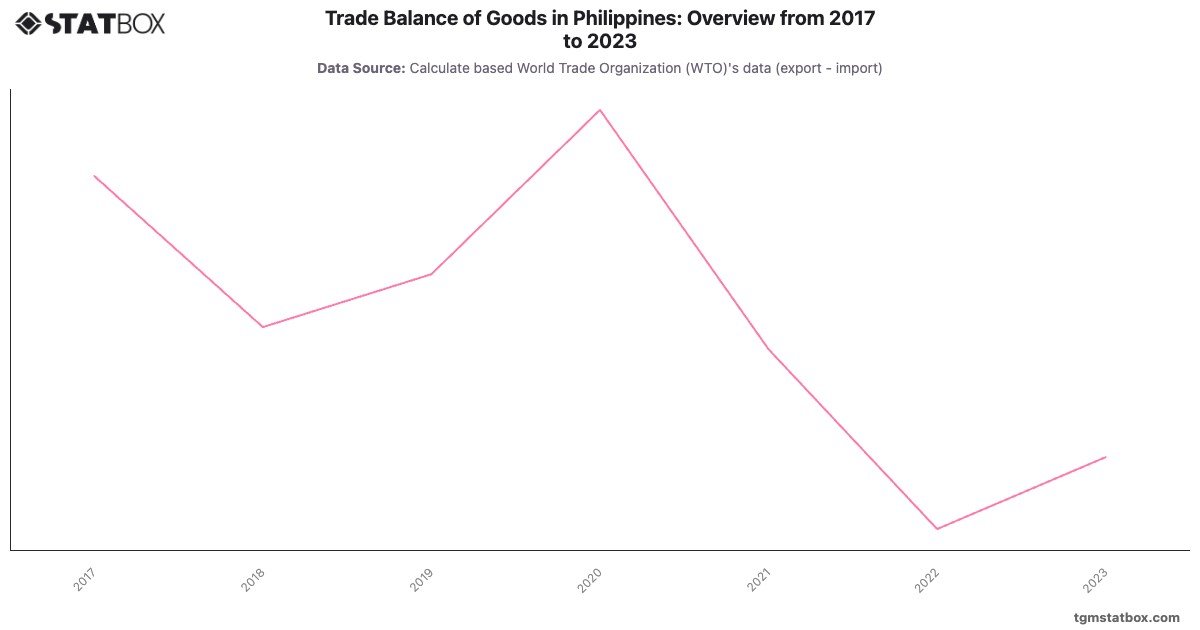
The Philippines consistently recorded trade deficits from 2017 to 2023, with the gap widening from -33,188.8 million USD in 2017 to -66,936.6 million USD in 2022, driven by increased imports of machinery, electronics, and consumer goods amid strong domestic demand. The deficit slightly narrowed to -60,061.0 million USD in 2023, reflecting a combination of export growth in electronics and moderating import costs.
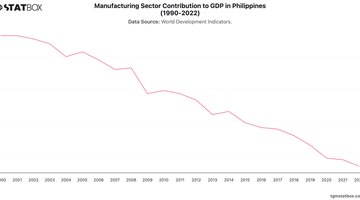
The persistent deficit highlights the Philippines’ reliance on imported capital goods and raw materials to support its growing manufacturing and construction sectors. Efforts to diversify exports and improve local production capacity will be critical to addressing the trade imbalance in the long term.
The persistent deficit highlights the Philippines’ reliance on imported capital goods and raw materials to support its growing manufacturing and construction sectors. Efforts to diversify exports and improve local production capacity will be critical to addressing the trade imbalance in the long term.
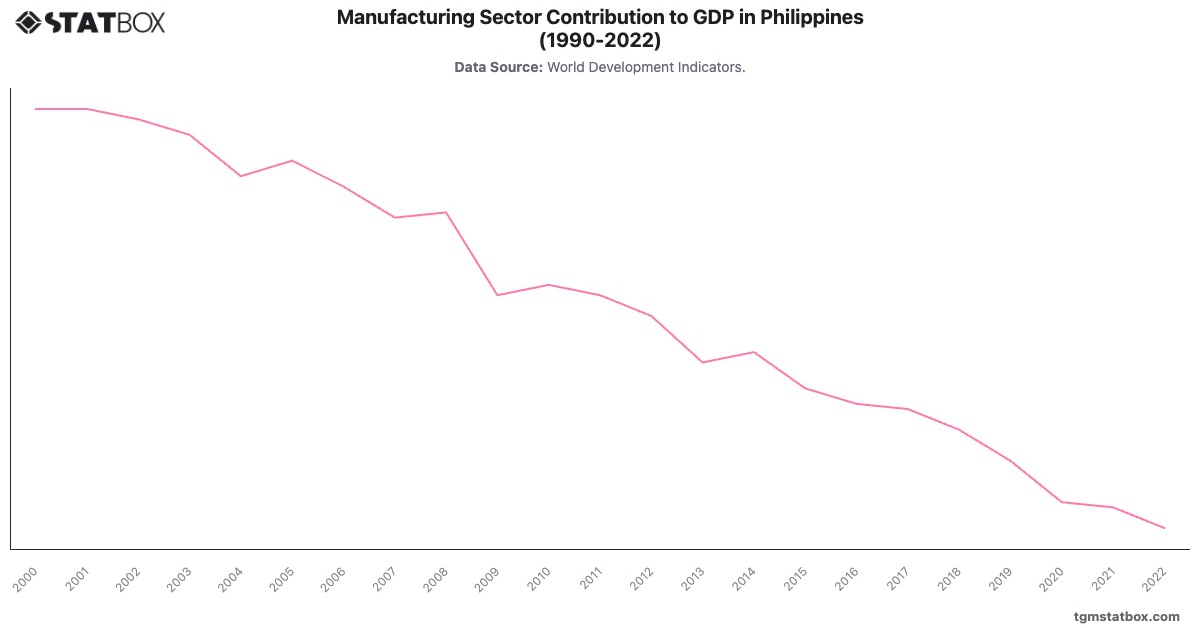
Discover additional trends and data on Philippines’ manufacturing sector share in GDP, Philippines’ export value, Philippines’ industry share in GDP.