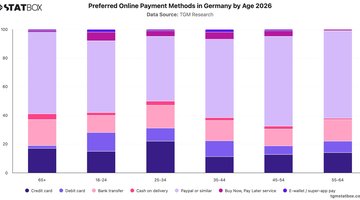
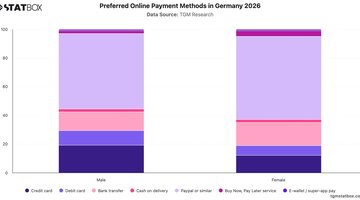
PayPal or similar services dominate Preferred Online Payment Methods in Germany 2026, chosen by an overwhelming 56% of respondents — more than triple the share of the next closest options. Credit cards and bank transfers tie for second place at 15% each, together accounting for roughly a quarter of preferences and highlighting a secondary split between card-based and direct banking approaches.
Newer or alternative methods remain firmly on the margins. Buy Now, Pay Later services attract just 3%, cash on delivery 2%, and e-wallets or super-app payments a negligible 1%. Even debit cards, widely used in many markets, register only 8%. The data suggests German consumers have largely consolidated around established digital intermediaries rather than embracing emerging fintech alternatives.
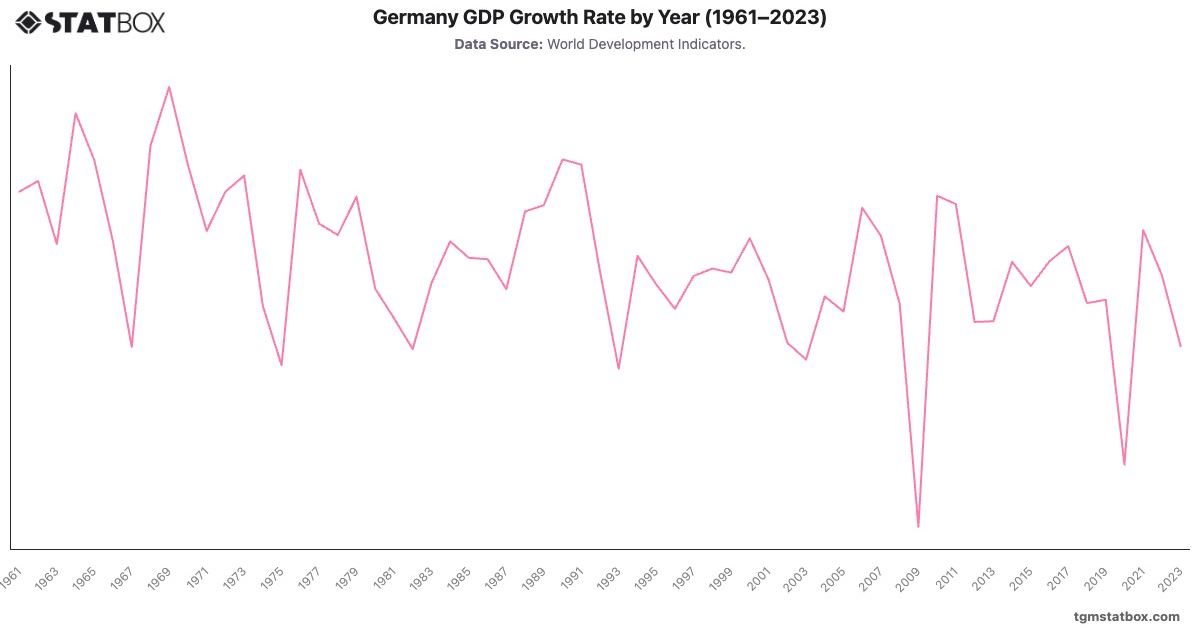
These payment preferences exist within a broader economic context worth noting. Germany GDP Growth Rate by Year (1961–2023) and Germany Gross Domestic Product (GDP) by Year (1961–2023) provide useful backdrop for understanding consumer spending capacity, while Device Usage Breakdown in Germany (%) is directly relevant, as the hardware through which Germans access the internet shapes which payment interfaces they encounter most frequently and ultimately prefer.