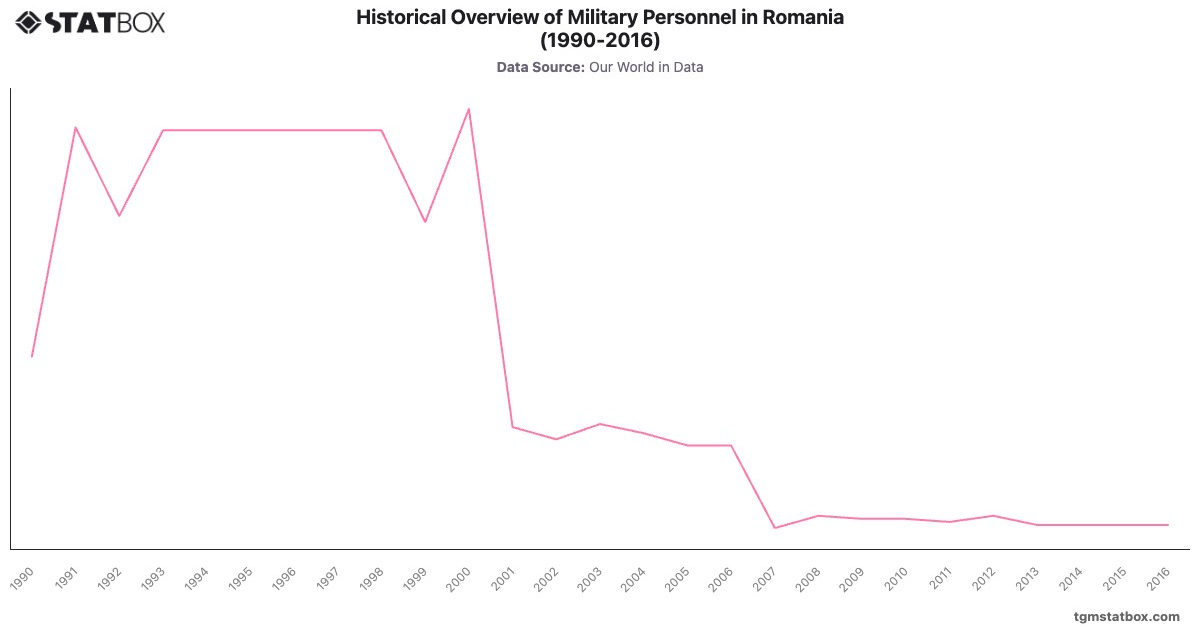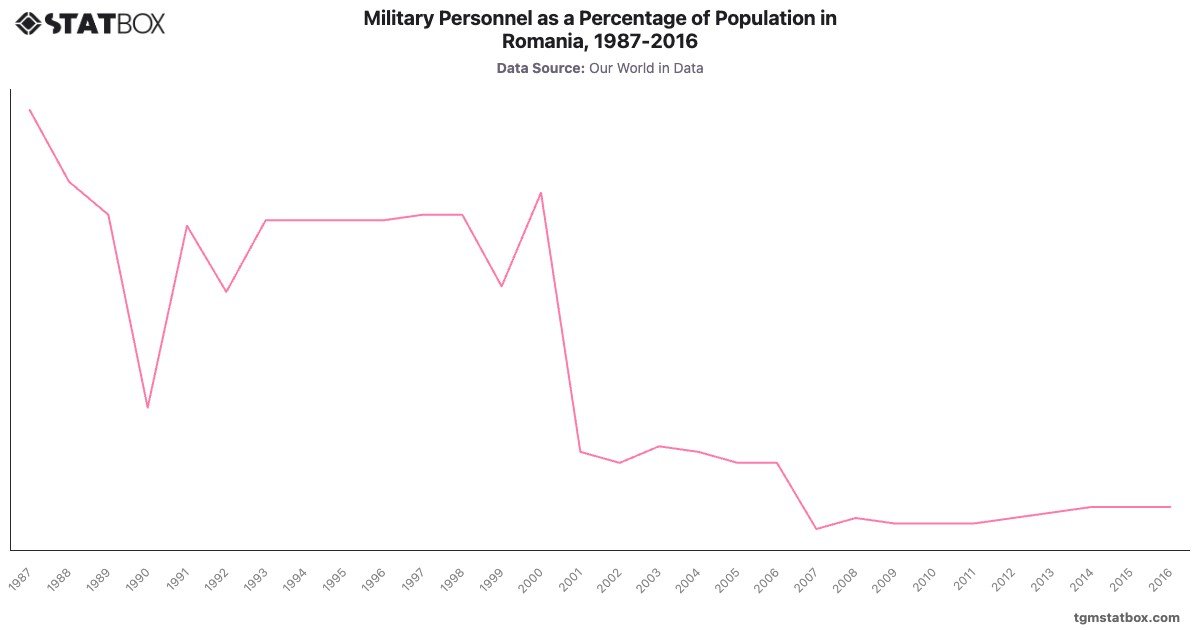
Romania’s military personnel as a percentage of the population showed a notable decline from in 1987 to in 1990, a decrease coinciding with the end of the communist era and the subsequent economic restructuring. The 1990s saw rates stabilize around , reflecting a temporary reorganization period. Romania’s eventual NATO membership in 2004 marked a shift towards modernization and integration into Western defense frameworks, leading to a gradual reduction in personnel levels to by the mid-2010s.
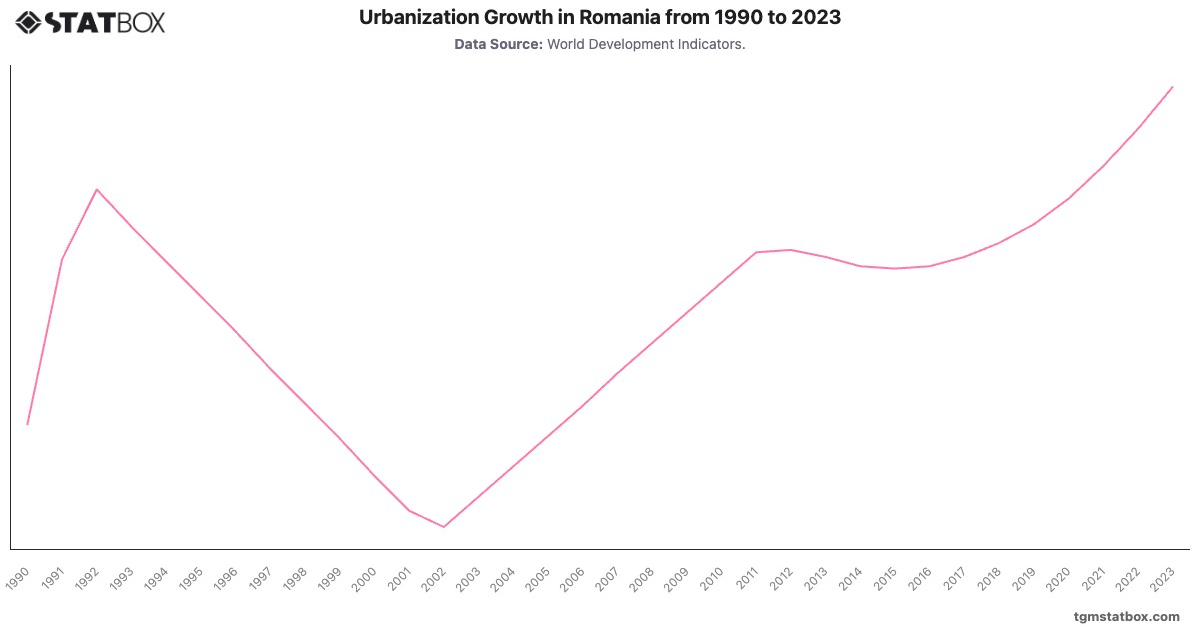
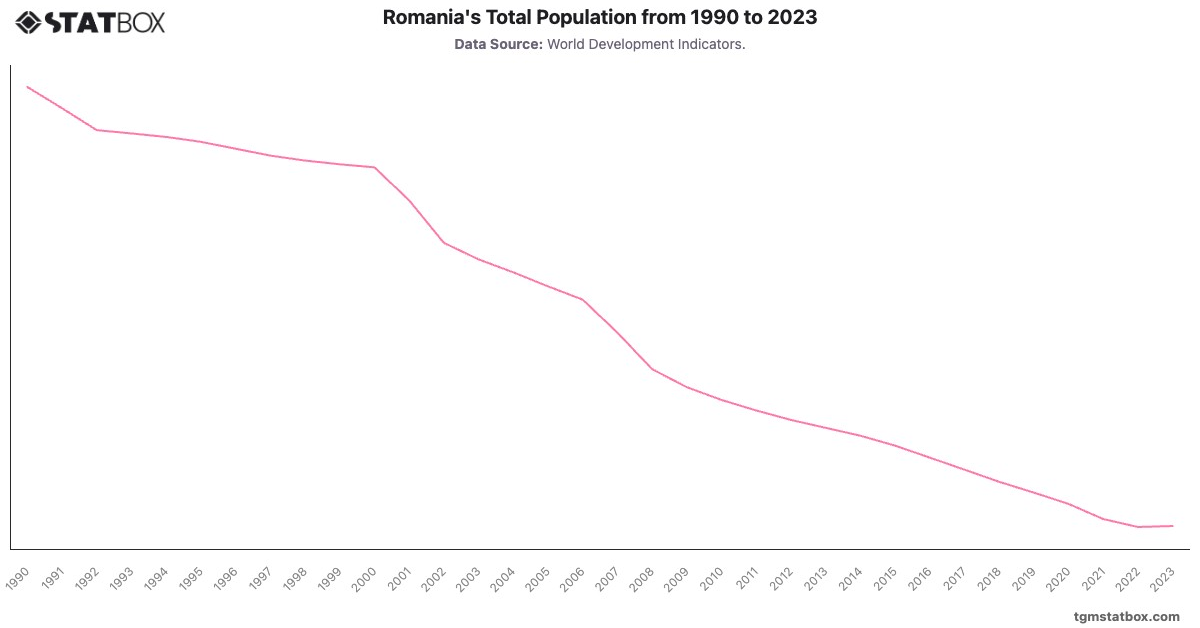
As Romania’s urban population grew, particularly in cities like Bucharest and Cluj-Napoca, economic focus shifted from military manpower towards infrastructure and development, mirroring trends seen across Eastern Europe. By 2016, Romania’s military personnel per capita stabilized at , a level in line with NATO countries prioritizing efficiency over force size. The steady urbanization trajectory also suggests that military reliance shifted to technological upgrades within a smaller, professionalized force.
As Romania’s urban population grew, particularly in cities like Bucharest and Cluj-Napoca, economic focus shifted from military manpower towards infrastructure and development, mirroring trends seen across Eastern Europe. By 2016, Romania’s military personnel per capita stabilized at , a level in line with NATO countries prioritizing efficiency over force size. The steady urbanization trajectory also suggests that military reliance shifted to technological upgrades within a smaller, professionalized force.
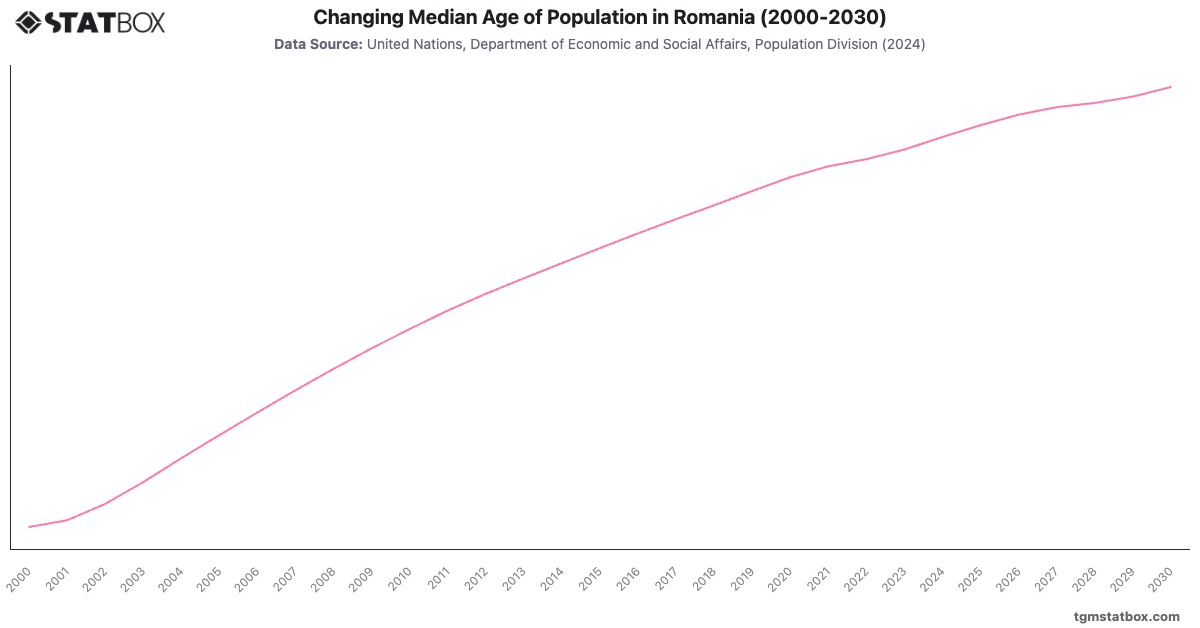
For a broader context, visit other statistics on Romania’s population growth, Romania’s median age shift, Romania’s public debt ratio.