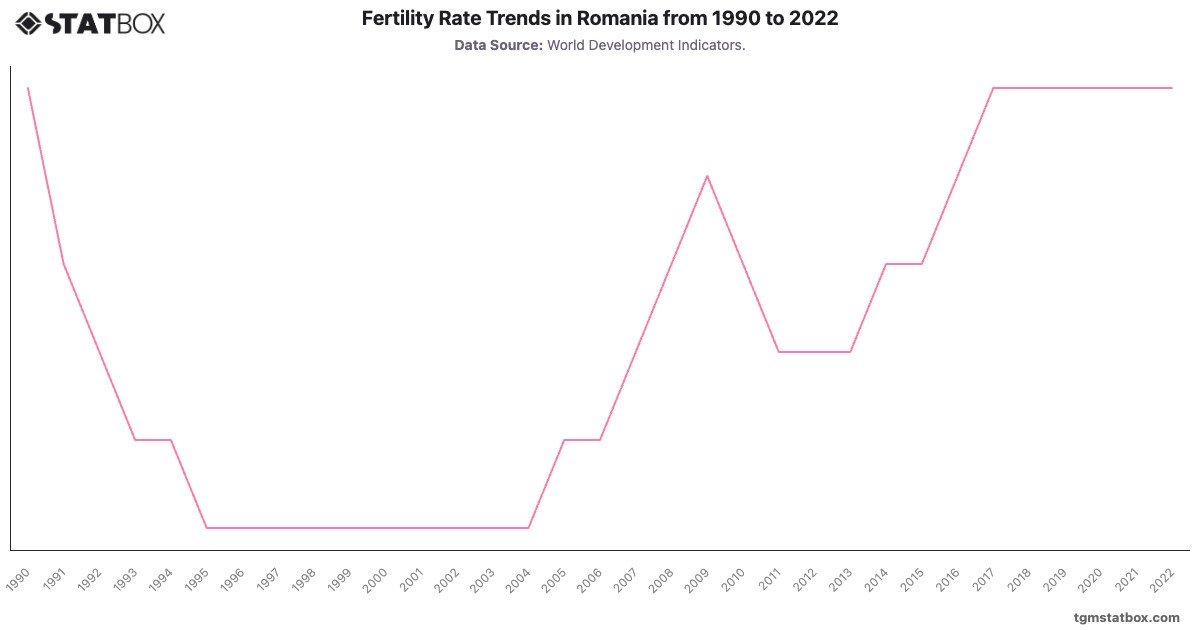
Romania's fertility rate exhibited a steep decline from 1.8 in 1990 to 1.3 by 1995, mirroring the socio-economic uncertainties of the post-communist transition. Population declines slowed in the late 1990s as stability improved, with rates leveling off at around 1.3 into the early 2000s.
A modest recovery began in the late 2000s, reaching 1.8 by 2017, driven by improving economic conditions and targeted family support policies. This recovery highlights a balanced approach to addressing demographic challenges amidst broader European trends.
A modest recovery began in the late 2000s, reaching 1.8 by 2017, driven by improving economic conditions and targeted family support policies. This recovery highlights a balanced approach to addressing demographic challenges amidst broader European trends.
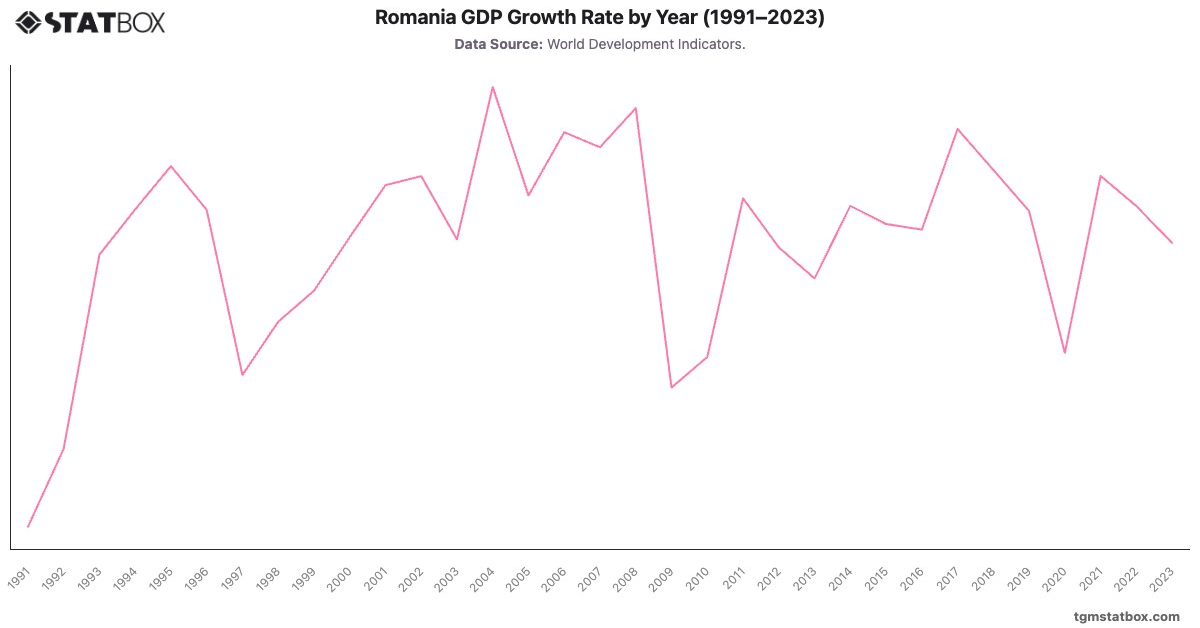
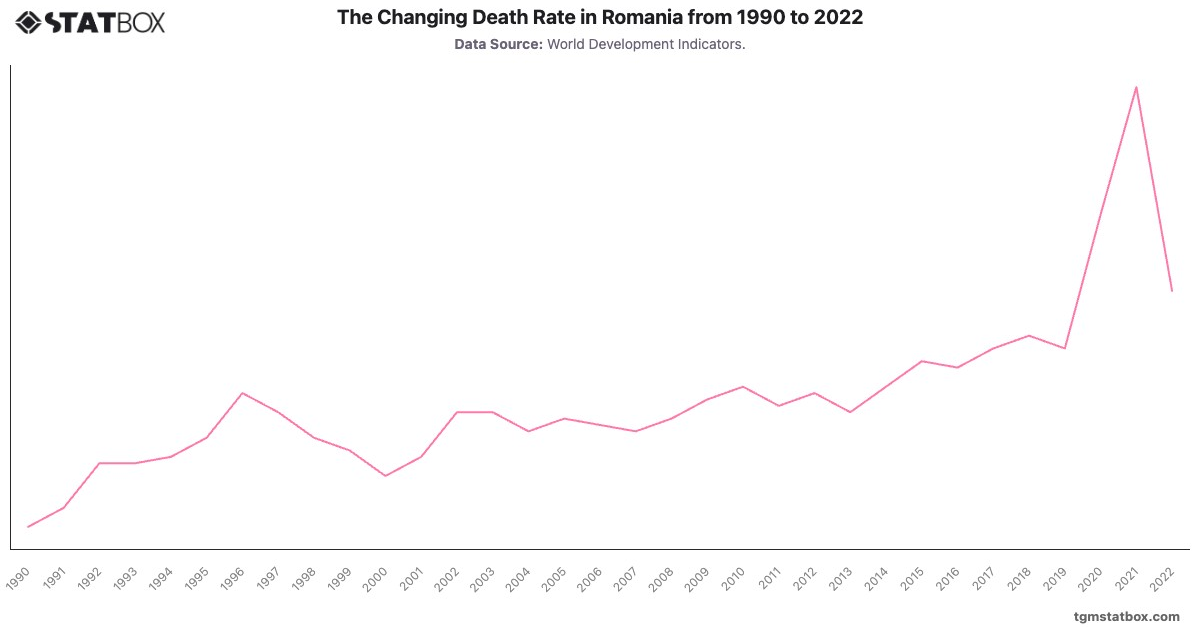
For a broader context, visit other statistics on yearly GDP growth rate for Romania, Romania’s population statistics, Romania’s mortality rate trend.