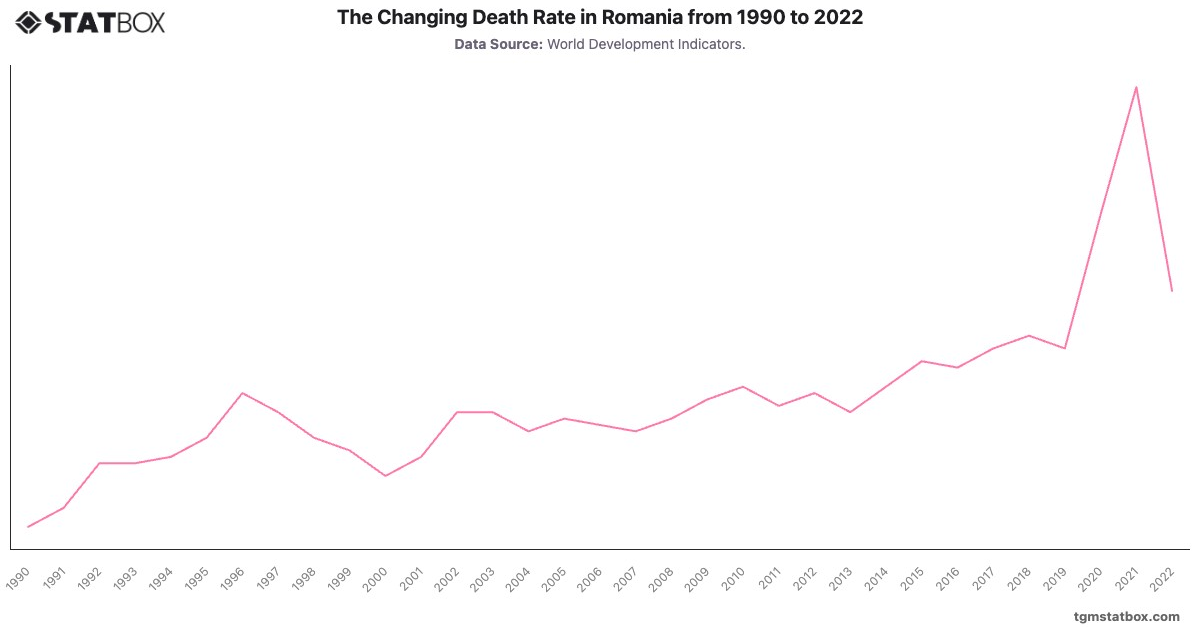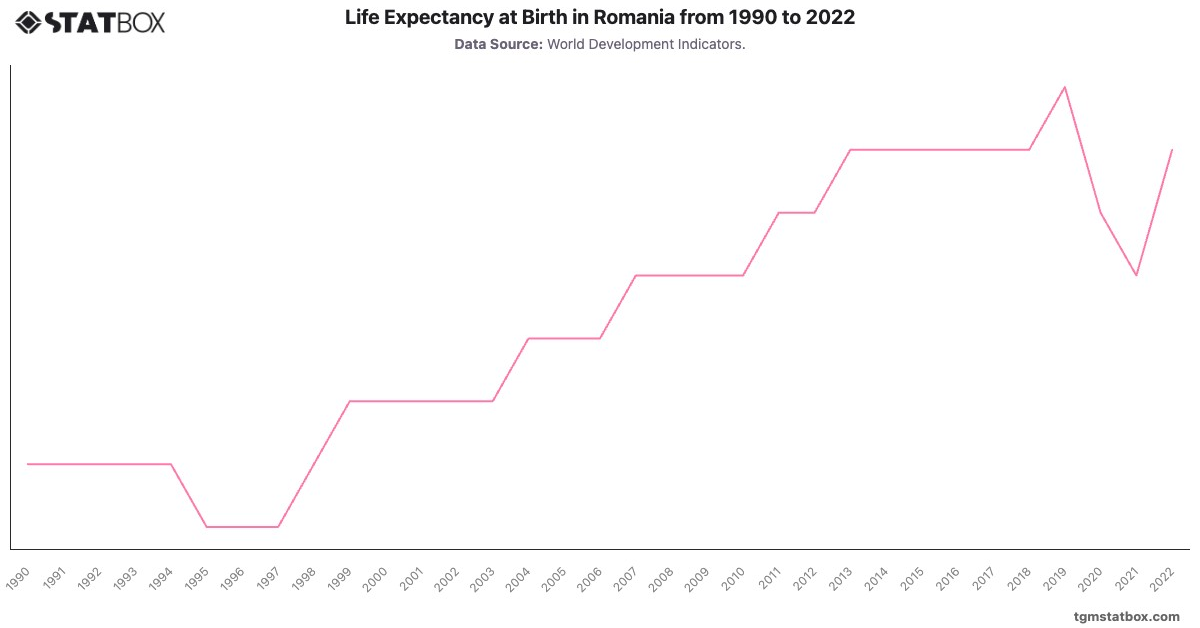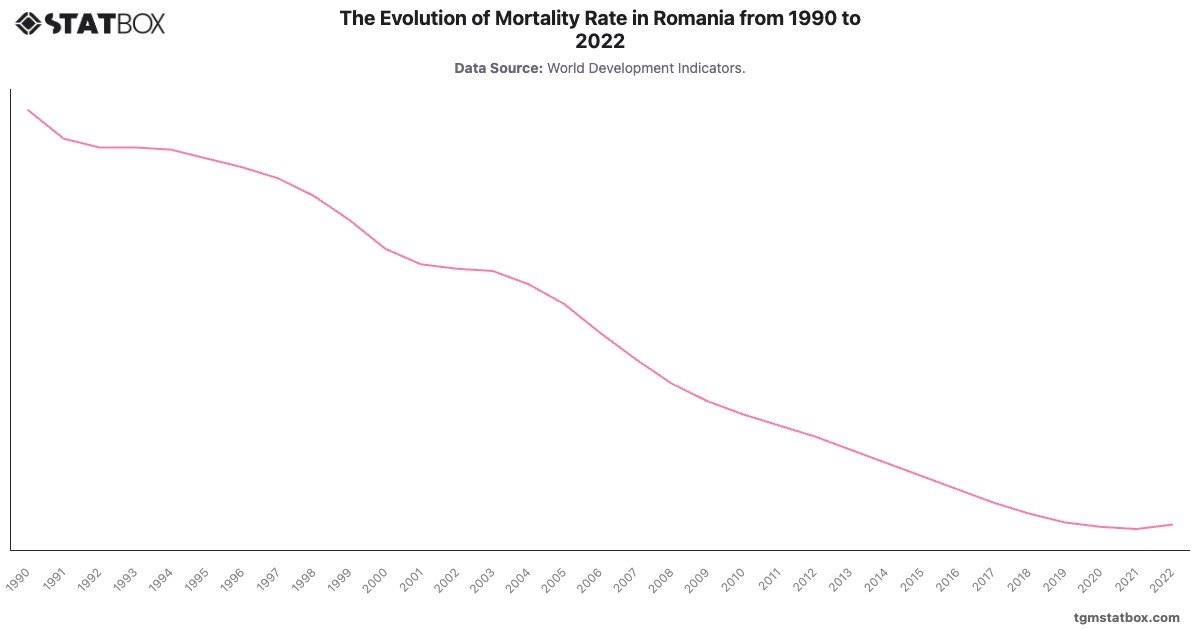
Romania’s mortality rate decreased steadily from 24.3 in 1990 to 5.5 in 2022, reflecting improvements in public health and healthcare infrastructure after the fall of communism. By 2000, the rate had dropped to 18.0, driven by better access to healthcare and targeted public health interventions.
The decline continued into the 21st century, with the rate reaching 7.1 by 2016 and stabilizing around 5.5 by 2022. Key factors include Romania’s integration into the European Union in 2007, which brought funding and reforms to its healthcare system. However, challenges such as rural-urban healthcare disparities persist.
The decline continued into the 21st century, with the rate reaching 7.1 by 2016 and stabilizing around 5.5 by 2022. Key factors include Romania’s integration into the European Union in 2007, which brought funding and reforms to its healthcare system. However, challenges such as rural-urban healthcare disparities persist.
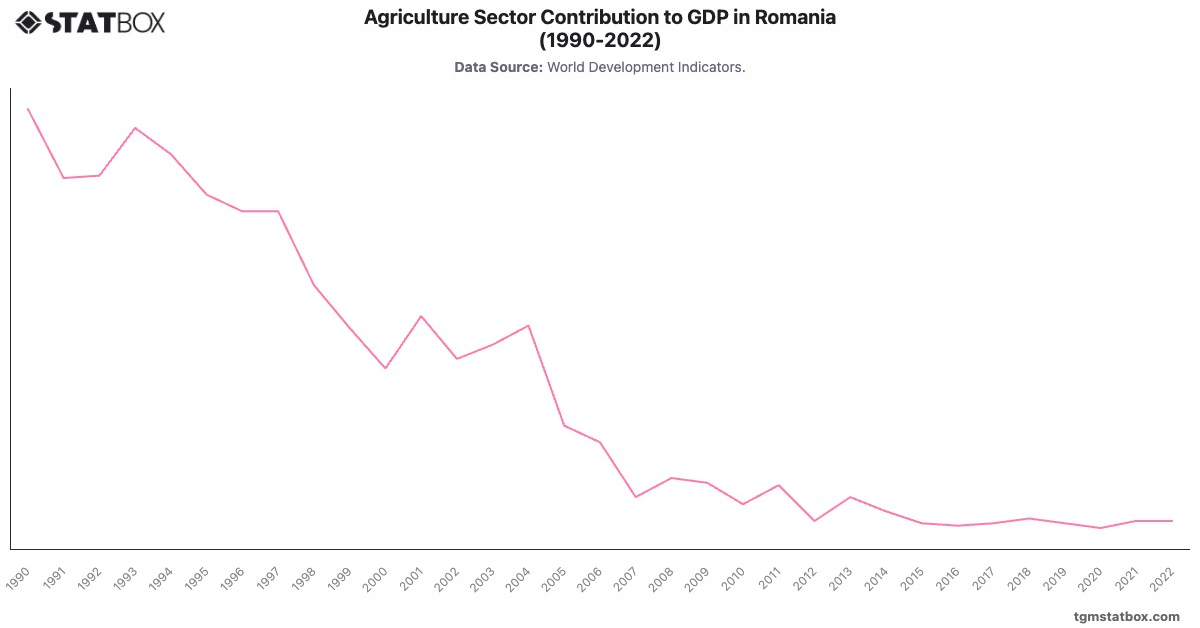
For additional information, visit statistics on yearly GDP growth rate for Romania, Romania’s urbanization rate, Romania’s agriculture sector GDP share.