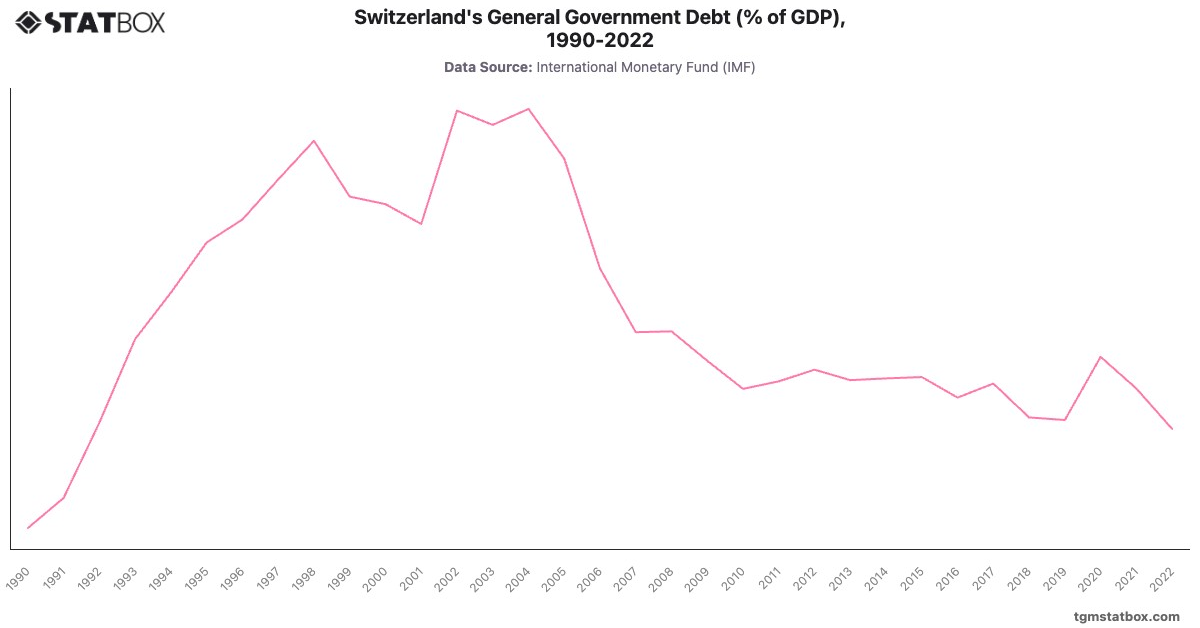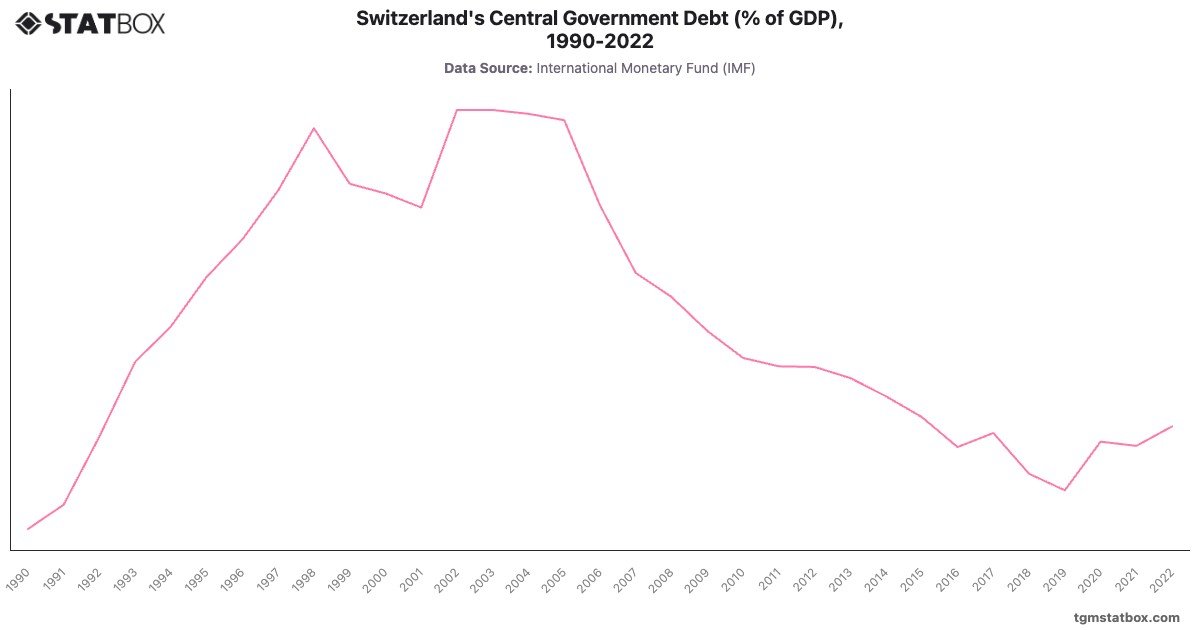
Switzerland's central government debt as a percentage of GDP showed a steady increase during the early 1990s, rising from in 1990 to a peak of in 1998. This growth aligned with efforts to stabilize the economy amid global financial uncertainties and increasing public spending. Notably, fiscal reforms introduced in the late 1990s helped curb this trajectory, leading to a gradual decline to by 2000.
From 2000 onward, Switzerland's debt levels remained relatively stable until the mid-2000s, after which a consistent decline occurred. This decrease was particularly evident between 2006 and 2014, when debt dropped from to , driven by robust economic growth and disciplined fiscal policies. The COVID-19 pandemic in 2020 caused a temporary uptick in debt to as the government implemented stimulus measures. Despite this, debt levels remained among the lowest globally, reflecting Switzerland's strong economic management.
From 2000 onward, Switzerland's debt levels remained relatively stable until the mid-2000s, after which a consistent decline occurred. This decrease was particularly evident between 2006 and 2014, when debt dropped from to , driven by robust economic growth and disciplined fiscal policies. The COVID-19 pandemic in 2020 caused a temporary uptick in debt to as the government implemented stimulus measures. Despite this, debt levels remained among the lowest globally, reflecting Switzerland's strong economic management.
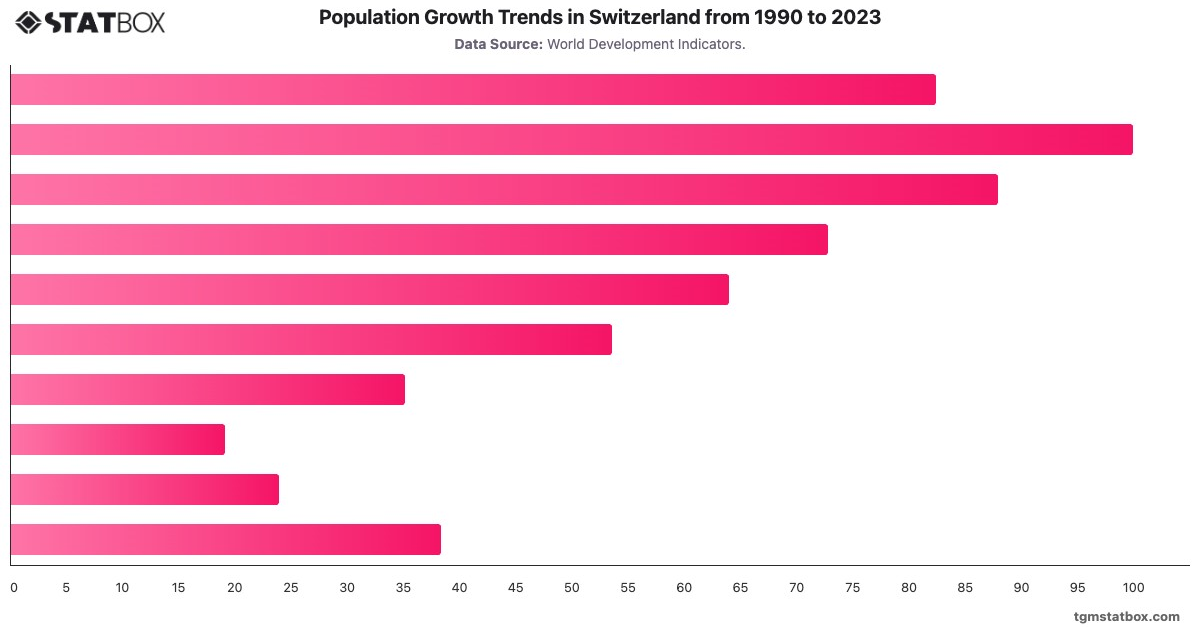
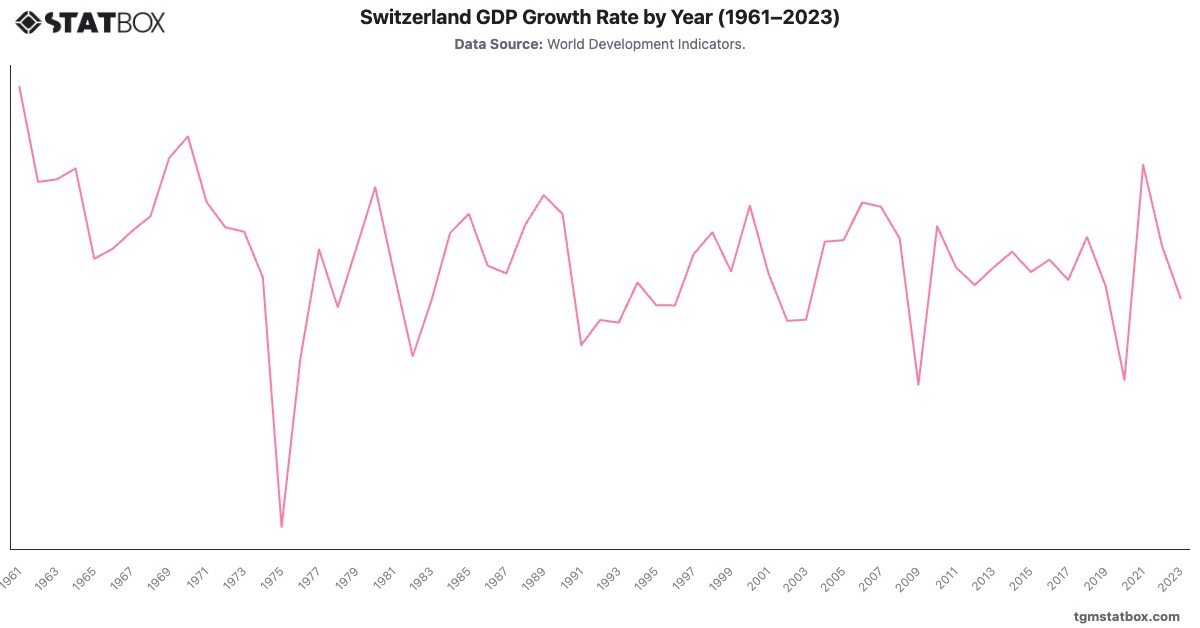
Discover additional trends and data on Switzerland’s population figures, Switzerland’s population trends, Switzerland’s annual GDP growth rate.