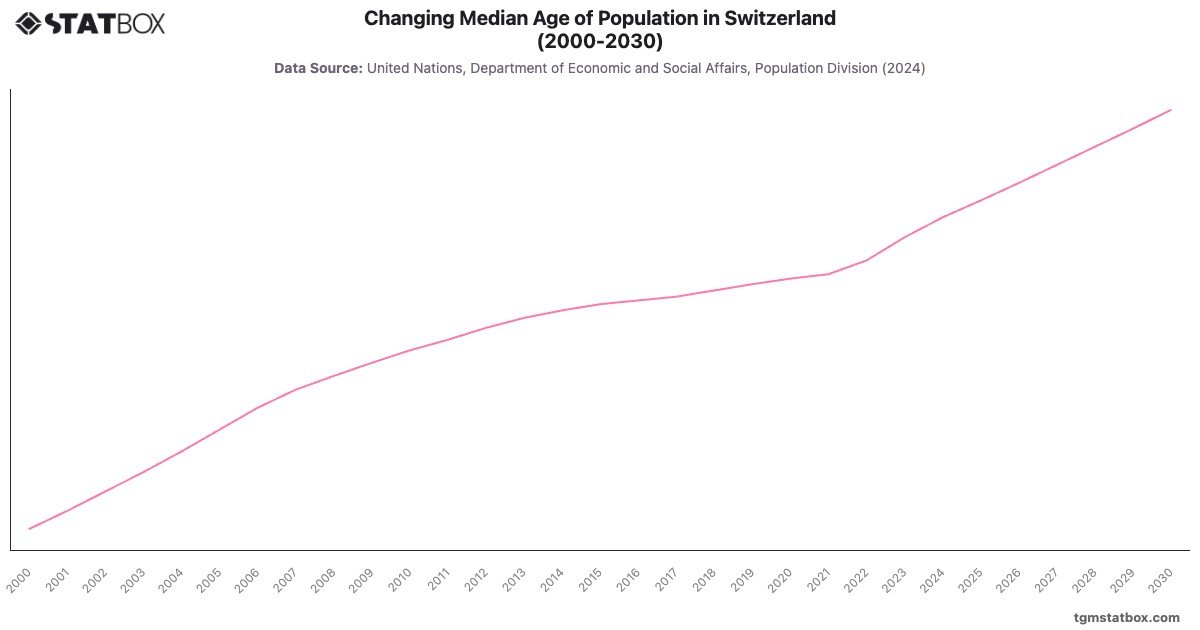
Switzerland's median age has steadily increased from 37.7 years in 2000 to a projected 44.4 years by 2030. This shift reflects Switzerland’s low birth rates, high life expectancy, and urbanization trends that shape the nation’s age profile. By 2010, the median age reached 40.5 as economic stability and urban expansion attracted younger populations to city centers, yet without significantly impacting the overall aging trend due to persistently low birth rates.
By 2020, Switzerland’s median age had risen to 41.7, and this trend is expected to continue, reaching 44.4 by 2030. As urban centers continue to attract working-age individuals, Switzerland’s aging trend underscores the need for robust healthcare and social systems to support an increasingly older population. The projected rise in the median age suggests a continued demographic shift, requiring sustained policy focus on age-related social services and urban planning in Switzerland.
By 2020, Switzerland’s median age had risen to 41.7, and this trend is expected to continue, reaching 44.4 by 2030. As urban centers continue to attract working-age individuals, Switzerland’s aging trend underscores the need for robust healthcare and social systems to support an increasingly older population. The projected rise in the median age suggests a continued demographic shift, requiring sustained policy focus on age-related social services and urban planning in Switzerland.
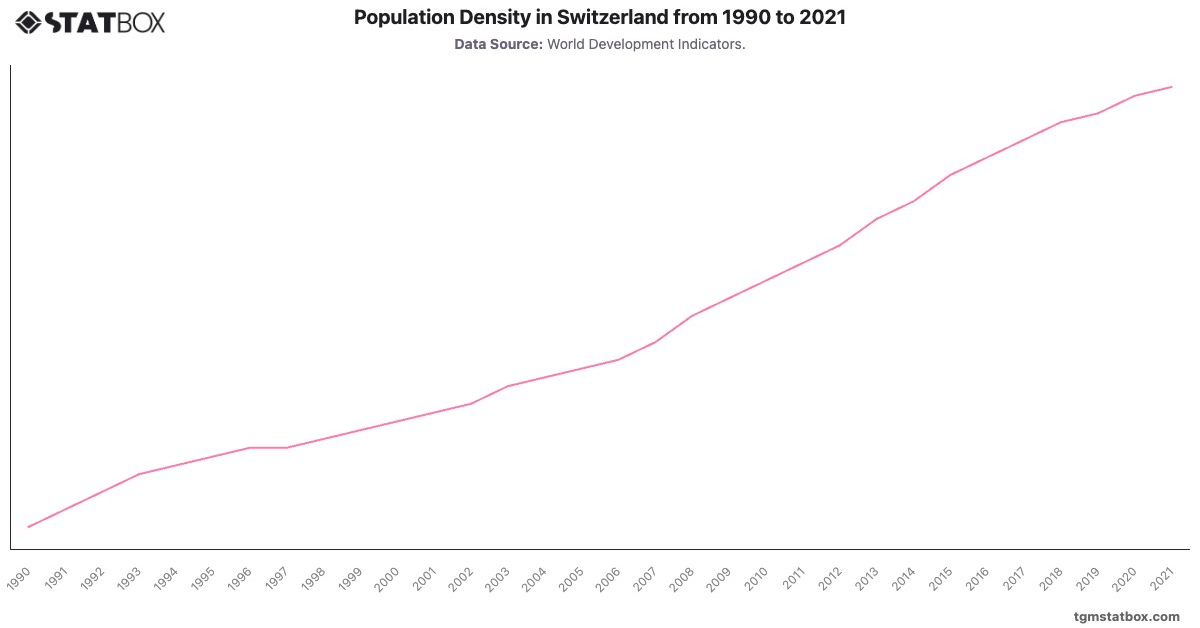
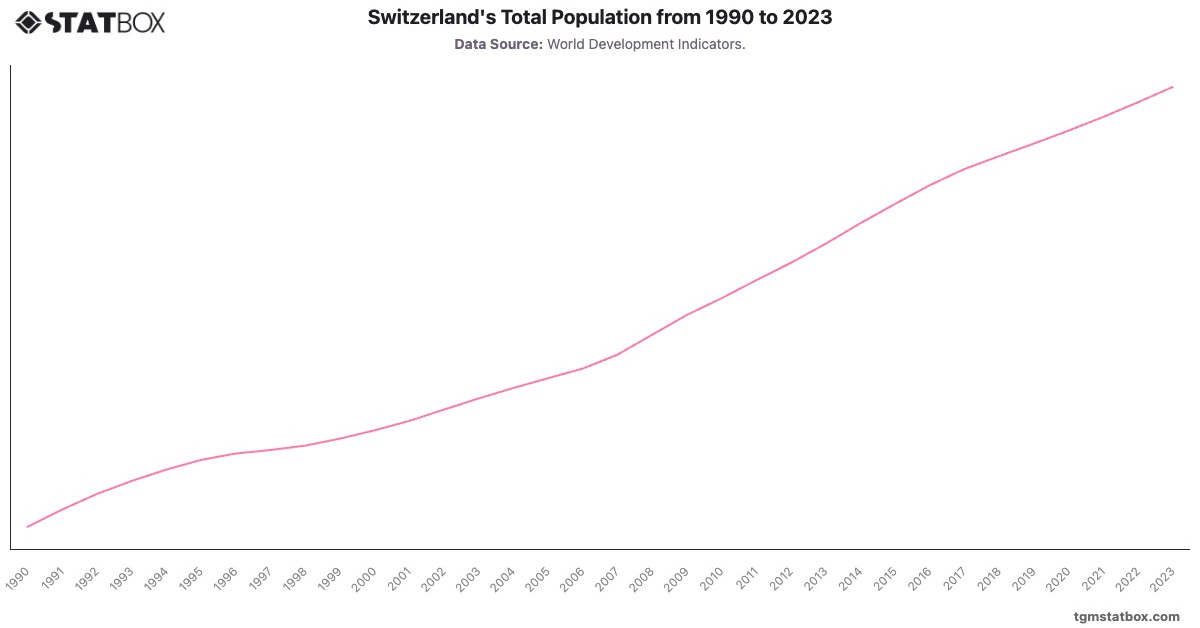
Explore related charts to gain a better understanding of Switzerland’s population trends, Switzerland’s population density, Switzerland’s population figures.