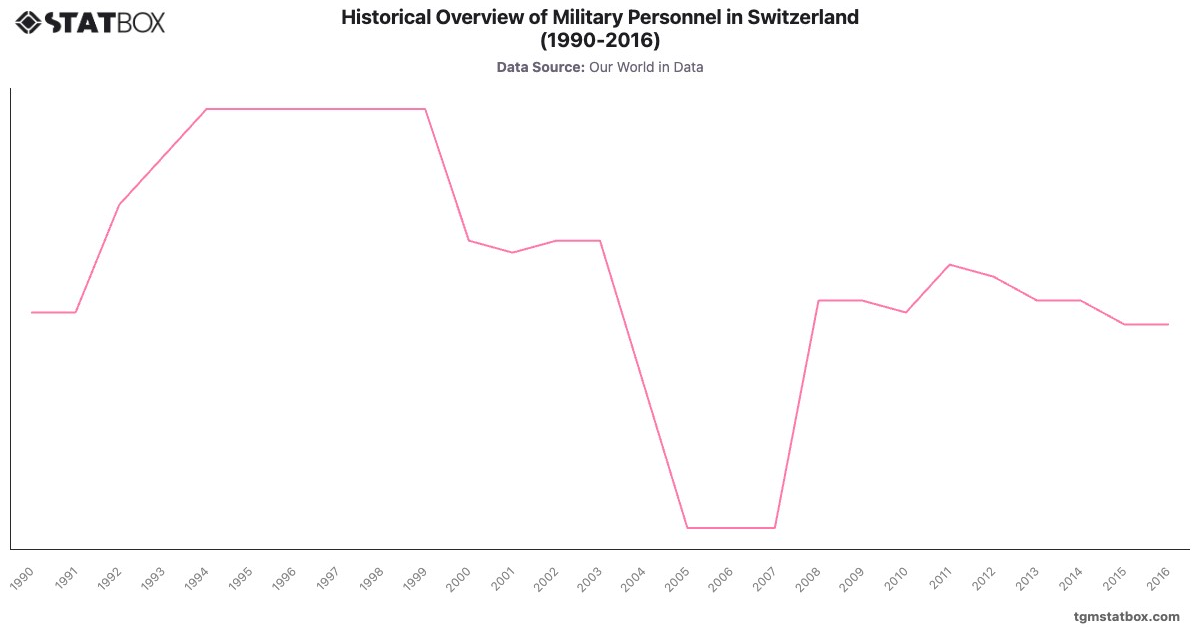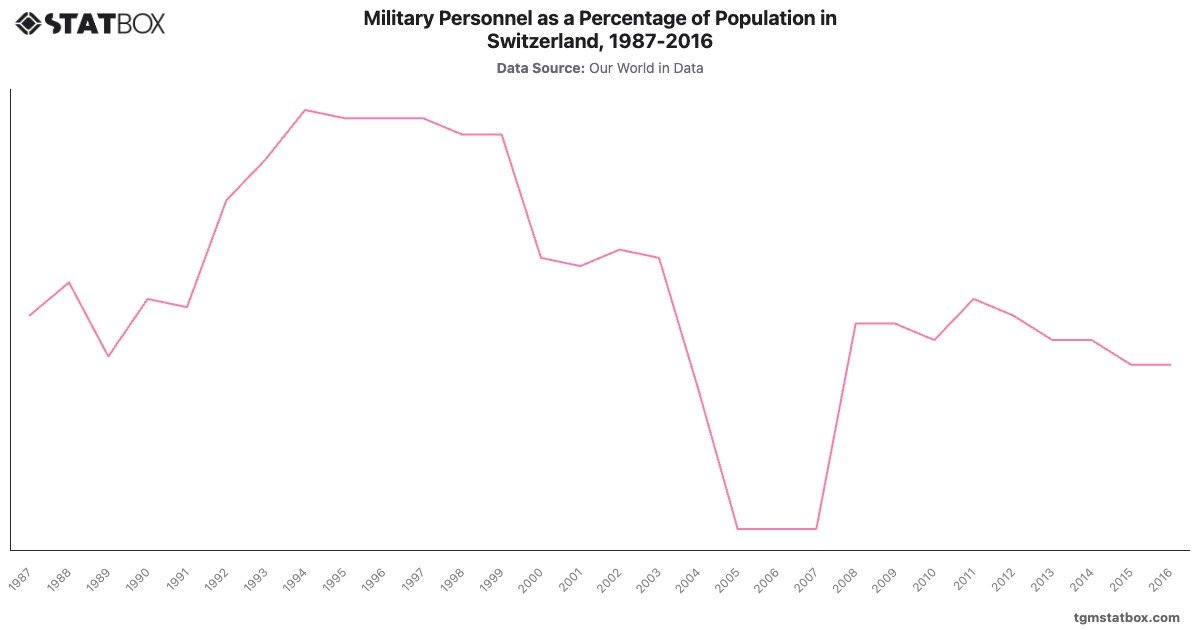
Switzerland's military personnel as a percentage of its population exhibited fluctuations from 1987 to 2016, with a general decline after 1995. Starting at in 1987, this rate rose to by 1994, reflecting Switzerland’s traditionally strong emphasis on national defense. However, from 1995 onwards, the percentage gradually declined to by 2016 as Switzerland adapted its military structure to match a less aggressive defense stance.
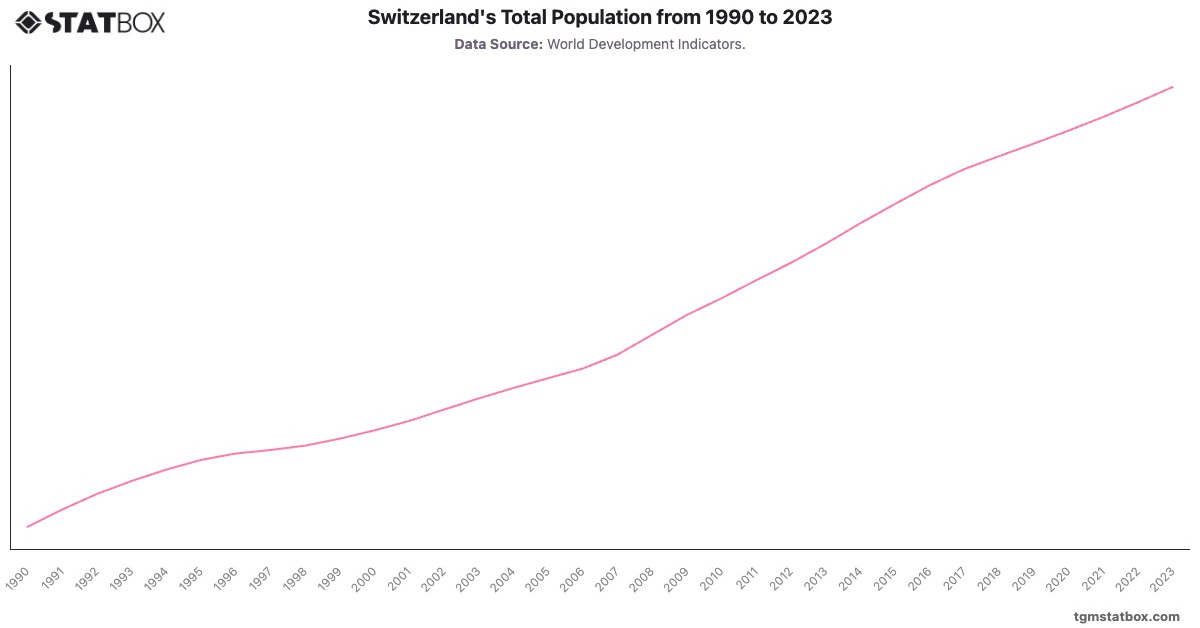
The urbanization trend in Switzerland influenced these reductions, as higher urbanization rates shifted workforce demographics, decreasing the pool of draft-age individuals. Switzerland’s move toward a smaller, highly trained reserve force rather than a large standing military also aligns with its urban, economically driven priorities, reinforcing a leaner, more technologically advanced military structure.
The urbanization trend in Switzerland influenced these reductions, as higher urbanization rates shifted workforce demographics, decreasing the pool of draft-age individuals. Switzerland’s move toward a smaller, highly trained reserve force rather than a large standing military also aligns with its urban, economically driven priorities, reinforcing a leaner, more technologically advanced military structure.
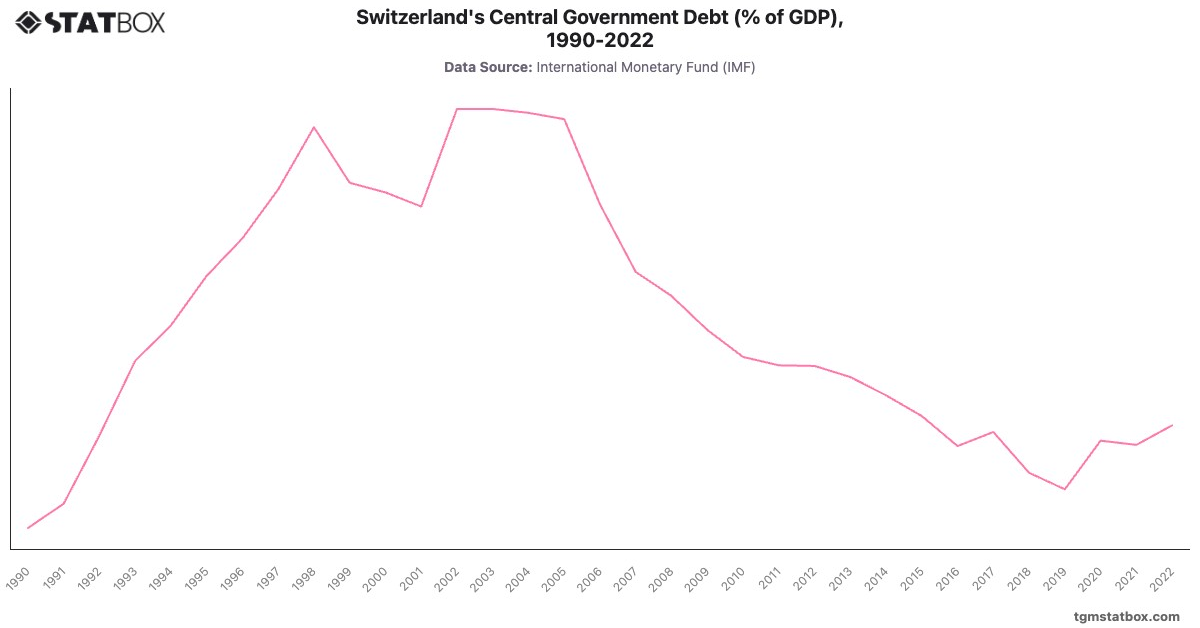
Discover additional trends and data on Switzerland’s population figures, Switzerland’s military spending, Switzerland’s government debt ratio.