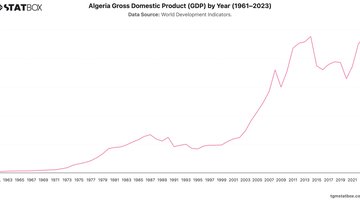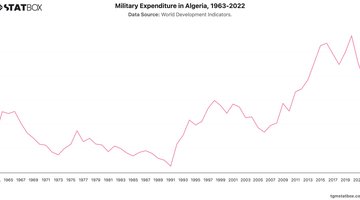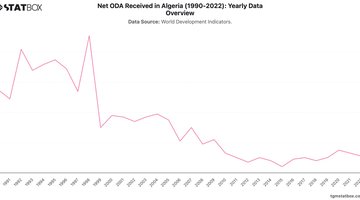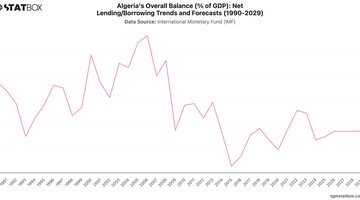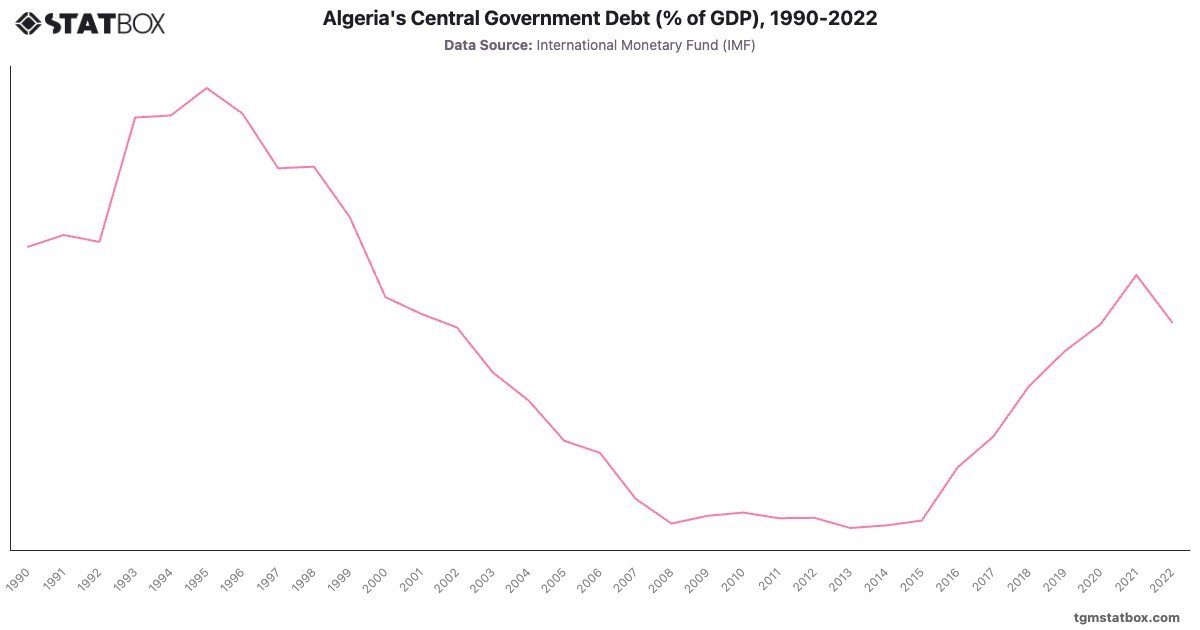
Algeria's debt trajectory reflects a mix of economic crises, fiscal policies, and oil market dynamics. Debt rose sharply from in 1990 to a peak of in 1995, driven by economic instability and falling oil prices. A recovery began in the late 1990s, with debt falling to in 1999 and further to in 2008, thanks to high oil revenues and aggressive debt repayment strategies.
Post-2008, the trend reversed as declining oil prices and fiscal pressures led to rising debt, peaking at in 2021. While debt moderated slightly to in 2022, Algeria's reliance on hydrocarbons remains a key vulnerability, underscoring the need for economic diversification.
Post-2008, the trend reversed as declining oil prices and fiscal pressures led to rising debt, peaking at in 2021. While debt moderated slightly to in 2022, Algeria's reliance on hydrocarbons remains a key vulnerability, underscoring the need for economic diversification.
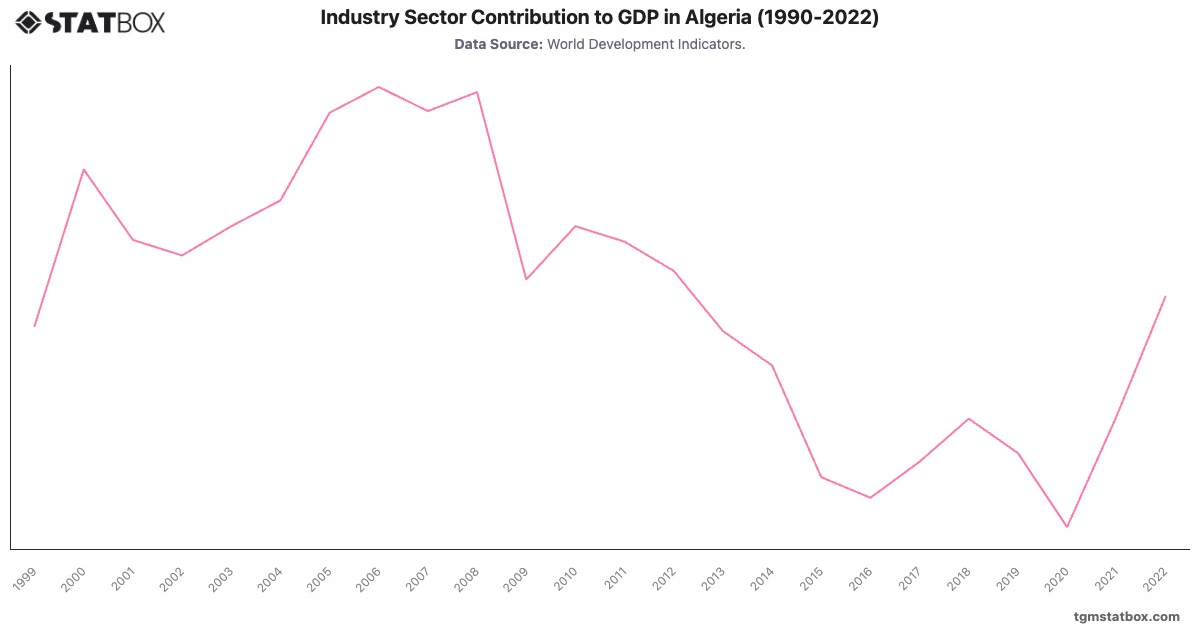
Gain a broader perspective by reviewing Algeria’s inflation rate forecast, industry sector’s share in Algeria’s GDP, Algeria’s annual GDP estimates.