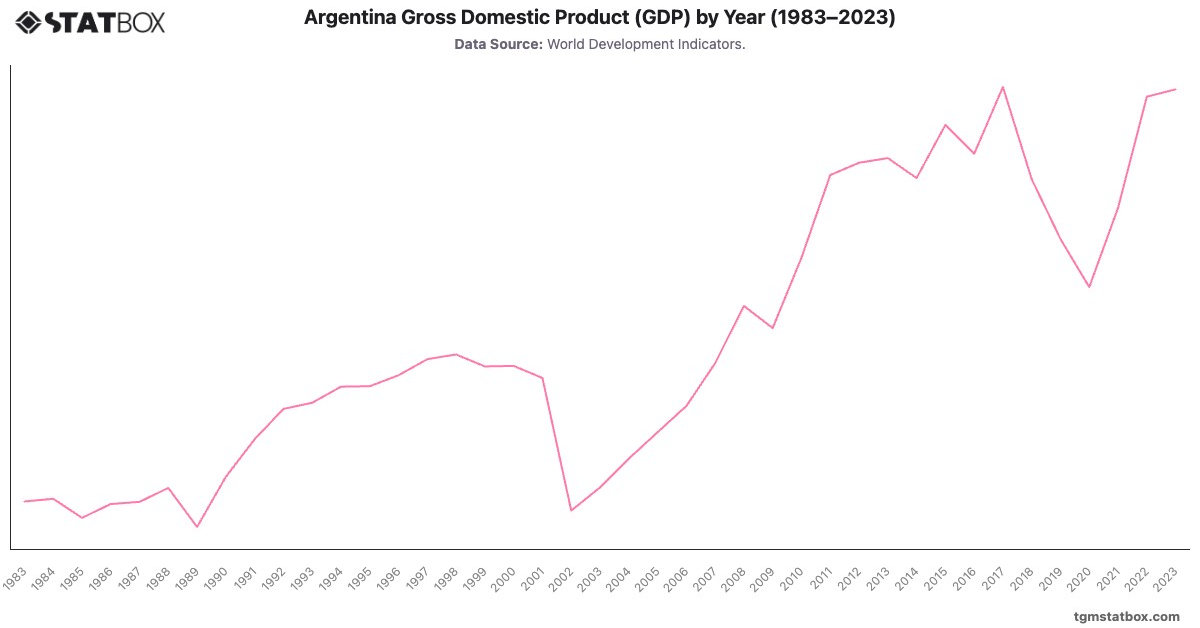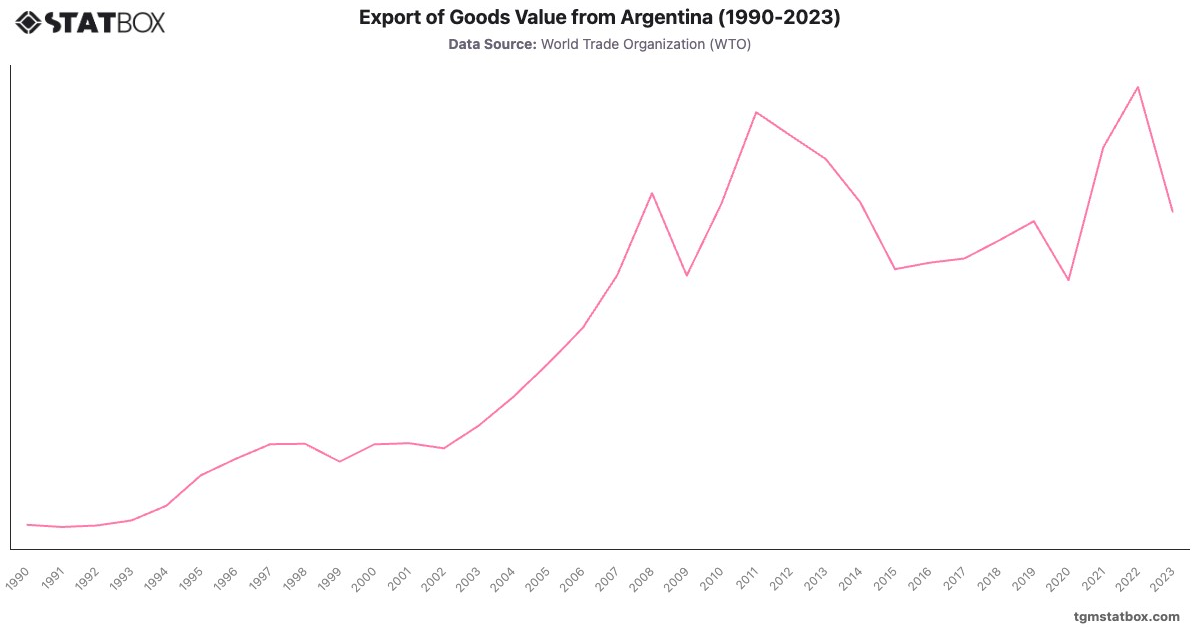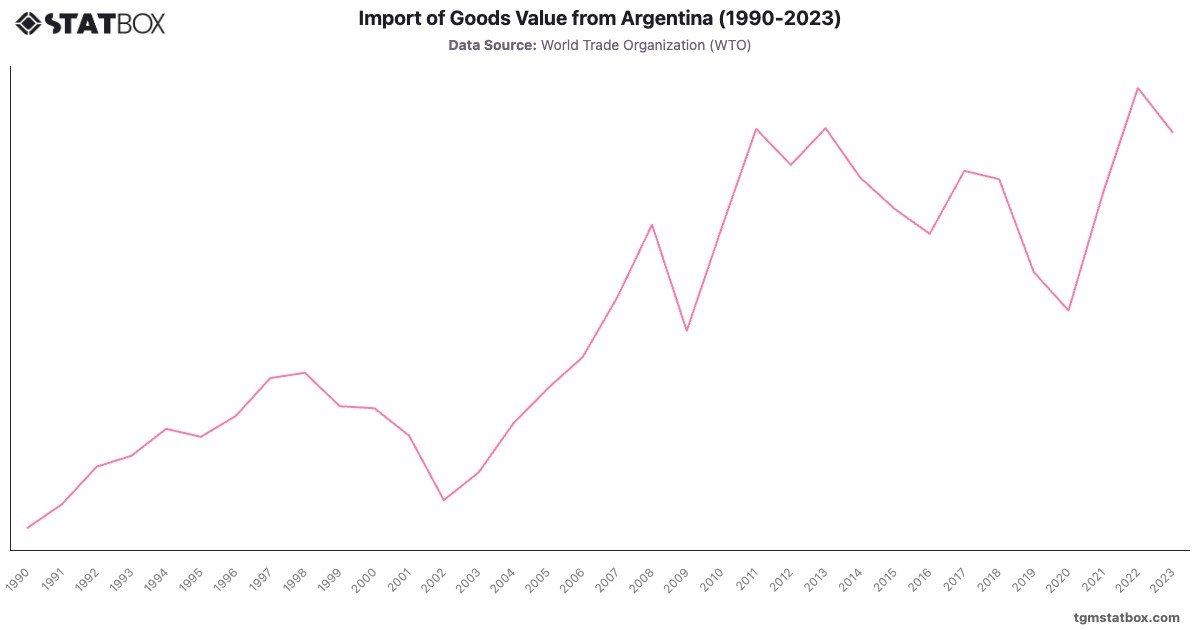
Argentina's imports surged from $4.1B in 1990 to $21.5B in 1994, driven by economic liberalization policies under President Carlos Menem. The subsequent period of growth peaked at $31.4B in 1998, followed by a sharp decline to $8.99B in 2002 due to the financial crisis. Recovery was rapid, with imports rising to $57.4B in 2008, supported by agricultural exports and increased domestic demand.
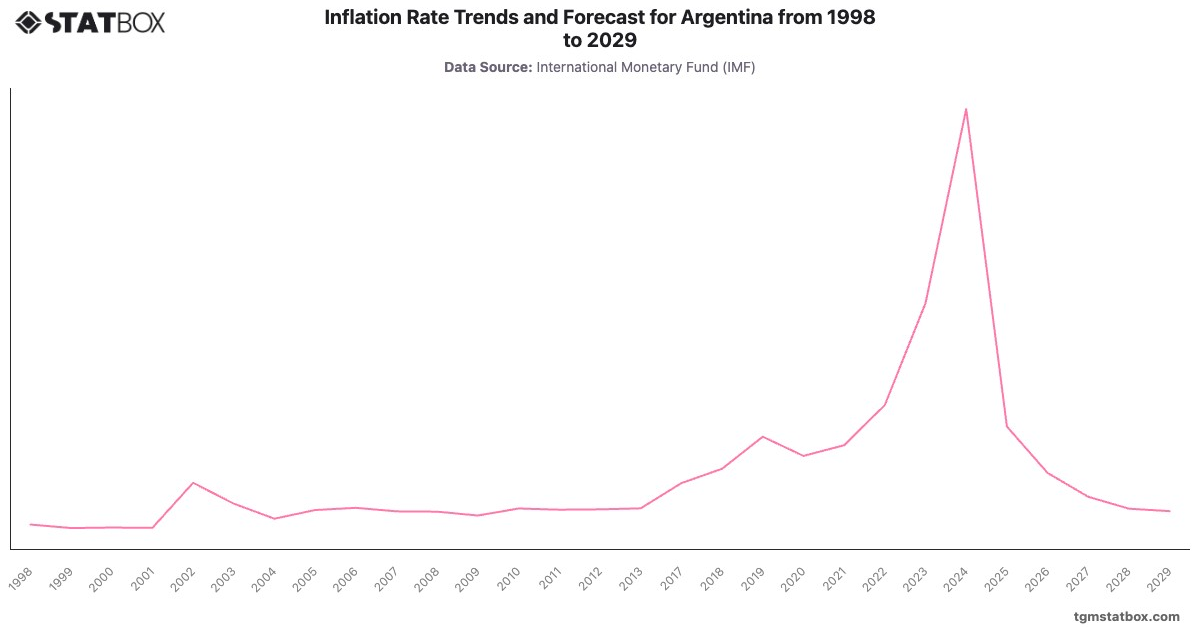
The period from 2008 to 2023 showcases fluctuations tied to Argentina’s economic volatility. A resurgence to $81.5B in 2022 reflects an export boom and recovery from COVID-19 impacts, though challenges like inflation and currency devaluation tempered imports to $73.7B in 2023. These trends underscore the impact of domestic policies and global conditions on Argentina's trade.
The period from 2008 to 2023 showcases fluctuations tied to Argentina’s economic volatility. A resurgence to $81.5B in 2022 reflects an export boom and recovery from COVID-19 impacts, though challenges like inflation and currency devaluation tempered imports to $73.7B in 2023. These trends underscore the impact of domestic policies and global conditions on Argentina's trade.
For a deeper dive into the topic, explore Argentina’s inflation rate forecast, Argentina’s population figures, Argentina’s agriculture share in GDP.