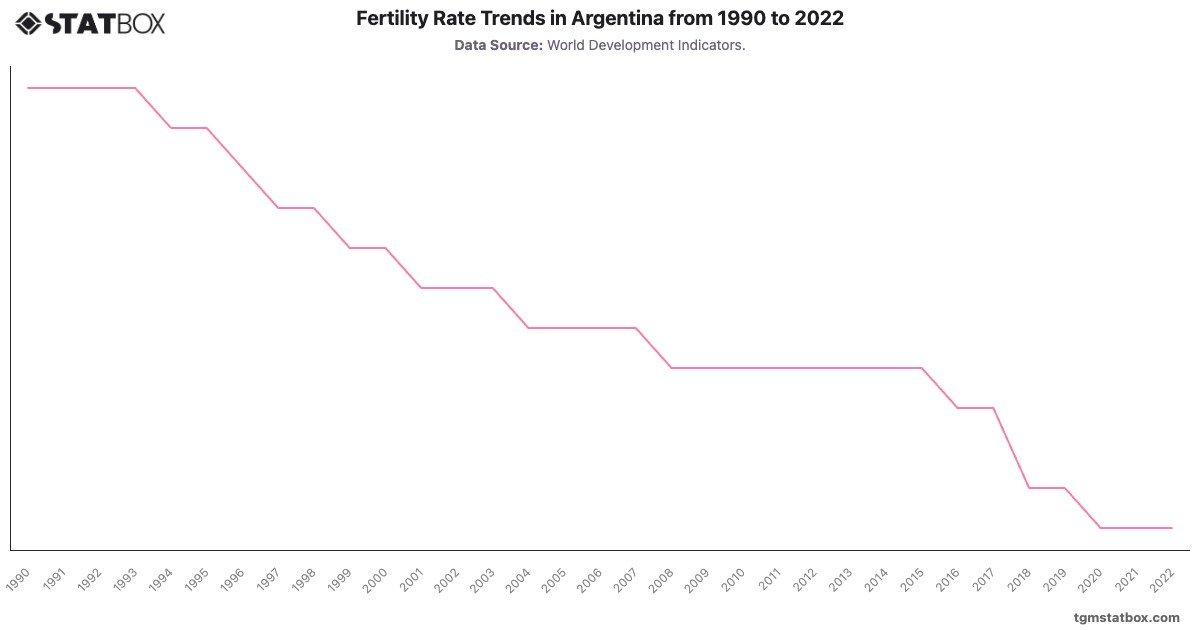
Argentina’s fertility rate declined steadily from 3.0 in 1990 to 1.9 in 2022, reflecting ongoing demographic and societal changes. During the 1990s, the rate remained relatively stable, hovering around 3.0, before beginning to decline slightly to 2.6 by the early 2000s. Factors like improved access to education and healthcare, particularly for women, contributed to this shift.
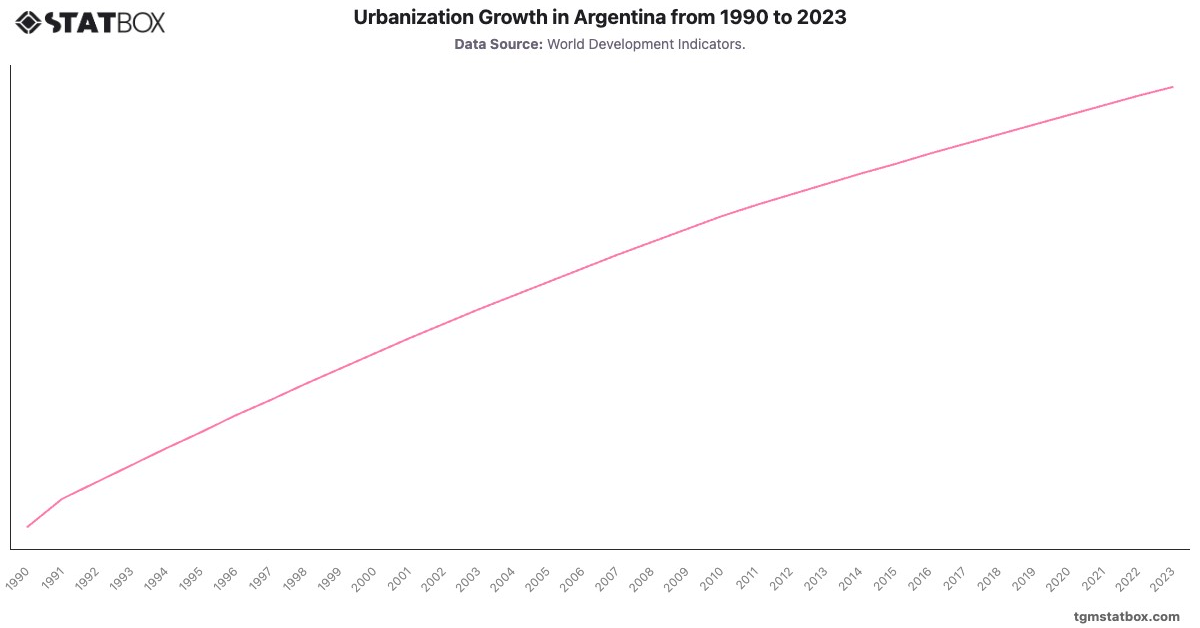
Between 2000 and 2010, the rate stabilized at approximately 2.3, before dropping further in the late 2010s, reaching 2.0 in 2018. This period saw economic challenges that likely impacted family planning decisions. By 2022, the rate settled at 1.9, aligning with broader trends in Latin America, where urbanization and changing social values have contributed to smaller family sizes.
Between 2000 and 2010, the rate stabilized at approximately 2.3, before dropping further in the late 2010s, reaching 2.0 in 2018. This period saw economic challenges that likely impacted family planning decisions. By 2022, the rate settled at 1.9, aligning with broader trends in Latin America, where urbanization and changing social values have contributed to smaller family sizes.
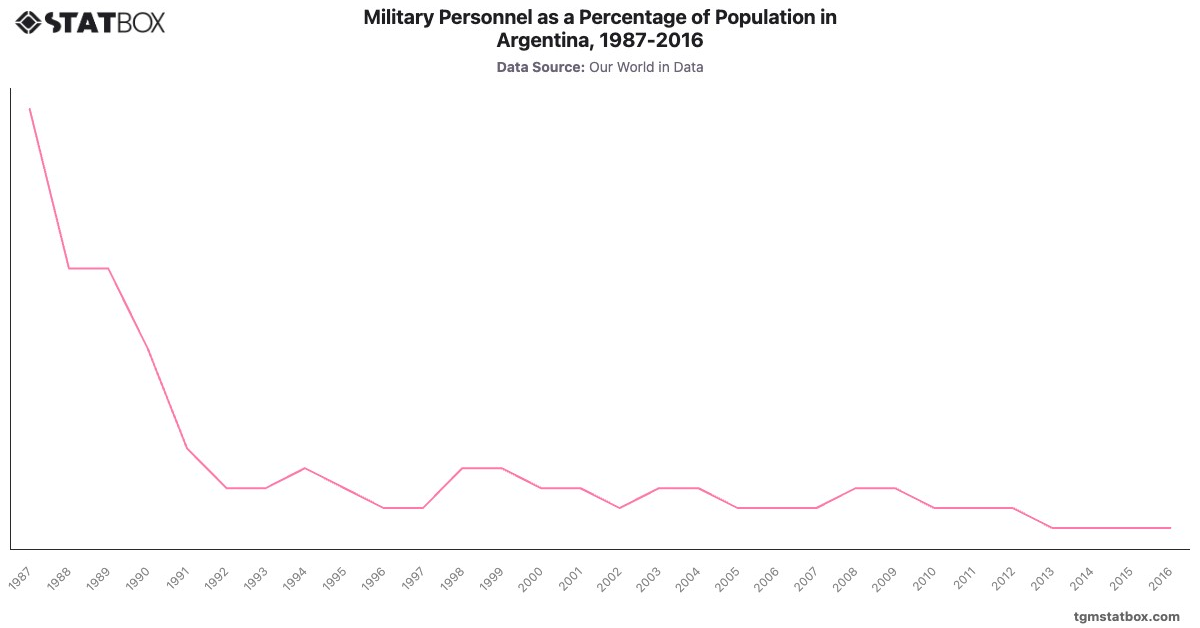
Find out more through related statistics on Argentina’s unemployment rate trend, Military personnel ratio in Argentina, Argentina’s mortality rate trend.