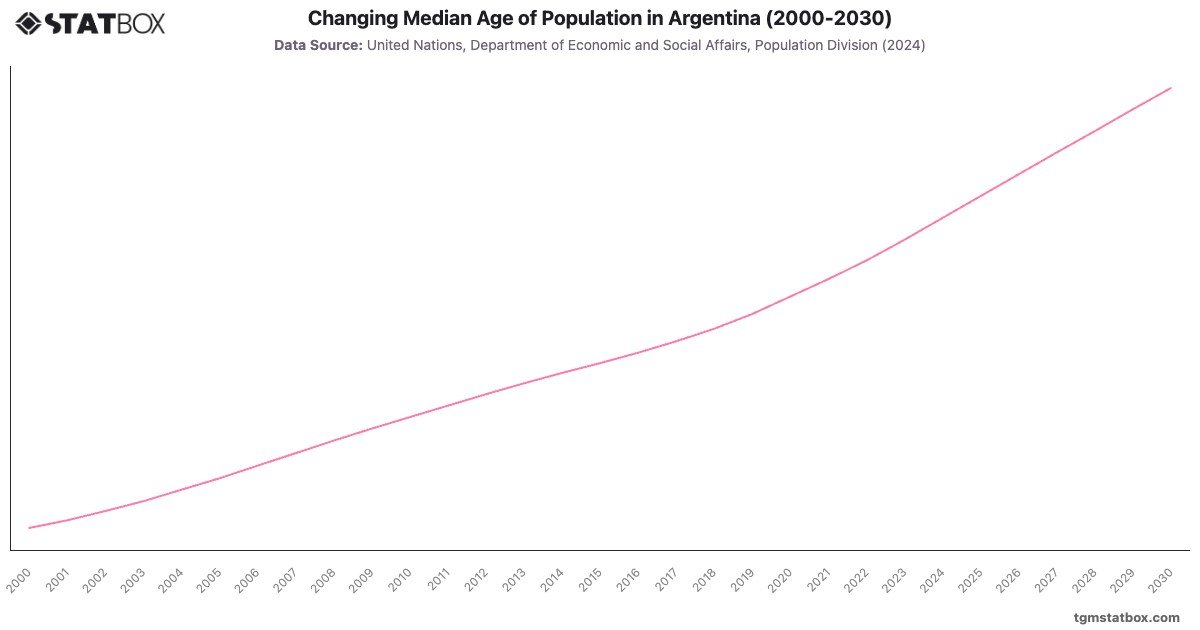
From 2000 to 2020, Argentina’s median age rose from 26.8 to 31.1 years, reflecting a gradual aging trend attributed to lower birth rates and higher life expectancy. Economic improvements in the early 2000s contributed to improved healthcare access, enhancing lifespan and naturally raising the median age. During this period, Argentina saw a steady yearly increase of approximately 0.2 to 0.3 years, a sign of a slow yet consistent shift towards an older population.
By 2030, Argentina’s median age is projected to reach 34.9 years. This accelerating growth mirrors other South American nations as they undergo demographic transitions. While population growth continues, the increase in the elderly population drives the overall age higher. With advancements in healthcare and economic stability, this aging trend is likely to persist, presenting both challenges and opportunities for policy adjustments around healthcare, employment, and social security.
By 2030, Argentina’s median age is projected to reach 34.9 years. This accelerating growth mirrors other South American nations as they undergo demographic transitions. While population growth continues, the increase in the elderly population drives the overall age higher. With advancements in healthcare and economic stability, this aging trend is likely to persist, presenting both challenges and opportunities for policy adjustments around healthcare, employment, and social security.
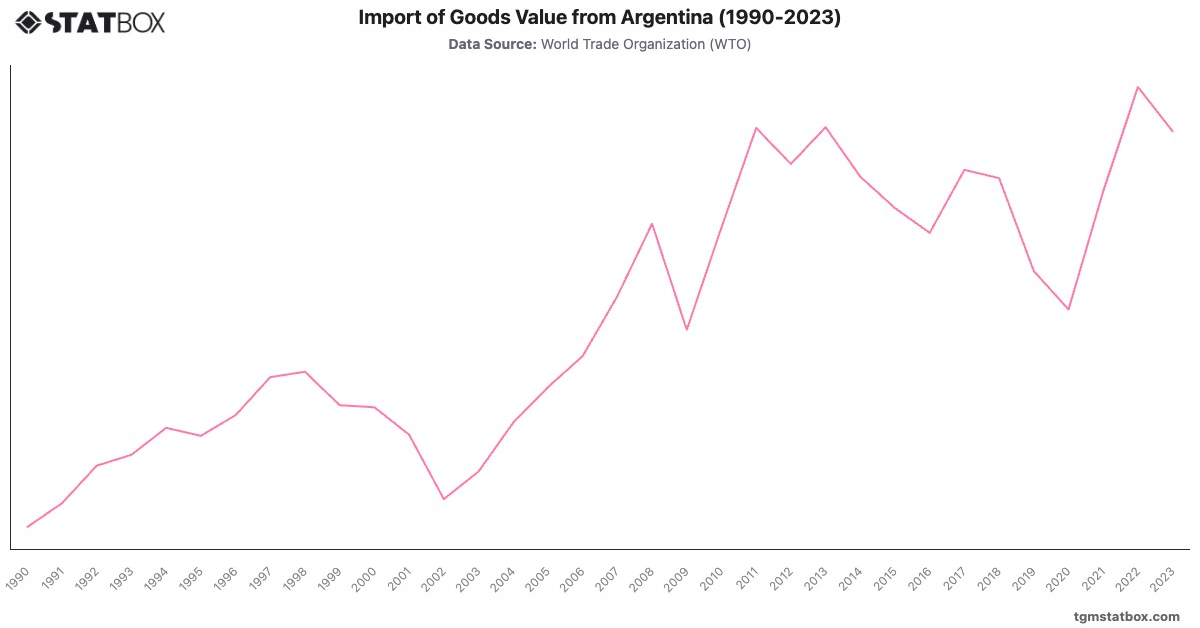
Explore related charts to gain a better understanding of Argentina’s goods import value, Argentina’s agriculture share in GDP, Working age population share in Argentina.