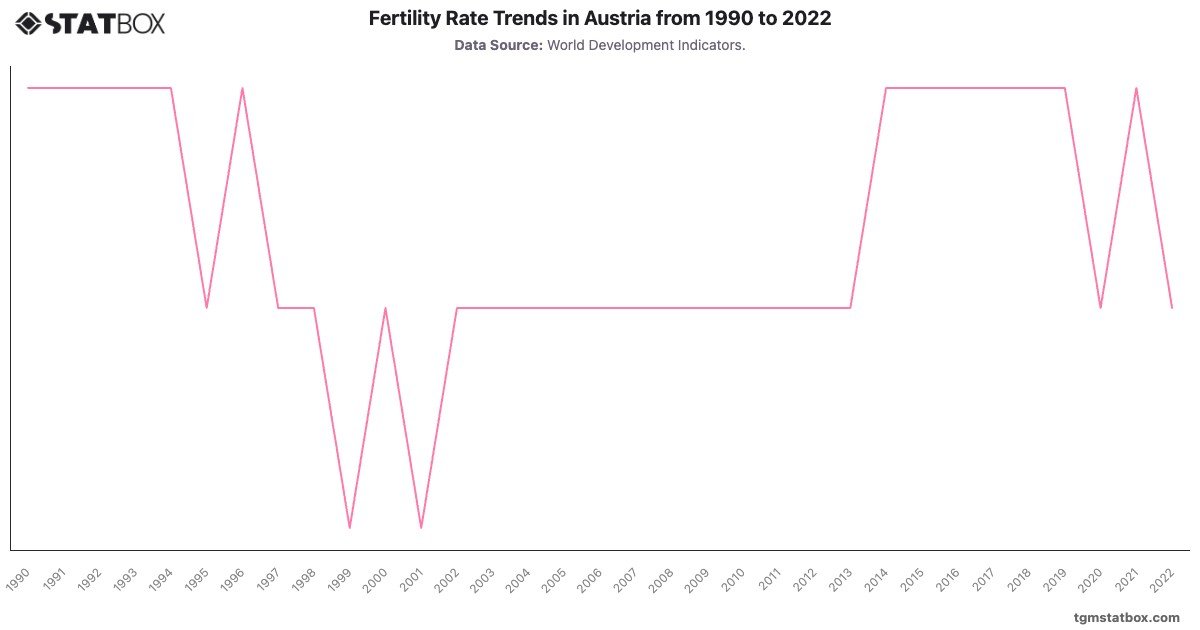
Austria’s fertility rate remained relatively stable between 1.5 and 1.3 from 1990 to 2022, reflecting the country's consistent demographic patterns. In the early 1990s, the rate hovered around 1.5 before experiencing a minor dip to 1.3 by 1999. This decline was influenced by changing societal norms, including delayed parenthood and preferences for smaller families.
From the 2000s onward, the rate fluctuated slightly but maintained a general stability, staying within a narrow range of 1.4 to 1.5. The gradual recovery in the mid-2010s, with the rate returning to 1.5 by 2019, may be attributed to improved family support policies, such as parental leave and childcare benefits. By 2022, the fertility rate stood at 1.4, reflecting Austria’s balanced approach to managing demographic challenges amidst broader European trends.
From the 2000s onward, the rate fluctuated slightly but maintained a general stability, staying within a narrow range of 1.4 to 1.5. The gradual recovery in the mid-2010s, with the rate returning to 1.5 by 2019, may be attributed to improved family support policies, such as parental leave and childcare benefits. By 2022, the fertility rate stood at 1.4, reflecting Austria’s balanced approach to managing demographic challenges amidst broader European trends.
For a deeper dive into the topic, explore Austria’s mortality trend, Austria’s manufacturing sector GDP share, Austria’s urbanization trends.