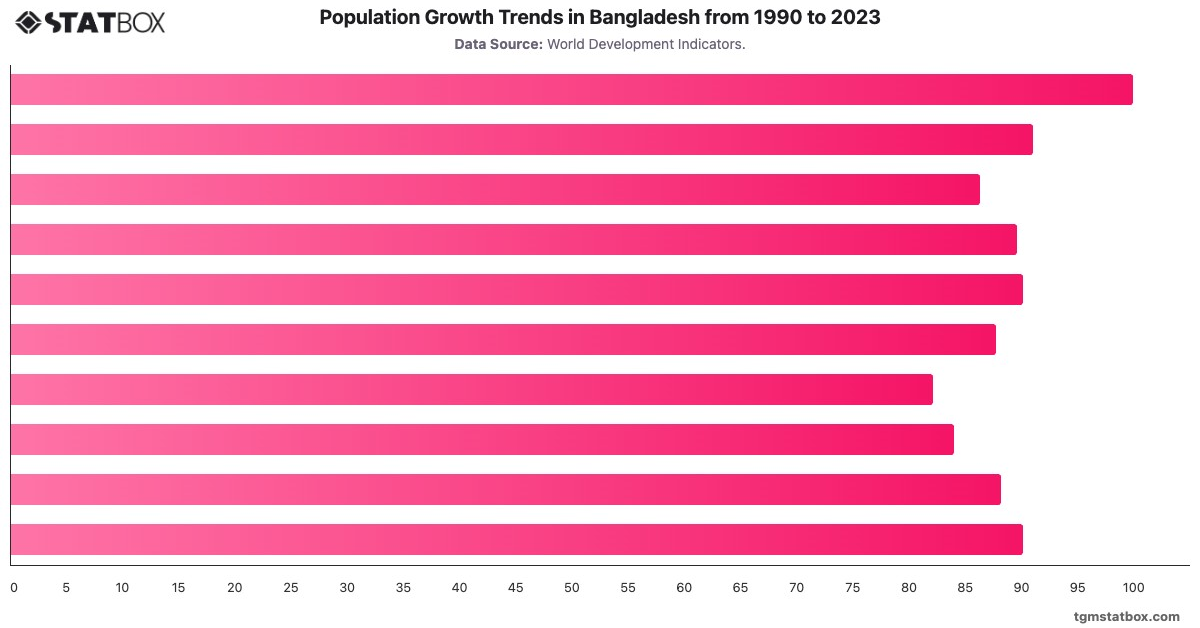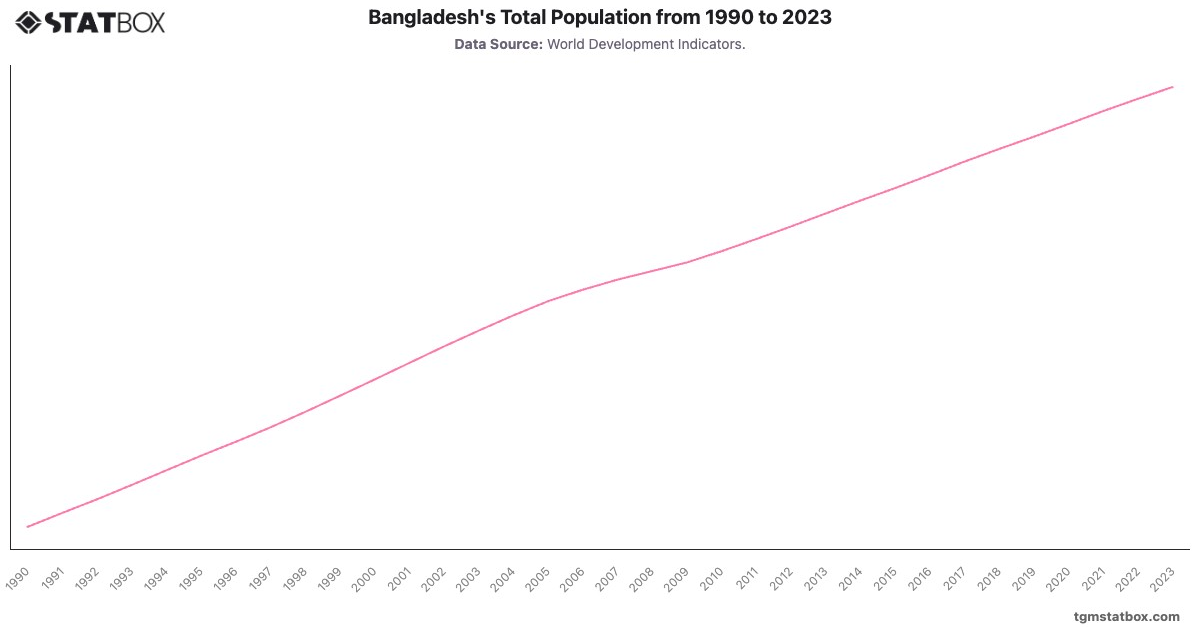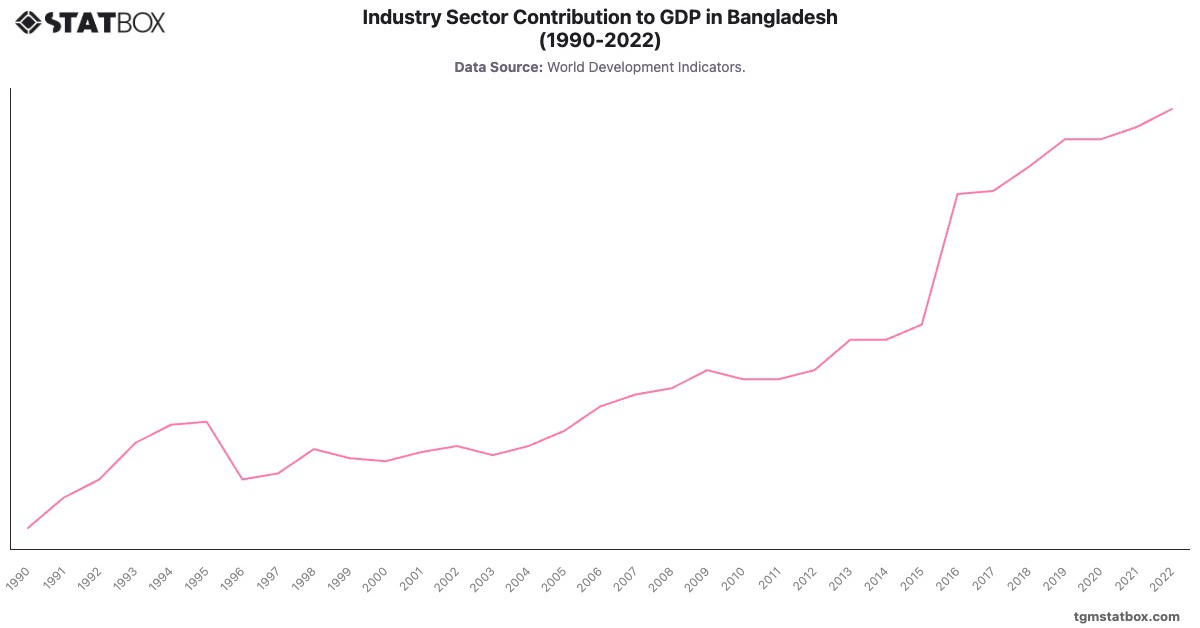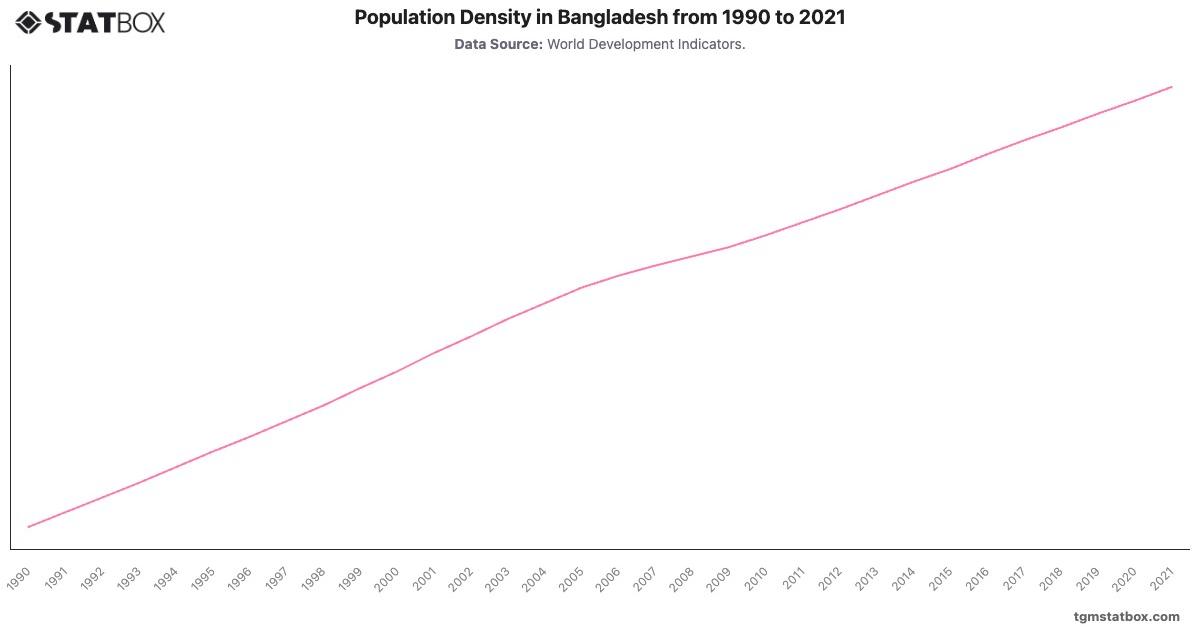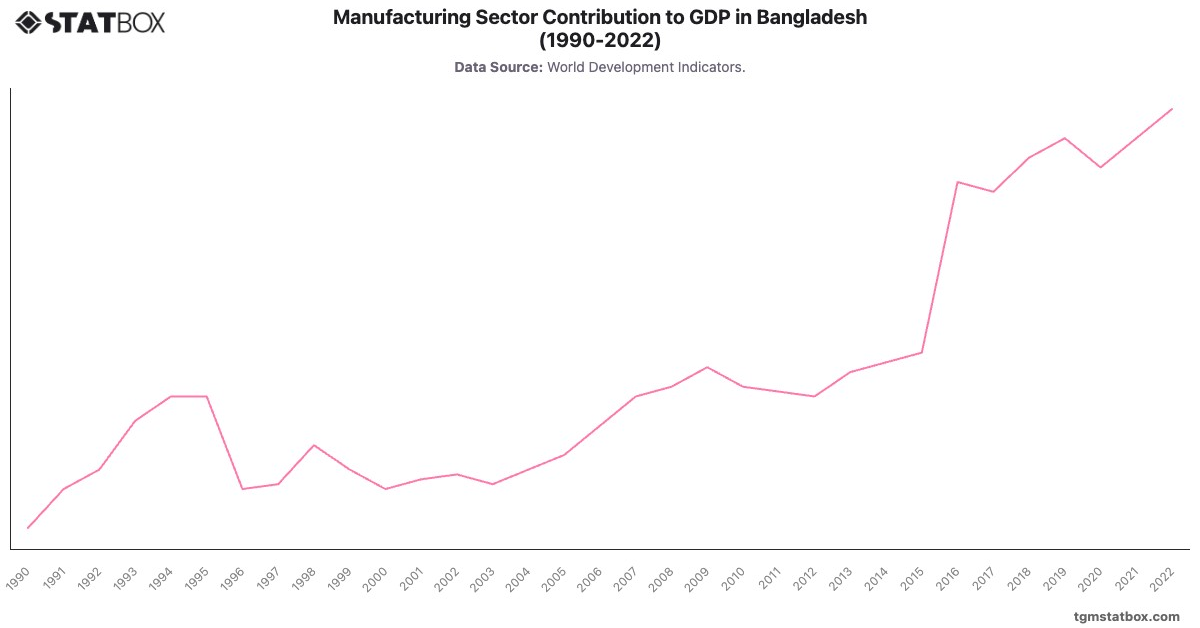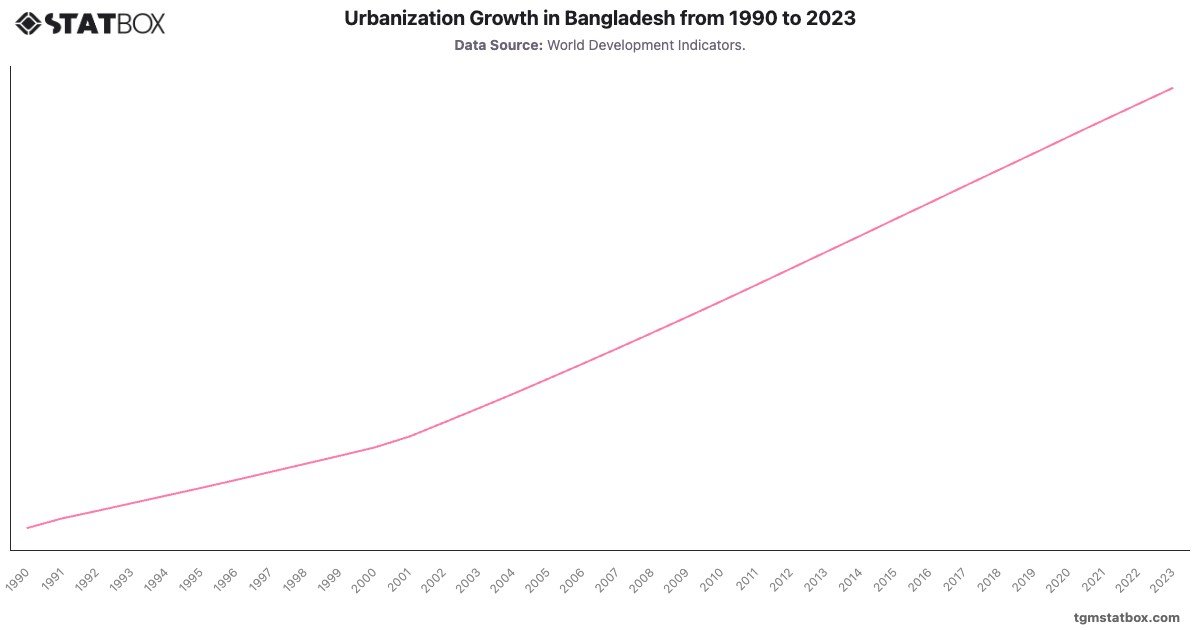
Bangladesh’s urbanization rate rose from in 1990 to in 2023, reflecting significant growth as the country rapidly urbanized over three decades. The early 1990s saw moderate urban growth, primarily due to migration towards Dhaka and Chattogram, where economic opportunities in manufacturing, particularly garment production, drew large rural populations. By the 2000s, Bangladesh’s urbanization accelerated, supported by the expansion of the industrial and service sectors. Urban centers saw continued development in infrastructure, healthcare, and education, contributing to increased migration from rural areas. By 2023, urbanization reached , driven by economic opportunities and improved living conditions in urban areas, though rapid urbanization presents challenges in managing infrastructure, housing, and service demands for the expanding urban population.
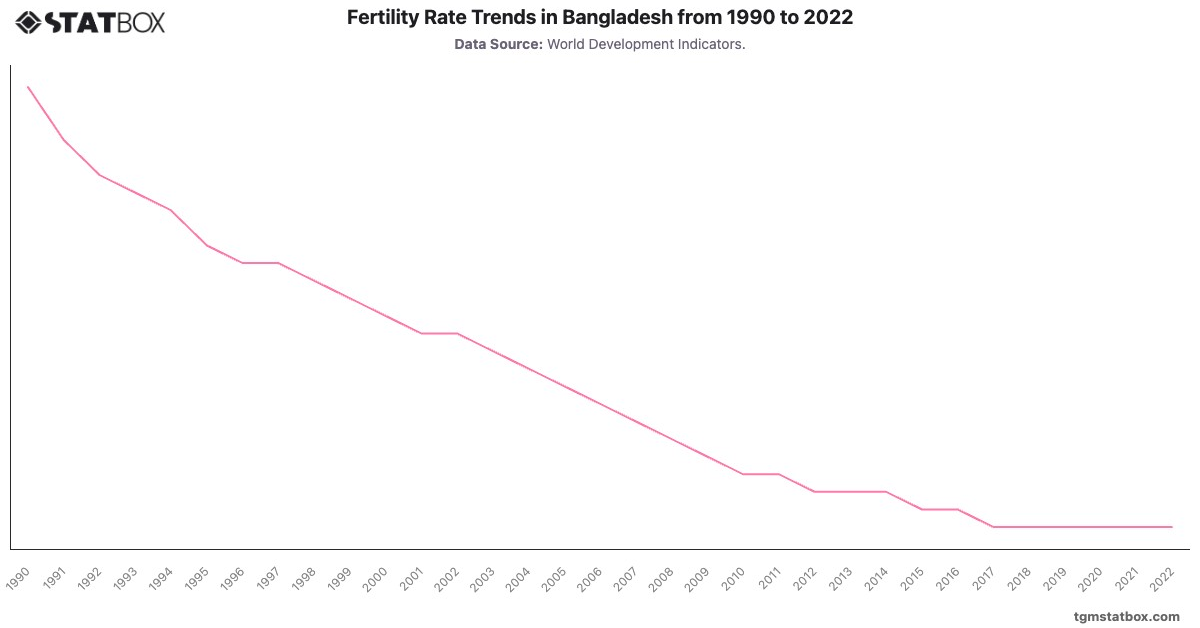
Find out more through related statistics on Bangladesh’s fertility trends, Bangladesh’s manufacturing sector GDP share, Bangladesh’s services sector share in GDP.