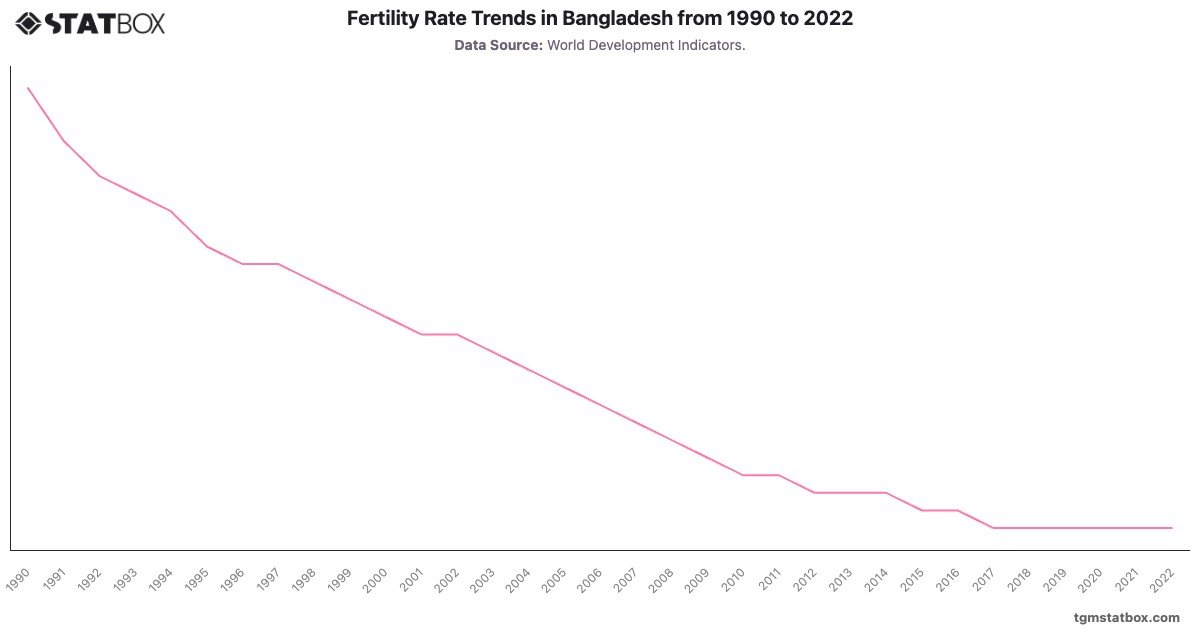
Bangladesh experienced a significant decline in fertility rates, dropping from 4.5 in 1990 to 2.0 in 2022. This steady decrease highlights the success of national family planning programs and increased access to education, particularly for women. The early 1990s saw rapid declines due to campaigns promoting contraceptive use and improving maternal health.
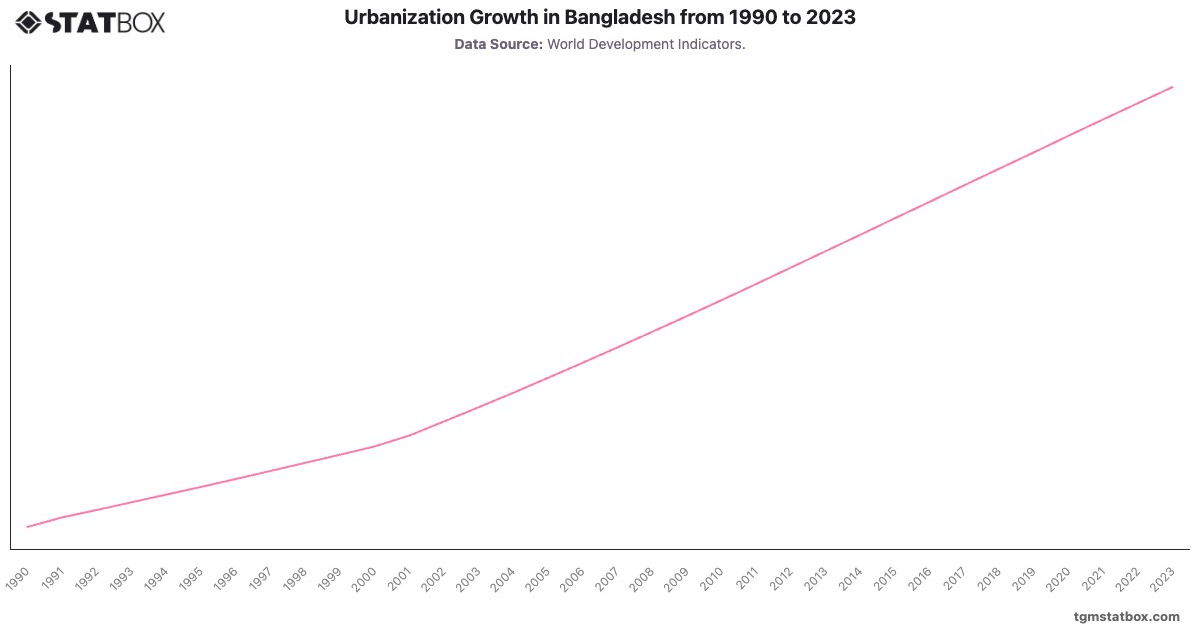
From 2000 onwards, the fertility rate stabilized around 2.0, signaling a transition towards replacement-level fertility. Economic growth and urbanization played key roles, as rural-to-urban migration and improved living standards contributed to smaller family sizes. However, challenges like regional disparities and the need for sustained policy efforts remain critical for maintaining this progress.
From 2000 onwards, the fertility rate stabilized around 2.0, signaling a transition towards replacement-level fertility. Economic growth and urbanization played key roles, as rural-to-urban migration and improved living standards contributed to smaller family sizes. However, challenges like regional disparities and the need for sustained policy efforts remain critical for maintaining this progress.
Find out more through related statistics on Bangladesh’s median age demographic trend, Bangladesh’s changing mortality rate, Bangladesh’s population data.