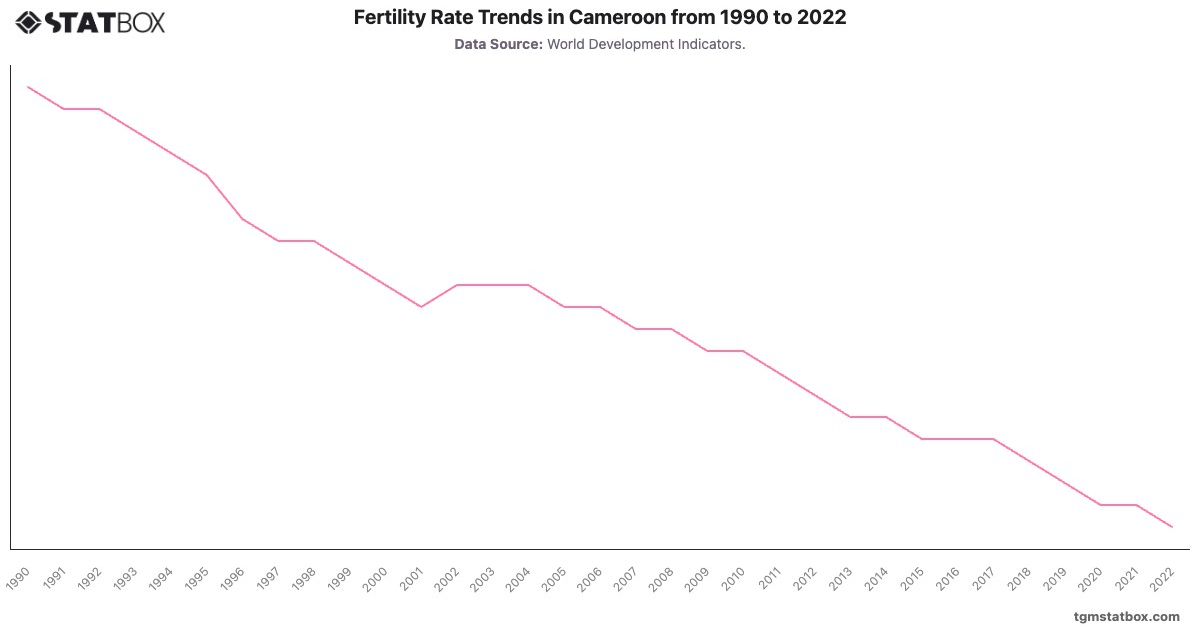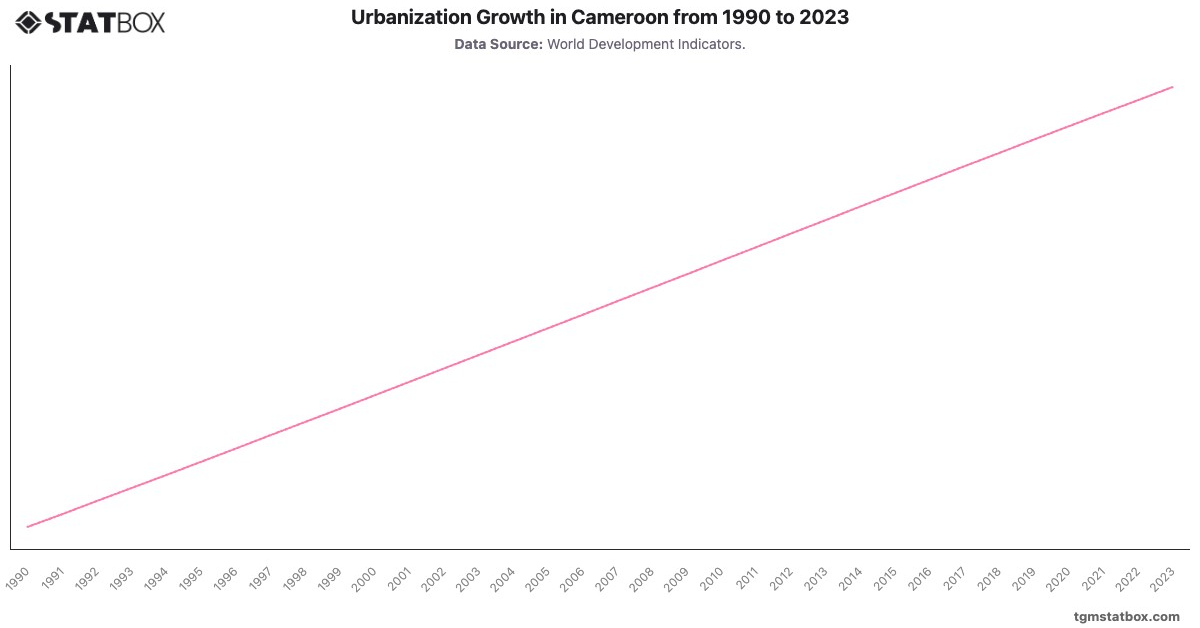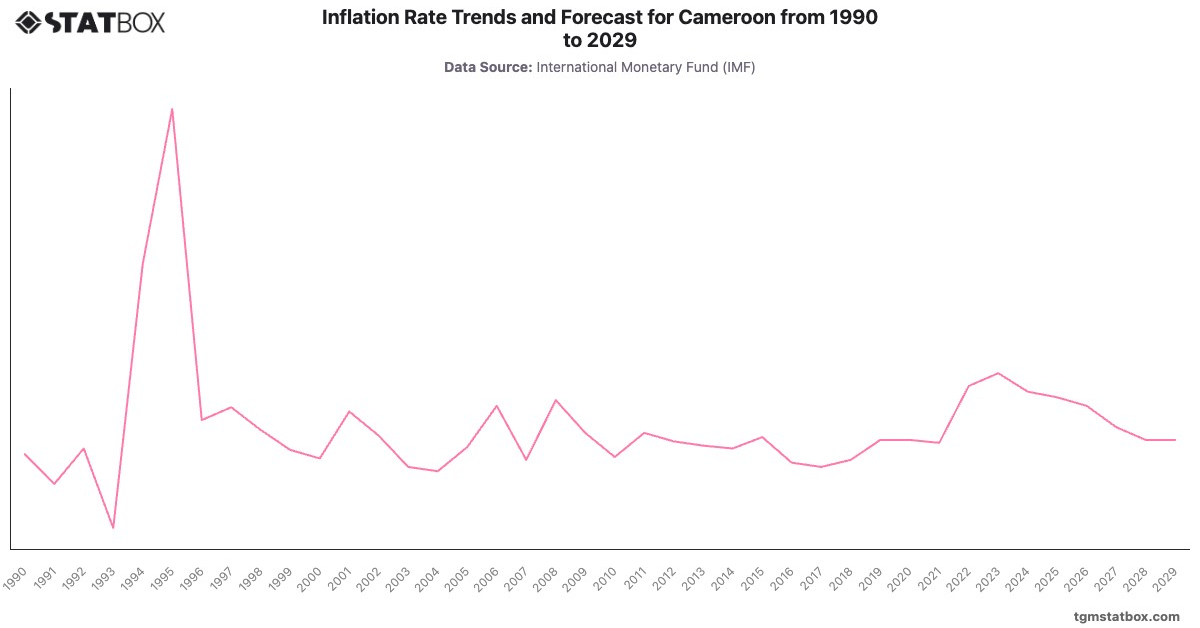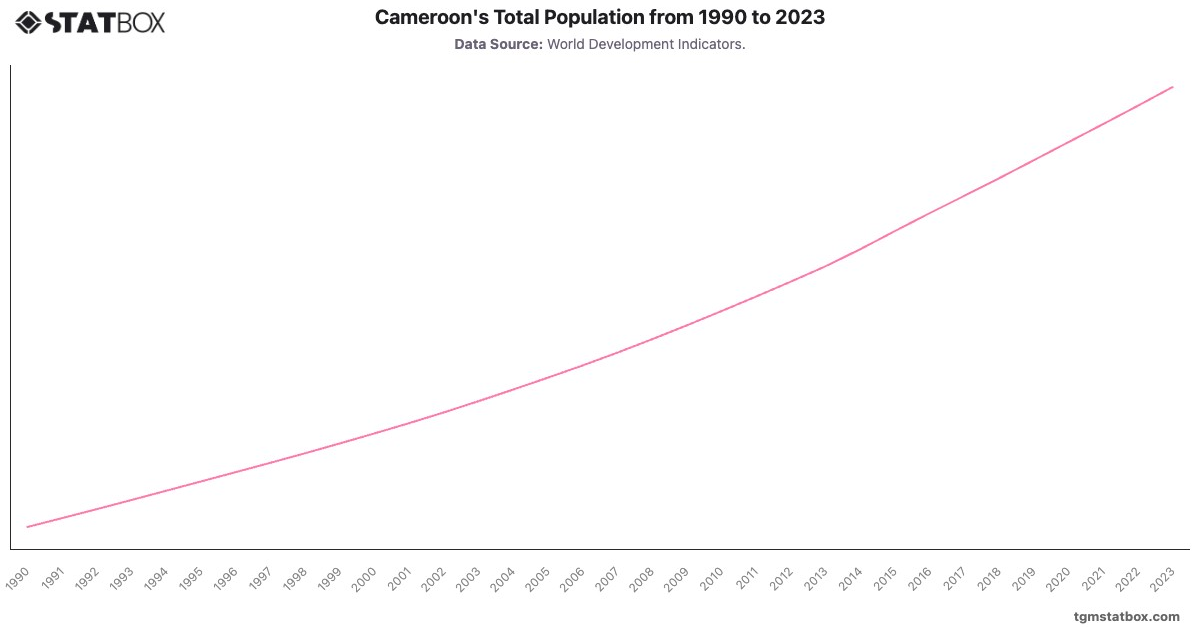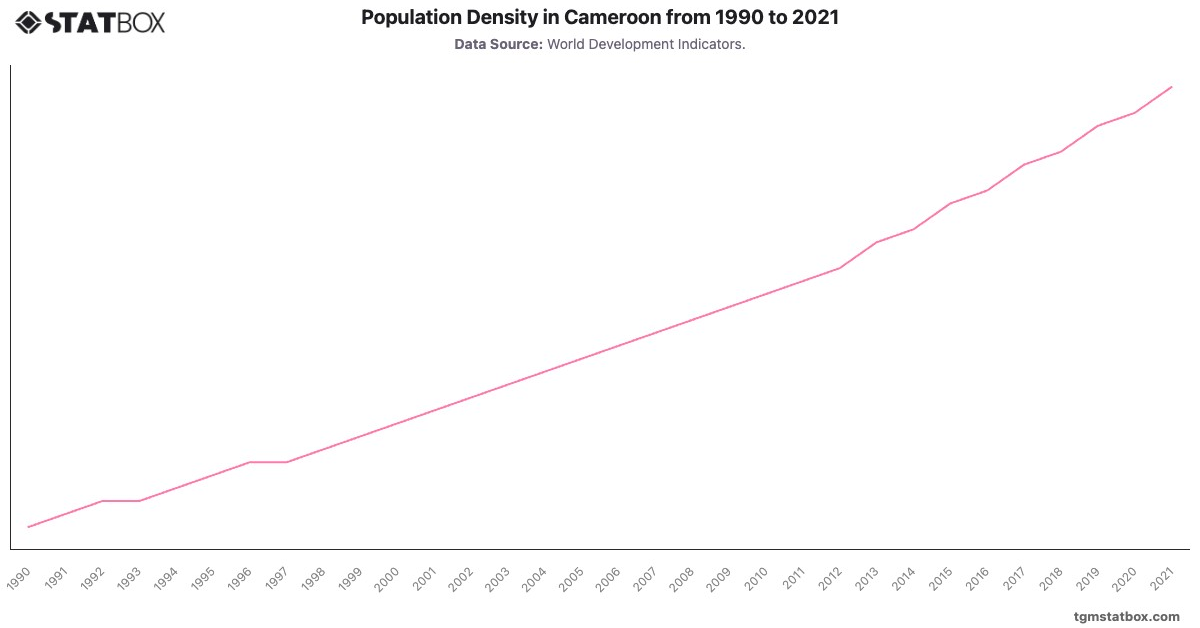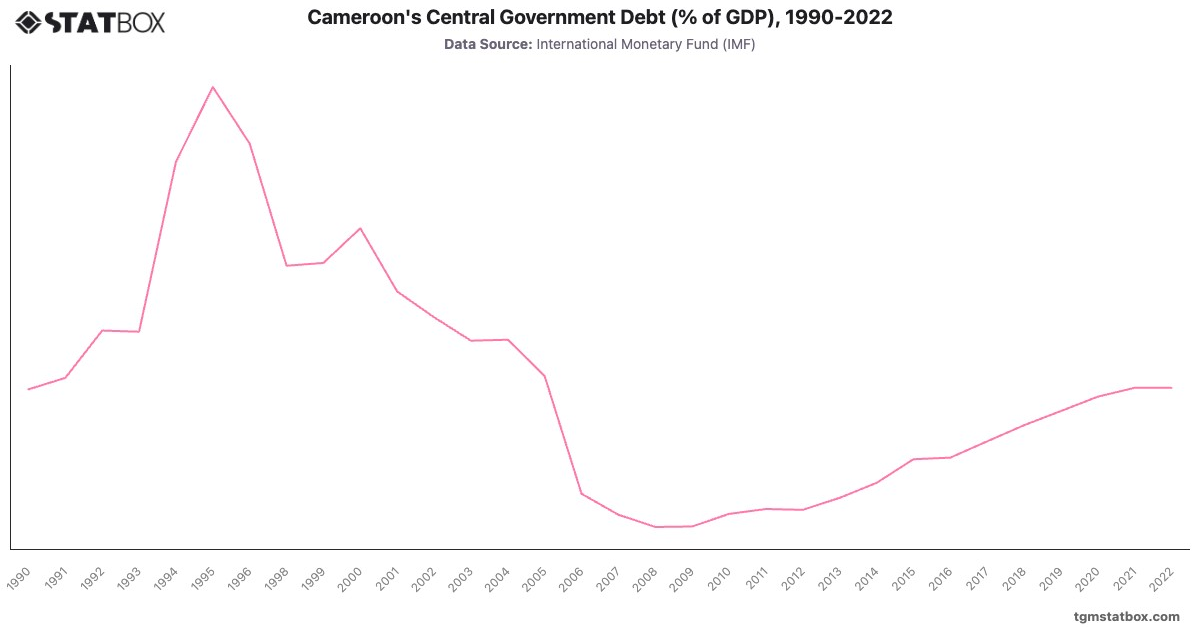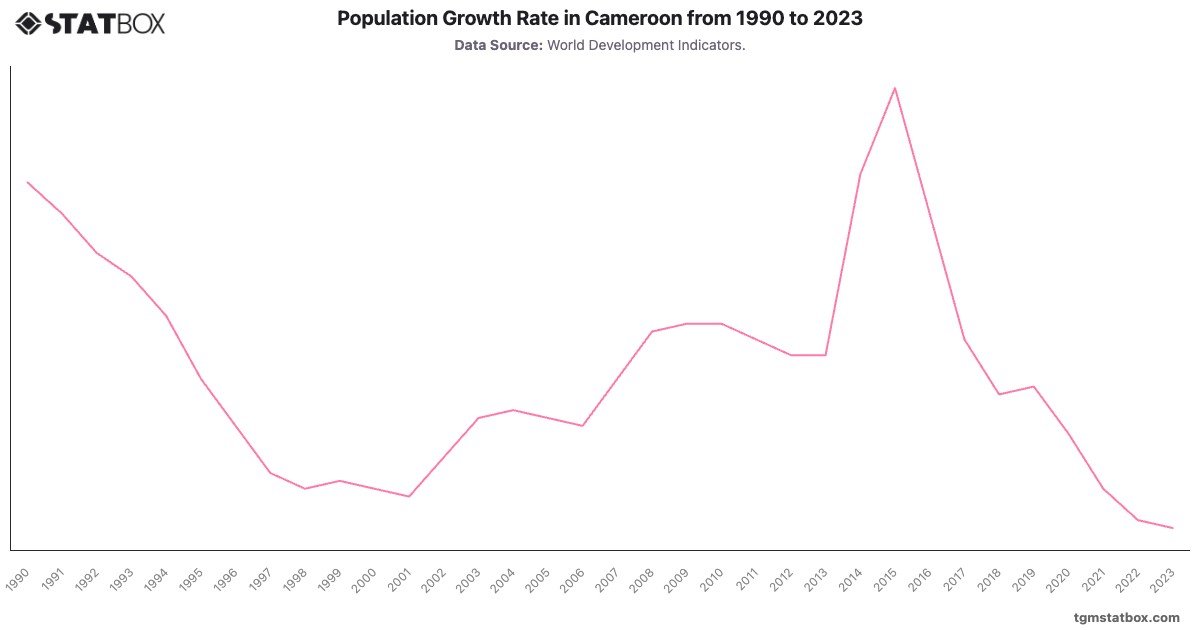
The chart demonstrates Cameroon’s relatively stable yet gradually decreasing population growth rate over three decades. In the early 1990s, growth was strong at , reflecting high birth rates and a youthful population structure. However, a steady decline followed, with growth rates reducing to around by 1999 due to economic pressures and a rising urban population that influenced family planning practices.
Through the 2000s, growth rates stabilized between and , supported by improved healthcare but tempered by socioeconomic challenges and urbanization, which typically correlates with smaller family sizes. A slight uptick occurred between 2014 and 2016, peaking again at in 2015, likely due to a demographic bulge in young adults reaching reproductive age. Since 2017, the rate resumed a downward trend, reaching in 2023, as Cameroon continued to experience urban migration, family planning uptake, and healthcare advancements.
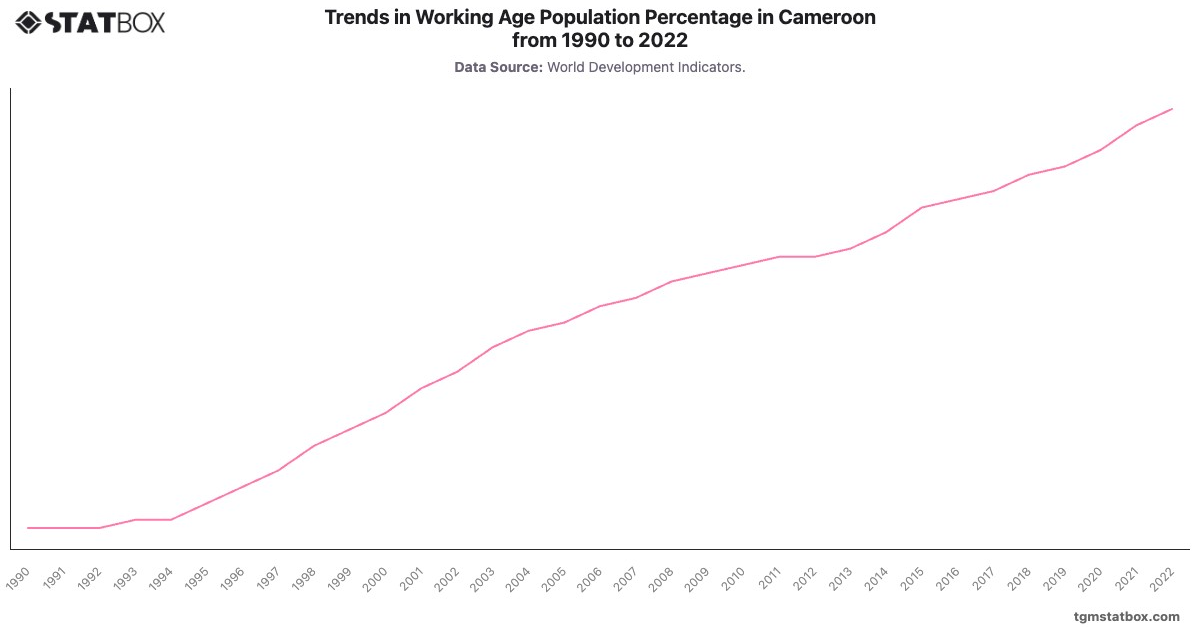
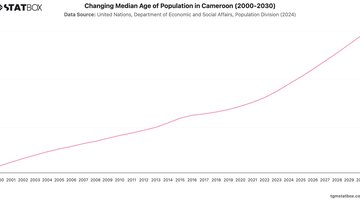
Explore related charts to gain a better understanding of Cameroon’s urban expansion, Cameron’s median age shift, Cameroon’s working-age population share.